Mullaghmore Head.
Mullaghmore Head is a small peninsula in the north of County Sligo, dominated by Classiebawn Castle and surrounded by two large beaches. Wikipedia says the area has become a big-wave surfing destination that draws surfers and windsurfers from around the world, and notes that in March 2012 surfers rode waves of up to 15 metres here. Billabong hosted Ireland's first big-wave contest at Mullaghmore in 2011. For most visitors the story is one of watching a spectacular wave from land; for those who want to surf nearby, the beach breaks around the peninsula offer something much more approachable.
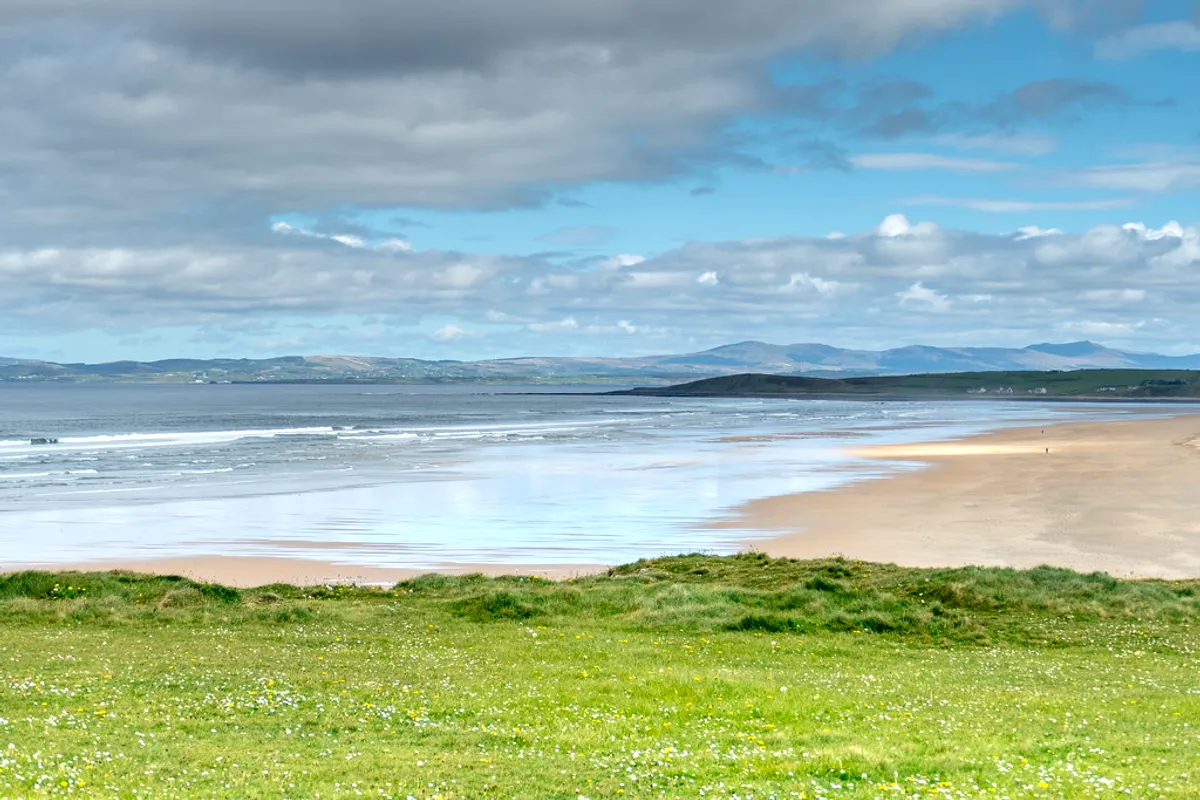 Photo: Kent Wang · CC BY-SA 2.0 · Flickr
- Level
- Expert
- Direction and bottom
- Right · Reef
- Best swell
- NW groundswell
- Best wind
- SE offshore
- Best tide
- Works at all stages
- Best months
- Oct, Nov, Dec, Jan, Feb, Mar
- Size
- The headland needs a large swell; smaller days suit the beach beside it
- Hazards
- Giant waves and hold-downs, Cold Atlantic water, Rocks and reef, Remote rescue, Strong currents
Two different places in one name
The name Mullaghmore covers two very different waves. The headland big-wave reef only comes to life when a large Atlantic swell arrives, and then it produces a thick right-hander that is ridden by tow teams and a small number of paddle surfers. Surf-Forecast's page for Mullaghmore itself describes something milder: a sheltered break with lefts and rights that works in a wide range of swells, rated five out of ten and fairly consistent. The page lists the type as reef but describes the break as a beach break, which suggests that it is covering the more accessible waves beside the peninsula rather than the big-wave spot.
That difference matters for planning. If you read about waves of fifteen metres or more, those are on the outer reef in rare conditions. On a normal winter day, the visiting surfer is much more likely to find waist-high to head-high surf over sand and rock inside the bay.
Season and conditions
Surf-Forecast gives the best swell as north-west and the best wind as south-east offshore. The wave works at all tides and all year, but winter is the main season. In January, its statistics show about 24 percent clean, 54 percent blown out and 22 percent too small. Water temperatures are low, with about 13 degrees Celsius on the page and wind chill noted at about 7 degrees. A winter wetsuit with hood, gloves and boots is recommended.
The big days are the result of strong autumn and winter storms in the north Atlantic. They are forecast days in advance, and the big-wave community moves in quickly. Wikipedia mentions an 18.2 metre wave recorded off the coast in October 2020, ridden by Donegal surfer Conor Maguire. These are not ordinary conditions, and visitors should treat them as spectator events.
Who should not surf it
The headland reef is for experienced big-wave surfers working with a safety team. It is remote from any major emergency service, the water is cold enough to cause rapid fatigue, and the waves are strong enough to hold a surfer underwater for a long time. Do not paddle out at the head on a big day, however experienced you feel. Do not enter the water alone, and do not rely on a nearby lifeguard that may not exist.
The quieter beach breaks are more forgiving, but they still demand respect. Rips run along the sides of the bays, and offshore wind can pull inexperienced swimmers away from shore. Beginners should learn with an accredited school, most of which are based in Bundoran, around 11 kilometres to the north-east according to Surf-Forecast. Ask local advice about which beach is safest for the day.
Getting there and where to watch
The nearest airport is Sligo at about 22 kilometres on Surf-Forecast's figure, and Enniskillen is about 52 kilometres away. Mullaghmore village is the peninsula's only settlement, with 136 year-round residents in the 2016 census and many more visitors in summer, according to Wikipedia. The harbour, the sailing club and two large beaches, Bunduff Strand and Trawalua Beach, are listed on the same page.
The best viewing is from the headland path and the harbour area, where you can see the line of the wave and the tow teams working. On a large swell day, keep well back from the shore and do not walk onto exposed rock. Waves can surge much higher than expected, and cliffs and rocks become dangerous quickly. Local residents and farmers use the roads, so park considerately.
Combining it with Bundoran
Most visitors base themselves in Bundoran, 11 kilometres away, where the surf schools, shops and accommodation are concentrated. Surf-Forecast lists Back Strands, Tullaghan, Streedagh Strand and Bundoran as nearby breaks. The Bundoran guide covers the town and its waves, and this page sticks to Mullaghmore itself.
The ocean off Bundoran, by month
| J | F | M | A | M | J | J | A | S | O | N | D | |
|---|---|---|---|---|---|---|---|---|---|---|---|---|
| Swell, m | 1.6 | 1.9 | 1.5 | 0.9 | 0.9 | 0.9 | 0.8 | 1.0 | 1.1 | 1.3 | 1.6 | 1.4 |
| Period, s | 13 | 13 | 12 | 11 | 10 | 10 | 9 | 10 | 11 | 11 | 12 | 12 |
| Water, °C | 9 | 8 | 8 | 9 | 11 | 13 | 15 | 16 | 15 | 14 | 12 | 10 |
Open-ocean ERA5 medians, not wave size at the break. Sources.
Questions about Mullaghmore Head
Can I surf Mullaghmore Head?
Only if you are an experienced big-wave surfer with a safety team and the right conditions. Most visitors should watch from land or surf the gentler beach breaks nearby.
How big does it get?
Wikipedia reports waves of up to 15 metres ridden in March 2012 and an 18.2 metre wave recorded off the coast in October 2020. These are rare, extreme days.
How cold is the water?
Surf-Forecast gives about 13 degrees Celsius with a wind chill much lower. A winter wetsuit, hood, gloves and boots are recommended.
Where is the nearest airport?
Sligo, about 22 kilometres away, according to Surf-Forecast. Enniskillen is about 52 kilometres away.
Where should beginners learn near Mullaghmore?
Bundoran, about 11 kilometres away on Surf-Forecast's figure, has the surf schools, shops and accommodation. Ask a school which beach is working on the day, and avoid the headland. Winter learners should expect cold water and a thick wetsuit, hood, gloves and boots.
Check a live forecast and local advice before paddling out. Heavy waves injure and kill experienced surfers.