Skeleton Bay.
Skeleton Bay is the nickname for a left-hand wave that breaks along the Pelican Point sand spit near Walvis Bay on Namibia's Atlantic coast. Descriptions in the surfing press put the break about five miles north-west of Walvis Bay and say a single ride can last for well over a minute. Coverage in 2018 of Hawaiian surfer Koa Smith described a barrel of about two minutes covering around 1.5 kilometres. The wave is extraordinary, and the setting is a cold, windy desert coast where small mistakes carry large consequences.
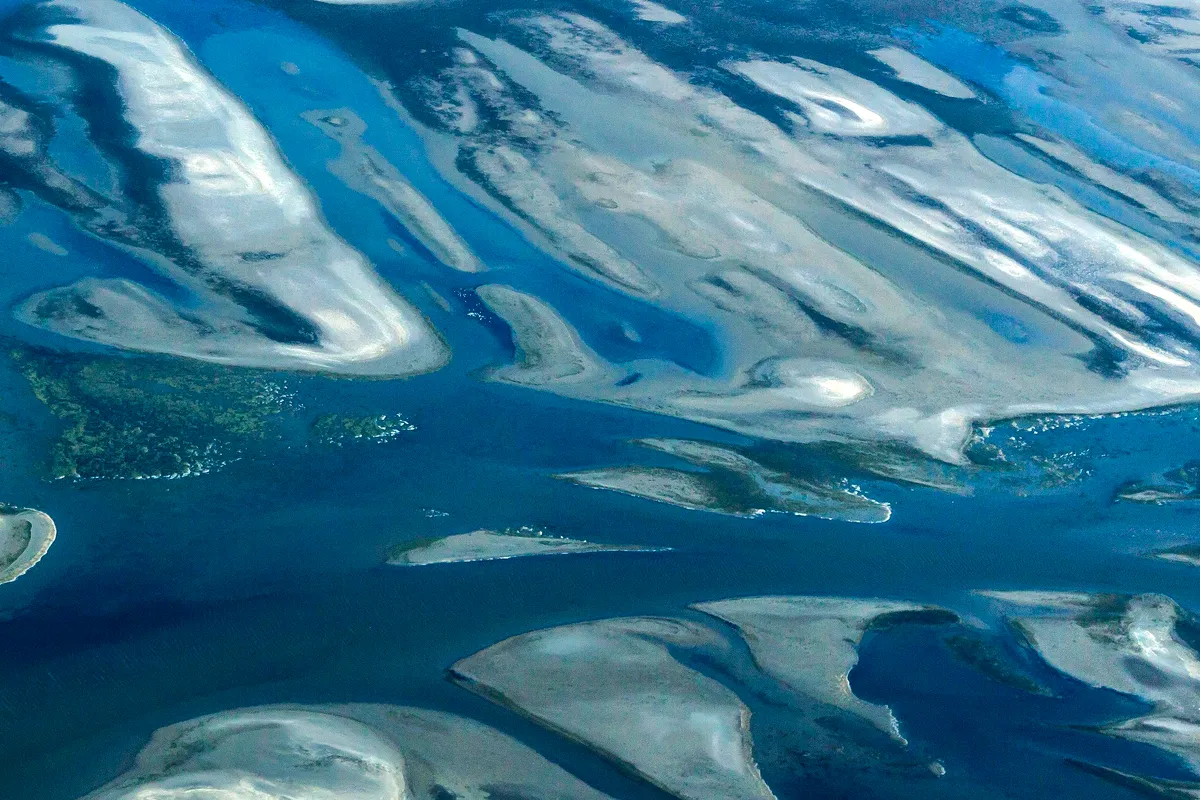 Photo: Rüdiger Wenzel · CC BY-SA 3.0 de · Wikimedia Commons
- Level
- Expert
- Direction and bottom
- Left · Sand
- Best swell
- SW to S groundswell, long period
- Best wind
- Light E to NE offshore
- Best tide
- Check locally; the bank changes with the tide
- Best months
- Apr, May, Jun, Jul, Aug, Sep
- Size
- Chest-high to well overhead; tube riding from head-high
- Hazards
- Fast closing barrels, Cold Atlantic water, Strong currents, Remote desert coast, Fog and wind
A sandbar that goes on and on
The wave forms where a long south-west swell meets the sand spit that extends from Pelican Point. The bottom is sand, so the shape of the bar depends on how the swell and the current have moved the sediment. When the bar is right, the wave breaks in a continuous line for a very long distance, producing a tube that moves quickly along the spit. Descriptions of the wave refer to rides of up to about two kilometres in the best cases.
Surfing press reports credit the spot's early attention to the American surfer Cory Lopez, who first surfed it in 2008 after a magazine competition to find waves using satellite images. Since then it has become one of the most photographed barrels in the world, and surfers travel to Namibia during the cooler months in search of good conditions.
Season, wind and temperature
The south-west swell season runs through the southern hemisphere winter, though good days can occur from autumn through spring. The wave needs light offshore winds, and the desert coast often has strong south or south-west winds that spoil the conditions, so the best sessions usually come early in the morning. Fog is common on this coast, and visibility can drop quickly.
The water is cold. Surf-Forecast's page for a Skeleton Bay listing gives a sea temperature of about 13 degrees Celsius and recommends a spring wetsuit, hood, gloves and boots, though that page appears to carry coordinates that do not match Pelican Point and should be treated with caution. For a session in the cooler months, a thick wetsuit with hood, gloves and boots is a sensible choice.
Who should not surf it
Skeleton Bay is for highly experienced surfers who are comfortable in fast, hollow tubes over shifting sand and who can cope with cold water and long rides. A barrel that runs for a minute or more means you may be a long way from where you started when it ends. The paddle back can be difficult, and the currents along the spit can be strong. The remote location also means that emergency help is far away.
People who are new to barrelling waves, weaker swimmers, and those who have not surfed in cold water should not attempt it. The wave is also a very different proposition from the gentler beach breaks along the Namibian coast. Because there is little shelter, wind and sun exposure are issues, and visitors should bring appropriate clothing, food and water.
Getting there and watching
Pelican Point lies across the lagoon from Walvis Bay, and the town is the usual base. Wikipedia places Walvis Bay at about 22.96 degrees south on the Namibian coast. Access to the spit is by vehicle across sand, or by boat from the harbour, and rules about permits and permission may apply, so I could not verify the current arrangements. Arrange access through a local operator, and check which areas are open before you travel.
The nearest international gateway is Windhoek, with domestic flights and road connections to Walvis Bay. Distances in Namibia are long, so plan driving times carefully. Watching the wave from the shore or from a boat gives a sense of its length, but conditions can change quickly, and you should stay clear of waves and surf zones. The spit is also a wildlife area, with seals and seabirds, so keep your distance.
Keeping expectations realistic
Many days at Skeleton Bay are small, windy or onshore, and the best days require patience. Travellers should allow flexible dates and consider other activities along the coast, such as dunes and wildlife. This page is a description of a wave, not an endorsement of any operator or itinerary.
Planning and timing
The Namibian coast is a long way from most of the world's surf centres, and a trip needs careful planning. Winter is cold and often foggy, and the wind can switch quickly, so build in extra days and keep your schedule flexible. Pack a thick wetsuit, hood, gloves, boots and warm clothing for the hours between sessions. Bring a spare board and leash, since repairs may be difficult. Because the area includes wildlife habitat, keep a respectful distance from seals and birds, and follow guidance from local operators. Check your insurance covers medical evacuation, as services are far from the spit.
Questions about Skeleton Bay
Where is Skeleton Bay?
It breaks along the Pelican Point sand spit near Walvis Bay on Namibia's Atlantic coast, roughly five miles north-west of the town according to surf press descriptions.
How long can a ride last?
Press coverage describes rides of up to about two minutes and around 1.5 kilometres in the best conditions.
How cold is the water?
Around 13 degrees Celsius on one Surf-Forecast listing, so a thick wetsuit with hood, gloves and boots is advisable.
Is it safe for most surfers?
No. It is a fast, hollow wave in a remote, cold location, suitable only for experienced surfers.
Check a live forecast and local advice before paddling out. Heavy waves injure and kill experienced surfers.