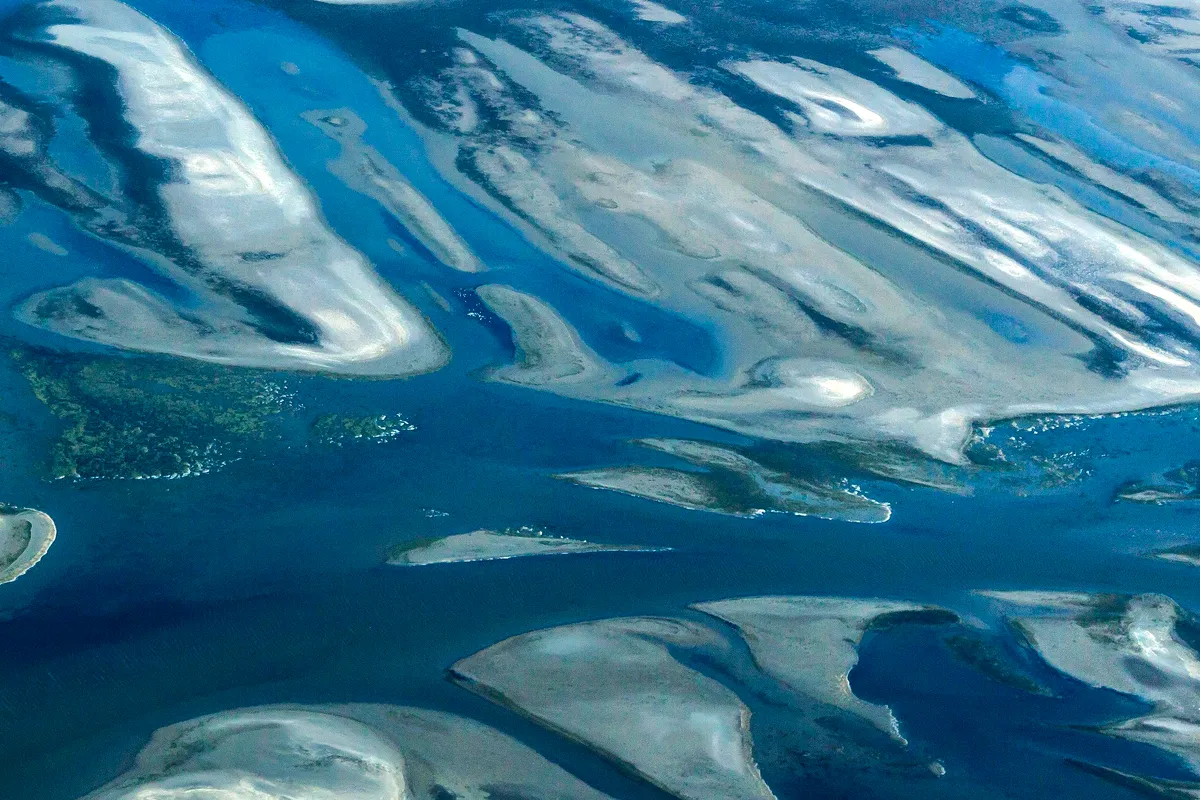
Namibia in one paragraph: the desert meets the Benguela
The Namib is a broad, hyper-arid strip of gravel plains and dunes that runs along Namibia's entire coastline, between roughly 100 and 200 kilometres wide according to Wikipedia. Its weather is driven by the cold, north-flowing Benguela Current, which brings very low rainfall, often 50 millimetres a year or less, frequent dense fog and lower temperatures than the rest of the country. In winter a hot, dry wind called the Bergwind or Oosweer can blow from the interior to the coast and produce sandstorms.
For surfers, that combination means cold water, fog, strong coastal winds and a landscape without much shelter. The Skeleton Coast in the north is a coastal desert where average rainfall is close to zero. The towns are few. Walvis Bay is the third-largest city with 102,704 residents in the 2023 census, and Swakopmund is the fourth-largest with 75,921, both in the Erongo Region. Between and beyond them, the coast is mostly empty.
Skeleton Bay: what it is and who it is for
Skeleton Bay, also called Donkey Bay in some accounts, is a left-hand point break over sand near Walvis Bay. Surf writers describe it as one of the longest tube-riding waves in the world, with rides that run for around a kilometre and, in some reports, much further. It only works on large, long-period swells generated by big southern hemisphere lows, and it can break only once or twice in a season, according to one summary.
That makes it an expert wave in the most literal sense. One account describes a strong current that makes paddling against it pointless, a difficult take-off where the drop is all-important, and the presence of large sharks that feed on the nearby seal colony. Surfers who ride it use short, thick boards that are stronger than normal, because standard boards break easily on the sand bottom. The beach is bleak and windswept.
If you are not already confident in heavy, hollow, fast waves, this is not a wave to try. It is also not a wave to watch casually: the same current and sand shifts that make it special make shore access and rescue difficult. Spectators and photographers should stay well away from the water edge.
Access, permits and the question of guides
I could not find a source that describes a dedicated permit system for Skeleton Bay itself. What the sources do describe is a tangle of national park rules, rough tracks and limited services. Skeleton Coast National Park is split into sections; a transit permit is free but does not allow visits to the northern areas, and any other part of the park requires a special permit that must be obtained in advance from the National Parks office in Windhoek. Sandwich Harbour is part of the Namib-Naukluft Park, requires a permit and is reachable only with a 4WD vehicle, and tours cannot always reach the lagoon when seas are rough or tides are high.
The practical picture from surf writing is that Skeleton Bay is reached by a rough 4x4 track, reportedly about half an hour from Walvis Bay, that there is no direct route, and that a local guide is strongly recommended. The Inertia notes that it is not suited to surfers who want easy beach access. A geomorphology note adds that the bay is moving north-west at roughly ten metres a year, which can change the wave.
Because rules and sandbars change, do not rely on a blog: confirm current requirements with Namibia's National Parks office or a Walvis Bay-based guide before you go, and never drive soft sand without proper recovery equipment.
Cold water, fog and what you need to wear
The Benguela Current makes the water cold all year, and Namibia's coast has frequent fog. Anyone who surfs here in the southern winter should plan for a thick winter wetsuit, gloves, boots and a hood, as with other cold, exposed coasts. I did not find a reliable temperature figure in the sources I used, so check recent sea temperature data before you choose your gear.
Wind is the other major factor. Fresh offshore winds are essential for the best waves at Skeleton Bay, but afternoon winds on the Namibian coast are strong, and a dry Bergwind can bring sand and heat. Pack goggles or sunglasses, a hat, sunscreen and a windproof jacket, and expect your equipment to be sandblasted.
Heating is limited and services are far apart, so carry spare food and plenty of water on any coastal trip. Remember that fog can cut visibility on roads and at sea.
Walvis Bay and Swakopmund as bases
Walvis Bay has a natural deep-water harbour, a lagoon with flamingos and pelicans and the town's main services. South Africa controlled Walvis Bay until 1994, when it was ceded to Namibia. Swakopmund, about half an hour up the coast, is the main resort town, with German-era buildings, adventure sports and a wider choice of accommodation. Most visitors stay in one of these two towns and arrange day trips.
Travellers headed for Skeleton Bay should ask about up-to-date swell forecasts, local accommodation near the wave and transport to the track, and should book with an operator who knows the beach. Local accommodation exists near the wave according to one surf account, though details are thin. Some visitors combine surf with kitesurfing or wingfoiling, which use the same strong winds.
Non-surfers have plenty to do: dune trips, boat trips in the bay and visits to the seal colony. The Atlantic remains cold and the sea mist can linger into the afternoon.
Security, driving and practical rules
The British government advises that muggers often target tourists in Windhoek, that theft from cars is common at service stations and that credit card skimming has occurred at some hotels and lodges. Avoid hailing taxis from the street and avoid township visits at night unless you are with someone who knows the area. Carry photo ID, because police checkpoints may ask for it.
Road safety is the larger concern for surf travellers. Accidents are common on gravel and dirt roads, comprehensive insurance is essential and many hire policies do not cover single-vehicle accidents. During the rainy season from January to April gravel roads deteriorate, and the advice is to keep below 80 kilometres an hour, carry two spare tyres and plenty of water, and avoid driving outside towns at night because of wildlife and livestock.
It is illegal to buy, sell, kill or capture protected wild animals without a licence, which includes the trade in ivory and rhino horn. Namibia is a very safe country compared with many, but the distances are huge and help can be a long way away.
Alternatives if you want a Namibian desert trip
If you are an expert surfer with a full week to spare and a guide, Namibia can be a once-in-a-lifetime pilgrimage. If not, consider whether you actually need Skeleton Bay. The same cold-water, big-swell, uncrowded character can be found much more easily on South Africa's west coast, where Cape Town's reefs and points are easier to reach and have emergency services.
For travellers who want Namibia without the surf commitment, a classic route combines Windhoek, the Namib dunes, Swakopmund and Etosha, with a day or two at the coast for sandboarding, a dolphin cruise or a drive to Sandwich Harbour. You can look at the coast and the line of dunes, watch the weather and decide whether to rent a board.
Either way, do not travel on the assumption that Skeleton Bay will be on. It breaks on specific swell, wind and sand conditions, and for many visitors it never does.
Surf regions of Namibia
Walvis Bay and Skeleton Bay
Walvis Bay is a port town with a lagoon and the nearest services to Skeleton Bay, an expert left-hand point over sand that works only on large winter swells. Access is by 4x4 across soft sand and, in practice, with a guide. The current is strong, large sharks are reported, and the surrounding desert is remote. Sandwich Harbour nearby is a permit-controlled part of the Namib-Naukluft Park.
Known for: Skeleton Bay, Walvis Bay, Sandwich Harbour
Swakopmund and the central coast
Swakopmund is the main resort town on the central coast, about half an hour north of Walvis Bay, with a wide range of accommodation and activities. Surf coverage in the sources I used was thin, so treat any wave here as unverified and ask locally. The area is better known for kitesurfing, adventure sports and dune landscapes than for dependable surf.
Known for: Swakopmund
The Skeleton Coast and the far south
North of Swakopmund the Skeleton Coast is a hyper-arid coastal desert with almost no rainfall and a handful of access points. Any visit beyond a transit requires a special National Parks permit obtained in advance in Windhoek. The far south of the coast is equally remote. There is little reliable information on surf in either area, so they are not places for casual exploration.
Known for: Skeleton Coast
Learning to surf: not in Namibia
Namibia is not a learning destination. The water is cold, fog and strong winds are common, services are few and the only famous wave is an expert-only sand-bottomed barrel with strong currents and large sharks. I did not find a recommended beginner scene in the sources I used, so there is nothing credible to point you to here.
If you want to learn to surf in southern Africa, Muizenberg in Cape Town has gentle waves, many schools and a shark-spotting programme. Durban has warmer water and sheltered beach breaks. Both are far easier to reach and better set up.
Once you are confident in solid reef and point waves, Namibia may be worth revisiting with a guide, a short, strong board and realistic expectations about access, tides and the swell window.
Surfing in Namibia: questions
Is Skeleton Bay suitable for most surfers?
No. It is an expert wave: a fast, hollow left over sand with a strong current, a difficult take-off and large sharks reported. It needs a big, long-period swell and fresh offshore wind.
When does Skeleton Bay work?
It needs large southern hemisphere swells, which arrive mainly in winter, and one summary says it can break only once or twice in a season. Short-period swell does not reach the bay.
Do I need a permit to surf Skeleton Bay?
I could not confirm a dedicated permit for the wave itself. Skeleton Coast National Park and the Namib-Naukluft Park, including Sandwich Harbour, require permits for most areas. Confirm the current rules with the National Parks office or a Walvis Bay guide.
How do I get to Skeleton Bay?
By 4x4 along rough sand tracks from Walvis Bay, usually with a local guide. Accounts say the track takes roughly half an hour, but conditions and rules change.
How cold is the water in Namibia?
It is cold because of the Benguela Current, with fog and strong winds. I did not find a reliable figure, so check recent data and plan for a thick winter wetsuit, boots and gloves.
Is Namibia safe for surf travellers?
Crime is mainly an issue in Windhoek, but the larger risks on a surf trip are road accidents on gravel, remote locations and limited medical help. Carry comprehensive insurance and drive only in daylight outside towns.
Sources & editorial notes
Country context checked against the sources below. Regional summaries are Book & Surf editorial planning suggestions, not forecasts or safety assessments.