Why a mid-Atlantic archipelago works for surfers
The islands sit far out in the Atlantic, so they pick up swell that has travelled a long way from storms in the North Atlantic. The archipelago is split into the windward Barlavento group in the north and the leeward Sotavento group in the south, and the flat, sandy, dry islands of Sal, Boa Vista and Maio are quite different from the rockier and greener islands such as São Vicente and Santiago.
That difference matters for planning. Sal and Boa Vista are the easiest to reach and the most set up for visitors, with direct flights from Europe, hotels and a handful of schools. The other islands have more mountains, more culture and fewer surf services, so they suit people who like to improvise. Almost every wave on the islands is exposed to the trade wind, which means mornings matter and a good forecast tool is worth more than a guidebook.
Cape Verde is also a place where surfing sits alongside kitesurfing, windsurfing and wingfoiling. Wikipedia notes that surfing, windsurfing and kitesurfing have been popular on Sal's southern beaches for roughly 25 years, and in practice the kite crowd is much bigger than the surf crowd. That is good for infrastructure and bad for anyone hoping for a quiet, glassy session in the afternoon.
The surf season, month by month in outline
Sources agree that the better surf runs through the northern winter, roughly November to March, when swells from the north-west and north are most regular. Treat that as a general pattern rather than a promise, because the forecast sites and travel guides do not agree on every detail and the swell window varies from year to year.
Summer is not dead. From about June to September the surf is usually smaller and the beach breaks near Santa Maria become suitable for first lessons, while the reefs at places like Ponta Preta are mostly asleep. Late summer is also the time when low-pressure systems can pass near the islands, and Wikipedia notes that hurricanes have occasionally formed near the archipelago. The rainy season, such as it is, runs mainly from August to October, and most islands receive very little rain in any month.
The wind is the other half of the calendar. The north-east trade blows on most days, strongest through the northern winter and spring according to wind-sports sources, and from December to February sandstorms can disrupt flights, especially to Boa Vista, according to the British Foreign Office. If you are flexible, build a few spare days into the end of the trip rather than the start.
Water temperature and what to wear
Wikipedia gives mean sea temperatures on Sal of about 22 to 26 degrees Celsius over the year, which is cooler than the tropical image suggests but comfortable. In winter many surfers wear a 3/2 full suit or a thin spring suit, and in late summer and early autumn boardshorts and a rash vest are enough.
The larger issue is the wind. Even in warm water, a strong onshore breeze on a wet body feels cold, so bring a light jacket for the beach. The sun is strong all year, with Sal averaging roughly 350 days of sunshine according to Wikipedia, so reef-safe sunscreen and a long-sleeved top will matter more than extra neoprene.
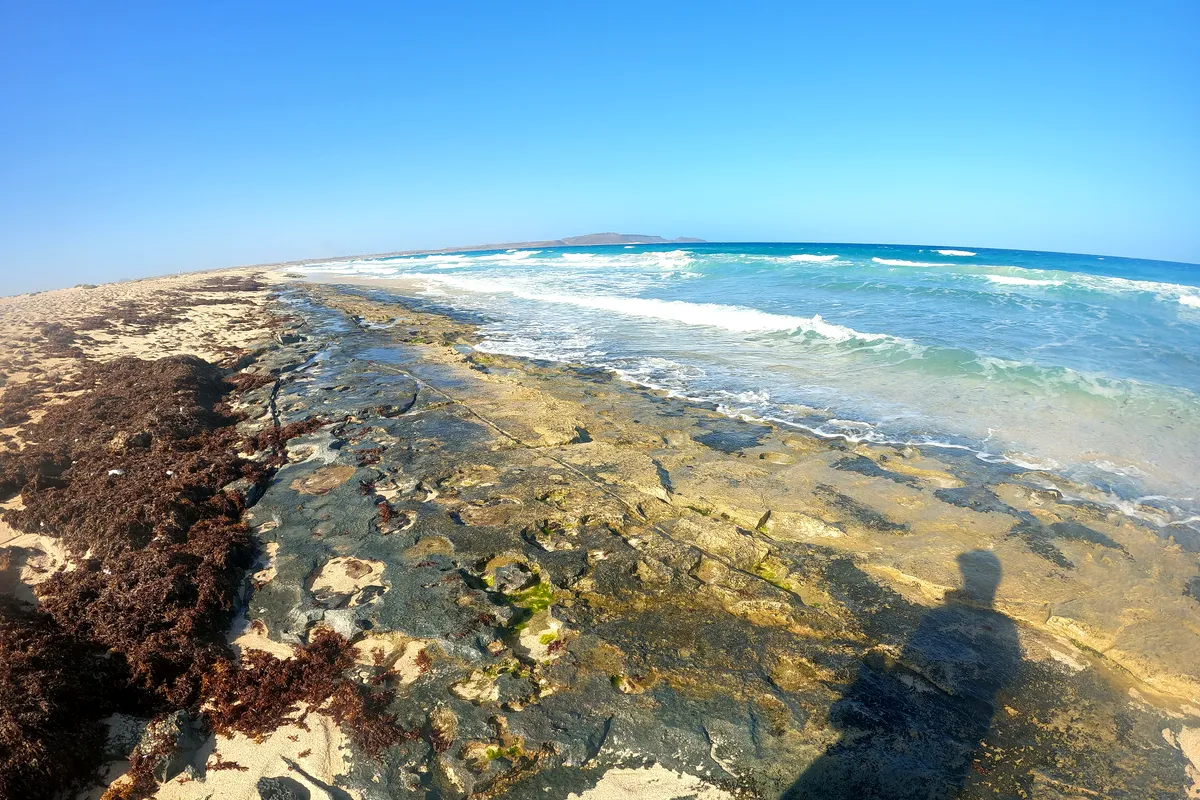
If you will surf reefs, bring booties with a decent sole. Black volcanic rock and urchins are common at the lava reefs, and many of the entries are over uneven stone.
Reading the wind and the tide
At exposed breaks the north-east trade can be onshore or cross-shore depending on the coast you are on. Ponta Preta, for example, is described by the surf-forecast sites as working best with an easterly offshore, which only happens when the trade swings round, so most surfers there pick the first light or a day when the wind drops. Beach breaks on the south of Sal, near Santa Maria, are more sheltered from the north-east and tend to be cleaner on a typical day.
Tide changes the character of the reefs. Several reef breaks are reported to work best around low tide, with sections closing out or backing off at high water, and the sources disagree about the best tide at some spots, so ask a school or a local surfer on the day.
Because conditions vary so much between sources, do not plan around a single guidebook description. Check a live forecast for swell period and wind, then look at the water before you commit, especially on remote stretches where nobody else may be around.
Getting to Cape Verde and moving between islands
Sal's Amílcar Cabral International Airport, near Espargos, is the busiest in the country and the usual entry point for surf travellers. Boa Vista also has an international airport, and Praia on Santiago and Mindelo on São Vicente connect to Lisbon and to other islands. Inter-island flights are the practical way to hop between the main islands, while sea travel is slower and, to Brava and Fogo, often disrupted according to British government advice.
UK passport holders can currently enter for up to 30 days without a visa, but they must complete the EASE online form at least five days before arrival and pay the airport security fee through it; from 1 July 2026 missing registration means paying double at the border. Passports need at least six months of validity. Rules change, so check the official government pages before you book.
The currency is the Cape Verdean escudo, which is indexed to the euro, and Portuguese is the official language, with Cape Verdean Creole spoken by most people. Hire cars, quads and scooters are common on Sal, but quad biking is treated as an extreme sport and may not be covered by travel insurance, medical facilities are basic, and helmets are a legal requirement on scooters and quads.
Safety on the water and on land
The British Foreign Office advises swimming only at beaches with a lifeguard, warns that tides and currents around the islands are very strong and that waves can have a strong undertow. Beach flags are used at supervised beaches: red means do not enter the water, yellow means you can walk in the water but not swim, and green means safe to swim. Surfers are not exempt from those flags, and a red flag on a beginner beach is a reason to get lessons elsewhere or to stay out.
On the reefs the main hazards are shallow rock, urchins, currents along the point and long walks to remote spots. A source on Ponta Preta describes submerged rocks and light crowds, which is a reminder that if you are hurt there, help may be slow. Go with someone, and tell someone where you are.
On land, crime is generally low, but the Foreign Office notes pickpocketing, bag snatching, burglary and muggings, especially in Praia and on Sal and Boa Vista. Use the hotel safe, avoid unlit and isolated areas after dark and use authorised taxis, which are blue and yellow on Sal and Boa Vista. Inter-city buses can be risky because of poor driving.
Turtles, salt and other things to do when it is flat
Sal is named for salt, and the old salt industry left real sights behind. The Pedra de Lume salt pond sits inside a volcanic crater, and the Santa Maria ponds are also notable. Salt production ended in 1984, but the landscapes are still a good flat-day trip.
From July to September loggerhead turtles come ashore to nest. Cape Verde has the largest nesting aggregation of the species in the world according to Wikipedia, and Sal has the second-largest rookery. Night-time turtle walks are run by local conservation groups; keep lights and phones away from nesting beaches and never approach a turtle on your own.
Beyond Sal, São Vicente has Mindelo, a port city with a strong musical tradition, Santiago has the capital Praia and the old town of Cidade Velha, and Fogo has an active volcano that last erupted in 2014. A surf trip that adds a second island by short flight is easier than it looks, as long as you keep the baggage allowance for boards in mind.
Putting a Cape Verde trip together
A simple week suits Sal: fly in, base in or near Santa Maria, take lessons or surf the beach breaks on small days, and walk or drive out to Ponta Preta when a winter swell arrives and you are comfortable on a reef. If you want somewhere less developed, add a short flight to São Vicente or Boa Vista, but expect to rely on local advice and 4WD transfers.
Bring spare fins, a leash and wax, because shops are limited, and check airline board fees and inter-island baggage rules before you pack. Travel insurance matters here: a Global Health Insurance Card is not accepted in Cape Verde, medical facilities are basic away from the main towns and evacuations are expensive.
As with any exposed island, the best habit is to treat the first day as a scouting day. Walk the south coast, watch the sets and talk to the people who surf there every day.
Surf regions of Cape Verde
Sal
Sal is flat, dry and built around Santa Maria in the south, where the beach looks onto surf, kite and windsurf schools. The island's reef at Ponta Preta, around a half-hour walk from town, is the best-known wave and is described as suited to experienced surfers because of submerged rocks. Beach breaks near Santa Maria are used for lessons on smaller days. Winds mainly blow from the north-east, so mornings are usually best.
Known for: Sal, Santa Maria, Ponta Preta
Boa Vista
Boa Vista is a larger, sandier and quieter island than Sal, with long dune-backed beaches near Sal Rei and Rabil. Its surf spots are described as aimed mainly at intermediate and advanced surfers, and the island is a draw for wingfoilers. Services for surfers are thinner than on Sal, and sandstorms between December and February can disrupt flights. It suits people who want empty beaches and are happy to arrange their own transport.
Known for: Sal Rei, Rabil, Praia de Chaves
São Vicente
São Vicente is hillier and more cultural than Sal, with the port of Mindelo at its centre. Calhau, on the north-west, is a black-sand bay that takes full north and north-west swell and is described as reachable only by four-wheel drive. Baía das Gatas, on the north-east, is a gentler bay used as a beginner option. Surf infrastructure is limited, so local advice and a reliable vehicle are essential.
Known for: Calhau, Baía das Gatas, Mindelo
Santiago and the leeward islands
Santiago, the largest island, has the capital Praia and a mountainous interior. The only surf spot named in the sources I checked is the Ponta Brava reef near Tarrafal in the north, so this is a destination for the adventurous rather than the average surf holiday. Fogo and Brava are served by disrupted ferries and have seismic activity, so check with your travel provider before planning to go there.
Known for: Tarrafal, Ponta Brava
Learning to surf in Cape Verde
Sal has the most developed lesson scene in the archipelago. Several schools operate from Santa Maria and offer group and private lessons that usually include a board and wetsuit or rash vest. One operator advertises lessons at Santa Maria beach or at other spots when conditions allow, which is how it should work: a good school moves beach to beach with the wind.
Choose lesson times for the morning if you can, before the trade wind builds. Ask about group size, whether instructors hold a recognised qualification and what happens on days when the beach is under a red flag. Beginners should stay away from reefs such as Ponta Preta, which sources describe as better for experienced surfers.
An alternative for first-timers is to combine surf lessons with a day of stand-up paddle or a kite introduction, since the same schools often offer all three. Prices vary and change, so ask for the current price and what it includes before you book.
Surfing in Cape Verde: questions
When is the best time to surf in Cape Verde?
November to March is the usual swell season, with north and north-west swells arriving most often. Summer has smaller waves that suit learners. Wind is present most of the year, so early sessions are best.
Is Cape Verde good for beginners?
Sal is a sensible beginner base, with schools in Santa Maria and sandy beach breaks on small days. The reefs, including Ponta Preta, are for experienced surfers. Choose a school that checks the beach and flags each day.
Do I need a wetsuit in Cape Verde?
Sea temperature on Sal averages roughly 22 to 26 degrees Celsius over the year. A 3/2 or spring suit is common in winter and boardshorts with a rash vest are enough in late summer. Booties help on lava reef.
Do I need a visa for Cape Verde?
UK passport holders can currently stay up to 30 days without a visa, but must register on the EASE platform at least five days before arrival and pay the airport security fee. Rules vary by nationality and change, so check the official government site before you travel.
Is Cape Verde safe for surf travel?
Crime is generally low, but petty theft and muggings happen, especially in Praia, Sal and Boa Vista. At sea the main risks are strong currents, undertow and shallow reef, so swim only where lifeguards are on duty and take care at remote breaks.
Which island is best for surfing?
Sal is the easiest, with direct flights, schools and a famous reef at Ponta Preta. Boa Vista and São Vicente have more remote waves but fewer services, and need more self-reliance.
Sources & editorial notes
Country context checked against the sources below. Regional summaries are Book & Surf editorial planning suggestions, not forecasts or safety assessments.