What Ghana's surf is, and is not
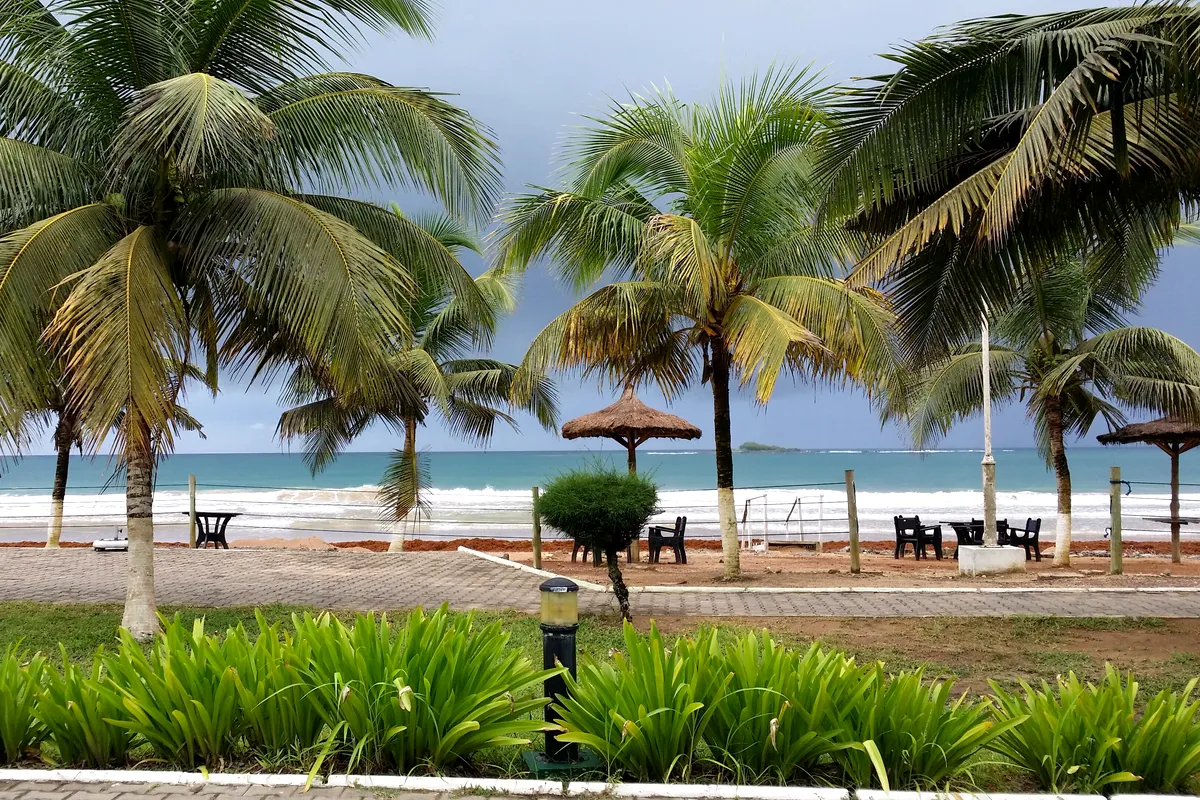
Ghana lies on the Gulf of Guinea with an Atlantic coastline of roughly 560 kilometres. The coast faces south, so it takes South Atlantic swell that has travelled a long way, which usually means smaller, softer waves than West Africa's more exposed western shoulder. Most of what you will ride is a sandy beach break with a few reefs and points, and the water is warm all year, so a wetsuit is rarely needed.
The surf culture is real but young. The Ghana Surfing Association was set up in 2011 to govern and promote the sport, and the best-known annual event is the International Surf Day contest at Kokrobite near Accra. Busua, on the Western Region coast, is usually described as the country's surf centre. Both places suit beginners and improvers, and the local surfers are friendly to visitors who are polite and patient.
If you want powerful reef waves, Ghana is not the place. If you want a warm-water learning trip combined with forts, rainforest and a very different travel experience from the usual surf circuit, it can be rewarding.
Swell, seasons and rain
Season advice for Ghana is less settled than for better-documented countries. Surf-forecast describes Busua as best in spring with a south-south-west swell and northerly offshore wind, while another local beach guide advises avoiding October and November because of strong swell and rip-current risk. Surfnerd suggests a southerly swell is usually best with north-west offshore winds. Those do not fully agree, and I could not verify a clean month-by-month calendar, so treat any single answer as provisional.
Two patterns are safe to rely on. Wikipedia notes that the climate is tropical with wet and dry seasons, and that the south-west is hot and humid. Rain is therefore heavier in some months, which can affect road quality, water clarity near river mouths and flights. Swell in the Gulf of Guinea tends to be long-period and gentle, so even a small forecast can produce surf that surprises beginners with its power at the shorebreak.
For planning, choose a window that suits your own tolerance for rain, ask a local school what the water has been doing and be ready to adjust.
Getting to Ghana and moving along the coast
Accra's Kotoka International Airport is the main gateway, with flights from Europe, the Middle East and other parts of Africa. From Accra, Kokrobite is a short drive west along the coast. Busua is much farther: Wikipedia places it roughly 30 kilometres west of Sekondi-Takoradi, so the journey from Accra usually involves a long day by road, a domestic flight to Takoradi or a combination, followed by a taxi.
English is the official language, and Twi, Fante, Ga, Ewe and Nzema are among the government-sponsored languages. The currency is the cedi. Visa rules and health requirements depend on your passport, and a yellow fever certificate is often needed, so check the embassy and official government pages before you book.
The Foreign Office advises using licensed or pre-booked taxis, and notes that tro-tros and app-based taxis are not centrally licensed. For longer trips outside cities, travel in daylight. That advice adds up to a practical rule: arrange your last leg to Busua in advance, and plan to arrive before dark.
Security and practical limits in Ghana
The British government advises that robbery, burglary and serious assault have become more common since 2021, sometimes with weapons, that street crime is rising in Accra and that kidnapping, including of foreign nationals, has been reported in Accra, Takoradi and Kumasi. Bag theft and impostor drivers have targeted visitors at the airport, so confirm your driver's identity at arrivals.
On the coast, theft is the main beach problem. The same advice says isolated violent crime and sexual assault have occurred in tourist areas, and warns visitors not to go to beaches alone. Leave valuables at your accommodation, carry only what you need for a surf and avoid walking on empty beaches after dark. Road conditions are often poor in rural areas, street lighting is poor or absent and police checkpoints can appear without warning at night, so avoid travelling by road outside main towns after dark.
Legal and cultural rules also matter. Drug possession carries severe penalties, and even small amounts of cannabis can lead to long prison sentences. Photography near military sites or the airport is illegal. Same-sex sexual acts are criminalised, which affects LGBT+ travellers. Dress modestly in towns, carry ID or a copy of your passport photo page and follow local etiquette.
Rip currents and the reality of the Ghanaian sea
Wikipedia describes the beach at Busua as long and sandy with no dangerous currents, but the British Foreign Office warns that swimming is dangerous on the southern coast because of rip tides and undertows, with occasional deaths. These statements are not contradictory so much as a reminder that conditions vary by beach and by day. The sea can be calm on one side of a bay and dangerous on the other.
For surfers the safest approach is local knowledge. Watch where local surfers enter and exit, stay out of channels where water is flowing seaward and be cautious at the shorebreak, where waves can dump onto shallow sand. Do not surf alone at remote beaches, and do not assume there will be lifeguards.
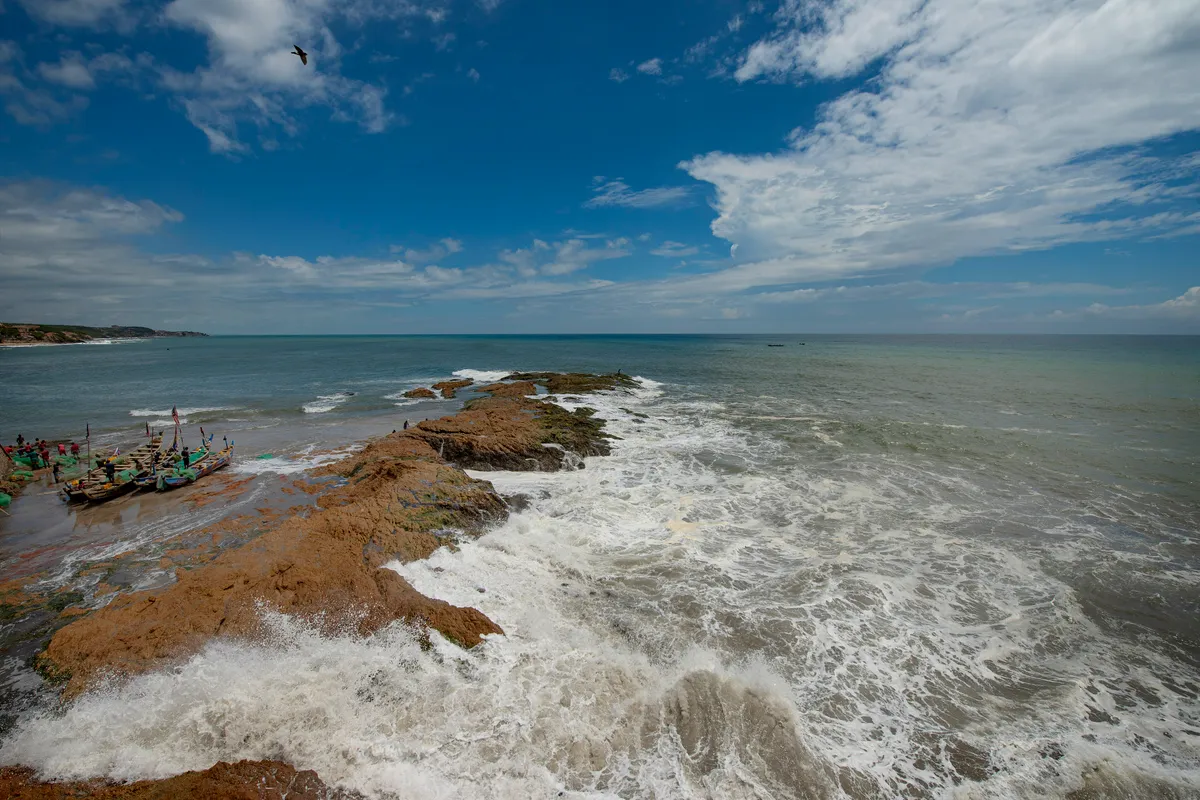
On the reefs and points, expect rock, urchins and strong currents. Reef booties are sensible, and a leash that you trust matters more than usual when the nearest hospital may be an hour or more away.
Forts, rainforest and flat days
The Ghanaian coast is lined with forts and castles built by European traders over several centuries, and they are a major part of any trip. Elmina Castle, begun in 1481, is described as the oldest European building in West Africa, and Cape Coast Castle nearby tells the history of the slave trade; both are serious and sobering visits. Closer to Busua, the fishing village of Dixcove has the old British Fort Metal Cross, and Fort Batenstein is a former Dutch fortress east of Busua. Axim, to the west, has Fort St Anthony, which the Dutch built after capturing the town in 1642.
Kakum National Park, with its canopy walkway, is a day trip from the Cape Coast area. Accra has markets, music venues and food that reward a couple of nights on the way in or out.
Fishing is central to the coast, and you will see canoes launched from the beach each morning. Treat that as working space, stay clear of lines and nets and buy fish from the people who bring it in.
Shaping a realistic Ghana surf trip
The simplest version is a week in Busua with two to four lessons or free surfs, a day at Dixcove and Axim and a stop at Elmina or Cape Coast on the way. If you want Accra, add two nights there and a half-day at Kokrobite.
Bring a good rash vest, high-factor sun protection and a repair kit for boards, because spares and repairs may be hard to find. Carry cash in small notes, though card use is growing in Accra, and keep a copy of your passport photo page. Insurance should cover medical evacuation and your planned activities.
Finally, be honest about expectations. Ghana is a place to get comfortable in the water, meet local surfers and see a part of West Africa that few visitors reach. It is not a place to chase ideal swell on a fixed schedule, and the best trips are the ones that leave space for it.
Surf regions of Ghana
Busua, Axim and the Western Region
Busua is a beach village in the Western Region, roughly 30 kilometres west of Sekondi-Takoradi, with a long sandy bay and the country's densest cluster of surf schools. Beach-break lefts and rights suit learners, and a right-hand point called Black Mamba, a paddle of around 20 minutes from the beach, is the advanced option. Axim, further west, has an exposed beach and reef break and a Dutch fort. Dixcove, a short walk west of Busua, is a working fishing port.
Known for: Busua, Black Mamba, Axim, Dixcove
Accra and the Greater Accra coast
Accra is the capital and largest city, and its coast has beach breaks that local surfers use. Kokrobite, west of the city, is the best-known break, with left and right sand peaks that can suit beginners, and is where the annual International Surf Day contest is held. Labadi Beach is another name in the area. The city has the country's main airport, and the British government warns of rising street crime, so take care with valuables and transport.
Known for: Kokrobite, Labadi, Accra
Cape Coast, Elmina and the Central Region
The Central Region is mainly a history-and-culture stop, with Cape Coast and Elmina Castles, Kakum National Park and busy fishing beaches. Surf is less well documented than in Busua or Accra, so visitors usually pass through between the two rather than basing themselves here. It is a good place to break a long road journey, as long as you arrive before dark.
Known for: Cape Coast, Elmina
Learning to surf in Ghana
Busua is the usual answer. Several schools operate on the beach and offer group lessons of around 90 minutes to two hours with a board and a wetsuit or rash vest included. Beach breaks with left and right peaks make it a good place for first waves, although one surf-forecast site rates its overall quality modestly and notes the presence of rocks.
At Kokrobite, near Accra, local clubs and informal instructors teach on the beach break, which also suits improvers. Whichever place you choose, ask how the school handles rip currents, how many students each instructor takes, whether instructors hold a first-aid qualification and what the plan is when swell is too big.
Non-surfers can enjoy the beach too, but the Foreign Office warns that swimming on the southern coast can be dangerous because of rip tides and undertows, so do not assume that a calm look means safe water.
Surfing in Ghana: questions
Where is the best place to surf in Ghana?
Busua in the Western Region is usually described as the country's surf centre, with schools and sandy beach breaks. Kokrobite near Accra is the other well-known spot and hosts an annual surf day contest.
When is the best time to surf in Ghana?
Sources disagree. One suggests spring for Busua with south-south-west swell, while another advises caution in October and November because of strong swell and rip currents. Ask a local school about current conditions.
Do I need a wetsuit in Ghana?
The Gulf of Guinea is warm, so most people surf in boardshorts and a rash vest. Schools often include a wetsuit, but it is mainly for sun and board rash rather than warmth.
Is Ghana safe for surf travel?
Many visitors have good trips, but the British government warns of rising street crime, kidnapping reports and beach theft, and says not to visit beaches alone. Avoid road travel after dark and use licensed taxis.
Are there strong rip currents in Ghana?
Yes. The Foreign Office says swimming on the southern coast is dangerous because of rip tides and undertows, and local advice varies by beach. Follow local surfers and avoid channels.
How do I get from Accra to Busua?
It is a long road trip, or a domestic flight to Takoradi followed by a taxi. Busua is roughly 30 kilometres west of Sekondi-Takoradi. Arrange transport in advance and avoid travelling after dark.
Sources & editorial notes
Country context checked against the sources below. Regional summaries are Book & Surf editorial planning suggestions, not forecasts or safety assessments.