What kind of surf country is Mozambique?
Mozambique faces the Indian Ocean across the Mozambique Channel, with Madagascar offshore for much of its length. That position shapes the surf: the best swells come from the south-east and east, generated by storms in the southern Indian Ocean, and the reefs and points that face that direction get the cleanest waves. Because the continent bends and Madagascar shelters parts of the coast, some stretches are far less exposed than the south.
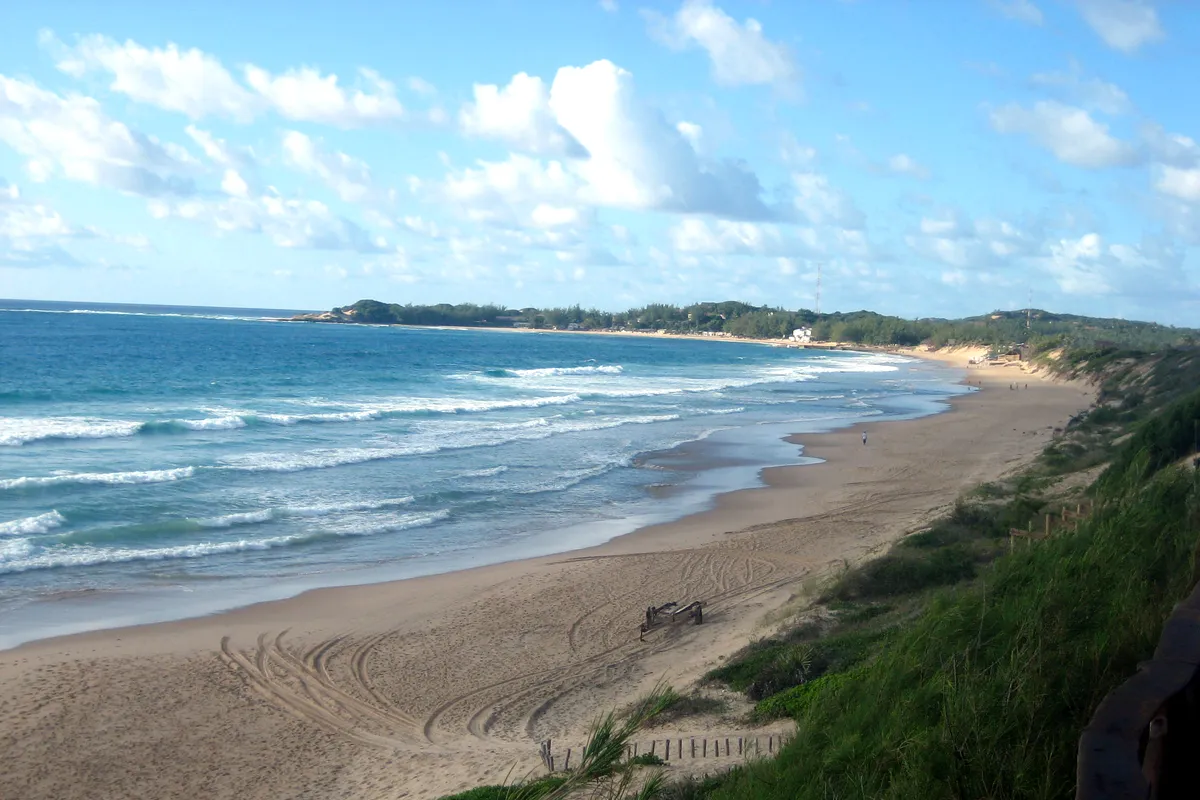
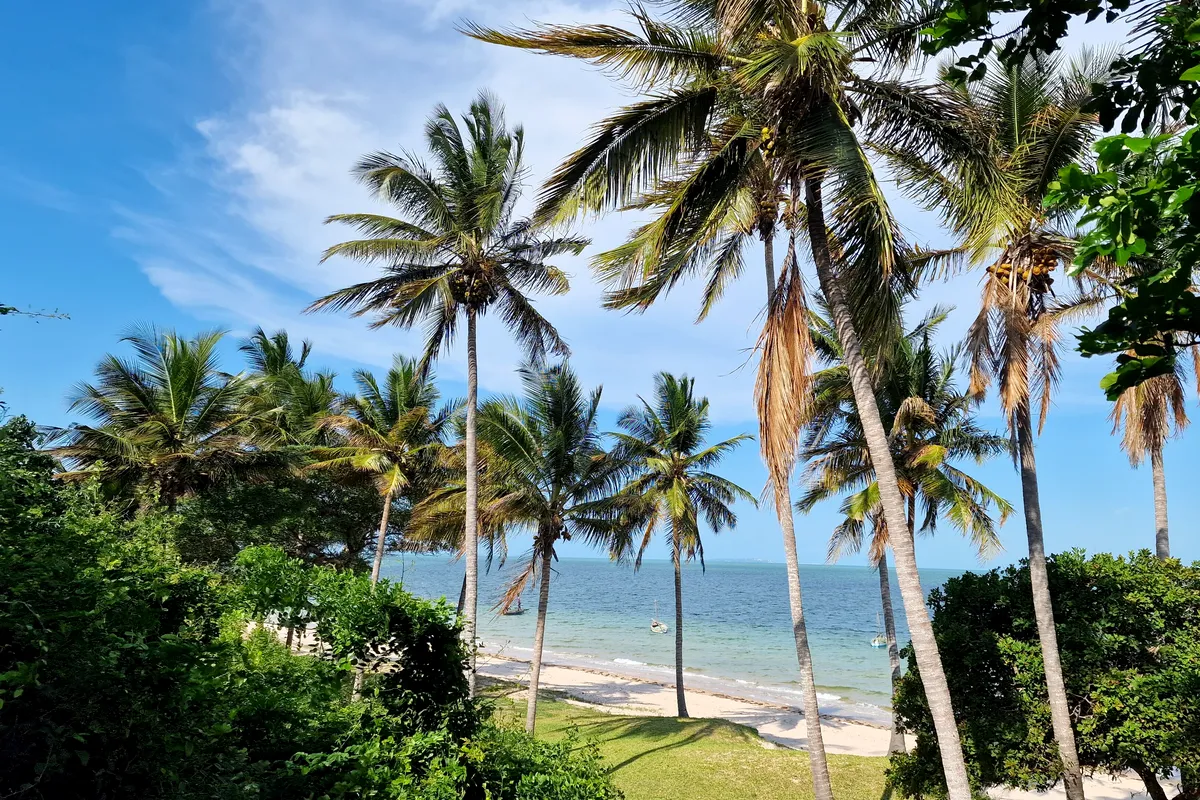
The result is a coast that mixes sandy beach breaks, a few right-hand points and a lot of empty shoreline that nobody has surfed or written about. For visitors the practical picture is smaller than the map suggests. Tofo and the Inhambane coast offer schools, rentals and a handful of reliable waves, Ponta do Ouro has a well-known right-hand point, and almost everything else is exploratory.
That suits some people and not others. If you want a fast route to quality waves with services, South Africa's coast is closer to that model. If you want to combine surf with beaches, marine life and a small-town atmosphere, Mozambique is a very different proposition.
When to go: dry-season swell and cyclone months
Wikipedia describes a tropical climate with a wet season from October to March and a dry season from April to September. Surf sources agree that the dry season is the surf season: waves are more consistent from roughly April to early October, with June and July often named as the peak, when south-east and east swells are most regular and offshore winds are common.
The wet season is humid, rainy and exposed to tropical cyclones. Cyclones Idai and Kenneth struck in the same season in 2019 and Cyclone Freddy hit twice in early 2023, which shows how serious the risk can be. Cyclone swell can be good in principle, but travel disruption, flooding and storm damage are real, and most surf travellers avoid the season.
Temperatures stay mild in the dry months. In Maputo the average runs from about 13 to 24 degrees Celsius in July, and warmer conditions are common further north. Sea temperatures follow the warm Mozambique Current, so many surfers wear boardshorts or a thin top for most of the year and a spring suit on cool mornings in winter.
Getting to Mozambique and moving around
Maputo is the capital and the main international gateway. For the Inhambane coast the quickest route is a flight to Inhambane airport, with services from Johannesburg according to one regional guide. By road, the EN1 highway runs from Maputo to Inhambane in roughly seven to eight hours, and a 4x4 is recommended by local guides. Long-distance buses and minibuses serve the same route, then a short ride covers the last stretch to Tofo.
Ponta do Ouro is reached from the South African side, and the border crossing at Kosi Bay is the usual route for surfers coming from Durban and Johannesburg. Many visitors drive in with a hire car from South Africa, so check the rental company's rules on crossing the border and the right documents.
The currency is the metical, Portuguese is the official language, and regional languages include Tsonga and Makhuwa. Entry requirements and visa rules change; the British government has recently updated its advice on an electronic travel authorisation, so check the latest official guidance for your passport before booking.
Security and logistics limits you should know
The British Foreign Office currently advises against all travel to Cabo Delgado province, except Palma and the area around Pemba and Afungi, where it advises against all but essential travel. It also advises against all travel to certain districts of Nampula and Niassa provinces. The northern insurgency that began in 2017 has displaced many people. None of the surf-travel areas in this guide are in those places, but travel insurance can be invalidated if you travel against government advice, so read the current advice before you plan any northern trip.
Crime is more common in the cities and tourist areas than in small villages, and the same advice says street crime is rising and sometimes involves knives or firearms. Avoid walking alone at night, do not display cash, jewellery or phones and use bank ATMs rather than those on the street.
Police checkpoints are common. Carry your original passport, because copies and photos are not accepted, and do not hand it to anyone who is not a clear official. Some visitors report harassment and bribe requests. Beaches are not policed and drinking alcohol on public beaches is illegal. In Inhambane province, landmines may remain in remote areas away from main routes, so get local advice before you walk or drive off the main tracks.
Driving, roads and daylight rules
The main road, the EN1, is usable but long, and other roads are often dirt or sand. The Foreign Office advises travelling outside major cities only in daylight, on main roads, and in convoy in rural areas, with doors locked and windows closed. Fuel supply is unreliable, so fill up when you can and carry water.
A 4x4 is not a luxury on the beach tracks around Tofo and Guinjata, where soft sand traps ordinary cars. If you rent, ask the company about breakdown cover and what to do if a vehicle sticks in sand at high tide. Carry two reflective triangles and a reflective vest, which the official advice recommends.
When you drive after surf, try to arrive before dark. Poorly lit roads, pedestrians and animals make night driving the main avoidable risk on the trip.
Marine life, reefs and ocean safety
Mozambique's coast is a major destination for marine life. Whale sharks are often seen around Tofo from May to July according to one surf guide, and humpback whales pass along the coast in the southern winter. That overlap with the surf season is one of the reasons for the area's popularity, but it also means busy water. Keep your distance from animals and use licensed operators for any boat trips.
The surf itself carries ordinary hazards. Beach breaks can close out and produce strong rips, points have rock and shallow reef, and the tide moves a lot of water in channels. Sharks are present in warm Indian Ocean water. They are a low-probability risk, but follow local advice, avoid surfing at dawn or dusk near river mouths or after heavy rain, and do not surf alone at remote spots.
Medical care is limited outside Maputo and a few towns. Take malaria advice from a travel clinic before you go, carry insect repellent and have insurance that covers medical evacuation.
A plan for ten days
A simple plan is to fly into Johannesburg or Maputo and base on the Inhambane coast for most of the trip, using Tofo as the town and travelling out to Guinjata Bay and other points when the swell and wind suit. Allow a few spare days for sand roads and flat spells and use them for snorkelling, a visit to Inhambane town or a day on the beaches.
If you want to combine Mozambique with South Africa, you can start in Durban and drive to Ponta do Ouro, then continue north by road or by flight. Driving the whole length of the coast is a longer expedition with real logistics, and most visitors do not attempt it.
Always treat Mozambique as a place where flexibility is part of the trip. A late bus, a missing fuel delivery or a closed road is normal, so build slack into the schedule.
Surf regions of Mozambique
Tofo and the Inhambane coast
Tofo is a small beach town on a peninsula in Inhambane province, a short drive from Inhambane city, with a mix of lodges, dive centres and surf schools. The beach break at Tofo is the main learning wave, and Tofinho, a right-hand reef and point at the southern end, is the intermediate option when conditions line up. Further along the coast, Guinjata Bay and Jangamo have point and beach waves reached by sand tracks.
Known for: Tofo, Tofinho, Barra, Guinjata Bay, Jangamo
Ponta do Ouro and the far south
Ponta do Ouro sits close to the South African border and is the best-known point break in the country, with right-hand waves on south-east swell. It draws a regular flow of surfers from Durban and Johannesburg. Ponta Malongane, a short distance away, is quieter and has a reef break that works with south-easterly winds. Sandy tracks and border formalities are the main logistical limits.
Known for: Ponta do Ouro, Ponta Malongane
The north and the rest of the coast
Beyond the south, there are long stretches of unsurveyed coast, and some are unsafe. The British government advises against all travel to most of Cabo Delgado and to certain districts of Nampula and Niassa, so exploratory surf trips in the far north are not sensible at present. Further south, places such as Vilankulo and Xai-Xai have beach tourism but little documented surf, so treat any wave there as unverified until you have local advice.
Known for: Vilankulo, Xai-Xai, Pemba
Learning to surf in Mozambique
Tofo is the practical place to learn. The beach break has left and right peaks that run at 2 to 4 feet on many days in the dry season, and a regional guide calls it good beginner territory, with most local schools teaching there. The bottom is sand, but closeouts are common, so a good instructor will pick peaks that are breaking cleanly.
Guinjata Bay, a short drive away, has a sandy bottom and a more sheltered feel according to surf sources, and it can suit beginners and improvers when the wind is right. Barra, on the northern end of the Tofo peninsula, needs a big southerly swell to work, so schools sometimes use it when the main beach is too large.
When you book lessons, ask how far the school is from the beach, whether wetsuits or rash vests are provided, how big the groups are and what rescue equipment is on the beach. Because beaches are not policed, you cannot assume lifeguard cover.
Surfing in Mozambique: questions
When is the best time to surf in Mozambique?
The dry season from about April to September is best, with June and July often named as the peak. The wet season from October to March brings humidity, rain and cyclone risk.
Is Mozambique safe for surf travellers?
The main surf areas are in the south and away from the Cabo Delgado conflict, but street crime, police checkpoints, rough roads and unpoliced beaches all need care. Read the current government advice before booking and carry your original passport.
Where are the best waves in Mozambique?
Ponta do Ouro has the best-known point break, and the Inhambane coast around Tofo has beach breaks and reef points. Beyond those, most of the coast is little surfed and unverified.
Do I need a 4x4 in Mozambique?
For the sand tracks around Tofo, Guinjata Bay and many of the south coast beaches a 4x4 is strongly recommended. On the Maputo to Inhambane road a standard car can manage in good conditions, but allow for long distances and poor surfaces.
Can I combine Mozambique with South Africa?
Yes. Many surfers cross from Durban to Ponta do Ouro, and flights connect Johannesburg to Inhambane. Check car rental rules for border crossings and the entry rules for your passport.
Do I need malaria tablets?
Malaria is present in much of Mozambique. Ask a travel clinic for current advice several weeks before departure, and use repellent and bed nets.
Sources & editorial notes
Country context checked against the sources below. Regional summaries are Book & Surf editorial planning suggestions, not forecasts or safety assessments.