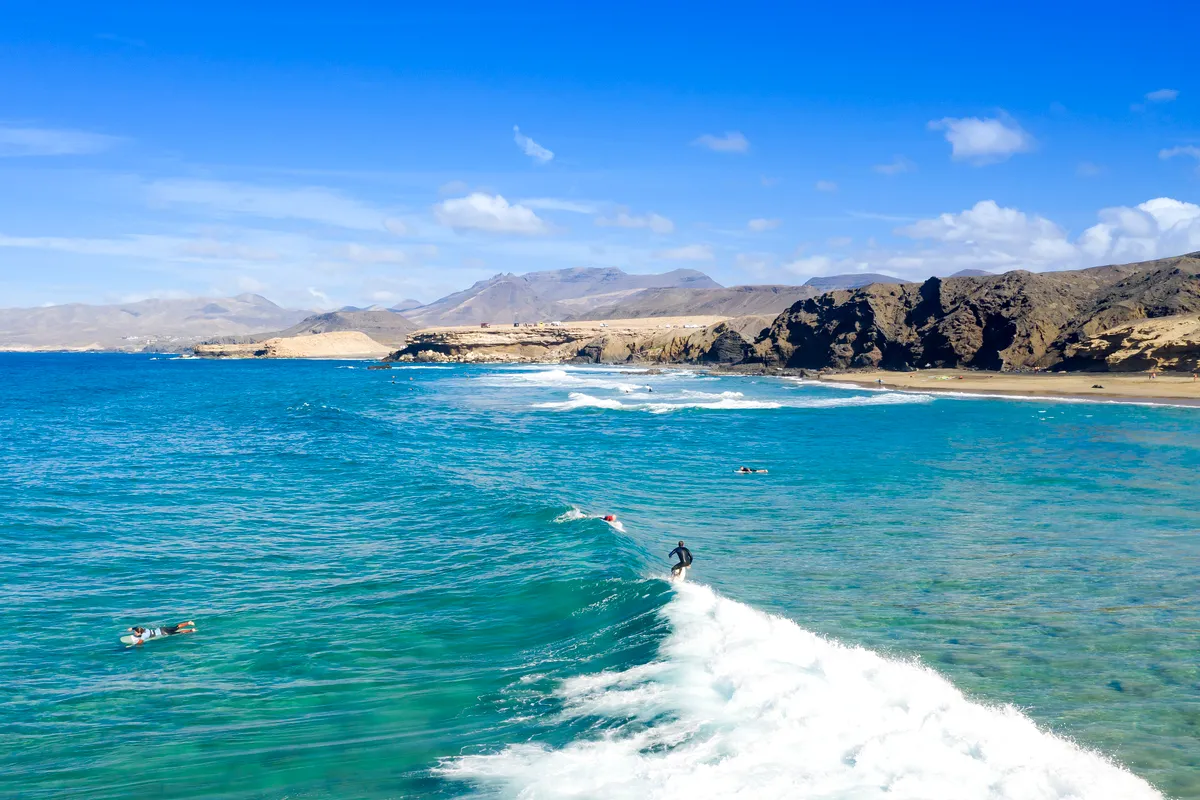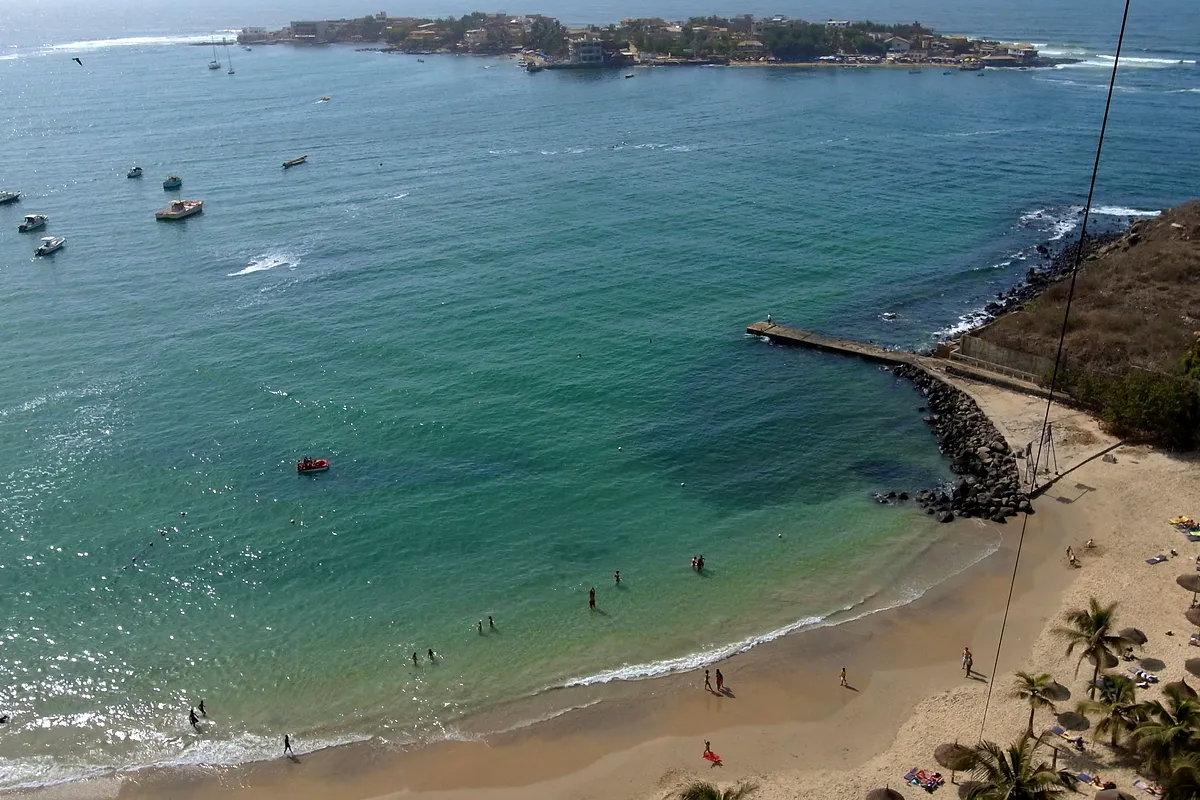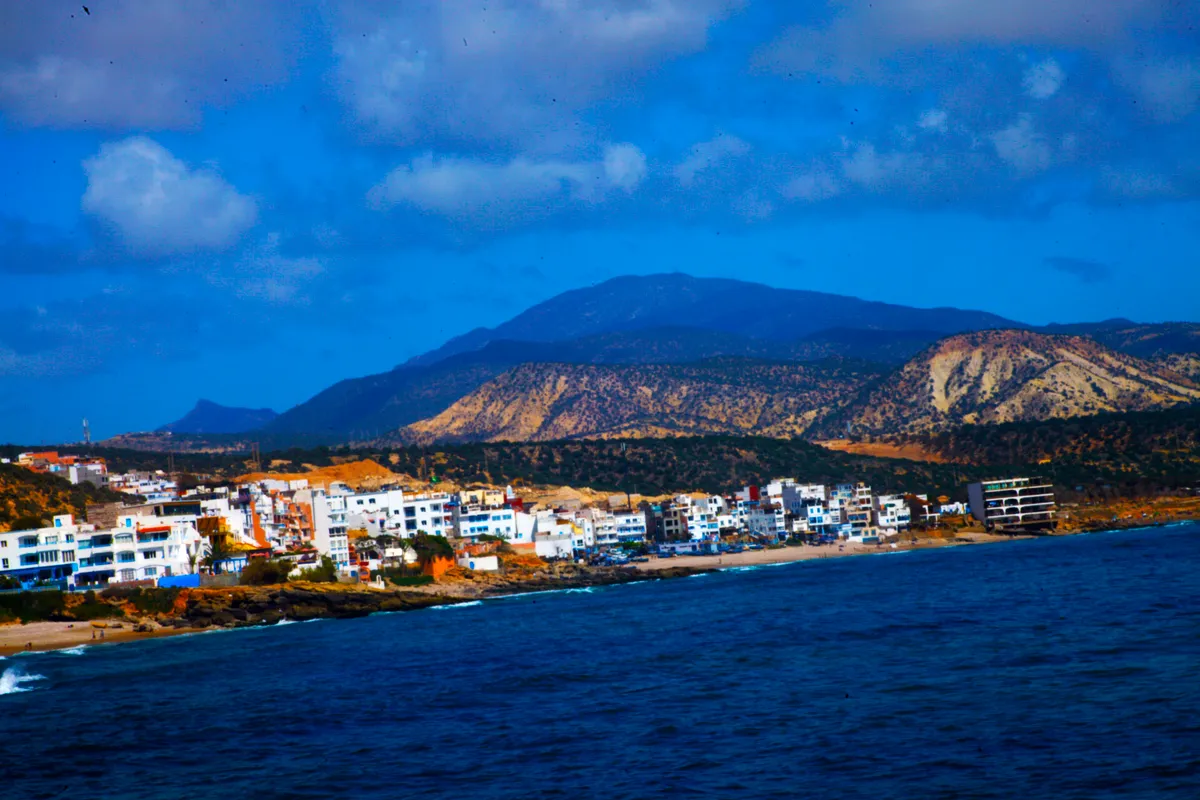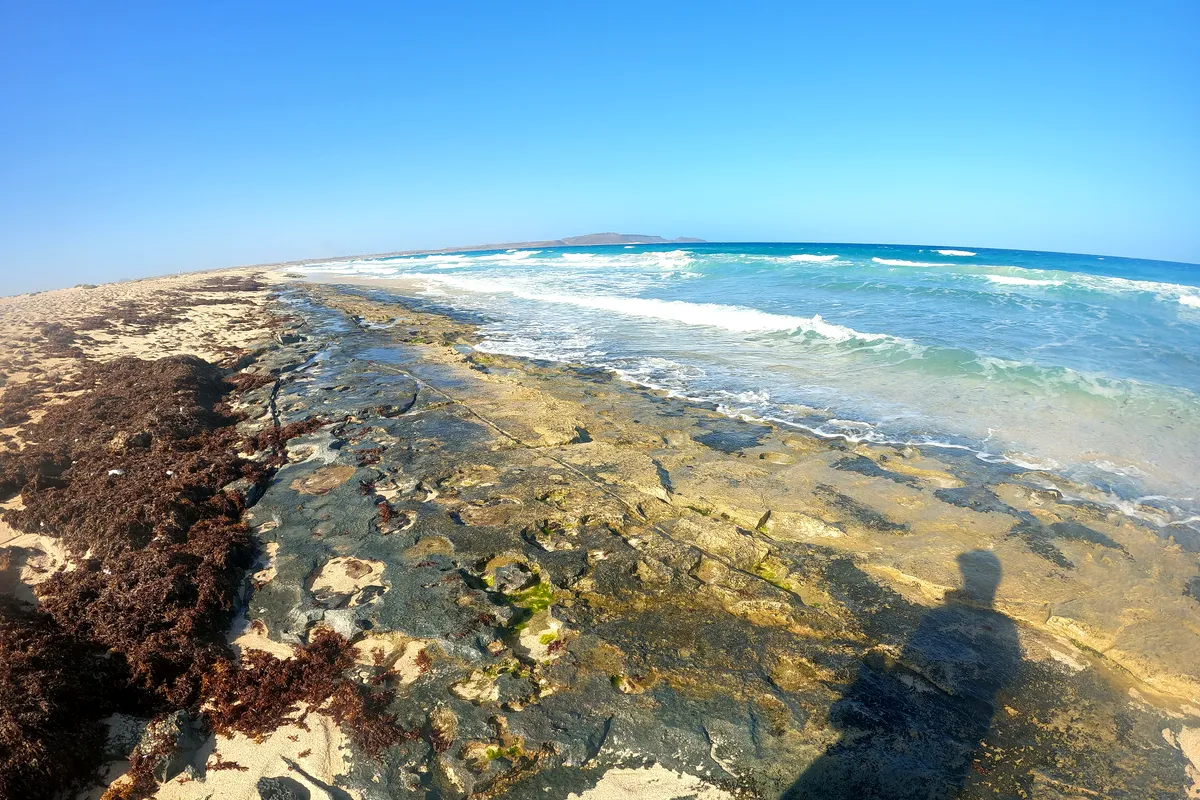
The breaks
Recognised, publicly known surf spots around Sal. Suitability depends on the day's swell, wind and tide, so treat the level as a guide, not a guarantee.
| Break | Type | Best for | Notes |
|---|---|---|---|
| Santa Maria beach | Beach break | Beginner–Intermediate | The main teaching beach, with sandy-bottomed waves on small days and strong currents when swell rises. Surf only where lifeguards are on duty. |
| Ponta Preta | Reef/point break | Advanced | A half-hour walk from town, best on north-west swell around low tide. Descriptions of the main direction differ, with submerged rocks and light crowds. |
| Palmeira | Reef break | Intermediate–Advanced | Listed among Sal's reef spots on forecast sites. Detailed descriptions are thin, so ask locally about access, tide and hazards. |
| Ponta do Sino | Reef break | Intermediate–Advanced | Another listed reef on the island, with little published detail. Treat as an exploratory wave and go with a local. |
| Kite Beach, Santa Maria | Wind-sport beach | Beginner | The island's kite and windsurf area on the south coast. Useful for non-surfers in the group, but unsuitable for surfing when kites are flying. |
Sal surf climate, measured
Ten years of ocean model data for the open water off this coast: what the swell usually looks like before it reaches the beach. Shelter, sandbars and reefs change what you actually surf, so read this next to the month notes below.
| Month | Swell | Period | From | Wind | Water | Wetsuit | Days over 2.5 m |
|---|---|---|---|---|---|---|---|
| Jan | 1.8 m | 11 s | N | 29 km/h NE | 23°C | Rash vest or 1 mm top | 13% |
| Feb | 1.9 m | 10 s | NE | 31 km/h NE | 22°C | Rash vest or 1 mm top | 15% |
| Mar | 2.0 m | 9 s | N | 31 km/h NE | 22°C | Rash vest or 1 mm top | 13% |
| Apr | 1.8 m | 11 s | N | 29 km/h NE | 22°C | Rash vest or 1 mm top | 3% |
| May | 1.5 m | 8 s | N | 28 km/h NE | 23°C | Rash vest or 1 mm top | 0% |
| Jun | 1.4 m | 8 s | NE | 25 km/h NE | 23°C | Rash vest or 1 mm top | 0% |
| Jul | 1.3 m | 8 s | NE | 18 km/h NE | 24°C | Rash vest or 1 mm top | 0% |
| Aug | 1.3 m | 8 s | NE | 18 km/h N | 26°C | Boardshorts | 0% |
| Sep | 1.4 m | 8 s | NE | 22 km/h NE | 27°C | Boardshorts | 0% |
| Oct | 1.5 m | 11 s | N | 25 km/h NE | 27°C | Boardshorts | 3% |
| Nov | 1.7 m | 11 s | N | 25 km/h NE | 26°C | Boardshorts | 5% |
| Dec | 2.0 m | 11 s | N | 29 km/h NE | 24°C | Rash vest or 1 mm top | 15% |
Median values from ERA5 at a sea point near Sal (16.5°N, 23°W), sampled 4 days a month at 12:00 UTC, 2015-2024. Highlighted months are our suggested planning window. Not a forecast or a safety assessment. How we use this data.
Book a surf trip to Sal
Everything we can link you to for this trip, grouped by what you need. Before you pay a camp or school, read who holds your money, and check that your insurance covers surfing.
Where to stay
Search near the breaks. Filter for surf hostels, apartments or hotels once you can see the map.
Surf lessons and activities
Listings change by season, so check what the operator includes and who coaches.
Flights
Add your dates and check the board fee on every leg before you pay.
Car hire
Ask about roof racks and whether the insurance covers boards on the roof.
Airport transfer
Tell the driver you have a board and its length when you book.
Mobile data
Download a forecast app and offline maps before you land.
Flight delay claims
If a delay eats your first surf day, check whether you can claim.
Luggage storage
Useful between check-out and a late flight. Check the size limit before dropping a board.
Links marked as partner links may earn us commission at no cost to you; the rest earn us nothing. We have not checked live availability or price, and the seller's terms apply. How we handle this.
Cheapest months to fly to Sal
Lowest return fare to SID that Aviasales users found recently, in US dollars. Treat these as a guide to which months are cheaper, not as prices you can book today.
| From | Dec 26 | Jan 27 | Mar 27 |
|---|---|---|---|
| London | $201 | $272 | – |
| Frankfurt | $1096 | – | $304 |
Prices seen by 1 November 2026. Travelpayouts Data API. Board fees are extra on most airlines: see our surfboard baggage guide.
A salt island with a tourist town on the south tip
Sal lies about 560 kilometres off the west coast of Africa and covers roughly 220 square kilometres, with a length of about 30 kilometres and a width of about 12. Its highest point, Monte Grande, is only 406 metres. The name is Portuguese for salt, and the island was first called Chã, meaning flat, before two large salt ponds were found.
Santa Maria, founded in the south in 1830, is now the main tourist town, and tourism has replaced salt and fishing as the main source of income. The island had about 39,700 residents in 2019, and its airport near Espargos is the busiest in Cape Verde. That makes Sal the usual first stop for visitors, with direct flights from several European cities and a compact layout.
The landscape is stark. Beaches are pale and long, the interior is volcanic and dry, and almost nothing grows without irrigation. Wikipedia gives the island roughly 350 days of sunshine a year and about 75 millimetres of annual rain, so planning around weather is mostly about wind and swell rather than rain.
The trade wind: friend and enemy
Winds on Sal come mainly from the north-east and blow on most days. That is why kiteboarding is possible year-round and why Wikipedia notes that surfing, windsurfing and kitesurfing have been popular on the southern beaches for about 25 years. For surfers the wind is both a tool and a constraint.
The southern beaches near Santa Maria are partly sheltered, so beach breaks there can be cleaner than the exposed north coast. Ponta Preta, on the other hand, is described by Surf-Forecast as working best with an easterly offshore, which only happens when the trade eases or swings, so surf there often means choosing your day.
The practical rhythm is to go early, finish by late morning and spend afternoons on land or on a kite board. Visitors who arrive expecting glassy conditions all day will be disappointed, and those who work with the wind usually have a good time.
Santa Maria beach: first waves
Santa Maria's main beach is where most lessons happen. It is a sandy beach break, and sources describe it as suiting beginners and surf schools. On small days the waves are gentle and the water is shallow enough for easy standing, and a school will move along the beach to find the best peak.
The beach is also the island's recreation hub, with a pier, kite and windsurf schools to one side and sun loungers to the other. The sea can look benign but the British government warns that tides and currents around Cape Verde are very strong and that waves can have a strong undertow, so swim and surf only where lifeguards are on duty and heed the flags.
Beach flags are used at supervised beaches: red means do not go into the water, yellow means you can walk in the water but not swim, and green means safe to swim. If you are renting a board and going alone, treat red-flag days as a reason to stay on the sand.
Ponta Preta: the reef everyone talks about
Ponta Preta is a reef break about a half-hour walk from Santa Maria, and it is the best-known wave on the island. Accounts differ about its details. One guide describes a reef and point break with rights and lefts and a better right, working around low tide, while another calls it a left-and-right reef over boulders and a third describes the main wave as a long right-hander. Most agree that north-west swell is ideal and that it suits experienced surfers.
Hazards are real. Sources mention submerged rocks, usually light crowds and a remote feel, which means help may be slow if something goes wrong. One guide gives a usable swell range of about 1.2 to 4.6 metres, and reports of wave size range from about 3 metres to over 4 metres on big north-west swells. Treat all of that as indicative and check a live forecast.
If you want to surf it, go with someone, tell your accommodation where you are, wear reef booties and scout from the rocks first. If you are not already comfortable on lava reef, Santa Maria's beach is a better place to spend your time.
Other reefs and the kite beaches
Surfnerd lists Palmeira and Ponta do Sino alongside Ponta Preta as reef spots on Sal, and describes the island as having the widest spread of surf in the archipelago. I could not verify detailed descriptions of those other breaks, so treat them as places to ask about locally rather than as established guides.
Kite Beach, on the south coast near Santa Maria, is where wind-sport schools operate, with private kitesurf lessons advertised there. It is not a place to surf on a windy day, since kite lines and fast-moving kiters are a hazard, but it is useful context for understanding how the island works. Kites rule the afternoons.
If you are travelling with a mixed group, this is an advantage. Non-surfers can learn to kite, windsurf or paddle while surfers go early, and everyone meets for lunch.
Getting to Sal and moving between islands
Amílcar Cabral International Airport, near Espargos, was begun by Italy in 1939 and finished by the Portuguese in 1949, and is the busiest airport in the country. Santa Maria is a short transfer by road, and authorised taxis on Sal are blue and yellow. Intercity buses can be risky because of poor driving.
Entry rules matter. UK passport holders can currently enter for up to 30 days without a visa, but must complete the EASE online form at least five days before arrival and pay the airport security fee; from 1 July 2026 missing registration means paying double at the border. Passports need at least six months of validity, and requirements for other nationalities differ, so check an official source.
If you want to add another island, inter-island flights are the practical choice. Sea travel to Brava and Fogo is often disrupted, and sandstorms between December and February can disrupt flights, especially to Boa Vista.
Turtles, salt pans and a flat-day list
From July to September, loggerhead turtles hatch on Sal. Cape Verde has the world's largest nesting aggregation of the species, and Sal has the second-largest rookery. Join an organised turtle watch if you are there in the season, and stay away from nesting beaches at night unless you are with a guide.
The Pedra de Lume salt pond sits inside a crater and is a popular trip, and the Santa Maria ponds are also notable. Salt production ended in 1984, but the landscape is still worth seeing. Santa Maria itself has a lively evening scene with live music, and there are boat trips, dive centres and desert-style quad tours inland.
Quad biking is treated as an extreme sport and may not be covered by travel insurance, medical facilities on the island are basic and evacuation after an accident is likely, so check your policy and wear a helmet, which is legally required.
Staying safe and sensible on Sal
Crime on Sal is generally low, but the Foreign Office notes pickpocketing, bag snatching, burglary and muggings, especially in Praia and on Sal and Boa Vista. Use the hotel safe, keep belongings in sight, avoid unlit or isolated areas after dark and keep doors and windows locked.
On the water, the dangers are rips, undertow, reef and the lack of lifeguards at remote spots. TripBase warns that at remote spots there is no lifeguard and the rip currents are strong. A Global Health Insurance Card is not accepted in Cape Verde, so you need private insurance that covers medical care and, ideally, evacuation.
Pack a repair kit, spare leash and fins, because shops are small and stock varies. Take your own sunscreen and carry plenty of water on long walks to the reefs.
Sal surf season month by month
A broad planning picture, not a forecast. Swell, wind and water temperature vary from year to year.
| January | Prime winter swell from the north and north-west, with strong trade wind. Ponta Preta can work, and mornings are the best window. |
|---|---|
| February | Reliable swell and steady wind. Sandstorms from December to February can disrupt flights, so allow slack on arrival and departure days. |
| March | Late winter swell remains available. Water is still cool by the island's standards and crowds on the beach are moderate. |
| April | Swell becomes less regular. Beach breaks near Santa Maria are fine for lessons, and the reef is quieter than in winter. |
| May | Smaller waves and a warming sea. A good month for beginners and for travellers who prefer lower prices and fewer visitors. |
| June | Small surf on most days, strong sun and a steady trade wind. Early lessons at Santa Maria are the best plan. |
| July | Summer, with small waves and the start of turtle hatching. The rainy season begins to approach, though rainfall remains low. |
| August | Warm water, small surf and turtle hatchlings on the beaches. The sea temperature approaches the top of its 22 to 26 degree range. |
| September | Warmest sea, occasional rain and a small chance of tropical weather in the region. Surf is small, and turtle watching continues. |
| October | The rainy season fades and the first larger swells can arrive late in the month. Check forecasts before committing to reef sessions. |
| November | The start of the winter swell season. Ponta Preta can begin to work, and tourist numbers are moderate before the holidays. |
| December | Regular swell, strong wind and busy accommodation over the holiday period. Book early, and allow slack for possible sandstorm delays. |
Learning to surf in Santa Maria
Sal has the most developed lesson scene in Cape Verde. A number of schools and instructors operate from Santa Maria, with lessons commonly priced by the hour or half-day and typically including a board and wetsuit or rash vest. One local operator advertises sessions at Santa Maria beach or other locations if conditions allow, which is how it should work.
Book the earliest slot available, before the trade wind builds, and ask what the school does when the flag is red or the swell is small. A lesson can be turned into a stand-up paddle or theory session if the sea is unsafe.
If you already surf, the same schools can often take you to the reef spots, but check the instructor's local experience, the group size and the plan if something goes wrong. Ponta Preta is not a learner wave, and most of the island's reefs are best approached with a local.
Comparing options across the country? Read our guide to surfing in Cape Verde.
Seasonal notes on this page describe typical patterns, not the conditions on a given day. Use the local forecast, lifeguard advice and a qualified instructor for water-safety decisions, and get a written breakdown of what any surf package includes before paying.
Sal surf trip questions
Is Sal good for surfing?
It is a modest surf destination with a famous reef at Ponta Preta and sheltered beach breaks near Santa Maria. The wind is constant, so mornings are best, and the main swell season is roughly November to March.
Is Sal good for beginners?
Yes at Santa Maria beach, with schools and sandy-bottomed waves on small days. The reefs are for experienced surfers, and currents can be strong, so follow the flags.
What is the best time of year to surf Sal?
November to March for swell. Summer is smaller and suits lessons, but turtle nesting and warm water are also reasons to visit then.
Do I need a visa for Sal?
UK passport holders can currently stay up to 30 days without a visa but must register on the EASE platform at least five days before arrival and pay the airport security fee. Other nationalities should check official rules.
How far is Santa Maria from the airport?
It is a short road transfer from Amílcar Cabral International Airport near Espargos. Use an authorised taxi or a pre-booked transfer.
Can I combine Sal with another island?
Yes, by inter-island flight. Boa Vista is nearby, São Vicente has Mindelo and surf at Calhau, and each has fewer services than Sal. Sandstorms from December to February can disrupt flights.
Sources & editorial notes
Destination context checked against the sources below. Base-selection and itinerary suggestions are Book & Surf editorial recommendations. Seasonal windows are broad planning suggestions, not measured forecasts or guarantees.
- Wikipedia: Sal, Cape Verde ↗
- UK Government: Cape Verde safety and security ↗
- UK Government: Cape Verde entry requirements ↗
- Surf-Forecast: Ponta Preta ↗
- Surfnerd: Cabo Verde surf reports ↗
We do not claim to have personally surfed every break. Read our editorial standards.