How to plan your first surf trip
Choosing the right place, school and season for your first surf holiday, so you spend more time riding waves and less time guessing.
Start with the session you need
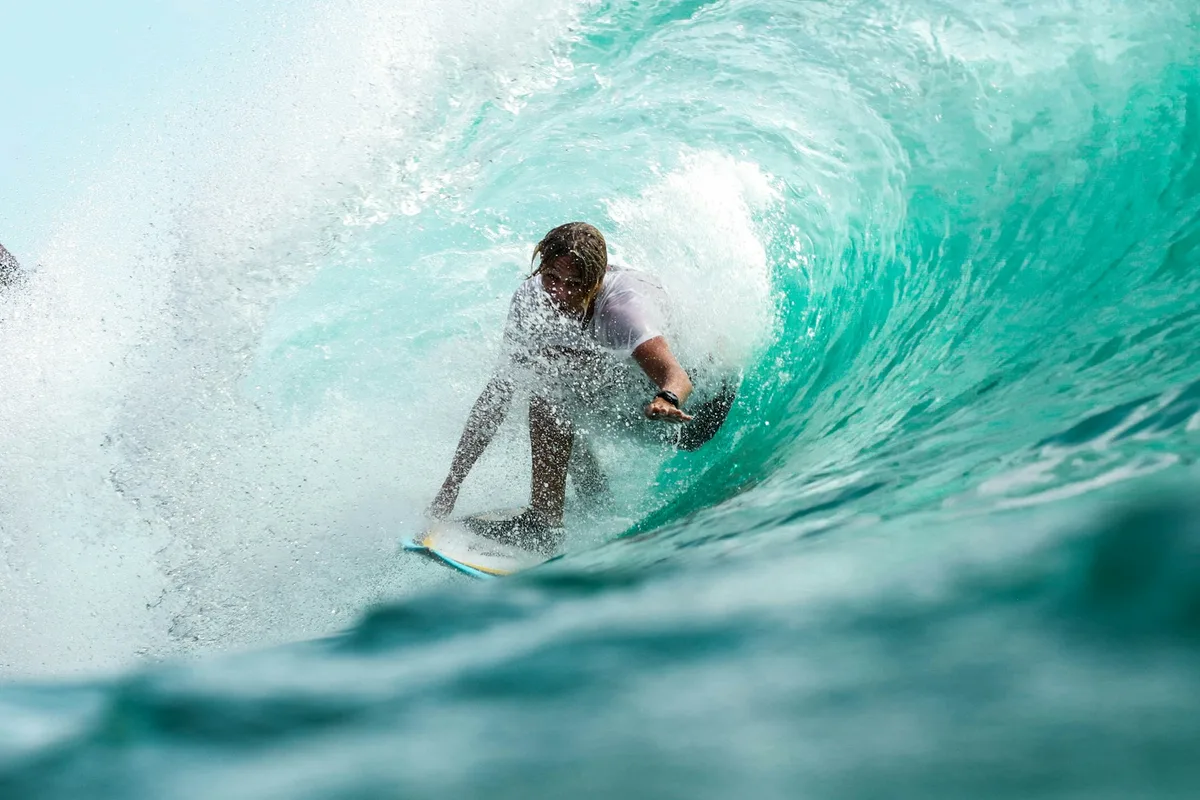
A beautiful photograph can tell you where you want to go. It cannot tell you whether the wave is right for you. Before choosing a destination, be honest about what you can do without help: paddle out, control the board, catch an unbroken wave, turn and get safely back to shore. If those are still learning goals, build your trip around instruction and gentle waves rather than a famous break.
The world's best-known surf spots are often powerful reef or point breaks for experienced surfers. A first surf trip is far more enjoyable at a destination with soft, sandy beaches, consistent small waves and plenty of qualified surf schools. You can always visit the famous breaks to watch, and come back to surf them once your skills have caught up.
Choose a beginner-friendly destination and season
Good first-trip destinations share a few qualities: gentle, sandy beach breaks, a choice of beaches facing different directions so that schools can find sheltered waves, established surf schools and camps, and easy travel logistics. Timing is just as important. Many surf destinations are gentle in one season and powerful in another.
Some reliable combinations for beginners include Peniche or the Algarve in Portugal from late spring to autumn, the Canary Islands in winter, Taghazout in Morocco from autumn to spring, Weligama in Sri Lanka from December to March, Canggu in Bali during the dry season, and Tamarindo or Nosara in Costa Rica during the dry season. Read the destination guide for your dates, and look at the month-by-month section to see what to expect.
Choose the school before the room
On a first surf trip, your surf school matters more than your accommodation. Ask prospective schools where they teach, how they choose a beach each day, how many learners share an instructor and what they do when conditions are unsuitable. Ask about instructor qualifications, insurance, equipment and transport. A clear answer is more useful than a promise that you will stand up on day one.
Once you know where lessons run, choose accommodation that makes the daily routine easy. If you are booking a surf camp, the school and accommodation come together, so compare camps on the quality of teaching and organisation first, and the pool or decor second. Our guide to surf camps versus surf lessons explains the trade-offs in more detail.
Compare complete trip costs
Create a simple budget with six lines: travel, final transfer, accommodation, food, instruction and equipment. Then add a contingency. A package that includes airport pickup, board hire and breakfast can be easier to compare once those items are separated.
Read cancellation terms and ask whether missed sessions are refunded, moved or replaced with another activity. Check what your travel insurance covers: many policies treat surfing as a standard activity, but some require an add-on, and you should check cover for equipment and medical evacuation in remote destinations. If you are travelling with your own board, check airline fees for sports equipment before booking flights.
How long should a first surf trip be?
A week is a good length for a first surf trip. It gives you time to learn the basics, repeat them on consecutive days and start catching waves with less help. Shorter trips can work, but avoid arranging a lesson immediately after an overnight flight. Start rested and leave room between sessions.
Repetition at a suitable beach often teaches more than changing locations every day. Ask your instructor for one clear thing to focus on next time, rather than a list of ten corrections. If you can, book a few extra days without lessons at the end of your trip to practise what you have learned on rental boards in gentle conditions.
Get ready before you go
A little preparation makes a big difference. Surfing uses muscles that many people rarely work, especially the shoulders, upper back and core used in paddling. Swimming, paddling, push-ups and core exercises in the weeks before your trip will help you last longer in the water. Practising the pop-up on the floor at home, moving from lying on your stomach to standing in one smooth motion, helps too.
It also helps to learn some ocean basics before you arrive: how rip currents work and how to escape them, why you should never let go of your board in a crowd, and the basics of surf etiquette. Your school will teach you these, but arriving with some understanding speeds things up.
Pick a place with a good land day
You will not control the swell or wind. Choose somewhere you would enjoy even if a session is cancelled: a walkable town, local food, a coastal path or a book-friendly terrace. Rest is not time wasted. It gives you the energy to enjoy the next session rather than paddling out tired because the trip feels too short.
Many surf destinations have excellent flat-day options, from Lisbon and Sintra near Ericeira to Paradise Valley near Taghazout, Galle Fort near Weligama and the temples and rice terraces of Bali. Building one rest day into a week-long trip is good for both your body and your enjoyment.
What to expect from your first week
Expect to spend your first sessions in waist-deep water, catching white water on a big soft-top board with an instructor nearby. Many people stand up during their first or second lesson. By the end of a good week, most beginners can stand up consistently, ride towards the beach with balance, begin to angle along the white water and catch some waves without being pushed.
Expect to be tired, to fall a lot and to swallow some seawater. Expect some days to be better than others. Most of all, expect to want to come back: a well-planned first surf trip is often the start of a lifelong habit.
Questions
Where should I go for my first surf trip?
Choose a destination with gentle, sandy beaches, many surf schools and the right season. Good options include Peniche and the Algarve in Portugal, the Canary Islands, Taghazout in Morocco, Weligama in Sri Lanka, Canggu in Bali and Tamarindo in Costa Rica.
How many surf lessons should I book on my first trip?
If possible, book lessons on most days of a week-long trip. Consecutive sessions help you build skills and fitness much faster than occasional lessons.
Do I need to be fit to go on a surf trip?
You do not need to be an athlete, but basic fitness and being comfortable in the water help. Swimming and shoulder and core exercises before your trip make paddling easier.
Should I book a surf camp for my first trip?
A surf camp is often the easiest option for a first trip, especially if you are travelling alone, because lessons, equipment, transport and accommodation are organised for you.
What is the best month for a first surf trip?
It depends on the destination. Portugal is gentle from late spring to early autumn, the Canary Islands and Morocco suit winter, Sri Lanka's south coast is best from December to March and Bali's dry season runs from April to October. Check the destination guide for your dates.
Plan the trip
- Taghazout surf guide
- Weligama surf guide
- Peniche surf guide
- Tamarindo surf guide
- Surfing in Portugal
- Surfing in Morocco
- Surfing in Sri Lanka
- Surfing in Costa Rica
Sources
These are editorial planning suggestions, not a substitute for local instruction or current conditions. How we write our guides.