The breaks
Recognised, publicly known surf spots around Peniche. Suitability depends on the day's swell, wind and tide, so treat the level as a guide, not a guarantee.
| Break | Type | Best for | Notes |
|---|---|---|---|
| Supertubos | Beach break | Advanced | Fast, hollow and powerful over shallow sand. A world-class wave on its day and a crowded, heavy one; watch rather than paddle out unless you are confident. |
| Molhe Leste | Beach break by breakwater | Intermediate–Advanced | Next to the harbour wall, with some shelter from northerly wind. Often busy; strong currents can run along the breakwater. |
| Baleal (bay side) | Beach break | Beginner–Intermediate | The sheltered side of the Baleal isthmus and the main teaching beach in a typical north-west swell. Crowded with lessons in summer. |
| Lagide | Reef break | Intermediate–Advanced | Beside Baleal. Longer, more defined waves than the beach, with rocks and a competitive crowd to manage. |
| Almagreira | Beach break | Intermediate | Exposed northern beach that picks up more swell than Baleal. Can be a quieter option on small days and too powerful on big ones. |
| Consolação | Reef & sand | Intermediate–Advanced | South of town. A bigger-swell option for experienced surfers; ask locally about tide and currents before paddling out. |
Full profile: Supertubos.
Peniche surf climate, measured
Ten years of ocean model data for the open water off this coast: what the swell usually looks like before it reaches the beach. Shelter, sandbars and reefs change what you actually surf, so read this next to the month notes below.
| Month | Swell | Period | From | Wind | Water | Wetsuit | Days over 2.5 m |
|---|---|---|---|---|---|---|---|
| Jan | 2.7 m | 13 s | NW | 20 km/h N | 15°C | 4/3 mm full suit | 50% |
| Feb | 2.7 m | 14 s | NW | 27 km/h N | 14°C | 4/3 mm full suit | 53% |
| Mar | 2.9 m | 13 s | NW | 25 km/h N | 14°C | 4/3 mm full suit | 60% |
| Apr | 1.9 m | 11 s | NW | 20 km/h N | 15°C | 4/3 mm full suit | 23% |
| May | 1.8 m | 10 s | NW | 24 km/h N | 16°C | 3/2 mm full suit | 10% |
| Jun | 1.5 m | 10 s | NW | 22 km/h N | 17°C | 3/2 mm full suit | 3% |
| Jul | 1.5 m | 9 s | NW | 20 km/h N | 18°C | 3/2 mm full suit | 3% |
| Aug | 1.4 m | 9 s | NW | 23 km/h N | 18°C | 3/2 mm full suit | 10% |
| Sep | 1.5 m | 11 s | NW | 15 km/h N | 18°C | 3/2 mm full suit | 8% |
| Oct | 1.9 m | 12 s | NW | 18 km/h S | 17°C | 3/2 mm full suit | 30% |
| Nov | 2.1 m | 12 s | NW | 23 km/h N | 17°C | 3/2 mm full suit | 30% |
| Dec | 2.1 m | 13 s | NW | 21 km/h SE | 16°C | 3/2 mm full suit | 45% |
Median values from ERA5 at a sea point near Peniche (39.25°N, 9.5°W), sampled 4 days a month at 12:00 UTC, 2015-2024. Highlighted months are our suggested planning window. Not a forecast or a safety assessment. How we use this data.
Book a surf trip to Peniche
Everything we can link you to for this trip, grouped by what you need. Before you pay a camp or school, read who holds your money, and check that your insurance covers surfing.
Where to stay
Search near the breaks. Filter for surf hostels, apartments or hotels once you can see the map.
Surf lessons and activities
Listings change by season, so check what the operator includes and who coaches.
Flights
Add your dates and check the board fee on every leg before you pay.
Car hire
Ask about roof racks and whether the insurance covers boards on the roof.
Airport transfer
Tell the driver you have a board and its length when you book.
Mobile data
Download a forecast app and offline maps before you land.
Flight delay claims
If a delay eats your first surf day, check whether you can claim.
Luggage storage
Useful between check-out and a late flight. Check the size limit before dropping a board.
Links marked as partner links may earn us commission at no cost to you; the rest earn us nothing. We have not checked live availability or price, and the seller's terms apply. How we handle this.
Cheapest months to fly to Peniche
Lowest return fare to LIS that Aviasales users found recently, in US dollars. Treat these as a guide to which months are cheaper, not as prices you can book today.
| From | Nov 26 | Dec 26 | Jan 27 | Feb 27 | Mar 27 | Apr 27 |
|---|---|---|---|---|---|---|
| London | $91 | $79 | $94 | $99 | $239 | – |
| New York | $631 | $651 | $597 | $542 | – | $491 |
| Los Angeles | $716 | $726 | $807 | – | – | – |
| Frankfurt | $152 | $147 | $180 | $173 | – | – |
Prices seen by 1 November 2026. Travelpayouts Data API. Board fees are extra on most airlines: see our surfboard baggage guide.
Peniche, in surfers' own words.
Loading community posts…
Posted by members and checked by a moderator before appearing. Reviews are the member's own opinion, and we can't confirm that each one is a real booking unless it's marked verified. Community rules. Add your own after your trip; plan yours with the booking options above.
Why Peniche works for almost every surfer
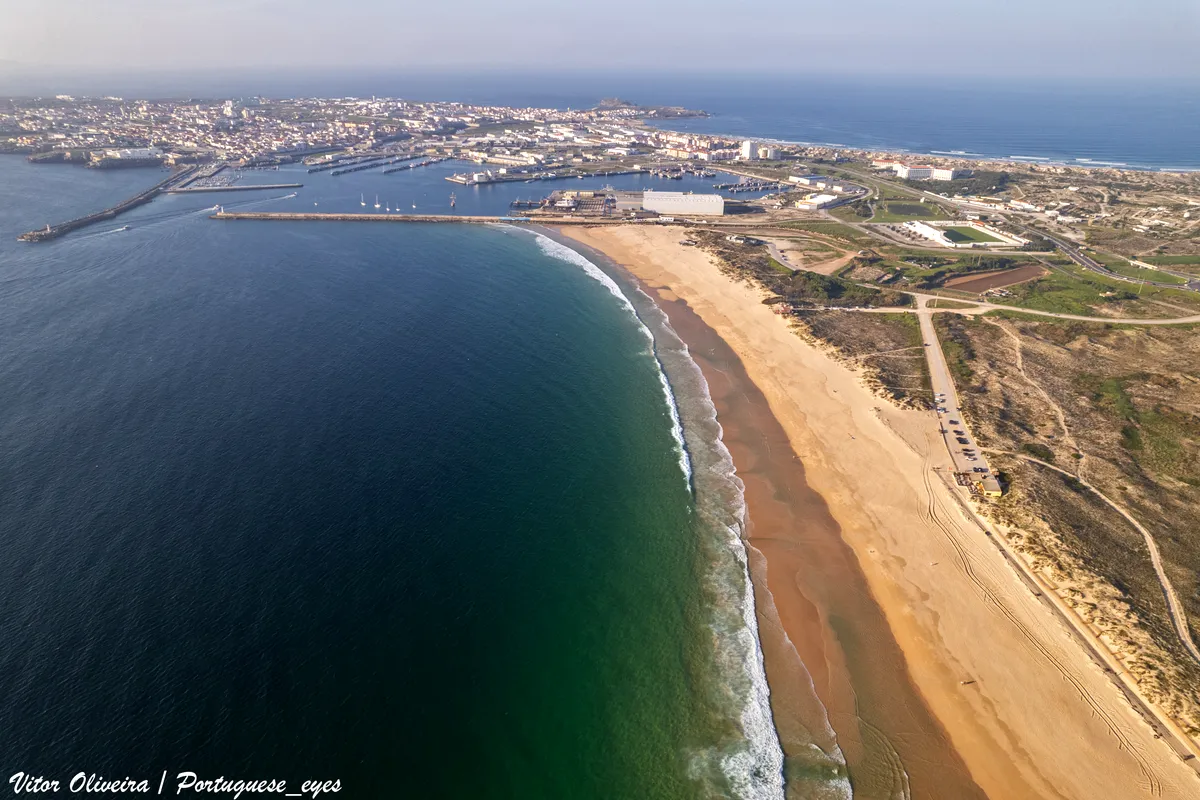
Most surf towns are defined by one stretch of coast facing one direction. Peniche is different. The old town sits on a rocky headland that was once an island, joined to the mainland by a sandy isthmus. The result is a short drive between beaches that face north-west, west and south, and that changes how a week here feels. A big north-west swell that closes out the exposed beaches can arrive as clean, manageable waves on the more sheltered side. A northerly wind that blows out one coast can be offshore on another.
For learners, that means schools can usually find somewhere workable on most days. For experienced surfers, it means a realistic chance of good waves across a week even when the Atlantic is unsettled. It is also why Peniche became one of Portugal's busiest surf hubs: there are many schools, camps, rental shops and surf houses, which brings choice but also crowds, especially on summer weekends and on the best-known peaks.
Supertubos and the south side
Supertubos, on Praia do Medão south of town, is the wave that put Peniche on the international map. It is a fast, hollow beach break that has hosted elite professional surfing contests, and on its best days it produces heavy barrels over shallow sandbanks. It is not a learner's wave when it is working, and the name should not set the agenda for a beginner trip. Watch it from the beach, enjoy it, and leave it to surfers who are confident in powerful, crowded conditions.
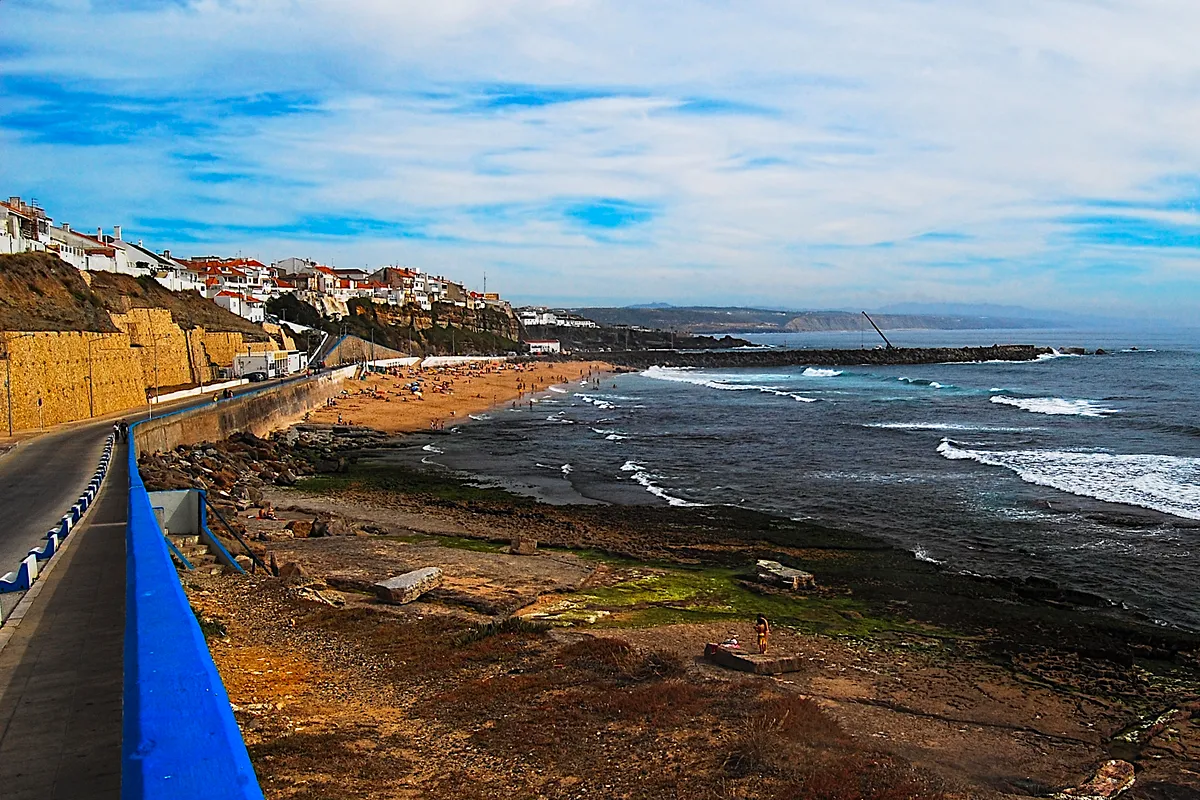
Nearby, Molhe Leste breaks next to the harbour's eastern breakwater. The wall offers some shelter from northerly wind, and the banks can be very good, but it is also a demanding and often busy wave. Further south, Consolação has a mix of reef and sand and tends to be a bigger-swell option for experienced surfers. Ask locally before paddling out at any of these: currents along the breakwater and around the rocks are real, and the sandbanks shift.
Baleal and the north side
Baleal is a small former island just north of Peniche, linked to the mainland by a sandy strip with beaches on both sides. The bay on the southern, sheltered side is where many schools take beginners: in a typical north-west swell it is softer and more protected than the open coast. On busy days it is crowded with lessons, so patience and spacing matter.
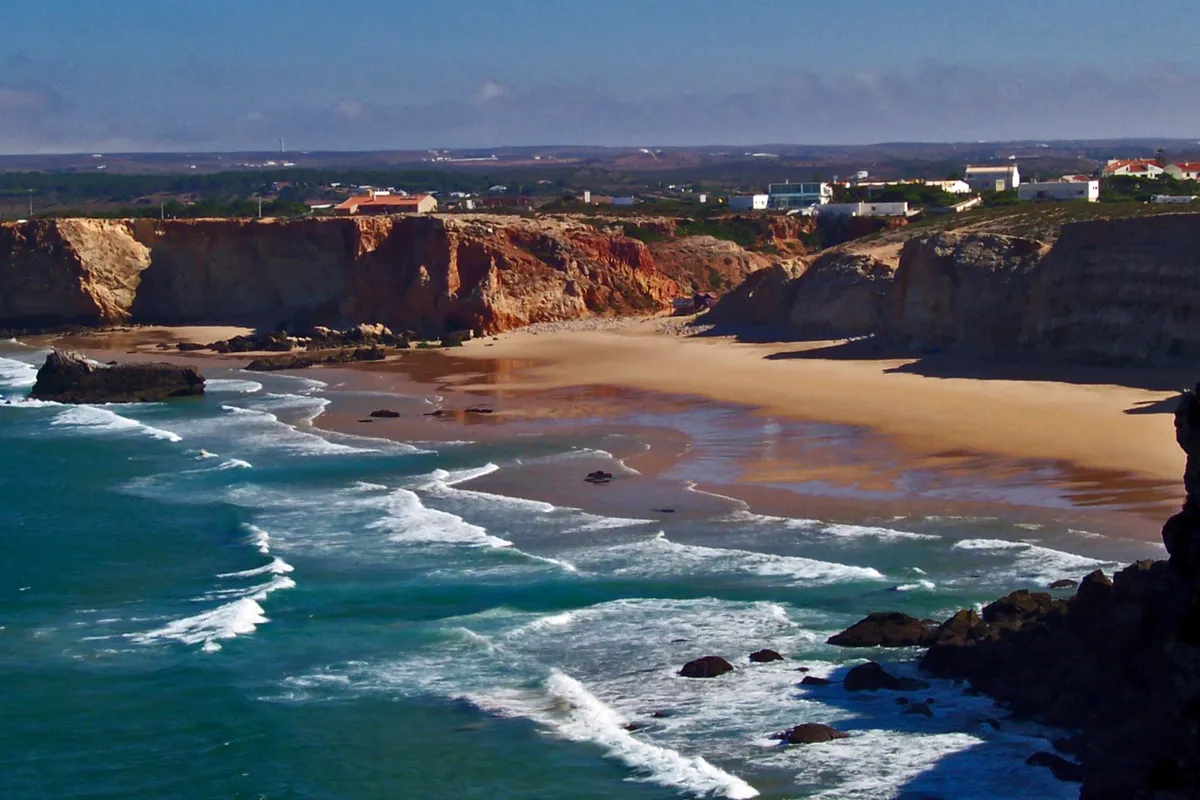
Lagide, beside Baleal, is a reef break better suited to competent intermediates and above. It can offer longer, more defined waves than the beach, but the rocks and the crowd mean you should be comfortable with your control before trying it. North of Baleal, Almagreira and the beaches towards Ferrel are more exposed and catch more swell; they can be quieter alternatives when the bay is too small, and too powerful when the Atlantic is large.
Choose your base: Peniche town or Baleal
Peniche town has the harbour, the fortress, a working fishing industry, supermarkets, restaurants and bus connections. It feels like a real Portuguese town rather than a surf resort, and you can reach the south-side breaks quickly. If you want evenings with more choice and less dependence on a car, stay in town.
Baleal and the surrounding area are where many surf camps and surf houses cluster. You can walk to the beach for an early session, and schools often meet nearby. It is quieter at night outside summer, and you may need transport for groceries and dinner variety. Ferrel, just inland of the north coast, is a smaller village option with surf houses and easy access to the northern beaches.
Whichever you choose, ask your school exactly where it meets and whether it drives students to a different beach when conditions change. That flexibility is the main advantage of surfing here.
Travel to Peniche, and getting about
Lisbon airport is the usual arrival point, roughly an hour and a quarter to an hour and a half north by road depending on traffic. Express coaches run between Lisbon and Peniche, which is a practical option if you are travelling without a board or are using a camp's rental equipment. Many camps offer airport transfers at an extra cost, so ask before booking a separate ride.
A car gives you the most freedom to chase conditions between the north and south sides, and to visit nearby towns. Parking near the popular beaches gets busy in summer. Cycling between town and Baleal is possible on calmer days, but the wind can be strong. If you are bringing a board, check your airline's sports-equipment rules and fees before you book the flight, not at the airport.
Making the most of a week in Peniche
Make the first day an orientation day. Look at both sides of the peninsula, talk to a school or rental shop about which beaches are working, and note where the lifeguarded areas are in season. Keep the middle of the trip flexible, and plan your sessions around the morning when the wind is often lighter, particularly in summer.
On a flat or stormy day, take the boat to the Berlengas, a protected archipelago off the coast (crossings depend on sea conditions and are seasonal), or visit the walled medieval town of Óbidos, about twenty minutes inland. In Peniche itself, the fortress houses a national museum dedicated to resistance and freedom, and the cliffs at Cabo Carvoeiro are worth a walk at sunset. Eat fish where the fishermen eat: the harbour area is the obvious place to start.
Respecting the lineup and the place
Peniche is busy, and much of that pressure falls on a handful of peaks. Visitors who sit politely, wait their turn and avoid paddling into the inside of local surfers are usually welcome. Group lessons should stay in the beginner zones rather than spreading into the line-up at the reefs. If you are renting a board and surfing independently for the first time, start at a beach where your mistakes will not land on someone else.
Park in marked areas, keep dune paths intact and take litter home. Many people in Peniche work in fishing, not tourism, so harbour areas are workplaces first.
Peniche surf season month by month
A broad planning picture, not a forecast. Swell, wind and water temperature vary from year to year.
| January | Winter swells are frequent and often large. Experienced surfers use the sheltered corners; learners need a school that picks the beach carefully. Cold water: a 4/3 or 5/4 wetsuit. |
|---|---|
| February | Similar to January, with powerful Atlantic swell and changeable weather. Fewer visitors and quieter line-ups outside the best-known peaks. |
| March | Still consistent and still cold. Days lengthen and spring weather starts to break through. A good month for experienced surfers who do not mind a thick wetsuit. |
| April | Swell remains regular while the weather softens. A useful shoulder month for improvers, with schools operating and lower prices than summer. |
| May | Smaller, friendlier swells become more common and the days are long. Northerly winds start to appear in the afternoons, so morning sessions matter. |
| June | Generally smaller surf and warmer air. Good for beginners at the sheltered beaches. Expect more visitors as summer begins. |
| July | Peak holiday season. Waves are usually small to moderate, lessons are busy and the afternoon wind is often strong. Ideal for first-timers who book ahead. |
| August | The busiest month on land and in the water. Best for learners and families; experienced surfers may find it small and crowded. Water is at its least cold, though still cool. |
| September | Often the sweet spot: water still relatively mild, the first autumn swells arriving and crowds thinning after the summer holidays. Good for all levels. |
| October | A classic month for experienced surfers, with more consistent groundswell and often lighter winds. Beginners can still learn on the sheltered side with a good school. |
| November | Swells get bigger and more frequent, the weather more mixed. Excellent for confident surfers; learners should choose a school that will move beaches as needed. |
| December | Short days, cold water and powerful surf. Quiet in town and out of season for many camps. Best for experienced surfers who can read conditions. |
Learning to surf in Peniche
Peniche is one of Europe's most practical places to learn because of its range of beach orientations. On a typical day, schools take beginners to the sheltered bay at Baleal or another protected beach, choose the tide and keep groups in the white water before moving on to small unbroken waves.
You will find everything from single lessons to week-long surf camps with accommodation, meals, equipment and transport included. When comparing them, ask how many students share one instructor, which beaches they use and how they decide, whether wetsuits and boards are included, and what happens on days when conditions are unsuitable. A camp that drives students to the best beach for their level each day is worth more than one with a nicer pool.
Plan on several consecutive days rather than a single lesson. Most people make the biggest progress once they stop fighting the board and start reading the white water, which usually takes a few sessions.
Comparing options across the country? Read our guide to surfing in Portugal.
Seasonal notes on this page describe typical patterns, not the conditions on a given day. Use the local forecast, lifeguard advice and a qualified instructor for water-safety decisions, and get a written breakdown of what any surf package includes before paying.
Peniche surf trip questions
When is the best time to surf in Peniche?
September to November is the best all-round window: consistent swell, water that is still relatively mild after summer and fewer crowds. Beginners often prefer June to September for smaller waves and warmer weather, while experienced surfers also enjoy the powerful winter months.
Is Peniche good for beginners?
Yes. The peninsula has beaches facing different directions, so schools can usually find sheltered, smaller waves somewhere, most often around the bay at Baleal. Avoid Supertubos and the reefs until you can catch and control unbroken waves confidently.
What wetsuit do I need for Peniche?
The Atlantic here is cool all year. A 3/2 wetsuit can work in late summer, but most visitors use a 4/3 for much of the year, and a 5/4 with boots is common in winter. Most schools and rental shops include or hire wetsuits.
Is it better to stay in Peniche town or Baleal?
Stay in Peniche town for restaurants, shops, buses and a lived-in Portuguese atmosphere. Stay in Baleal or Ferrel if you want to walk to the beach and be among surf camps. With a car, either works.
Can you surf Peniche in November?
Yes, November is one of the best months for experienced surfers, with frequent groundswell. The weather is more mixed and the water colder, so bring a 4/3 wetsuit. Learners can still have good sessions with a school that chooses sheltered beaches.
How far is Peniche from Lisbon?
Roughly 95 kilometres north, which usually takes around an hour and a quarter to an hour and a half by car. Express coaches link Lisbon and Peniche, and many surf camps offer airport transfers.
Sources & editorial notes
Destination context checked against the sources below. Base-selection and itinerary suggestions are Book & Surf editorial recommendations. Seasonal windows are broad planning suggestions, not measured forecasts or guarantees.
- Visit Portugal: Surfing ↗
- Wikipedia: Peniche, Portugal ↗
- Wikipedia: Berlengas archipelago ↗
- IPMA: Portuguese Institute for Sea and Atmosphere (marine forecasts) ↗
We do not claim to have personally surfed every break. Read our editorial standards.