The breaks
Recognised, publicly known surf spots around Sagres. Suitability depends on the day's swell, wind and tide, so treat the level as a guide, not a guarantee.
| Break | Type | Best for | Notes |
|---|---|---|---|
| Tonel | Beach break | Intermediate | West-facing town beach that picks up the most swell. Often the first check on small days; messy in strong northerly winds. |
| Beliche | Beach break | Beginner–Intermediate | South-west-facing cove below cliffs, partly sheltered from northerly winds. Steep steps; limited space at high tide. |
| Mareta | Beach break | Beginner | South-facing town beach, sheltered from most swells. Works on big winter swells with northerly winds; popular for lessons then. |
| Martinhal | Beach break | Beginner | Very sheltered south-east-facing beach. Only works on bigger or more southerly swells, but gentle when it does. |
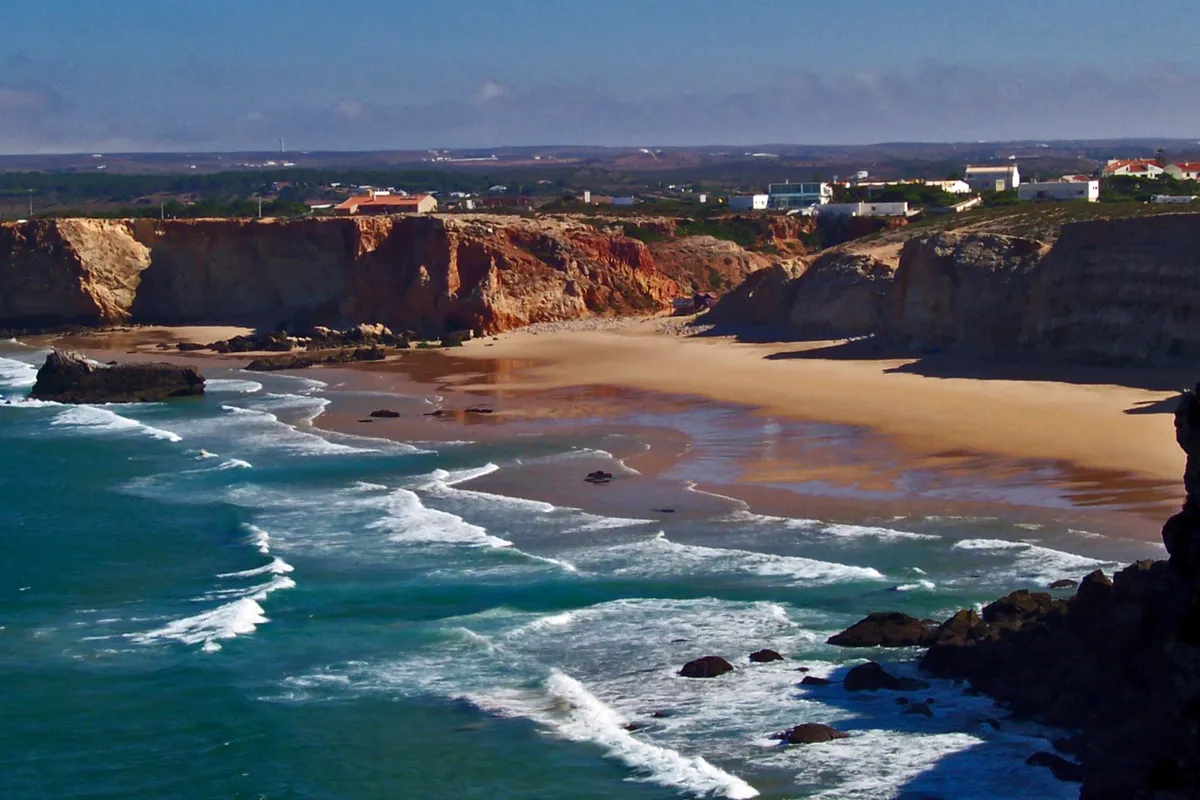
| Cordoama & Castelejo | Beach break | Intermediate | Long, exposed west-facing beaches below cliffs near Vila do Bispo. Best on medium swells and light winds. |
| Zavial | Reef & beach | Intermediate–Advanced | South-facing bay towards Lagos that lights up on big winter swells and northerly winds. |
Why Sagres is so reliable
Sagres sits on a rocky plateau at the point where Portugal's west coast turns the corner and becomes the Algarve's south coast. Within a few kilometres, there are beaches facing west, south-west and south, each with a different exposure to swell and wind. When a big north-west swell and a strong northerly wind make the west coast messy, the south-facing beaches are offshore and cleaner. When the swell is small, the west-facing beaches pick up whatever is around.
This flexibility is why Sagres is one of the most reliable surf destinations in Europe, particularly for learners and improvers who need manageable conditions. It is also why the town has a high concentration of surf schools, camps and surf hostels. Sagres is small, low-key and outdoorsy, with a windswept, end-of-the-world feel, and it attracts surfers, climbers, hikers and nature lovers.
The west-facing beaches: Tonel and Beliche
Tonel, right next to the town, faces west and is the most exposed of the Sagres beaches. It picks up the most swell and is often the first beach to check on smaller days. With the right wind, it can offer good-quality beach-break peaks for intermediates, but it is often too big or messy in winter.
Beliche, on the road to Cabo de São Vicente, sits in a cove below high cliffs and faces south-west. It is partly sheltered from northerly winds and can be a good option when Tonel is blown out. Steep steps lead down to the beach, which is beautiful but has limited space at high tide. Both beaches can have strong currents on bigger swells.
The south-facing beaches: Mareta and Martinhal
Mareta, the town beach of Sagres, faces south and is sheltered from most north-west swells. On big winter swells with northerly winds, it can produce clean, gentle waves, and it is a popular spot for lessons on those days. On normal days, it is often calm and good for swimming.
Martinhal, east of Sagres, faces south-east and is even more sheltered. It only works on bigger swells or when the swell comes from the south-west, but it can be an excellent beginner beach when it does. The small islands offshore add to the scenery. These south-facing beaches are why Sagres keeps working in winter storms.
Cordoama, Castelejo and Zavial
North of Sagres, near the village of Vila do Bispo, Cordoama and Castelejo are long, exposed west-facing beaches below steep cliffs. They pick up plenty of swell and are best on medium days with light winds or easterly offshores. The drive down to the beaches is spectacular, and there are few buildings.
East of Sagres, on the road to Lagos, Zavial is a south-facing bay with a reef and beach set-up that comes alive on bigger winter swells. It is often one of the best waves in the area when the swell is large and the wind is northerly, attracting intermediate and advanced surfers. Many Sagres camps include these spots in their daily rotation.
Sagres: which area to stay in
Sagres town is small and spread out, with surf hostels, guesthouses, apartments and a handful of hotels. Most accommodation is within a short drive or walk of the beaches. The town has a few bars, restaurants and shops, a relaxed atmosphere and an international mix of surfers.
Vila do Bispo, about ten minutes north, is a quieter, more traditional village close to Cordoama and Castelejo. Lagos, about thirty minutes east, has much more choice for dining and nightlife. If you are taking lessons, check where your surf school is based and whether it provides transport.
Travel to Sagres, and getting about
Faro airport is about an hour and a half by road. Buses run from Lagos to Sagres several times a day, and Lagos is connected to Faro by train and bus. Many surf camps offer airport transfers.
A car is very useful in Sagres, because the beaches are spread out and public transport is limited. Cycling is possible, but the plateau is often windy. Parking can be tight at Beliche and Tonel in summer.
Wind, weather and safety
Sagres is famously windy, particularly in summer, when strong northerly winds are common. The wind is the main factor that decides which beach works, so learn how it interacts with each beach's orientation. Mornings are often calmer.
The water is cool all year, typically in the mid-teens Celsius in winter and the high teens in summer; upwelling on the west coast can make it colder. A 4/3 wetsuit is common for much of the year. Some beaches have strong currents on bigger days, and cliff paths can be slippery. Lifeguards patrol some beaches in summer only.
Making the most of a week in Sagres
Check the forecast each evening and plan which beach to try based on the swell and wind direction. Keep the middle of the trip flexible, and if you are learning, let your school choose.
On a rest day, visit the Fortaleza de Sagres, a clifftop fortress associated with Portugal's Age of Discovery, and Cabo de São Vicente, the south-western tip of mainland Europe, where sunsets attract crowds. Walk sections of the Rota Vicentina coastal trail, go birdwatching in autumn when migrating birds pass through, or take a boat trip to see dolphins. Fresh fish, especially in the harbour restaurants, is a highlight.
Sagres surf season month by month
A broad planning picture, not a forecast. Swell, wind and water temperature vary from year to year.
| January | Big winter swells: the west coast is often too big, but Mareta, Zavial and Martinhal can work. Cool water: a 4/3. |
|---|---|
| February | Consistent and powerful, with quiet beaches. A good month for intermediates who use the south-facing spots. |
| March | Still consistent with milder weather. Good conditions for all levels with flexible beach choice. |
| April | Swells ease and spring flowers cover the cliffs. Good for learners and improvers. |
| May | Smaller, friendlier swells and longer days. Northerly winds start to increase. |
| June | Small summer surf and strong afternoon winds. West-facing beaches pick up what swell there is. |
| July | Peak season, busy beaches and windy afternoons. Small waves suit beginners; surf early. |
| August | Similar to July: small surf, crowds and wind. The warmest water of the year, though still cool. |
| September | Autumn swells return while the water is still relatively warm. Crowds thin; a great month. |
| October | Consistent swells, lighter winds and pleasant weather. One of the best months to visit. |
| November | Bigger swells and changeable weather. The south-facing beaches come into play. |
| December | Winter swells and quiet town. Experienced surfers can find excellent waves at Zavial and Tonel. |
Learning to surf in Sagres
Sagres is one of Europe's best places to learn to surf because its beaches face so many directions. Schools can usually find a sheltered beach with gentle waves, whether that is Mareta, Martinhal, Beliche or a west-coast beach on smaller days.
Many surf camps and hostels in Sagres offer packages with accommodation, lessons, equipment and transport. Ask about group size, instructor qualifications and how the school chooses beaches. A good school will explain why it picked a particular beach, which helps you learn to read conditions yourself.
Spring and autumn offer a good balance of manageable waves, fewer crowds and pleasant weather. Summer is busier and windier, while winter can be excellent with a school that uses the south-facing beaches.
Comparing options across the country? Read our guide to surfing in Portugal.
Seasonal notes on this page describe typical patterns, not the conditions on a given day. Use the local forecast, lifeguard advice and a qualified instructor for water-safety decisions, and get a written breakdown of what any surf package includes before paying.
Sagres surf trip questions
Why is Sagres good for surfing?
Sagres has beaches facing west, south-west and south within a few kilometres, so there is usually somewhere with suitable swell and wind. That makes it very reliable, especially for learners.
When is the best time to surf in Sagres?
September to May brings the most consistent swells. October is often excellent, with good waves and lighter winds. Summer is small and windy but suits beginners.
Is Sagres good for beginners?
Yes. Sheltered beaches such as Mareta, Martinhal and Beliche can offer gentle waves even when the west coast is big. Many surf schools operate in Sagres.
Is Sagres windy?
Yes, especially in summer, when strong northerly winds are common. The wind decides which beach works best, and mornings are often calmer.
How far is Sagres from Lagos?
About thirty minutes by car. Buses also run between Lagos and Sagres several times a day.
What wetsuit do I need in Sagres?
A 4/3 for much of the year and a 3/2 in summer and early autumn. Upwelling can make the water colder than expected in summer.
Sources & editorial notes
Destination context checked against the sources below. Base-selection and itinerary suggestions are Book & Surf editorial recommendations. Seasonal windows are broad planning suggestions, not measured forecasts or guarantees.
- Visit Portugal: Surfing ↗
- Wikipedia: Sagres, Portugal ↗
- Wikipedia: Cape St. Vincent ↗
- Rota Vicentina: walking trails ↗
We do not claim to have personally surfed every break. Read our editorial standards.