Surf etiquette: the unwritten rules of the line-up
Priority, dropping in, paddling out and being a good guest, in the water and beyond, on an unfamiliar coast.
Why etiquette matters
Surf etiquette is a set of unwritten rules that help surfers share waves safely and fairly. A wave can only be ridden well by one surfer at a time, and boards are heavy and hard. Without shared rules, line-ups would be chaotic and dangerous. Etiquette keeps people safe, reduces conflict and makes surfing more enjoyable for everyone.
For visitors, etiquette is also about respect. Many surf spots are home to local communities whose members have surfed there for years. Understanding and following the rules is the easiest way to be welcomed in the water and to avoid tension.
Priority: who gets the wave
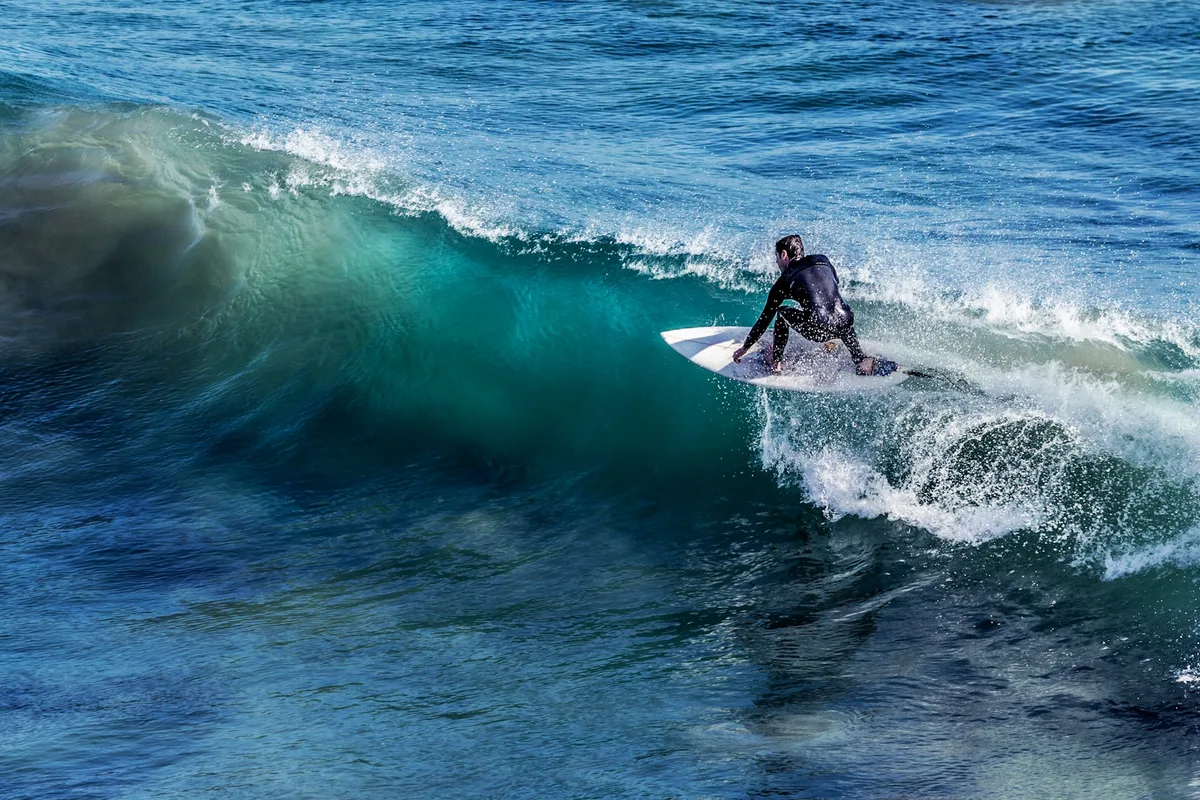
The most fundamental rule is priority. The surfer closest to the breaking part of the wave, called the peak, has the right of way. If someone is already standing up and riding, they have priority over anyone further along the wave.
In practice, this means looking towards the peak before you paddle for a wave. If someone closer to the peak is paddling or already riding, let it go. At busy spots, there is often also an informal rotation, where surfers who have been waiting longest get the next wave. Watch how the line-up works before joining in.
Do not drop in
Dropping in means catching a wave in front of someone who already has priority on it. It is the cardinal sin of surfing because it ruins their wave and can cause collisions. Always look both ways before standing up. If you accidentally drop in, pull off the wave as quickly as safely possible and apologise. A simple apology goes a long way.
Related behaviour, such as snaking, where a surfer paddles around another to gain priority, or repeatedly paddling to the inside of others, is also seen as poor etiquette.
Paddling out and staying out of the way
When paddling out, avoid the path of surfers riding waves. Paddle wide, through the channel where waves are not breaking, rather than straight through the take-off zone. If a surfer is riding towards you, it is usually your responsibility to get out of their way, typically by paddling towards the white water behind them rather than into their path.
Never let go of your board in a crowd. A loose board can be pushed by the wave into other surfers. Learn to duck dive or turtle roll so that you can keep hold of your board as waves break over you. If you cannot yet control your board in the conditions, choose a less crowded spot or smaller day.
Stay in control of your equipment
Choose a setting where you can manage your board and avoid other people. Leave enough space, do not rely on a leash as a substitute for control, and avoid paddling into someone's path. If your lesson or skill level does not cover the conditions in front of you, the answer is a different session, not a more determined paddle.
Beginners on large soft-top boards should stay in the white water or designated learning areas, away from experienced surfers on the main peak. Surf schools should keep their groups together and away from busy line-ups.
Being a good guest in the water
When you surf somewhere new, take time to watch before paddling out. Notice where people sit, how the waves break and how the line-up works. When you paddle out, sit wide at first, wait your turn and do not try to catch every wave. Smile, say hello and be patient.
At some spots, particularly famous reef and point breaks, local surfers have strong attachments to their waves. Respect that. Do not bring large groups to a small peak, do not hassle for waves and accept that local surfers may catch more set waves. Your experience will be better for it.
Handling mistakes and conflict
Everyone makes mistakes in the water, especially when learning or surfing somewhere new. If you drop in, get in someone's way or lose your board near another surfer, apologise straight away. Most experienced surfers appreciate an honest apology and will move on.
If someone shouts at you or behaves aggressively, stay calm and avoid escalating the situation. Paddle away, take a break or move to a different peak. Line-ups can be tense when waves are scarce, and conflict rarely improves anyone's session. If you notice the same issue repeatedly, ask a local surf shop or school for advice on where and when visitors are most welcome.
Safety always comes first. If you see someone in trouble, help if you can do so safely, and alert lifeguards or others. Surfing communities are at their best when people look out for each other.
Share the place, not just the wave
Use established paths, avoid blocking driveways and take litter away. A surf destination is also somebody's home and workplace. Ask before photographing people, spend with local businesses and respect cultural expectations away from the beach. Being friendly does not entitle a visitor to every wave or every space.
In many destinations, from Morocco to Sri Lanka and Bali, dressing modestly away from the beach and respecting religious customs are part of being a good guest. Fishing harbours and beaches are often workplaces first; give fishing boats priority.
Be thoughtful about what you publish
A public destination guide is different from broadcasting access to a sensitive or little-known break. Avoid sharing precise locations that could damage a place or overwhelm a small community. Ask whether a photograph or geotag helps the people who live there, not only the people following your trip.
A good trip is not measured by how many waves you took. Make room for others, acknowledge mistakes and listen when local advice changes your plan. The best thing you can bring to an unfamiliar coast is curiosity backed by patience.
Questions
What is dropping in?
Dropping in means catching and riding a wave in front of a surfer who already has priority on it. It is considered the worst breach of surf etiquette because it ruins their ride and can cause collisions.
Who has priority on a wave?
The surfer closest to the peak, or breaking part of the wave, has priority. If someone is already riding the wave, they have priority over anyone further along it.
How do I paddle out without getting in the way?
Paddle wide through the channel where waves are not breaking, away from the take-off zone. If a surfer is riding towards you, move out of their path, usually towards the white water behind them.
How should beginners behave in the line-up?
Stay in the white water or learning areas, keep control of your board, avoid the main peak and watch how the line-up works. Apologise if you make a mistake.
What should I do if I drop in on someone?
Pull off the wave as quickly as you safely can and apologise. Most surfers will accept an honest mistake, especially from a visitor who is clearly trying to follow the rules.
Is localism a problem for visiting surfers?
At some famous breaks, local surfers can be protective of their waves. Following etiquette, being patient and respectful and avoiding large groups usually prevents problems. If a spot feels hostile, try another nearby.
Plan the trip
- Ericeira surf guide
- Raglan surf guide
- Pichilemu surf guide
- Uluwatu surf guide
- Surfing in Portugal
- Surfing in New Zealand
- Surfing in Chile
Sources
These are editorial planning suggestions, not a substitute for local instruction or current conditions. How we write our guides.