The breaks
Recognised, publicly known surf spots around Raglan. Suitability depends on the day's swell, wind and tide, so treat the level as a guide, not a guarantee.
| Break | Type | Best for | Notes |
|---|---|---|---|
| Manu Bay | Left-hand point | Intermediate–Advanced | Long, fast lefts over boulders, made famous by The Endless Summer. Popular and crowded on good days. |
| Whale Bay | Left-hand point | Advanced | A more remote left-hand point beyond Manu Bay, with rocky entry and exit and long rides on the right swell. |
| Indicators | Left-hand point | Advanced | The outer point, which can produce very long rides on bigger swells. Experience essential. |
| Ngarunui Beach | Beach break | Beginner–Intermediate | Black-sand beach near town, the main learning beach, with lifeguard patrols in summer. Watch for rips. |
Full profile: Manu Bay.
Raglan surf climate, measured
Ten years of ocean model data for the open water off this coast: what the swell usually looks like before it reaches the beach. Shelter, sandbars and reefs change what you actually surf, so read this next to the month notes below.
| Month | Swell | Period | From | Wind | Water | Wetsuit | Days over 2.5 m |
|---|---|---|---|---|---|---|---|
| Jan | 1.6 m | 12 s | SW | 18 km/h SW | 20°C | 2 mm shorty or spring suit | 5% |
| Feb | 1.5 m | 12 s | SW | 16 km/h SW | 21°C | 2 mm shorty or spring suit | 8% |
| Mar | 1.6 m | 13 s | SW | 17 km/h SW | 20°C | 2 mm shorty or spring suit | 15% |
| Apr | 1.9 m | 13 s | SW | 18 km/h SW | 19°C | 2 mm shorty or spring suit | 23% |
| May | 2.3 m | 13 s | SW | 16 km/h W | 18°C | 3/2 mm full suit | 30% |
| Jun | 1.9 m | 13 s | SW | 17 km/h E | 16°C | 3/2 mm full suit | 30% |
| Jul | 2.0 m | 13 s | SW | 20 km/h SW | 14°C | 4/3 mm full suit | 25% |
| Aug | 2.2 m | 12 s | SW | 19 km/h SW | 14°C | 4/3 mm full suit | 25% |
| Sep | 2.3 m | 13 s | W | 22 km/h SW | 14°C | 4/3 mm full suit | 40% |
| Oct | 2.0 m | 13 s | SW | 22 km/h SW | 15°C | 4/3 mm full suit | 25% |
| Nov | 2.0 m | 13 s | SW | 21 km/h NW | 17°C | 3/2 mm full suit | 23% |
| Dec | 1.7 m | 12 s | SW | 16 km/h SW | 19°C | 2 mm shorty or spring suit | 18% |
Median values from ERA5 at a sea point near Raglan (37.75°S, 174.75°E), sampled 4 days a month at 12:00 UTC, 2015-2024. Highlighted months are our suggested planning window. Not a forecast or a safety assessment. How we use this data.
Book a surf trip to Raglan
Everything we can link you to for this trip, grouped by what you need. Before you pay a camp or school, read who holds your money, and check that your insurance covers surfing.
Where to stay
Search near the breaks. Filter for surf hostels, apartments or hotels once you can see the map.
Surf lessons and activities
Listings change by season, so check what the operator includes and who coaches.
Flights
Add your dates and check the board fee on every leg before you pay.
Car hire
Ask about roof racks and whether the insurance covers boards on the roof.
Airport transfer
Tell the driver you have a board and its length when you book.
Mobile data
Download a forecast app and offline maps before you land.
Flight delay claims
If a delay eats your first surf day, check whether you can claim.
Luggage storage
Useful between check-out and a late flight. Check the size limit before dropping a board.
Links marked as partner links may earn us commission at no cost to you; the rest earn us nothing. We have not checked live availability or price, and the seller's terms apply. How we handle this.
Cheapest months to fly to Raglan
Lowest return fare to AKL that Aviasales users found recently, in US dollars. Treat these as a guide to which months are cheaper, not as prices you can book today.
| From | Nov 26 | Dec 26 | Jan 27 | Feb 27 | Mar 27 | Apr 27 |
|---|---|---|---|---|---|---|
| London | $1150 | $1089 | – | $843 | $1210 | – |
| New York | $1602 | – | $1146 | – | – | – |
| Los Angeles | – | $2451 | – | – | – | $841 |
| Sydney | $362 | $396 | $378 | $388 | $406 | $391 |
| Frankfurt | – | $1125 | – | $1399 | – | – |
Prices seen by 1 November 2026. Travelpayouts Data API. Board fees are extra on most airlines: see our surfboard baggage guide.
A coast built for long lefts
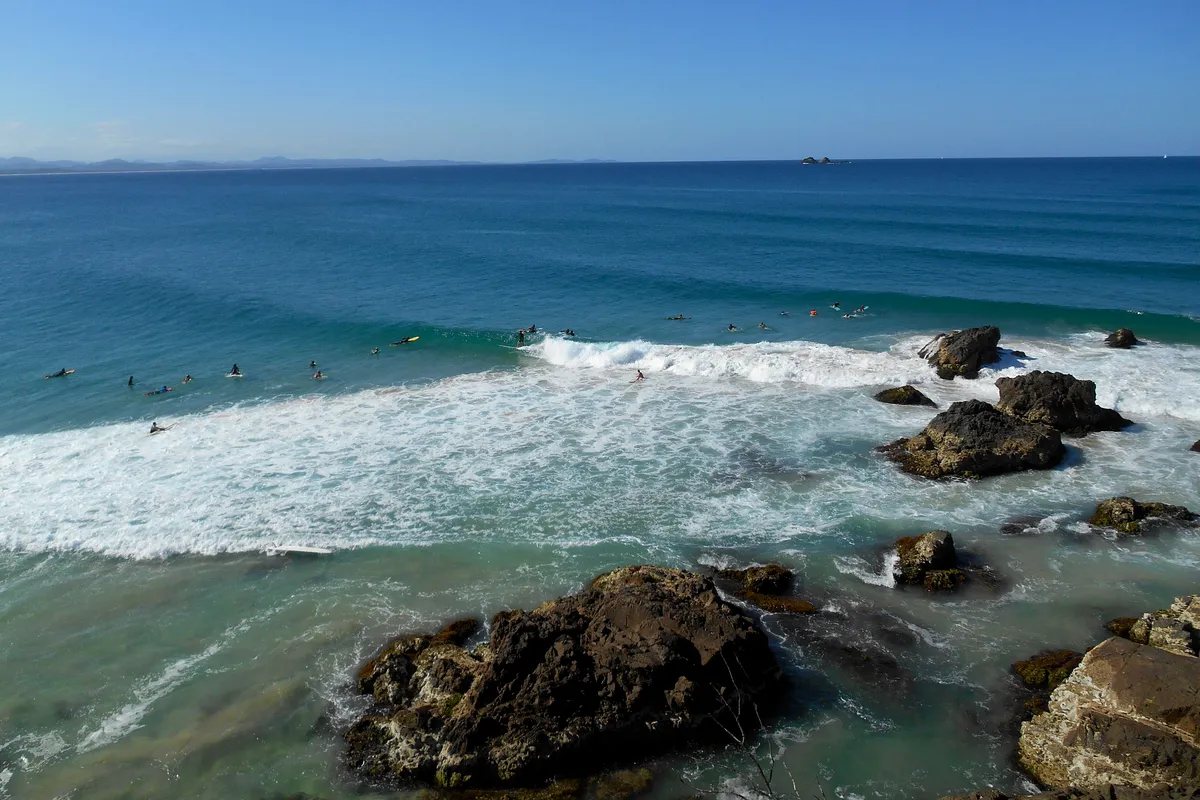
Raglan's surf reputation rests on a series of left-hand point breaks along the coast west of town. The coastline is made of volcanic rock and boulders, and when swell from the Tasman Sea arrives from the south-west, it peels along these points for long distances. On a good day, the rides can be among the longest in New Zealand.
The points are best for intermediate and advanced surfers who can handle rocky entries and exits, strong currents and a committed local crowd. For beginners, Ngarunui Beach, a black-sand beach closer to town, offers softer waves and lifeguard patrols in summer.
Manu Bay, Whale Bay and Indicators
Manu Bay is the most famous of Raglan's points, a left-hand wave that featured in the classic surf film The Endless Summer. It breaks over a boulder bottom and can offer long, fast walls on a good south-west swell. It is popular and can be crowded, especially on weekends.
Whale Bay, further west, is a left-hand point with a rocky shoreline and a quieter, more remote feel. Indicators, beyond Whale Bay, is the outer point and can produce very long rides on bigger swells. Both require experience: getting in and out over rocks, managing currents and reading the take-off zones are all part of the challenge.
Ngarunui Beach and the beaches
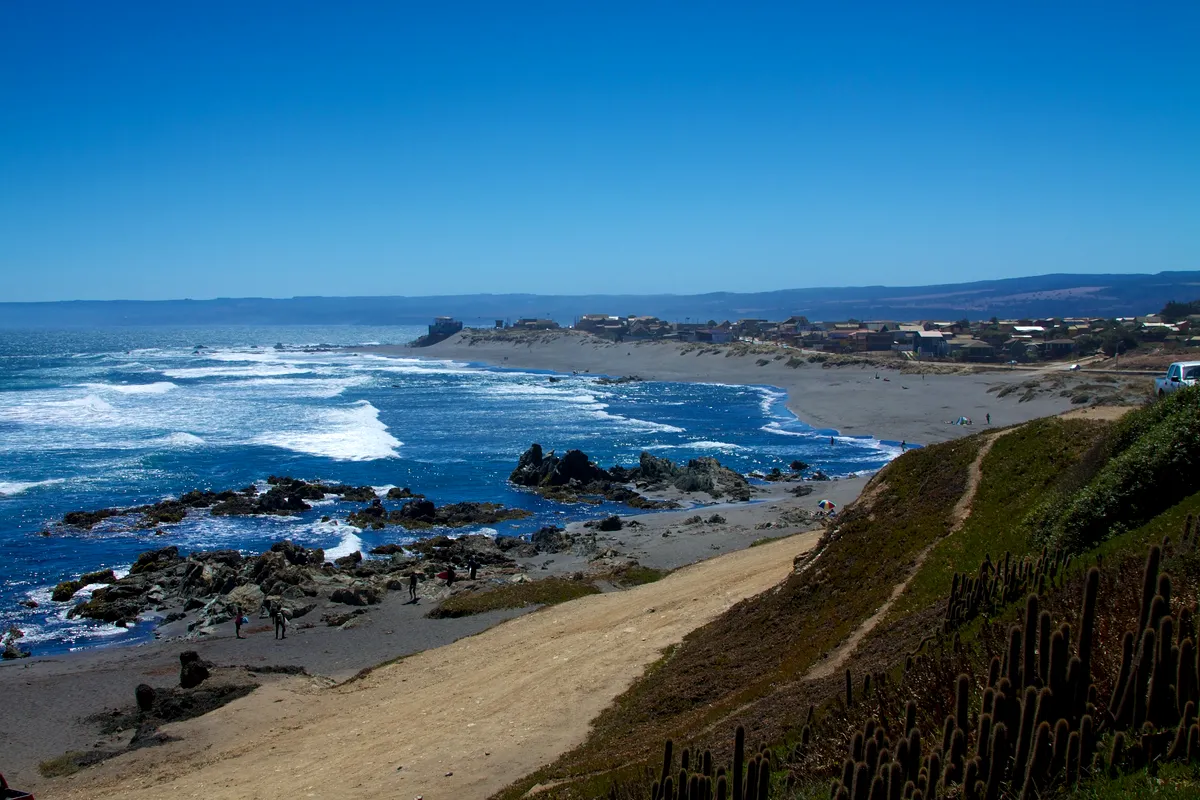
Ngarunui Beach, also called Ngarunui or Ocean Beach, is the main beach near Raglan, with black sand, sand dunes and beach-break peaks. It is the main learning beach and has lifeguard patrols in summer. Swim and surf between the flags where possible, and be aware of rips, which are common on New Zealand's west coast.
The beach can be powerful on bigger swells, so learners should check conditions with a school or lifeguard. On smaller days, it is a fun and forgiving place to practise.
Picking a base around Raglan
Raglan town sits on the harbour, with cafés, shops, galleries and a relaxed, creative atmosphere. Staying in town gives you easy access to restaurants and the harbour, with a short drive to the beaches and points.
Many surf lodges, campgrounds and holiday homes sit along the coast road towards Manu Bay and Whale Bay. Staying here puts you closer to the waves, but you will need a car for supplies. Accommodation books up in summer and during school holidays.
Reaching Raglan and moving between breaks
Auckland Airport is the main international gateway, about two hours' drive north. Hamilton, a city about forty-five minutes inland, has a smaller airport with domestic flights. Shuttles run between Hamilton and Raglan, but a rental car is the most practical way to explore the coast.
The road to the points is winding and narrow in places. Drive carefully, especially in wet weather.
Ocean safety on the west coast
New Zealand's west coast beaches can be powerful, and rip currents are common. At Ngarunui Beach, surf lifeguards patrol in summer and mark the safest area with red and yellow flags. Stay between the flags if you are learning or swimming, and ask the lifeguards about conditions if you are unsure. If you are caught in a rip, stay calm, hold on to your board, raise a hand to signal for help and paddle across the current rather than against it.
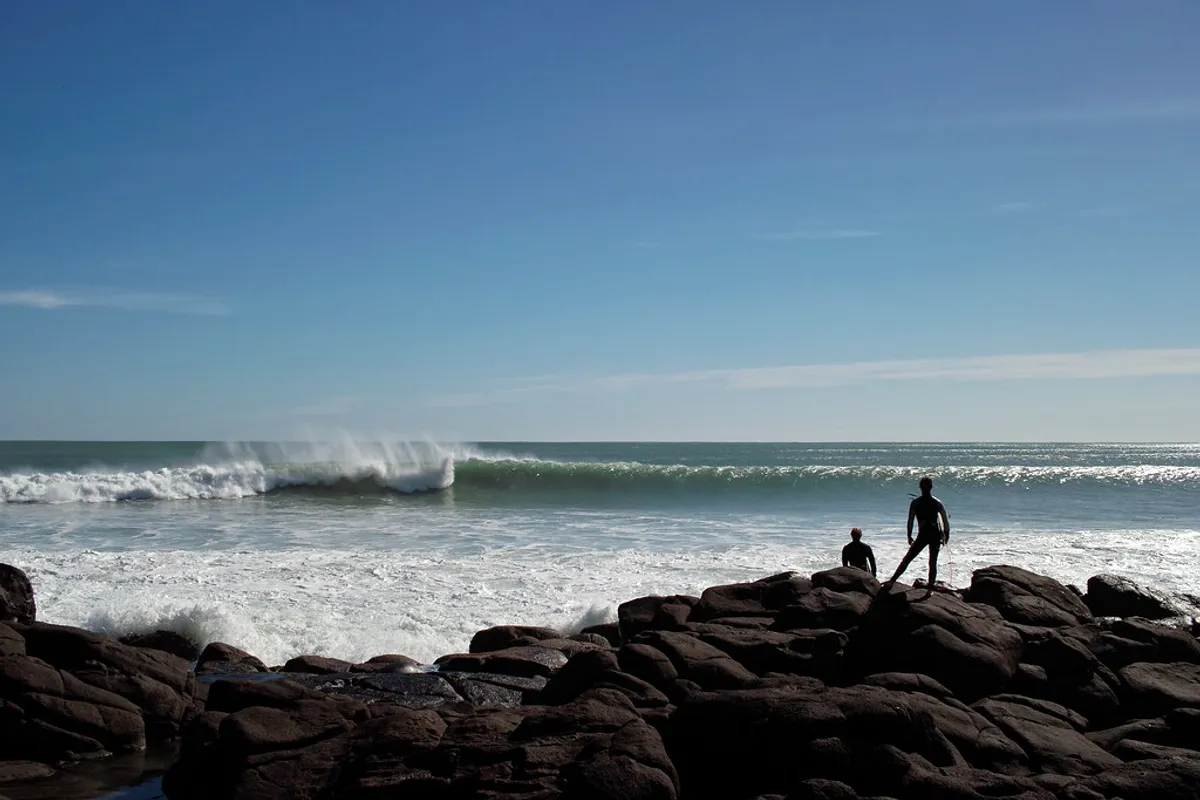
The points have their own hazards. Boulders and rock ledges make entry and exit tricky, especially at high tide or on bigger swells. Watch how local surfers get in and out before trying it yourself. Currents can sweep you down the point; on bigger days, it may be easier to come in further down the bay than to fight back to where you paddled out.
The water is cool to cold for much of the year, which affects stamina and judgement. A good wetsuit, boots in winter and a hood on the coldest days help you stay in control. Tell someone where you are surfing if you go out alone at the remote points, and check the MetService marine forecast before heading out.
Seasons and water temperature
Raglan has surf all year, but the seasons change the experience. Autumn, from March to May, is often considered the best time: consistent swells, lighter winds and water that is still relatively mild after summer. Winter brings bigger swells and colder water, ideal for experienced surfers with good wetsuits.
Spring and summer often bring smaller swells and more onshore winds, but the beach can still be fun for learning. Water temperatures range from cold in winter to mild in summer, so most surfers wear a full wetsuit most of the year: a 4/3 in winter, a 3/2 in summer.
Beyond Raglan: the wider North Island
Raglan is part of a wider North Island coastline that rewards exploration. To the south, the Taranaki region around Mount Taranaki has a coast of reef and point breaks along the so-called Surf Highway, State Highway 45, which circles the mountain and passes dozens of spots facing different directions. It is a few hours' drive from Raglan and offers a quieter alternative when conditions are right.
To the north, Auckland's west coast beaches, such as Piha and Muriwai, are powerful black-sand beach breaks within an hour of the city. Piha is famous for its surf and its dangerous rips; it is best for experienced surfers and should only be surfed with lifeguards on duty if you are less confident.
On the east coast, places such as Gisborne and the Coromandel Peninsula pick up different swells and can work when the west coast is flat or blown out. A North Island road trip that combines Raglan with Taranaki and the east coast gives you options in almost any conditions.
Flat days and a better week in Raglan
Check the swell and wind direction carefully: the points need a south-west swell and favourable winds. Surf early for the best conditions and fewer people.
On a flat day, walk to Bridal Veil Falls, a waterfall in native bush inland from Raglan, or hike Mount Karioi, the extinct volcano that rises above the coast. Kayak or paddleboard on the harbour, known in te reo Māori as Whāingaroa. Respect local Māori culture and sites, and support local businesses.
Raglan surf season month by month
A broad planning picture, not a forecast. Swell, wind and water temperature vary from year to year.
| January | Summer: warm air, smaller swells and busy beaches. Great for learning at Ngarunui. A 3/2 wetsuit is usually enough. |
|---|---|
| February | Late summer with the chance of cyclone-generated swells. Water at its warmest. |
| March | Autumn begins, with more consistent south-west swells and lighter winds. A prime month for the points. |
| April | Excellent autumn conditions: regular swell, fewer crowds and mild water. |
| May | Late autumn, with bigger swells and cooler water. Still a great month for experienced surfers. |
| June | Winter begins, with powerful swells and cold water. A 4/3 wetsuit and boots for some. |
| July | Cold and consistent. Big swells can light up the points; short days and wet weather. |
| August | Still winter, with powerful swell and cold water. Quiet in town and in the water. |
| September | Spring brings more variable winds and smaller swells. Water still cold. |
| October | Variable conditions with frequent onshore winds. Good for learning on smaller days. |
| November | Warming weather and smaller swells. The beach is fun for learners and longboarders. |
| December | Early summer, holidays and busy beaches. Smaller swells; a good time for lessons. |
Learning to surf in Raglan
Raglan's points are for experienced surfers, but Ngarunui Beach is a good place to learn. Several surf schools offer lessons there, with soft-top boards, wetsuits and instruction included. The black-sand beach and lifeguard patrols in summer make it a reassuring place to start.
Ask about group size, instructor qualifications and how the school chooses conditions. The west coast can be powerful, and rips are common, so learning about ocean safety is part of every good lesson.
Once you can catch and ride green waves confidently, a coach can help you choose a small, forgiving day at Manu Bay as your first taste of point-break surfing.
Comparing options across the country? Read our guide to surfing in New Zealand.
Seasonal notes on this page describe typical patterns, not the conditions on a given day. Use the local forecast, lifeguard advice and a qualified instructor for water-safety decisions, and get a written breakdown of what any surf package includes before paying.
Raglan surf trip questions
When is the best time to surf in Raglan?
Autumn, from March to May, is often best, with consistent south-west swells, lighter winds and mild water. Winter brings bigger waves and cold water.
Is Raglan good for beginners?
Yes, at Ngarunui Beach, which has surf schools and lifeguard patrols in summer. The points are for experienced surfers.
What wetsuit do I need in Raglan?
A 3/2 in summer and a 4/3 in winter is typical. Some surfers wear boots in the coldest months.
How far is Raglan from Auckland?
About two hours' drive south. Hamilton is about forty-five minutes away and has a domestic airport.
Why is Manu Bay famous?
Manu Bay appeared in the 1960s film The Endless Summer, which helped make Raglan's long lefts famous around the world.
Sources & editorial notes
Destination context checked against the sources below. Base-selection and itinerary suggestions are Book & Surf editorial recommendations. Seasonal windows are broad planning suggestions, not measured forecasts or guarantees.
- 100% Pure New Zealand: Raglan ↗
- Wikipedia: Raglan, New Zealand ↗
- MetService: New Zealand marine forecasts ↗
- Wikipedia: The Endless Summer ↗
We do not claim to have personally surfed every break. Read our editorial standards.