The breaks
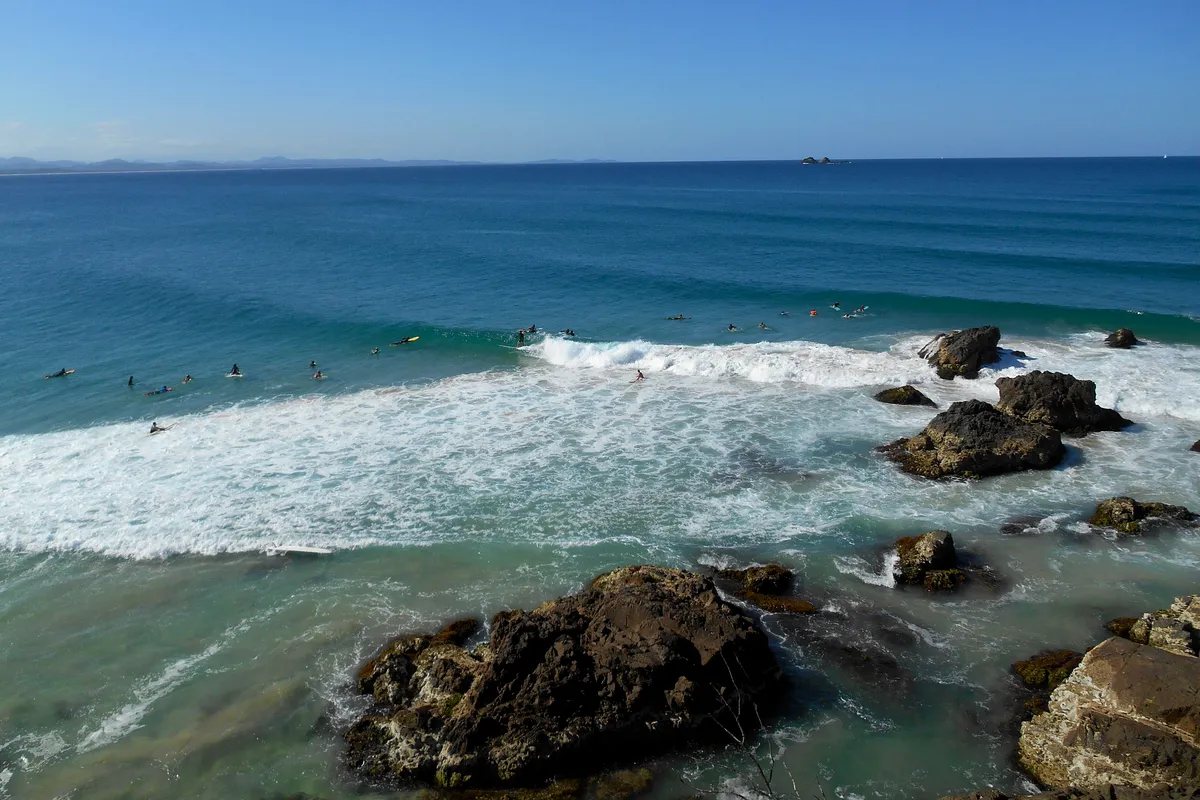
Recognised, publicly known surf spots around Byron Bay. Suitability depends on the day's swell, wind and tide, so treat the level as a guide, not a guarantee.
| Break | Type | Best for | Notes |
|---|---|---|---|
| The Pass | Right-hand point | Intermediate | Long, peeling rights along Cape Byron's northern side. Ideal for longboards and mid-lengths, but one of Australia's most crowded waves. |
| Wategos | Right-hand point/beach | Beginner–Intermediate | Gentle rights in a small, sheltered bay. Great for longboarding and confident beginners; limited parking. |
| Main Beach & Clarkes | Beach break | Beginner | Sandy town beaches often used by surf schools. Smaller and more forgiving than the exposed coast. |
| Tallows | Beach break | Intermediate–Advanced | Long, exposed east-facing beach south of the cape. More powerful, with strong currents. |
| Broken Head | Points & beaches | Intermediate–Advanced | A series of points and beaches in a nature reserve south of Byron. Can be excellent on the right swell. |
| Lennox Head | Right-hand point | Advanced | A world-class right-hand point about twenty minutes south. Powerful on big swells, rocky shoreline and committed locals. |
Full profile: The Pass (Byron Bay).
Byron Bay surf climate, measured
Ten years of ocean model data for the open water off this coast: what the swell usually looks like before it reaches the beach. Shelter, sandbars and reefs change what you actually surf, so read this next to the month notes below.
| Month | Swell | Period | From | Wind | Water | Wetsuit | Days over 2.5 m |
|---|---|---|---|---|---|---|---|
| Jan | 1.4 m | 9 s | E | 14 km/h NE | 25°C | Boardshorts | 5% |
| Feb | 1.7 m | 9 s | E | 13 km/h SE | 26°C | Boardshorts | 10% |
| Mar | 1.7 m | 9 s | SE | 12 km/h E | 26°C | Boardshorts | 10% |
| Apr | 1.6 m | 9 s | SE | 13 km/h S | 25°C | Boardshorts | 13% |
| May | 1.6 m | 9 s | SE | 12 km/h S | 23°C | Rash vest or 1 mm top | 5% |
| Jun | 1.5 m | 10 s | SE | 15 km/h S | 22°C | Rash vest or 1 mm top | 10% |
| Jul | 1.5 m | 10 s | SE | 14 km/h N | 21°C | 2 mm shorty or spring suit | 10% |
| Aug | 1.4 m | 10 s | SE | 15 km/h N | 20°C | 2 mm shorty or spring suit | 5% |
| Sep | 1.6 m | 9 s | SE | 15 km/h N | 20°C | 2 mm shorty or spring suit | 8% |
| Oct | 1.6 m | 9 s | SE | 13 km/h N | 21°C | 2 mm shorty or spring suit | 3% |
| Nov | 1.3 m | 8 s | E | 12 km/h NE | 22°C | Rash vest or 1 mm top | 0% |
| Dec | 1.4 m | 8 s | SE | 13 km/h N | 24°C | Rash vest or 1 mm top | 8% |
Median values from ERA5 at a sea point near Byron Bay (29°S, 153.5°E), sampled 4 days a month at 12:00 UTC, 2015-2024. Highlighted months are our suggested planning window. Not a forecast or a safety assessment. How we use this data.
Book a surf trip to Byron Bay
Everything we can link you to for this trip, grouped by what you need. Before you pay a camp or school, read who holds your money, and check that your insurance covers surfing.
Where to stay
Search near the breaks. Filter for surf hostels, apartments or hotels once you can see the map.
Surf lessons and activities
Listings change by season, so check what the operator includes and who coaches.
Flights
Add your dates and check the board fee on every leg before you pay.
Car hire
Ask about roof racks and whether the insurance covers boards on the roof.
Airport transfer
Tell the driver you have a board and its length when you book.
Mobile data
Download a forecast app and offline maps before you land.
Flight delay claims
If a delay eats your first surf day, check whether you can claim.
Luggage storage
Useful between check-out and a late flight. Check the size limit before dropping a board.
Links marked as partner links may earn us commission at no cost to you; the rest earn us nothing. We have not checked live availability or price, and the seller's terms apply. How we handle this.
A north-facing corner of the coast
Most of the east coast of Australia faces east, open to swell from the Tasman Sea and the Pacific. Byron Bay is different: Cape Byron, the most easterly point of mainland Australia, shelters a curved bay that faces roughly north. Swells from the south wrap around the cape and peel along its northern side as long, gentle point waves. On the other side of the cape, the beaches face more directly into the swell and are more powerful.
That geography means Byron has an unusually wide range of waves for a small area. Longboarders and beginners can enjoy The Pass and Wategos, while shortboarders and experienced surfers can head to exposed beaches and points to the south. It also means the wind direction matters: south and south-west winds are offshore or cross-shore in the bay, while northerly winds can mess it up.
The Pass and Wategos
The Pass is Byron's most famous wave: a right-hand point break that peels along the northern side of Cape Byron. On a clean south swell, it can offer long, rippable walls that suit longboards and mid-lengths. It is also one of the most crowded waves in Australia, with a mix of locals, visitors and surf schools. Etiquette and patience are essential.
Wategos, a small, beautiful beach just around the headland, offers gentle, rolling rights that are often ideal for longboarding and confident beginners. It is protected from most winds and can be a magical spot at dawn. Parking is limited and fills quickly.
Main Beach, Clarkes and the town beaches
The beaches in front of town, including Main Beach and Clarkes Beach, are sandy beach breaks that are often used by surf schools. They pick up some swell around the cape and are usually smaller and more forgiving than the exposed beaches. Lifeguards patrol the busiest sections in season.
Further west along the bay, Belongil Beach offers more beach-break peaks that can be quieter. The sandbanks shift, so quality varies through the year. On a big swell, these beaches can offer surprisingly good waves; on small days, they are perfect for learning.
Tallows, Broken Head and Lennox Head
On the southern side of the cape, Tallows Beach faces east and catches far more swell than the bay. It is a long, exposed beach with strong currents and powerful waves, better suited to experienced surfers.
Further south, Broken Head has a series of points and beaches in a nature reserve, with right-hand waves that can be excellent on the right swell. Lennox Head, about twenty minutes' drive south, is a world-class right-hand point break that can produce long, powerful waves on big south swells. It is recognised as a National Surfing Reserve and is only for experienced surfers, with a rocky shoreline and strong local crew.
Staying in Byron Bay
Byron's town centre is compact and walkable, with cafés, restaurants, bars and shops a few minutes from Main Beach. Staying in town makes it easy to walk to the beaches and The Pass.
Suburbs such as Suffolk Park, south of the cape, are quieter and closer to Tallows. Lennox Head and Bangalow offer a more relaxed, village feel within driving distance. Accommodation in Byron is expensive and books up quickly in summer and during holidays; plan ahead.
How to get to Byron Bay
Ballina Byron Gateway Airport is the closest, around half an hour's drive. Gold Coast Airport is a little further north and has more international and domestic connections. Shuttles run from both airports to Byron.
A car is useful for reaching Lennox Head, Broken Head and the hinterland. Parking in town and near popular beaches can be difficult and expensive. Cycling and walking are good options within town.
Ocean safety, sharks and what to pack
Byron Bay's beaches are patrolled by volunteer surf lifesavers and professional lifeguards in season, but not every beach and not every hour. The Beachsafe service run by Surf Life Saving Australia lists patrol times and hazards for each beach, and it is worth checking before you go to a new spot. Rip currents are the biggest everyday hazard on Australian beaches: learn to spot the darker, calmer-looking channels where water flows back out to sea, and if you are caught in one, stay calm, hold on to your board and paddle parallel to the beach or signal for help.
Sharks are part of the marine environment on the New South Wales north coast, and the region has had serious incidents. The practical precautions are the ones local surfers follow: avoid surfing alone, at dawn and dusk in murky water, near river mouths after heavy rain, or near schools of baitfish. Follow any beach closures and lifeguard advice, and check local shark-alert apps that report sightings.
Pack a 3/2 wetsuit for winter, a long-sleeved top and high-protection sunscreen for summer, and a hat. Board hire is widely available in town, from soft-tops to performance boards, so travelling without your own board is realistic.
Beyond the surf in Byron Bay
Watch the wind and swell direction to choose between the bay and the exposed beaches. Surf The Pass early to beat the crowds, or head to Wategos for a mellower session.
On a flat day, walk the Cape Byron lighthouse track for coastal views and, in season, migrating humpback whales. Explore the hinterland's rainforest and villages, such as Bangalow and Mullumbimby. Byron's markets, cafés and creative scene are part of the experience. Remember that the waters around Byron are home to sharks and other marine life; follow lifeguard advice and swim between the flags.
Byron Bay surf season month by month
A broad planning picture, not a forecast. Swell, wind and water temperature vary from year to year.
| January | Summer, with warm water and the chance of cyclone swells from the north-east. Busy holidays. Northerly winds can be an issue. |
|---|---|
| February | Peak cyclone season. When a cyclone swell arrives, The Pass and Lennox can fire. Hot and humid. |
| March | Late summer, still warm water and the chance of cyclone swells. Autumn swells begin to arrive. |
| April | Autumn brings more consistent south swells and lighter winds. Water still pleasantly warm. |
| May | Cooler mornings and more south swells. A good month for all levels, with fewer crowds. |
| June | Winter begins, with consistent south swells and offshore south-west winds. Cooler water: a 3/2 wetsuit. |
| July | Prime winter conditions: clean, offshore mornings and regular swell. Humpback whales migrate past. |
| August | Still excellent winter surf. Cool mornings, sunny days and good wave quality at the points. |
| September | Spring brings more variable winds and smaller swells. Water starts to warm. |
| October | Northerly winds become more common. Good for learning in the bay on small days. |
| November | Warming water and longer days. Swells are often small; mornings are best before the wind. |
| December | Early summer, busy holidays and warm water. The chance of north-east swells increases late in the month. |
Learning to surf in Byron Bay
Byron Bay is one of Australia's most popular places to learn to surf. The sheltered beaches in the bay, such as Main Beach and Clarkes, offer gentle white water and lifeguard patrols in season. Many surf schools operate in town, offering group and private lessons, multi-day packages and longer courses.
Lessons usually take place in the morning when winds are lighter. Ask how many students each instructor teaches, whether the school is accredited, and whether wetsuits and soft-top boards are included. Make sure you understand rip currents and how to stay safe in the surf.
As you progress, Wategos and the inside sections of The Pass can be good next steps, but only when you can control your board and respect the crowd.
Comparing options across the country? Read our guide to surfing in Australia.
Seasonal notes on this page describe typical patterns, not the conditions on a given day. Use the local forecast, lifeguard advice and a qualified instructor for water-safety decisions, and get a written breakdown of what any surf package includes before paying.
Byron Bay surf trip questions
When is the best time to surf in Byron Bay?
June to August, Australia's winter, brings consistent south swells and offshore south-west winds. Summer can bring cyclone swells, along with warm water and bigger crowds.
Is Byron Bay good for beginners?
Yes. The sheltered beaches in the bay, such as Main Beach and Clarkes, are ideal for learning, and many surf schools operate there.
Is The Pass crowded?
Very. The Pass is one of Australia's most popular waves. Surf early, be patient and respect local surfers and the line-up.
Do I need a wetsuit in Byron Bay?
In winter, a 3/2 wetsuit is common. In summer, boardshorts or a light top are usually enough.
How far is Lennox Head from Byron Bay?
About twenty minutes' drive south. It is a world-class right-hand point for experienced surfers.
Sources & editorial notes
Destination context checked against the sources below. Base-selection and itinerary suggestions are Book & Surf editorial recommendations. Seasonal windows are broad planning suggestions, not measured forecasts or guarantees.
- Tourism Australia: Guide to Byron Bay ↗
- Wikipedia: Byron Bay ↗
- Beachsafe: Surf Life Saving Australia beach information ↗
- Wikipedia: Lennox Head ↗
We do not claim to have personally surfed every break. Read our editorial standards.