The Pass (Byron Bay).
The Pass is a right-hand point wave in the lee of Cape Byron, the easternmost point of the Australian mainland. Wikipedia says the cape is about three kilometres east of Byron Bay town and has a lighthouse built in 1901, with hiking trails and whale watching. The Pass has a reputation as a long, forgiving wave that suits longboarders and learners as well as shortboarders. That reputation is also the reason it is crowded, and visiting surfers should expect to share it with many people.
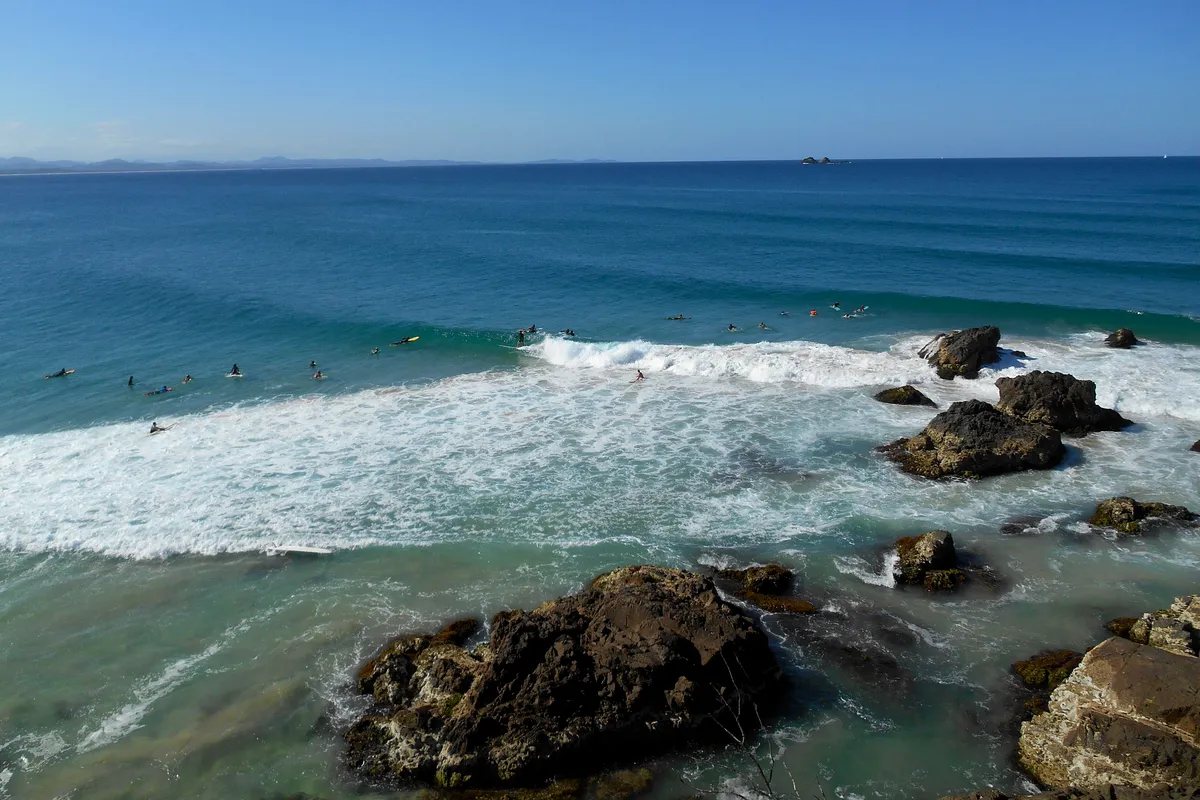 Photo: Richhandley · CC BY-SA 4.0 · Wikimedia Commons
- Level
- Beginner
- Direction and bottom
- Right · Mixed
- Best swell
- ENE to E
- Best wind
- SE offshore
- Best tide
- Works at all stages
- Best months
- Feb, Mar, Apr, May
- Size
- Ankle-high to head-high; long, gentle rides on small days
- Hazards
- Dense crowds, Rocks along the headland, Rips, Buoys and moorings, Sharks on this coast
Why the wave is so easy
Surf-Forecast describes The Pass as an exposed point break with consistent surf, and it gives the ideal swell direction as east-north-east. The wave refracts around the headland and peels into the bay, giving a slow, rolling wall. The page says the wave is good at all stages of the tide, and rates its consistency at three out of five. A reviewer rates the difficulty at about 2.4, which fits a wave that is easier than most named points on this list.
Wikipedia explains that Cape Byron has a significant influence on the open beaches to the north, because longshore drift carries sand northward and the cape blocks it. That explains why the sand around the bay is shaped the way it is, and why the wave is more sheltered from southern swells than some neighbouring beaches.
Seasons and conditions
The best wind is south-east offshore, and the best season is autumn, particularly February on Surf-Forecast's statistics: about 43 percent clean, 22 percent blown out and 35 percent too small. The page notes a sea temperature of about 22 degrees Celsius, with a shorty typical on that day. The wave can be good in winter, when southerly swells wrap into the bay, and in summer, when northeasterly windswell dominates.
Because The Pass is so easy, it is crowded in almost every season. On weekends and holidays the lineup is packed, and early morning is the best time to find some space. Weekday sessions are quieter, and the wave can be pleasant even in small surf.
Who should be careful
The Pass suits beginners and improvers with some surfing experience, but the crowd and the rocks make it hard for true first-timers. Surf-Forecast lists rips, rocks, man-made dangers such as buoys, and locals among the hazards, and gives the crowd a low rating. Learners should take a lesson from an accredited school and use the quieter beaches nearby, such as Tallows or Clarkes, when The Pass is full.
Shortboarders and longboarders share the wave, and the etiquette is to give way to the surfer closest to the peak. Do not drop in, do not paddle through the takeoff zone, and keep control of your board. The Northern Rivers coast is also an area where sharks have been recorded, so check local advice and avoid surfing at dawn or dusk if you are concerned.
Getting there and watching
The Pass is at the end of Brooke Drive, a short walk or drive from the centre of Byron Bay. Surf-Forecast lists Gold Coast Airport about 54 kilometres away and Brisbane about 148 kilometres away. A reviewer on the page notes a short walk to town. Parking near the beach is limited and can be expensive in peak season, so many visitors walk or cycle.
The headland and the grassy area above the beach offer a good view of the waves and the surfers. The Cape Byron walking track starts nearby and leads to the lighthouse. Dress for the weather and keep to the tracks. In winter and spring you may see whales passing offshore.
Alternatives close by
Surf-Forecast lists Tallows Beach, Wategos, The Wreck, Suffolk Park and Broken Head within eight kilometres. They differ in swell exposure and difficulty, and the Byron Bay destination guide describes the wider area, lessons and places to stay.
Choosing your moment
The Pass is at its best when the swell is small to medium and the wind is light. Mornings are often the best time, but the lineup is also at its fullest as people try to catch a wave before work or school. If you are a beginner, avoid weekends and school holidays, and use the quieter beaches nearby for your first sessions. Take a lesson from an accredited school and learn the rules of the water before you paddle into a crowd. Watch for moored boats and buoys, and be aware of the headland rocks. When you finish, rinse your gear and put your rubbish in the bins provided.
The ocean off Byron Bay, by month
| J | F | M | A | M | J | J | A | S | O | N | D | |
|---|---|---|---|---|---|---|---|---|---|---|---|---|
| Swell, m | 1.4 | 1.7 | 1.7 | 1.6 | 1.6 | 1.5 | 1.5 | 1.4 | 1.6 | 1.6 | 1.3 | 1.4 |
| Period, s | 9 | 9 | 9 | 9 | 9 | 10 | 10 | 10 | 9 | 9 | 8 | 8 |
| Water, °C | 25 | 26 | 26 | 25 | 23 | 22 | 21 | 20 | 20 | 21 | 22 | 24 |
Open-ocean ERA5 medians, not wave size at the break. Sources.
Questions about The Pass (Byron Bay)
Is The Pass a left or a right?
A right. It is a point break that peels along the headland towards the bay.
Is it good for beginners?
It is gentle in shape, but crowded and rocky. Beginners should take a lesson and consider quieter beaches.
When is the best time?
Autumn, especially around February on Surf-Forecast's figures, though it can work in other seasons.
How far is it from the airport?
About 54 kilometres to Gold Coast Airport, and about 148 kilometres to Brisbane, on Surf-Forecast's figures.
Where else can beginners surf in Byron Bay?
Surf-Forecast lists Tallows Beach and Wategos within a kilometre or so, and other breaks further along the coast. A qualified school will know which is working on the day. Beginners generally do better away from the point when it is crowded, using the soft white water first.
Check a live forecast and local advice before paddling out. Heavy waves injure and kill experienced surfers.