Snapper Rocks.
Snapper Rocks is a small rocky outcrop on the northern side of Point Danger, at the southern end of Rainbow Bay on the Gold Coast. Wikipedia describes it as a famous surf break and the start of the sandbank known to surfers as the Superbank. The rocks give the wave its shape, and the sand to the north keeps the rides long. It is also one of the busiest waves in Australia, and the lineup rewards patience and local etiquette.
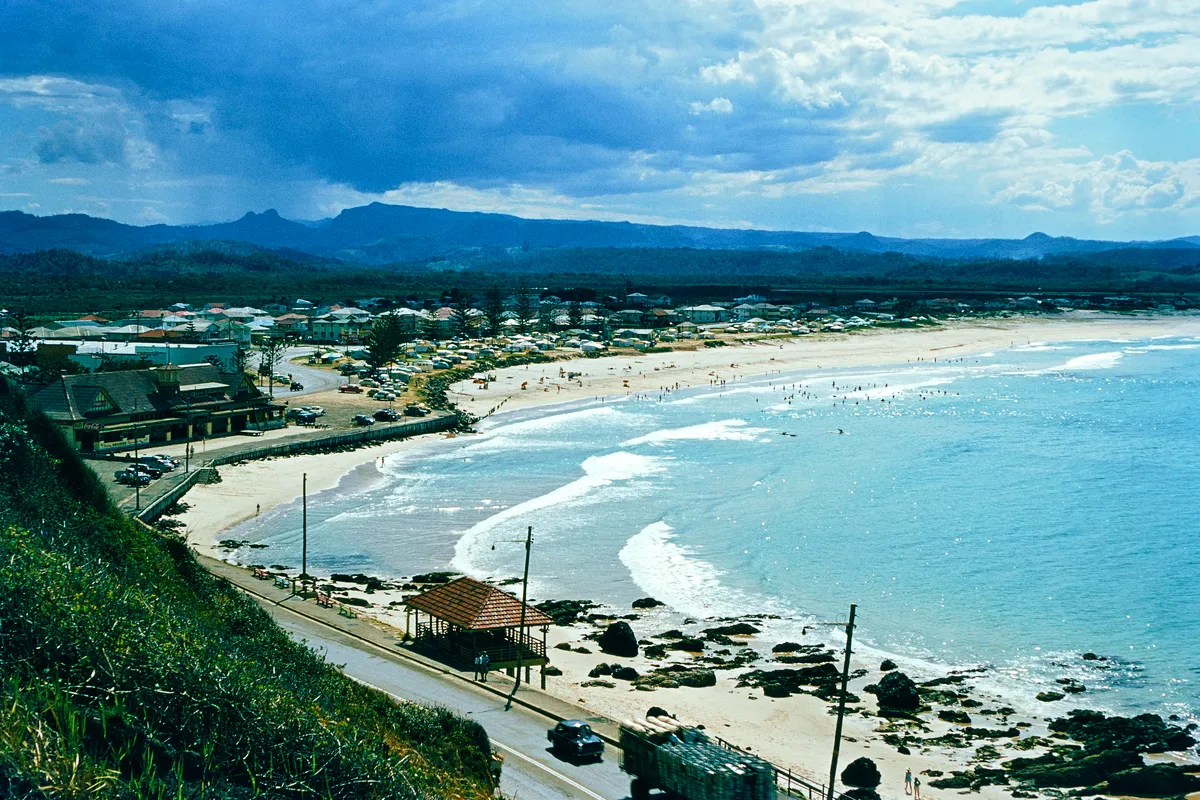 Photo: Jack Bain · CC BY 4.0 · Wikimedia Commons
- Level
- Advanced
- Direction and bottom
- Right · Mixed
- Best swell
- E to SE
- Best wind
- SE offshore
- Best tide
- Works at all stages
- Best months
- Feb, Mar, Apr, May, Jun, Jul, Aug
- Size
- Waist-high to double overhead; long rides link into Rainbow Bay
- Hazards
- Dense crowds, Rocks at the point, Rips along the channel, Territorial lineup, Jetty and rock edge
How the Superbank formed
Wikipedia says the Tweed River sand bypass system, operating since 1995, pumps sand from the river mouth to beaches north of it to keep the river entrance safe for shipping and to stabilise erosion. As a result, a large build-up of sand has formed between Snapper Rocks and Kirra, extending the beaches by around 100 to 200 metres and creating a new sandbar surf break called the Superbank.
The Superbank stretches from Snapper Rocks through Rainbow Bay, Greenmount Point and Coolangatta Beach to Kirra, a distance of around two kilometres, according to the same article. On the best days, a wave can link several of these sections into one long ride. Surf-Forecast describes Snapper Rocks as a fairly exposed point break with very consistent surf, rated five out of five.
Conditions that work
The best swell direction is east, and the best wind is south-east offshore, according to Surf-Forecast. The wave works at all stages of the tide. Autumn and winter are best, and February statistics show about 52 percent clean, 13 percent blown out and 35 percent too small. Summer swells from tropical cyclones can produce large surf, while winter southerly swells bring power when they wrap around.
The sea temperature is about 22 degrees Celsius on the page, with a shorty suggested for that day. In winter the water is cooler, and a spring or full suit is normal. Because the wave is so well known, forecasts are widely used and the lineup fills quickly when a good swell is predicted.
Rain, onshore afternoon sea breezes and the tropical cyclone season can change the picture from day to day, so look at the morning and evening forecasts rather than relying on a single number. Early mornings often give the cleanest faces and the most manageable crowds.
Who should skip Snapper
Snapper Rocks is not for beginners, and it is not an easy place for intermediates who cannot paddle quickly or who do not know the etiquette of a busy point. Surf-Forecast warns of rips, rocks and locals, and a reviewer jokes about about 500 of your closest friends in the water. The rocks at the point are a real hazard when the swell is large, and a collision between boards in a crowd is a real risk.
If you are learning, many other beaches on the Gold Coast offer gentler conditions with qualified schools. If you do surf Snapper, wait your turn on the inside, do not drop in, and avoid paddling through the take-off zone. Surf-Forecast gives a difficulty of 3 out of 5, but the crowd makes it feel harder than the number suggests.
Getting there and watching
The break is at Coolangatta, at the southern end of the Gold Coast. Surf-Forecast lists Gold Coast Airport at Coolangatta about five kilometres away and Brisbane about 97 kilometres away. Trams, buses and the M1 motorway connect the region, and taxis are available from the airport. Parking near Rainbow Bay is limited, so expect to walk.
The rock wall and the headland above give an excellent view of the lineup and the waves. Watching from there is allowed and popular, particularly in the early morning. Keep to paths, avoid slippery rocks and take care in wind. Respect the signs about restricted areas and the local residents.
Nearby breaks
Surf-Forecast lists Duranbah, Rainbow Bay, Greenmount, the Tweed River Breakwall and Kirra within about two kilometres. Each has a different character and a different crowd. The Gold Coast guide describes the wider region and beginner options.
Making a session work in a crowd
Snapper Rocks rewards surfers who understand crowd dynamics. Arrive early, paddle out through the channel rather than across the take-off zone, and position yourself where you can catch waves without blocking others. Keep your board close, use a leash that suits the conditions and wait your turn. Avoid the rocks at the point when the swell is large. If the lineup is too busy, walk along the beach to Rainbow Bay, Greenmount or Kirra, where the sand and tide may offer space. Remember that the Gold Coast has frequent lifeguard patrols, so swim between the flags when you are not surfing.
The ocean off Gold Coast, by month
| J | F | M | A | M | J | J | A | S | O | N | D | |
|---|---|---|---|---|---|---|---|---|---|---|---|---|
| Swell, m | 1.3 | 1.6 | 1.5 | 1.4 | 1.3 | 1.3 | 1.3 | 1.2 | 1.4 | 1.4 | 1.2 | 1.3 |
| Period, s | 9 | 9 | 9 | 9 | 10 | 10 | 9 | 9 | 8 | 9 | 8 | 8 |
| Water, °C | 27 | 27 | 27 | 26 | 24 | 23 | 22 | 22 | 22 | 23 | 24 | 25 |
Open-ocean ERA5 medians, not wave size at the break. Sources.
Questions about Snapper Rocks
What is the Superbank?
A long sandbank created by the Tweed River sand bypass system, which links Snapper Rocks, Rainbow Bay, Greenmount and Kirra.
Is Snapper Rocks crowded?
Yes. Surf-Forecast describes it as busy, with a reviewer joking about 500 surfers in the water.
When is the best time?
Autumn and winter, according to Surf-Forecast, with a clean-surf peak in February in its statistics.
How far is it from the airport?
About five kilometres to Gold Coast Airport at Coolangatta on Surf-Forecast's figure.
Check a live forecast and local advice before paddling out. Heavy waves injure and kill experienced surfers.