Manu Bay.
Manu Bay is the left-hand point wave on the coast west of Raglan, about eight kilometres from the township according to Wikipedia. It is one of a series of breaks along the headland that includes Whale Bay and Indicators, and its traditional name is Waikeri, meaning surging or swirling waters. The wave is more than 300 metres long and has been a reference point for left-hand points for decades. It is also a wave that rewards patience, since it is long enough to link sections and thoughtful enough to punish a rushed takeoff.
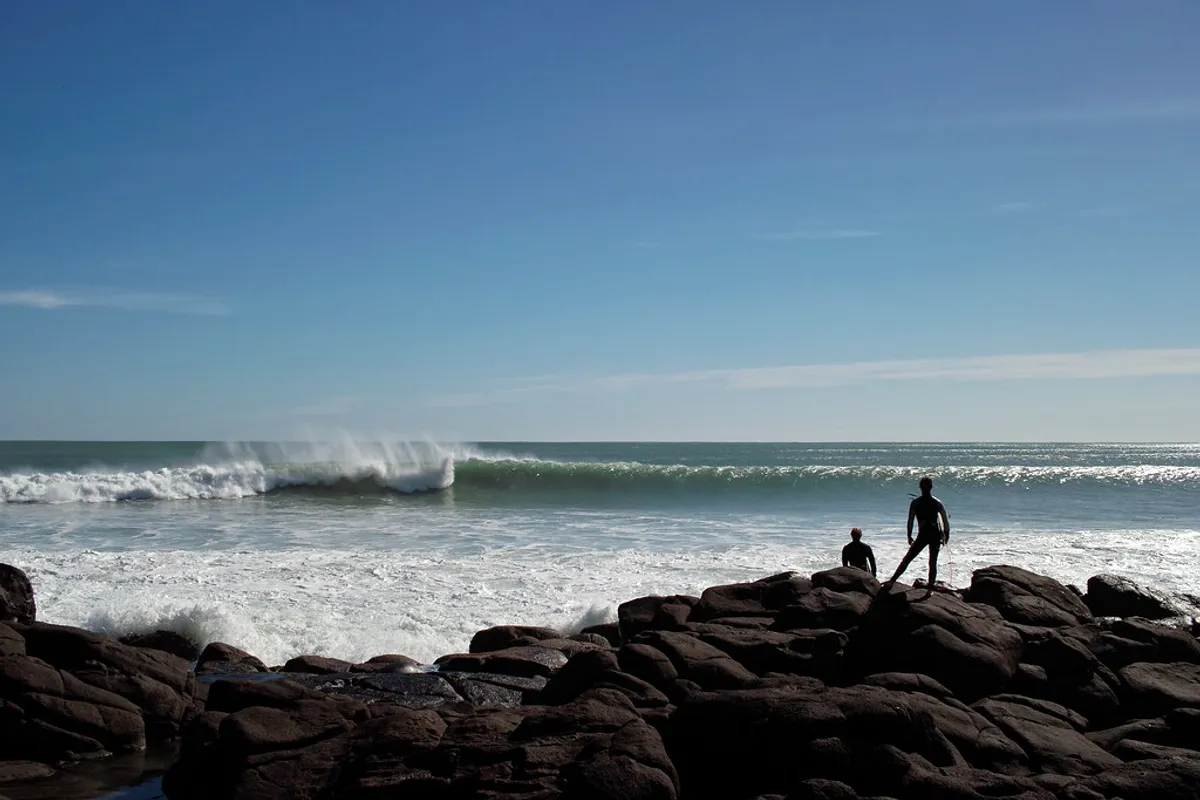 Photo: Jun Kaneko · CC BY-SA 2.0 · Flickr
- Level
- Intermediate
- Direction and bottom
- Left · Cobble
- Best swell
- SW groundswell
- Best wind
- SE offshore
- Best tide
- Around low
- Best months
- Apr, May, Jun, Jul, Aug, Sep
- Size
- 2 ft to 10 ft or more; best from waist to overhead
- Hazards
- Rocks and boulders, Locals and crowds, Cold water, Wind exposure
A long left on boulders
Wikipedia describes Manu Bay as working from about two to ten feet or more and breaking over 300 metres, with alternating hollow and wall sections and occasional barrels. It is usually about two-thirds the size of Indicators, the next point along the coast. WannaSurf describes a long, regular left that wraps around the point over small boulders, and says it tends to be hollower at low tide.
Surf-Forecast lists it as an exposed point break rated five out of ten and fairly consistent. The best swell is from the south-west and the best wind is south-east. It is mostly groundswell, which gives long, lined-up sets. The wave is a left, so goofy-footers face the wave and regular-footers ride with their backs to it.
Because the point is long, it rewards surfers who plan their ride rather than rushing the first section. Look ahead to see where the wave steepens, trim to stay with it and be ready for the hollower stretch near the end. A good ride here is more about line and patience than raw speed.
Season, tide and wind
The wave can work year-round, but winter is best, most often June, when Surf-Forecast shows clean waves about 28 percent of the time, blown out about 55 percent and too small about 17 percent. The page says the best tide is around low. Light onshore winds can still leave rideable waves, but a strong onshore wind will spoil it.
The sea temperature is about 16 degrees Celsius, so a spring wetsuit is typical, with a thicker suit in winter. Rain and cold fronts are common in the cooler months, and winter days can be wet. New Zealand weather is variable, so allow flexibility.
Who should and should not surf it
Manu Bay suits intermediates who are comfortable on a point and who can respect a lineup with its own order. Surf-Forecast lists the crowd as sometimes crowded, with a reviewer noting that numbers have increased in recent years. It also warns of rocks and local surfers. A beginner should not try the point on a medium or large day; the paddle is long, the sets can be powerful and the rock shelf is unforgiving.
Beginners can learn on Ngarunui Beach, listed by Surf-Forecast at zero kilometres and rated three. Surf there with an instructor and move to the point only when you can control your board and understand priority. In the water, wait your turn, avoid dropping in and give way to the surfer closest to the peak.
Getting there and watching
Raglan is 48 kilometres west of Hamilton on State Highway 23, according to Wikipedia. Surf-Forecast lists Hamilton airport about 44 kilometres away and Auckland about 90 kilometres away. Wikipedia says some Raglan buses run to Manu Bay and carry bikes. The easiest way for most visitors is to hire a car, and parking is available near the bay.
The road runs along the shore, so you can watch the wave from the car park or the grass above the point. The view is close and clear. The area is a recreation reserve that was purchased in 1971, according to Wikipedia, and it also has historical and cultural meaning, so treat it respectfully and follow signs.
History and neighbours
Wikipedia says Manu Bay was featured in The Endless Summer in 1966 and a 2010 surf film, and that Raglan hosted a world championship surfing event there in 1998. Surf-Forecast lists Whale Bay two kilometres away and Indicators four kilometres away. The Raglan destination guide covers the town and the wider coast.
Respecting the place
Manu Bay has a long history for local Māori, and its traditional name, Waikeri, reflects that. Treat the reserve and its surroundings with care, follow signs, and take rubbish home. The road along the shore can be busy with cars and cyclists, so watch for traffic when walking to the water with a board. In winter, bring warm clothes for the car park, because rain and wind are common. A hooded wetsuit, boots and gloves are a good idea in the cooler months. If the point is crowded, consider Ngarunui Beach or another break along the coast instead of forcing your way into the lineup.
The ocean off Raglan, by month
| J | F | M | A | M | J | J | A | S | O | N | D | |
|---|---|---|---|---|---|---|---|---|---|---|---|---|
| Swell, m | 1.6 | 1.5 | 1.6 | 1.9 | 2.3 | 1.9 | 2.0 | 2.2 | 2.3 | 2.0 | 2.0 | 1.7 |
| Period, s | 12 | 12 | 13 | 13 | 13 | 13 | 13 | 12 | 13 | 13 | 13 | 12 |
| Water, °C | 20 | 21 | 20 | 19 | 18 | 16 | 14 | 14 | 14 | 15 | 17 | 19 |
Open-ocean ERA5 medians, not wave size at the break. Sources.
Questions about Manu Bay
Is Manu Bay a left or a right?
A left. It is a long left-hand point break over boulders, the wave that made Raglan famous.
What does Waikeri mean?
Wikipedia says it is the traditional name and means surging or swirling waters.
When is the best time?
Winter, especially June on Surf-Forecast's figures, though it can work year-round.
Is there somewhere easier nearby?
Ngarunui Beach is listed at zero kilometres and rated three by Surf-Forecast. It is better for learners.
Check a live forecast and local advice before paddling out. Heavy waves injure and kill experienced surfers.