The breaks
Recognised, publicly known surf spots around Hiriketiya. Suitability depends on the day's swell, wind and tide, so treat the level as a guide, not a guarantee.
| Break | Type | Best for | Notes |
|---|---|---|---|
| Hiriketiya beach break | Beach break | Beginner | Small, gentle waves over sand in the middle of the bay, ideal for learners and longboarders. Busy in peak season. |
| Hiriketiya reef | Reef break | Intermediate | More defined, faster wave along one side of the bay. Shallow at lower tides; often crowded. |
| Mirissa | Right-hand reef | Intermediate | Reef break at the end of Mirissa beach, about forty minutes west. |
| Weligama Bay | Beach break | Beginner | Long, sandy bay about an hour west, one of Asia's most popular learning beaches. |
Why Hiriketiya is special
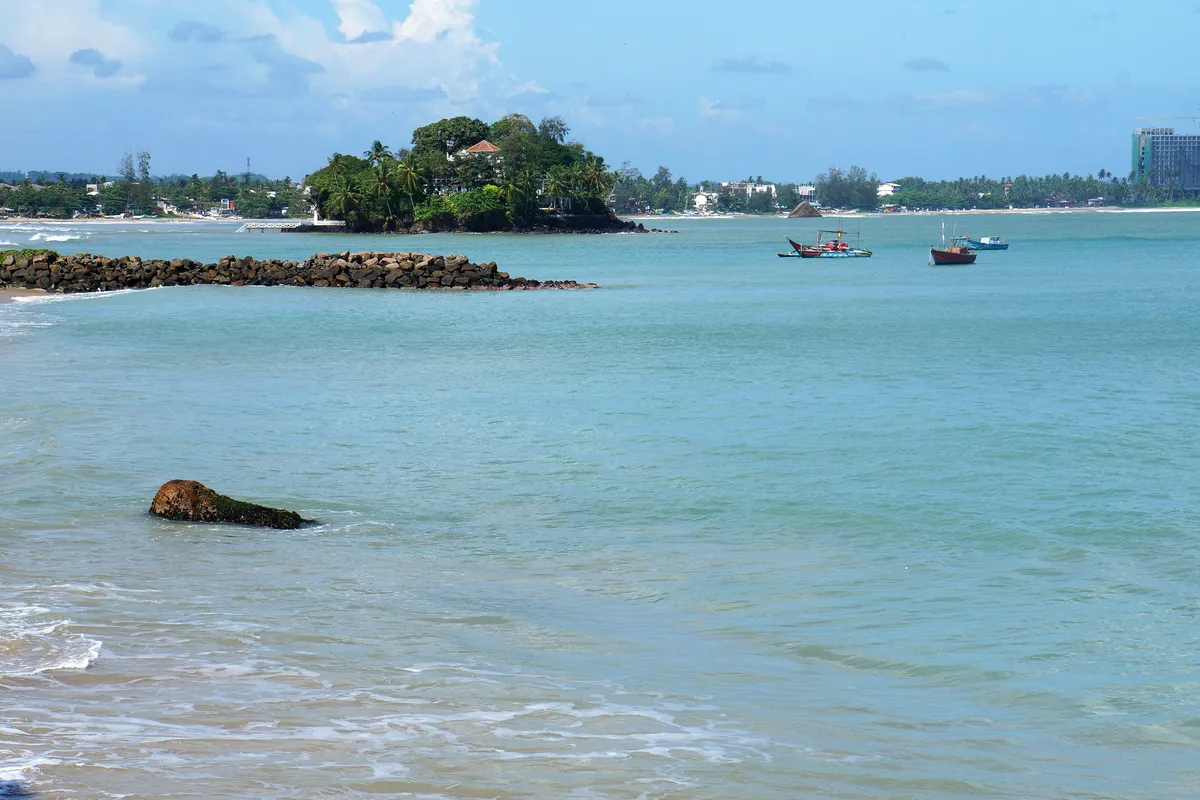
Hiriketiya, often called Hiri, is a small bay near the town of Dickwella, towards the eastern end of Sri Lanka's south coast. It is almost enclosed by headlands, with a narrow opening to the sea, which protects it from the full force of the swell. The result is a calm, beautiful bay with a gentle beach break in the middle and a reef break along one side.
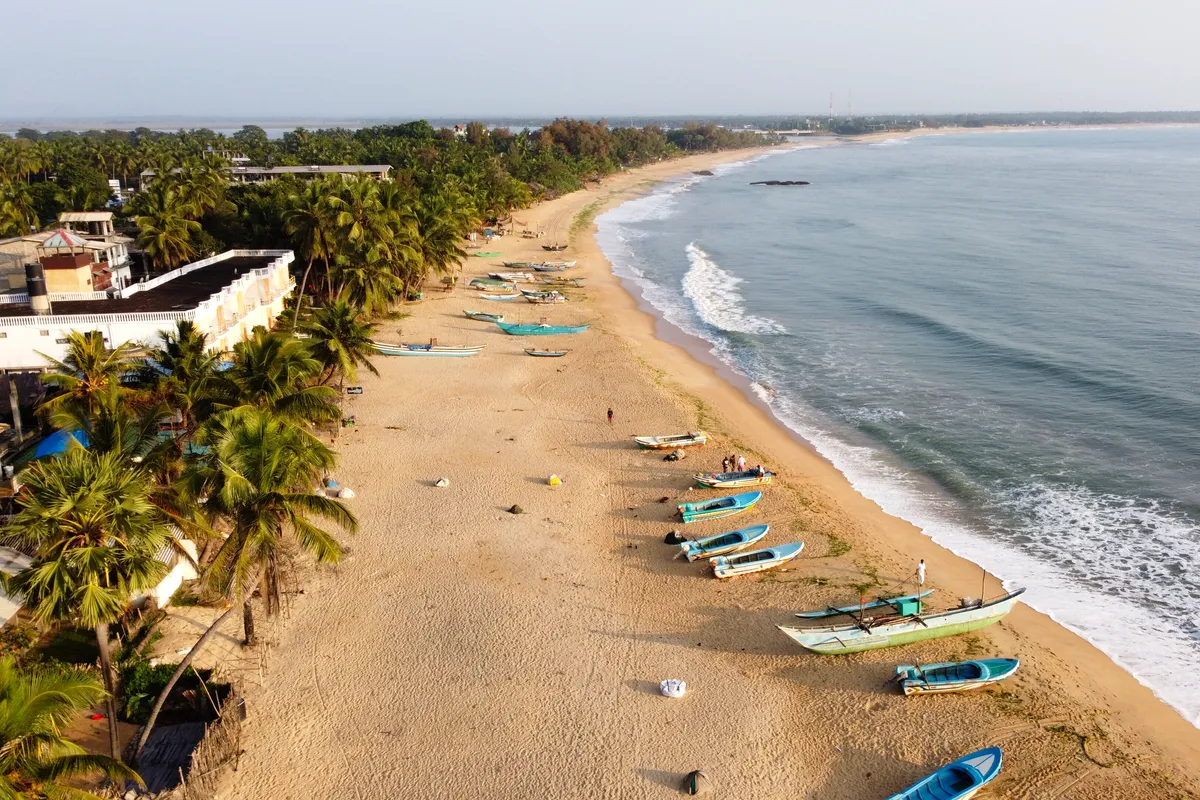
The setting is what draws many visitors: a crescent of golden sand, turquoise water and palm trees, with cafés and guesthouses tucked into the jungle around the bay. Over the past decade, Hiriketiya has grown from a quiet fishing spot into a popular destination for surfers, digital nomads and travellers looking for a slower pace than the busier towns to the west.
The beach break
The beach break in the middle of the bay offers small, gentle waves over sand, ideal for beginners and longboarders. On most days in season, the waves are soft and forgiving, and surf schools use them for lessons. Because the bay is small, the line-up can get busy, especially in peak season, so keep space between you and other surfers.
The waves here depend on swell size and direction: on small days, the bay can be almost flat, while bigger swells bring better waves to the beach break and wake up the reef.
The reef
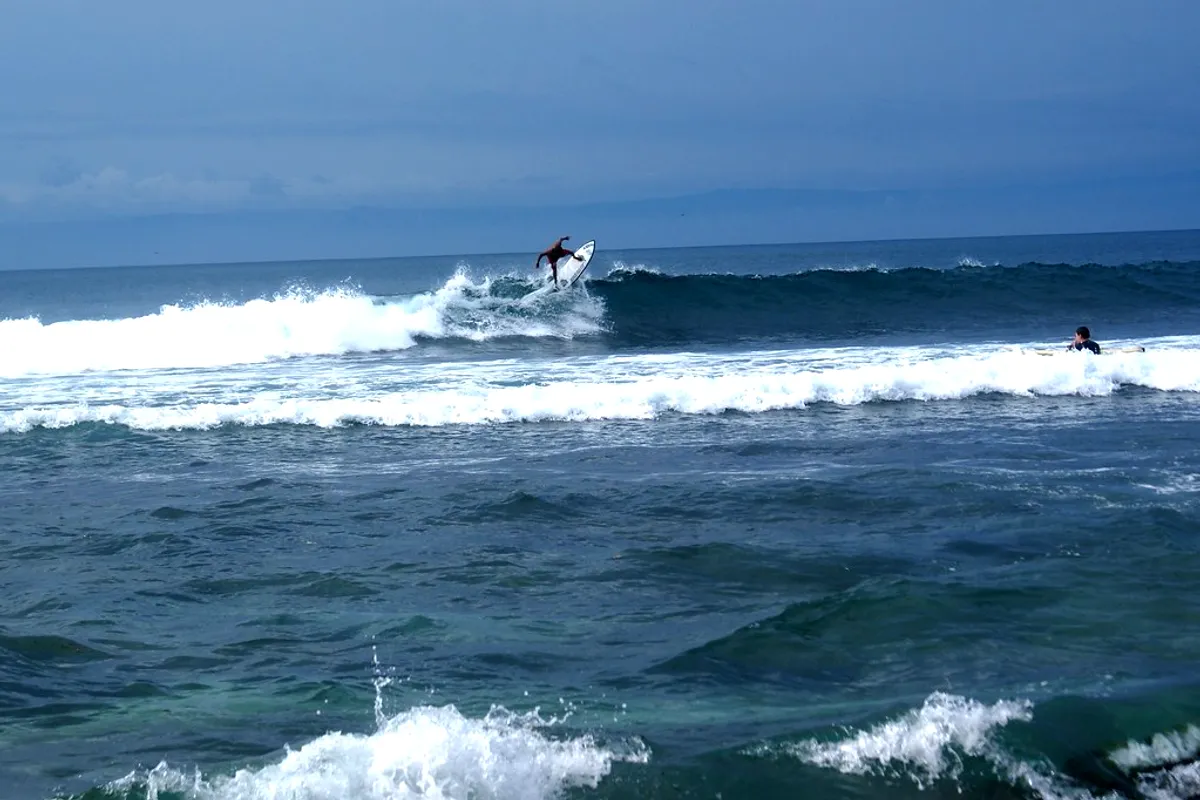
Along one side of the bay, a reef break produces a more defined wave that suits intermediate surfers. It is faster and more powerful than the beach break, and the reef can be shallow at lower tides. It is often crowded with experienced surfers and longboarders, and it is the main attraction for those who have already learned.
Watch the reef from the beach before paddling out, check the tide and ask locally about the safest entry and exit points. Booties can be useful.
Seasons on the south coast
Hiriketiya is in season during the north-east monsoon, from roughly November to April. During these months, winds are generally light or offshore on the south coast, and swells from the Indian Ocean bring consistent, clean waves. December to March is usually the peak, with the most reliable conditions and the busiest bay.
From May to October, the south-west monsoon brings rain and onshore winds to the south coast. The bay's sheltered shape means it can sometimes still be surfable, but conditions are much less reliable, and many surfers head to Arugam Bay on the east coast instead.
Where to stay in Hiriketiya
Accommodation in Hiriketiya ranges from simple guesthouses and surf hostels to boutique villas, most within a short walk of the bay. Many are set in the jungle on the hillsides, offering views and a quieter atmosphere. The bay itself has a handful of cafés and restaurants, some with a creative, design-led feel.
Dickwella, a few minutes away, is a local town with shops and services. Tangalle, further east, has longer beaches and more accommodation. Book ahead for December to March.
Colombo to Hiriketiya: getting there and around
Colombo's Bandaranaike International Airport is several hours away by road via the Southern Expressway. Many guesthouses arrange private transfers. Trains run along the coast to Matara, from where a tuk-tuk can take you the rest of the way.
Tuk-tuks are the main form of local transport and can carry surfboards. Scooter rental is common, but only ride if you are licensed and experienced, and check your insurance. Hiriketiya is about an hour east of Weligama, so day trips to other south coast spots are possible.
What to pack and staying safe
The water is warm all year, so a rash vest or surf top is enough. Pack reef-safe sunscreen, a hat and booties if you plan to surf the reef. A basic first-aid kit for cuts is useful.
On busy days, the main hazard is other surfers and boards, so wear a leash and keep your distance. The reef can be shallow at low tide. Dress modestly away from the beach, respect local customs and be mindful of the fishing community that still uses the bay.
Hiriketiya, Weligama or Mirissa?
Weligama, about an hour to the west, has a much longer, wider bay that is better suited to large numbers of beginners and surf camps. Mirissa, between the two, has a livelier nightlife and a reef break for intermediates. Hiriketiya is smaller, prettier and more relaxed, with a more boutique, creative atmosphere, but its small size means it can feel crowded in peak season.
Many surfers combine them: learning in Weligama, then moving to Hiriketiya for a slower pace and a step up to the reef. All three are in season at the same time.
Planning your days in Hiriketiya
Surf in the morning, when winds are lightest and the bay is calmer. Use the afternoons to rest, take a yoga class or explore.
On a rest day, visit Mulkirigala, a Buddhist rock temple complex on a hill inland, or the blowhole at Hummanaya near Dickwella. Take a tuk-tuk to Tangalle's long beaches, or go whale watching from Mirissa in season. Yala National Park, known for leopards and elephants, is a few hours east.
Hiriketiya surf season month by month
A broad planning picture, not a forecast. Swell, wind and water temperature vary from year to year.
| January | Peak season: consistent swells, sunny days and light winds. The bay is busy. |
|---|---|
| February | Excellent conditions and warm water. A great month for learning and improving. |
| March | Still in season with consistent waves. Crowds start to ease late in the month. |
| April | End of the season. Waves are still good early in the month before the monsoon shift. |
| May | The south-west monsoon arrives: rain, wind and unreliable conditions. Head to Arugam Bay. |
| June | Off-season on the south coast. The sheltered bay may occasionally work. |
| July | Off-season with onshore winds. Many businesses quieter. |
| August | Still off-season. Arugam Bay on the east coast is in season. |
| September | Off-season, with mixed conditions. Some businesses reopen late in the month. |
| October | Transition month as winds start to change. |
| November | The season begins, with cleaner conditions and fewer crowds than peak months. |
| December | Peak season begins, with consistent swells and busy holidays. |
Learning to surf in Hiriketiya
Hiriketiya's beach break is a gentle place to learn, and several surf schools and guesthouses offer lessons with soft-top boards and rash vests. Because the bay is small, lessons can be crowded in peak season, so ask about group size and timing.
If you are a complete beginner, consider starting in Weligama's bigger bay and moving to Hiriketiya once you can catch waves. If you already surf, Hiriketiya's reef is an excellent next step, and local guides can help with positioning and tide.
Ask schools about instructor qualifications and whether they offer coaching or video analysis for improvers.
Comparing options across the country? Read our guide to surfing in Sri Lanka.
Seasonal notes on this page describe typical patterns, not the conditions on a given day. Use the local forecast, lifeguard advice and a qualified instructor for water-safety decisions, and get a written breakdown of what any surf package includes before paying.
Hiriketiya surf trip questions
When is the best time to surf in Hiriketiya?
The season runs from November to April, with December to March usually the most consistent. From May to October, the south coast is affected by the south-west monsoon.
Is Hiriketiya good for beginners?
Yes. The beach break in the middle of the bay has gentle waves suitable for learners. The reef is better for intermediate surfers.
How far is Hiriketiya from Weligama?
About an hour by road. Many surfers combine the two on one trip.
Is Hiriketiya crowded?
It can be in peak season, because the bay is small and popular. Mornings are often quieter.
Do I need a wetsuit in Hiriketiya?
No. The water is warm all year. A rash vest or surf top is useful for sun protection.
How do I get to Hiriketiya from Colombo?
Most visitors take a private transfer via the Southern Expressway, which takes several hours. Trains run to Matara, from where a tuk-tuk can complete the journey.
Is Hiriketiya good for longboarding?
Yes. The gentle beach break in the middle of the bay and the reef on smaller days are both popular with longboarders. Longboard rental is available from surf shops around the bay.
Can I surf Hiriketiya outside the main season?
Sometimes. The bay's sheltered shape means it can occasionally produce small waves during the south-west monsoon, but conditions are unreliable from May to October, and many businesses are quieter. For consistent surf at that time, head to Arugam Bay.
Where should I stay in Hiriketiya?
Most guesthouses, hostels and villas are a short walk from the bay, many on the jungle-covered hillsides. Dickwella, a few minutes away, has local shops and services, and Tangalle further east offers more choice.
Is there nightlife in Hiriketiya?
Hiriketiya is relaxed, with cafés, restaurants and occasional events rather than big nightlife. Mirissa, about forty minutes west, is livelier in the evenings.
Sources & editorial notes
Destination context checked against the sources below. Base-selection and itinerary suggestions are Book & Surf editorial recommendations. Seasonal windows are broad planning suggestions, not measured forecasts or guarantees.
- Sri Lanka Tourism: Thrills and adventure ↗
- Wikipedia: Dickwella ↗
- Wikipedia: Mulkirigala Raja Maha Vihara ↗
We do not claim to have personally surfed every break. Read our editorial standards.