The breaks
Recognised, publicly known surf spots around Tenerife. Suitability depends on the day's swell, wind and tide, so treat the level as a guide, not a guarantee.
| Break | Type | Best for | Notes |
|---|---|---|---|
| La Izquierda (Spanish Left) | Left-hand reef | Advanced | Fast, powerful left over lava reef in Playa de las Américas, with a strong local crew. |
| La Derecha del Cartel | Right-hand reef | Intermediate–Advanced | Right-hand reef on the Playa de las Américas seafront. |
| El Médano | Beach & reef | Intermediate | Famous for wind sports; surfable waves when the wind allows. Near Tenerife South Airport. |
| Almáciga | Beach break | Intermediate | Black-sand beach below the Anaga mountains that picks up winter swells. |
| El Socorro | Beach break | Beginner–Intermediate | North-west black-sand beach popular with surf schools. |
| Punta del Hidalgo | Reef break | Advanced | Powerful reefs on the north coast that work on bigger swells. |
An island with two surf personalities
Tenerife is a volcanic island rising steeply from the Atlantic, with Mount Teide at its centre. The mountain divides the island's climate: the north is greener and wetter, facing the north-west swells that arrive in winter, while the south is drier and sunnier, sheltered from the biggest north swells but exposed to swells from the west and south.
That split gives Tenerife surf in almost every season. In winter, the north coast's beaches and reefs come alive; in summer, south and west swells reach the reefs around Playa de las Américas. The island also has a large population and a busy tourism industry, so surf schools, shops and accommodation are easy to find.
The reefs of Playa de las Américas
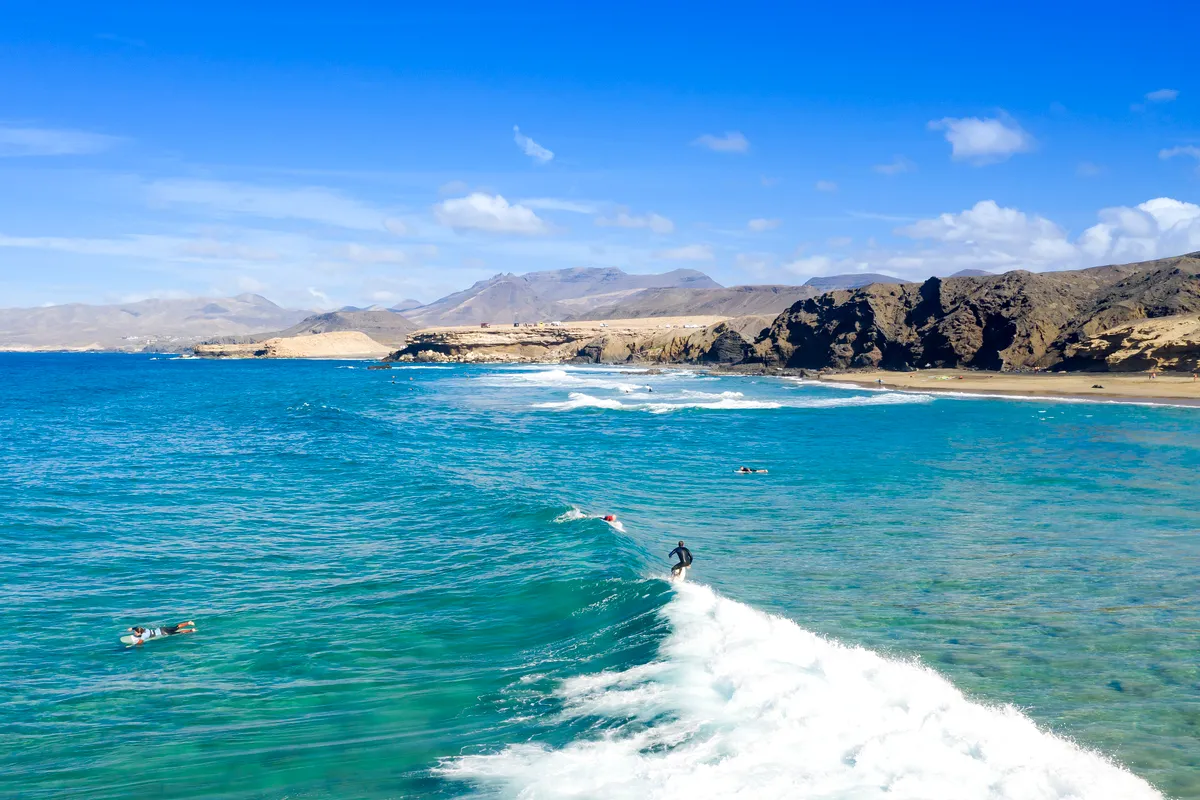
Playa de las Américas, on the south-west coast, is better known as a resort town, but its seafront hides several quality reef breaks. La Izquierda, also called the Spanish Left, is a fast, powerful left over lava reef, while La Derecha del Cartel is a right-hand reef nearby. Other breaks along the seafront work on different swells and tides and suit intermediate and advanced surfers.
The line-ups are close to hotels and promenades, which makes them convenient but also busy, with a strong local crew. The reefs are shallow in places, so booties can help.
El Médano and the wind
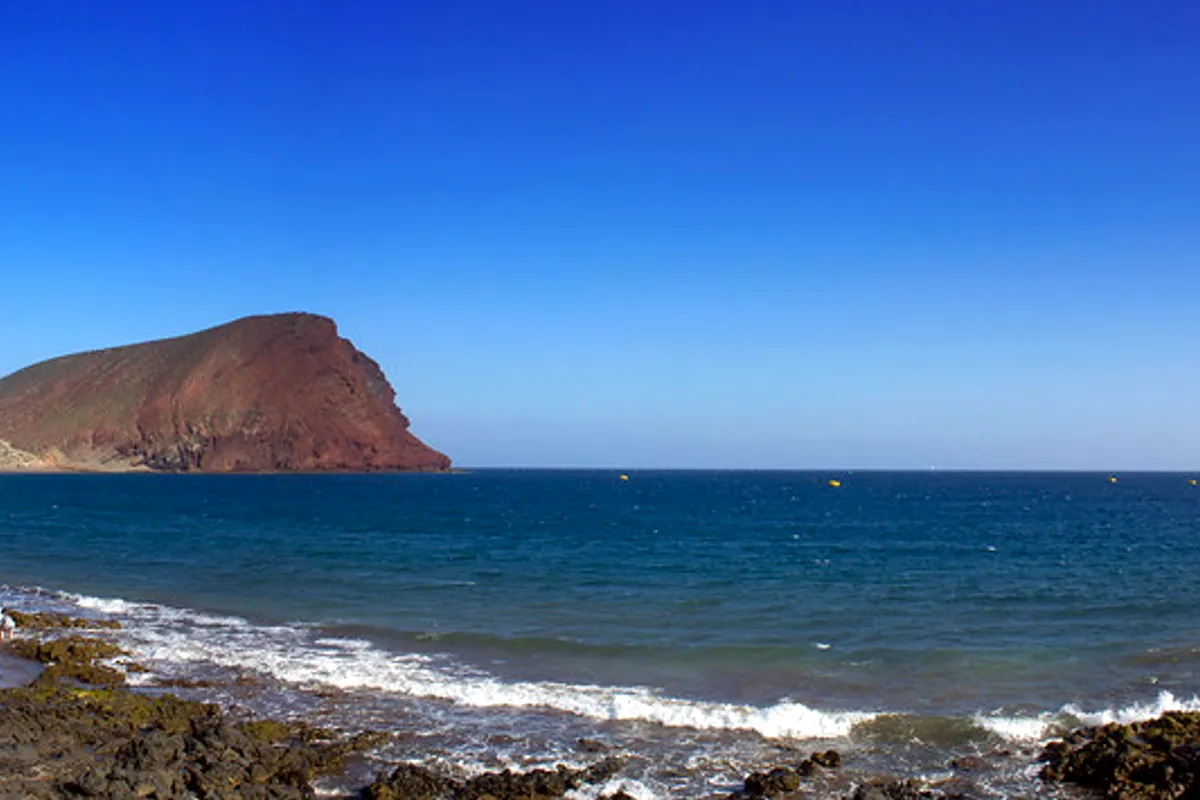
On the south-east coast, El Médano is famous for its strong, consistent winds, which make it one of Europe's best-known windsurfing and kitesurfing spots. It also has beaches and reefs that can produce surfable waves, though the wind often affects conditions. The town has a relaxed, international atmosphere and is close to Tenerife South Airport.
The north coast: Almáciga and El Socorro
In the north-east, the rugged Anaga mountains meet the sea, and Almáciga, a black-sand beach below steep cliffs, is a popular surf spot that picks up winter swells. Nearby Benijo is a wild, scenic beach.
On the north-west coast, El Socorro is a black-sand beach break popular with surf schools and local surfers, and reefs near Punta del Hidalgo and Bajamar can produce powerful waves on bigger swells. The north coast is greener, quieter and more traditional than the south, with a cooler climate.
The local line-up in Las Américas
The reefs of Playa de las Américas are some of the most crowded in the Canary Islands, with a large, experienced local community and visitors staying in the resort hotels nearby. The best waves, especially at La Izquierda, are dominated by skilled locals, and visitors who drop in or ignore priority will quickly feel unwelcome.
Sit wide, watch how the line-up works and take turns. If you are an intermediate surfer, the less crowded reefs and smaller days offer a better experience. Booties help with the sharp lava rock when entering and exiting the water, and the timing of entries between sets matters.
Winter in the north, year-round in the south
The best surf on the north coast arrives from roughly October to March, when North Atlantic swells are most consistent. These are also the months when the north can be wet and windy. The south coast can work year-round, with west and south swells in summer, and some winter swells wrapping around the island.
The water is mild compared with mainland Europe, ranging from around 18–19°C in late winter to 23–24°C in late summer. A 3/2 wetsuit is common in winter, and a shorty or boardshorts in summer.
Two airports and getting around
Tenerife has two airports: Tenerife South, close to Playa de las Américas and El Médano, with many international flights, and Tenerife North, near La Laguna, with more domestic and inter-island routes. Buses connect the main towns, and a rental car is the most practical way to explore different surf spots, as the island's mountainous terrain makes some journeys long.
Volcanic geology and the surf
Tenerife's reefs are made of volcanic lava rock, formed by eruptions over hundreds of thousands of years. This geology shapes the waves: lava shelves and boulders create reef breaks with defined take-off zones, and the steep underwater slopes around the island allow swell to arrive with plenty of energy. The black sand of many northern beaches comes from eroded volcanic rock.
The same geology makes Tenerife spectacular out of the water, from the volcanic landscapes of Teide National Park to the cliffs of Los Gigantes on the west coast.
Resort south or traditional north
The south, around Playa de las Américas, Los Cristianos and Costa Adeje, has the most hotels and apartments, with sunshine and nightlife. Surfers who want to be close to the southern reefs often stay here. The north, around Puerto de la Cruz, La Laguna and the Anaga coast, has a more traditional Canarian feel, with historic towns, local restaurants and greener landscapes.
Many surfers split their time or choose a base in the centre of the island and drive to whichever coast is working.
Mount Teide and rest days
Teide National Park, a UNESCO World Heritage Site, surrounds Spain's highest mountain, with lunar landscapes, hiking trails and a cable car to near the summit. The Anaga Rural Park in the north-east has laurel forests and hiking trails, and La Laguna's historic centre is also a World Heritage Site. Whale and dolphin watching trips run from the south-west coast, where pilot whales live year-round.
Tenerife surf season month by month
A broad planning picture, not a forecast. Swell, wind and water temperature vary from year to year.
| January | Winter swells on the north coast and mild, sunny days in the south. Water around 18–19°C; a 3/2. |
|---|---|
| February | Consistent north swells and the coolest water of the year. Carnival brings crowds to Santa Cruz. |
| March | Still good north swells, with spring warmth arriving. |
| April | North swells ease; the south reefs can work on west swells. |
| May | Smaller swells and warmer weather. Good for beginners. |
| June | Summer begins, with south and west swells reaching the southern reefs. |
| July | South coast reefs work on summer swells. Busy resorts. |
| August | Warmest water (around 23–24°C) and summer swells in the south. |
| September | Transition month, with the first north swells arriving late. |
| October | The north coast season begins, with warm water and consistent swells. |
| November | Consistent north swells and pleasant weather. A great month. |
| December | Winter swells on the north coast and sunshine in the south. |
Learning to surf in Tenerife
Tenerife has many surf schools, particularly around Playa de las Américas in the south and El Socorro in the north. Southern schools often teach at gentler sections of the reefs or nearby beaches, while El Socorro's black-sand beach is a popular learning spot in the north. Lessons usually include wetsuits and soft-top boards.
The mild climate makes learning possible year-round. Ask schools about group sizes, instructor qualifications and which spots they use, as some reef breaks are shallow.
Comparing options across the country? Read our guide to surfing in Spain.
Seasonal notes on this page describe typical patterns, not the conditions on a given day. Use the local forecast, lifeguard advice and a qualified instructor for water-safety decisions, and get a written breakdown of what any surf package includes before paying.
Tenerife surf trip questions
When is the best time to surf in Tenerife?
The north coast is best from October to March, while the southern reefs around Playa de las Américas can work year-round.
Is Tenerife good for beginners?
Yes. Surf schools operate in Playa de las Américas and at El Socorro in the north, with gentle options on smaller days.
What wetsuit do I need in Tenerife?
A 3/2 in winter and a shorty or boardshorts in summer. Water ranges from about 18°C to 24°C.
Tenerife or Fuerteventura for surfing?
Fuerteventura and Lanzarote are more surf-focused, with more reefs and beaches. Tenerife offers year-round surf in the south, plus more culture, mountains and nightlife.
Which airport should I use for surfing in Tenerife?
Tenerife South is closest to Playa de las Américas and El Médano, while Tenerife North is closer to the north coast.
Can I combine surfing with hiking in Tenerife?
Yes. Teide National Park and the Anaga Rural Park have excellent hiking trails, and the island's mountains are never far from the coast.
Is Tenerife crowded for surfing?
The reefs of Playa de las Américas can be very crowded. The north coast and smaller days in the south are usually quieter.
Is there surf in Tenerife in summer?
Yes. The north coast is usually small in summer, but the southern reefs around Playa de las Américas often pick up south and west swells.
Do I need booties to surf in Tenerife?
Booties are useful on the lava reefs of Playa de las Américas and the north coast, where entries and exits can be sharp and slippery.
Where is the best place to stay in Tenerife for surfing?
Playa de las Américas suits those focused on the southern reefs, while Puerto de la Cruz or La Laguna are better for the north coast in winter.
Sources & editorial notes
Destination context checked against the sources below. Base-selection and itinerary suggestions are Book & Surf editorial recommendations. Seasonal windows are broad planning suggestions, not measured forecasts or guarantees.
- Wikipedia: Tenerife ↗
- Wikipedia: Playa de las Américas ↗
- Wikipedia: Teide National Park ↗
- AEMET: Spanish State Meteorological Agency ↗
We do not claim to have personally surfed every break. Read our editorial standards.