Anchor Point.
Anchor Point is the right-hand point just north of the fishing village of Taghazout, on Morocco's Atlantic coast. Wikipedia notes that Morocco's long right-hand point breaks are consistent and relatively uncrowded compared with Europe, and that a long session can link Anchor Point with Hash Point and the beach break at Panoramas, a distance of roughly two kilometres. That promise is why surfers fly in, but the wave only reaches its best when a solid north-west swell meets the right tide and wind.
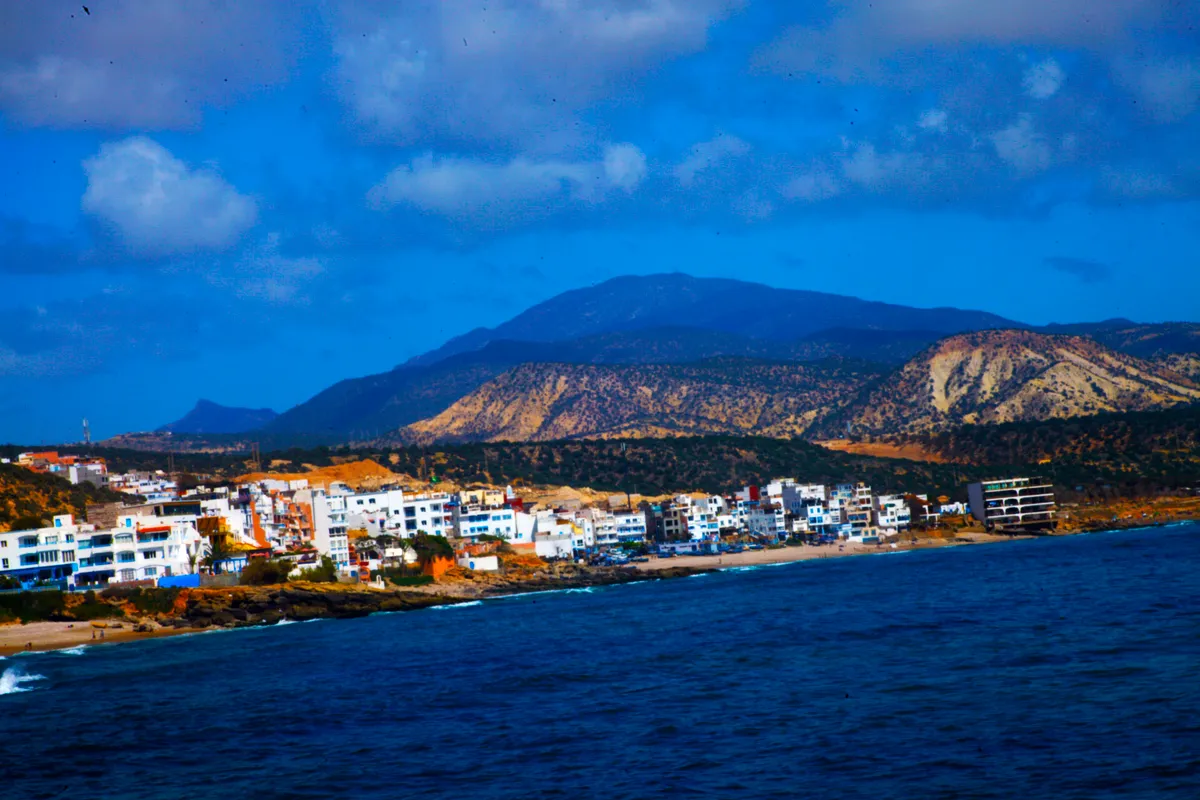 Photo: AJSPARK4444 · CC BY-SA 4.0 · Wikimedia Commons
- Level
- Advanced
- Direction and bottom
- Right · Mixed
- Best swell
- NW
- Best wind
- NE offshore
- Best tide
- Around low
- Best months
- Nov, Dec, Jan, Feb, Mar
- Size
- Waist-high to overhead; needs a solid swell to link up
- Hazards
- Rocks in the lineup, Crowds when it works, Rocky entry, Wind-swept coast
The wave from take-off to inside
Surf-Forecast describes Anchor Point as a quite exposed point break rated five out of ten, with reliable surf outside summer. WannaSurf lists a right-hand point over sand and rock, with a good ride lasting 300 to 500 metres. The wave starts on the outer point and then wraps around the bay in a series of sections, some hollow and others open for turns. On the biggest swells it can link with the breaks inside, and a ride of several minutes becomes possible.
The point faces north-west and works best with a swell from that direction. The surf is mostly groundswell, which means long, well-organised lines. Offshore winds blow from the north-east, and the best tide on Surf-Forecast is around low. At high tide the wave can fade or turn mushy on the inside, so many surfers time their sessions around the low water.
Seasons and expectations
Winter is the key season. Surf-Forecast's statistics for January show clean surf about 60 percent of the time, with blown-out conditions about 25 percent and too small about 15 percent. Summer is usually flat, as the page says, and the wave may not break at all during the warmer months. Visitor reviews describe it as an impressive wave on a good day, though some say that it works only a few times per season in its full form.
That gap between reputation and reality is worth planning for. If you travel specifically for Anchor Point, allow several weeks and have a fallback plan. The coast has many other breaks, and the nearby ones listed on Surf-Forecast include Killer Point, La Source, Mystery Point, Hash Point and Panoramas, all within two kilometres. A trip based on one wave can disappoint; a trip based on the whole coast usually does not.
Who should not surf it
Anchor Point is a wave for surfers who are comfortable on a fast, long right wall and at ease around rocks. WannaSurf rates it for experienced surfers, and the Surf-Forecast page warns of rocks in the lineup. Beginners and early intermediates will have trouble with the paddle-out, the rocky entry and the speed of the wave, and they will probably be in the way of better surfers. Taghazout has gentler beach breaks for learning.
Surfers who do not read lineups well should stay out when the swell is up, because the take-off zone is narrow and the crowd can be tightly packed. Surf-Forecast describes the wave as fairly popular and sometimes crowded. Dropping in on a wave that others are riding is the quickest way to ruin a session for everyone, including yourself.
Getting there and where to watch
Wikipedia places Anchor Point about three kilometres north of Taghazout village. An older WannaSurf entry suggests driving to a point about one kilometre north of the village, or taking a bus to Taghazout and walking about five minutes, though details of parking and tracks may have changed. Agadir's Inezgane airport is about 26 kilometres away on Surf-Forecast's figure, and taxis and buses connect the airport to Taghazout.
The cliff above the point gives a straightforward view of the line-up, and you can judge the size of the waves and the number of people before you decide to surf. Be careful on loose ground, and do not leave valuables visible in a parked vehicle. Wind can be strong at the top of the cliff, even when the water is smooth.
Planning around the local setting
Taghazout is a working fishing village as well as a surf town, and local customs matter. Dress modestly away from the beach, ask before photographing people and respect any fishing equipment on the shore. Water temperature on the page is about 20 degrees Celsius, so a spring suit is typical, and a thicker suit is sensible in the cooler months. The destination guide for Taghazout covers lodging, lessons and the other breaks along the coast.
The ocean off Taghazout, by month
| J | F | M | A | M | J | J | A | S | O | N | D | |
|---|---|---|---|---|---|---|---|---|---|---|---|---|
| Swell, m | 1.8 | 2.3 | 2.2 | 1.7 | 1.7 | 1.5 | 1.5 | 1.4 | 1.4 | 1.6 | 2.0 | 2.1 |
| Period, s | 14 | 13 | 13 | 12 | 10 | 9 | 8 | 8 | 10 | 12 | 12 | 13 |
| Water, °C | 17 | 17 | 16 | 17 | 18 | 18 | 19 | 20 | 20 | 20 | 19 | 18 |
Open-ocean ERA5 medians, not wave size at the break. Sources.
Questions about Anchor Point
Is Anchor Point a left or a right?
It is a right-hand point break. Surfers travel from the outer point towards the inside, and on large swells the wave can link with breaks further along the coast.
When is the best time to surf Anchor Point?
Winter, especially from November to March. Surf-Forecast's January figures show clean surf about 60 percent of the time. Summer is mostly flat.
Is Anchor Point crowded?
It can be. Surf-Forecast describes it as fairly popular and sometimes crowded. Visitor reviews are mixed, partly because the wave only works fully on certain swells.
How far is it from Agadir airport?
About 26 kilometres on Surf-Forecast's figure, and roughly 3 kilometres north of Taghazout village according to Wikipedia.
What should I do if Anchor Point is not working?
Use the neighbouring breaks within two kilometres, including Killer Point, La Source, Mystery Point, Hash Point and Panoramas, or choose a gentler beach near Taghazout with a school. Having a fallback plan avoids forcing a session in poor conditions or on the wrong tide, which is where most injuries and arguments happen.
Check a live forecast and local advice before paddling out. Heavy waves injure and kill experienced surfers.