Chicama (El Point).
Chicama, centred on the fishing port of Puerto Malabrigo, is known for a long left-hand point that works when a south-south-west swell arrives from the Pacific. Surf-Forecast calls the main wave El Point and describes it as an exposed point and reef break with left-handers only. The wave is famous for its length, and the surf crowd is relatively small, but the geography makes it more demanding than the maps suggest: a long ride ends far from where you started.
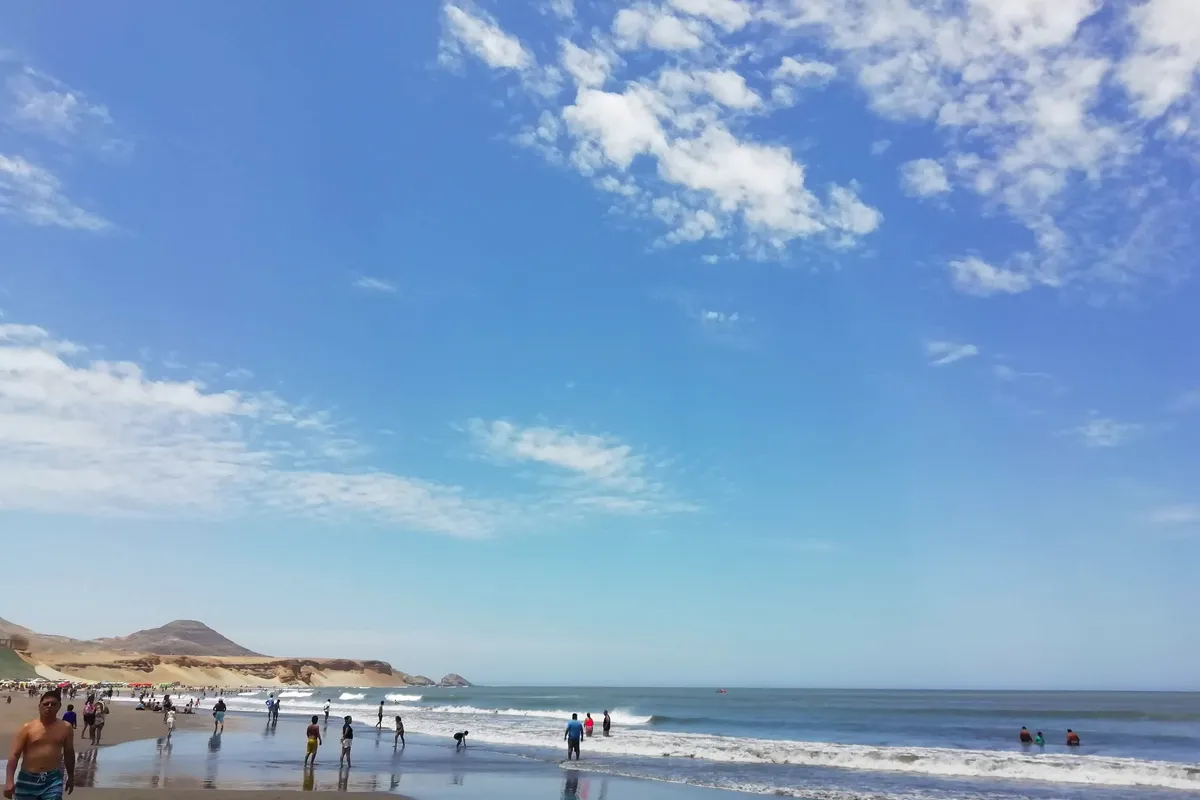 Photo: Melissa Guadalupe · CC BY-SA 4.0 · Wikimedia Commons
- Level
- Intermediate
- Direction and bottom
- Left · Reef
- Best swell
- SSW groundswell
- Best wind
- ENE offshore
- Best tide
- Check locally; the point works across a range
- Best months
- Apr, May, Jun, Jul, Aug, Sep
- Size
- Waist-high to double overhead; long walls on mid-size swells
- Hazards
- Rocks near the shore, Long paddles back, Cold winter water, Sun and wind exposure
A wave measured in minutes
Chicama's reputation comes from the way a single swell wraps around the point and peels in a series of connecting sections. El Point is the best known, with El Cape or Keys, El Hombre and Malpaso listed within two kilometres on Surf-Forecast. On a good swell, the sections can link into a long ride, and the page notes that the wave tends to be clean and uncrowded relative to its quality.
The shape changes with the swell. On smaller days, rides are shorter and more playful. On larger days the wave can get faster and more powerful, and the sections hold together over a long distance. It is a left-hander only, so goofy-footers face the wave, and regular-footers ride with their backs to it.
Season and wind
Surf-Forecast gives the best swell as south-south-west groundswell and the best wind as east-north-east offshore. The guide describes the winter as the favoured time, though its seasonal statistics are unhelpful, showing February with only about 12 percent clean and 87 percent blown out. The two figures conflict, which suggests that conditions depend heavily on the local wind at the time of year. The southern hemisphere winter, with its larger south swells, is the usual target for visiting surfers.
The page gives a water temperature of about 24 degrees Celsius at the time of checking, with a rash vest suggested for that day. Peru's coastal water can be cooler than that for much of the year, so check recent reports and pack accordingly.
Who should and should not surf it
Chicama suits intermediates and above who are comfortable with a long walk or paddle back to the start. Beginners may find the waves forgiving in size on small days, but they will struggle with the distance and the rocks close to the shore. Surf-Forecast warns surfers to watch out for rocks. Because the wave runs for such a long way, a fall can leave you a long way from help, and the paddle back against the current takes energy.
If you are not fit enough for repeated long paddles, or you rely on a nearby boat for transport, plan your session carefully. A local guide will know the best entry and exit points. The relatively small crowd should not be treated as permission to behave casually; courtesy still applies, and the local community depends on fishing as well as surf tourism.
Getting there
Chicama is a town in northern Peru beside the Pan-American Highway, about 33 kilometres north of Trujillo, according to Wikipedia. Puerto Malabrigo, also called Puerto Chicama, is the fishing port on the coast. Surf-Forecast lists Trujillo airport about 57 kilometres away and Chiclayo about 110 kilometres away. Transfers and taxis connect the area, and Trujillo is the main base for buses.
The point can be viewed from the cliffs and the shoreline near the port. Wind and sun are strong, so bring water and a hat. Keep your belongings secure, as you would anywhere busy, and ask locals about safe parking. OpenStreetMap lists a place called Olas de Chicama in Puerto Malabrigo, which can be a starting point for local advice.
Other waves close by
Surf-Forecast lists Chicama El Cape, El Hombre and Malpaso, each within two kilometres. Further afield are Poemape and El Brujo, 23 and 29 kilometres away. The Chicama destination guide covers lodging, the town and how to organise a session.
Practical notes for a long-wave trip
A trip to Chicama is easier if you treat the length of the wave as a logistics question. Many surfers arrange a lift back along the point, either by foot along the shore or with a local driver, so ask about this before your first session. Bring a spare leash, wax suited to the water temperature and a rash vest for sun protection. Peru's north coast is dry, with strong sun and wind, so carry drinking water and sunscreen. Travel insurance should cover surfing, and it helps to carry a simple first-aid kit for reef cuts. Spend time in the fishing community, buy from local businesses, and ask before photographing people at work on the shore.
The ocean off Chicama, by month
| J | F | M | A | M | J | J | A | S | O | N | D | |
|---|---|---|---|---|---|---|---|---|---|---|---|---|
| Swell, m | 1.0 | 1.2 | 1.3 | 1.4 | 1.5 | 1.5 | 1.5 | 1.4 | 1.4 | 1.4 | 1.3 | 1.1 |
| Period, s | 12 | 12 | 13 | 13 | 13 | 12 | 13 | 13 | 13 | 13 | 13 | 12 |
| Water, °C | 20 | 22 | 22 | 20 | 19 | 18 | 18 | 17 | 16 | 16 | 17 | 18 |
Open-ocean ERA5 medians, not wave size at the break. Sources.
Questions about Chicama (El Point)
Is Chicama a left or a right?
A left. Surf-Forecast describes the wave as left-handers only, breaking over beach, reef and point.
When is the best time to go?
Winter in the southern hemisphere, when larger south-south-west swells arrive. Check local reports because wind can vary.
Is Chicama crowded?
Surf-Forecast describes relatively few surfers even on good days, but conditions change, so ask locally.
How far is it from Trujillo?
About 57 kilometres to the airport on Surf-Forecast's figure. Wikipedia places Chicama town about 33 kilometres north of Trujillo.
How do I get back to the start of the wave?
Many surfers walk back along the shore or arrange a lift with a local driver or boat, because the wave is too long to paddle back against easily. Ask your accommodation or a local guide before your first session, and keep an eye on the tide and the sun during the walk.
Check a live forecast and local advice before paddling out. Heavy waves injure and kill experienced surfers.