The breaks
Recognised, publicly known surf spots around Chicama. Suitability depends on the day's swell, wind and tide, so treat the level as a guide, not a guarantee.
| Break | Type | Best for | Notes |
|---|---|---|---|
| Chicama (Puerto Malabrigo) | Long left-hand point break | Intermediate–Advanced | The headline wave: a left that can link several sections over sand and rock. Rides of a kilometre or more are possible on the right swell, with strong currents all the way. |
| El Point | Inside section of the point | Intermediate | A named section near the town, often the first to pick up swell and the best place for improvers to build up to the longer rides. Section names differ by source. |
| El Hombre | Outer section | Advanced | Appears in several accounts as one of the further sections. It is exposed and requires a fit paddle or a boat return. |
| Pacasmayo | Left-hand point and breakwater waves | Intermediate–Advanced | A port town to the north with a long left. Less famous than Chicama, with access and rocks to consider; ask locally before going. |
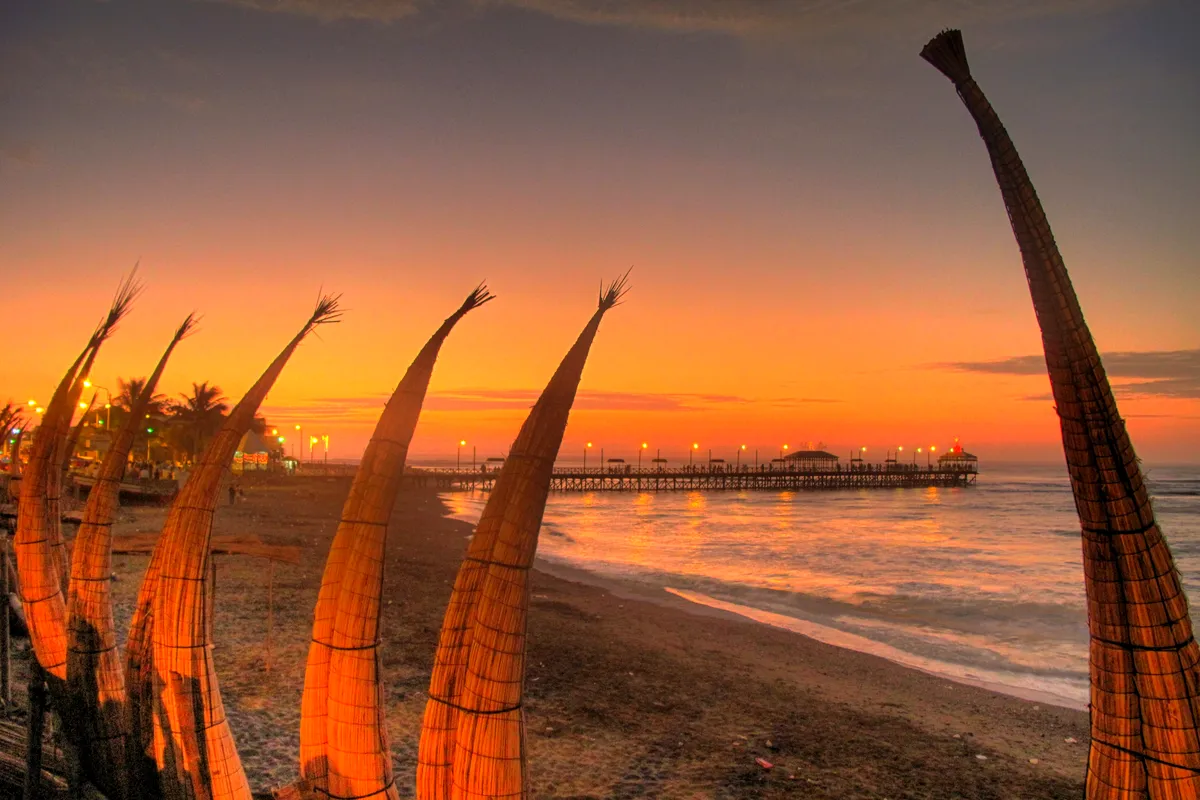
| Huanchaco | Beach and pier breaks | Beginner–Intermediate | A frequently chosen swap for flat days at Chicama, with a long tradition of reed boats and a more tourist-friendly feel. |
Full profile: Chicama (El Point).
Chicama surf climate, measured
Ten years of ocean model data for the open water off this coast: what the swell usually looks like before it reaches the beach. Shelter, sandbars and reefs change what you actually surf, so read this next to the month notes below.
| Month | Swell | Period | From | Wind | Water | Wetsuit | Days over 2.5 m |
|---|---|---|---|---|---|---|---|
| Jan | 1.0 m | 12 s | S | 11 km/h S | 20°C | 2 mm shorty or spring suit | 0% |
| Feb | 1.2 m | 12 s | SW | 10 km/h S | 22°C | Rash vest or 1 mm top | 0% |
| Mar | 1.3 m | 13 s | SW | 10 km/h S | 22°C | Rash vest or 1 mm top | 0% |
| Apr | 1.4 m | 13 s | S | 14 km/h S | 20°C | 2 mm shorty or spring suit | 0% |
| May | 1.5 m | 13 s | S | 17 km/h S | 19°C | 2 mm shorty or spring suit | 0% |
| Jun | 1.5 m | 12 s | S | 17 km/h S | 18°C | 3/2 mm full suit | 0% |
| Jul | 1.5 m | 13 s | S | 16 km/h S | 18°C | 3/2 mm full suit | 0% |
| Aug | 1.4 m | 13 s | S | 17 km/h S | 17°C | 3/2 mm full suit | 3% |
| Sep | 1.4 m | 13 s | S | 16 km/h S | 16°C | 3/2 mm full suit | 0% |
| Oct | 1.4 m | 13 s | S | 16 km/h S | 16°C | 3/2 mm full suit | 0% |
| Nov | 1.3 m | 13 s | S | 14 km/h S | 17°C | 3/2 mm full suit | 0% |
| Dec | 1.1 m | 12 s | S | 14 km/h S | 18°C | 3/2 mm full suit | 0% |
Median values from ERA5 at a sea point near Chicama (7.75°S, 79.5°W), sampled 4 days a month at 12:00 UTC, 2015-2024. Highlighted months are our suggested planning window. Not a forecast or a safety assessment. How we use this data.
Book a surf trip to Chicama
Everything we can link you to for this trip, grouped by what you need. Before you pay a camp or school, read who holds your money, and check that your insurance covers surfing.
Where to stay
Search near the breaks. Filter for surf hostels, apartments or hotels once you can see the map.
Surf lessons and activities
Listings change by season, so check what the operator includes and who coaches.
Flights
Add your dates and check the board fee on every leg before you pay.
Car hire
Ask about roof racks and whether the insurance covers boards on the roof.
Airport transfer
Tell the driver you have a board and its length when you book.
Mobile data
Download a forecast app and offline maps before you land.
Flight delay claims
If a delay eats your first surf day, check whether you can claim.
Luggage storage
Useful between check-out and a late flight. Check the size limit before dropping a board.
Links marked as partner links may earn us commission at no cost to you; the rest earn us nothing. We have not checked live availability or price, and the seller's terms apply. How we handle this.
Puerto Malabrigo and the world's longest left
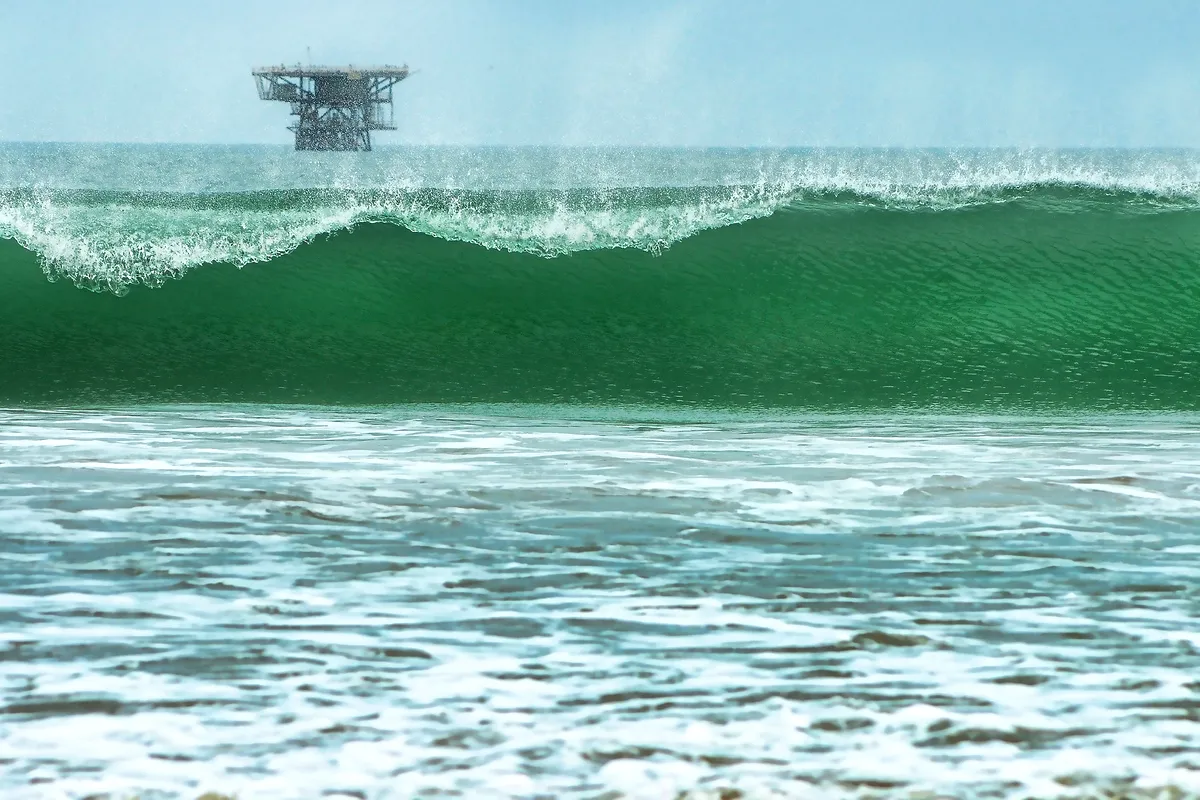
The wave people call Chicama breaks at Puerto Malabrigo, a small fishing port on the Pacific, a drive from the town of Chicama itself in the La Libertad region. It is a left-hand point break, and guides say a single ride can run for as much as four kilometres on the best days, though most rides are far shorter. Malabrigo is also described as the first wave in the world to have been given legal protection.
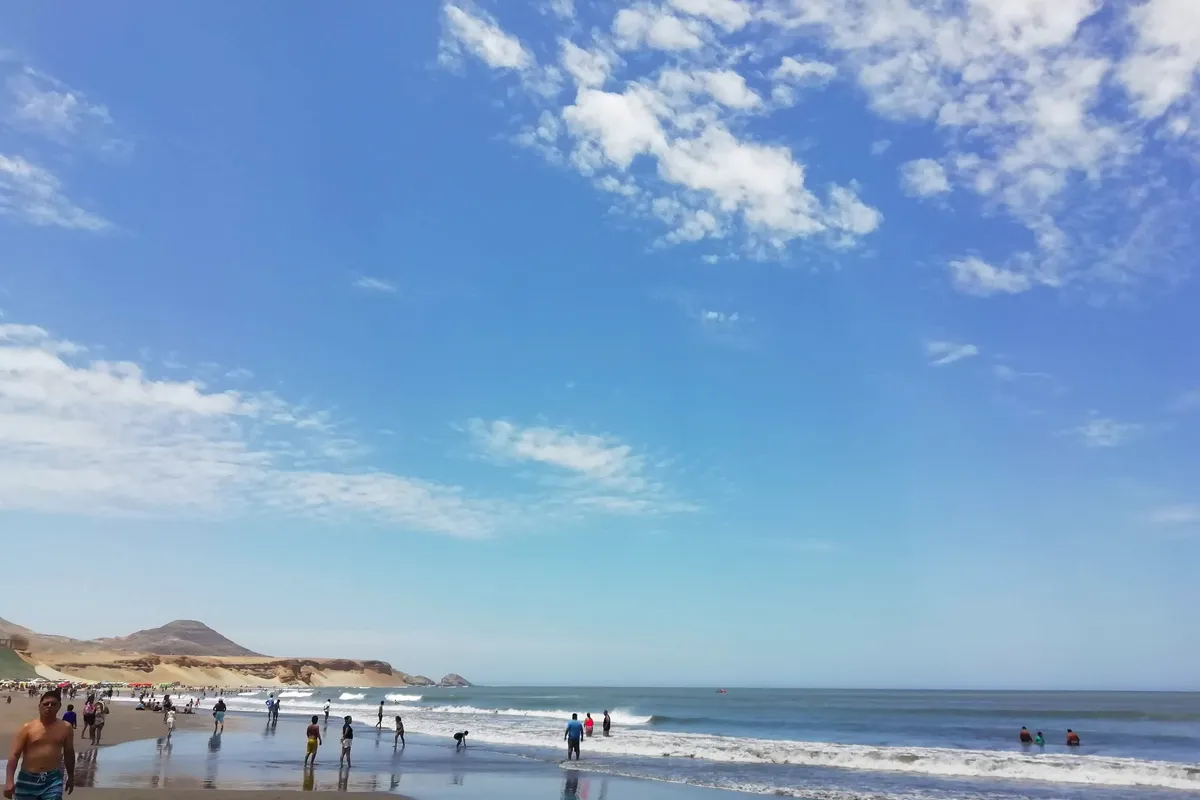
The setting is stark and dry: desert hills, a long pier and a pier-side town of low houses. There is very little to do except surf, eat and rest, which is part of why surfers come here for a week or more. Do not expect resort-style distractions.
Sections, names and how a long ride works
A ride at Chicama is a chain of sections that link when the swell is big enough and the sandy bays between them line up. Local names vary between sources. Some mention El Cape, El Point and Las Dos Tetas, while older writers refer to Malpaso and El Hombre, and one lists El Malecón near the town. Only the first sections may break on a modest swell, so the full ride is a bonus, not a given.
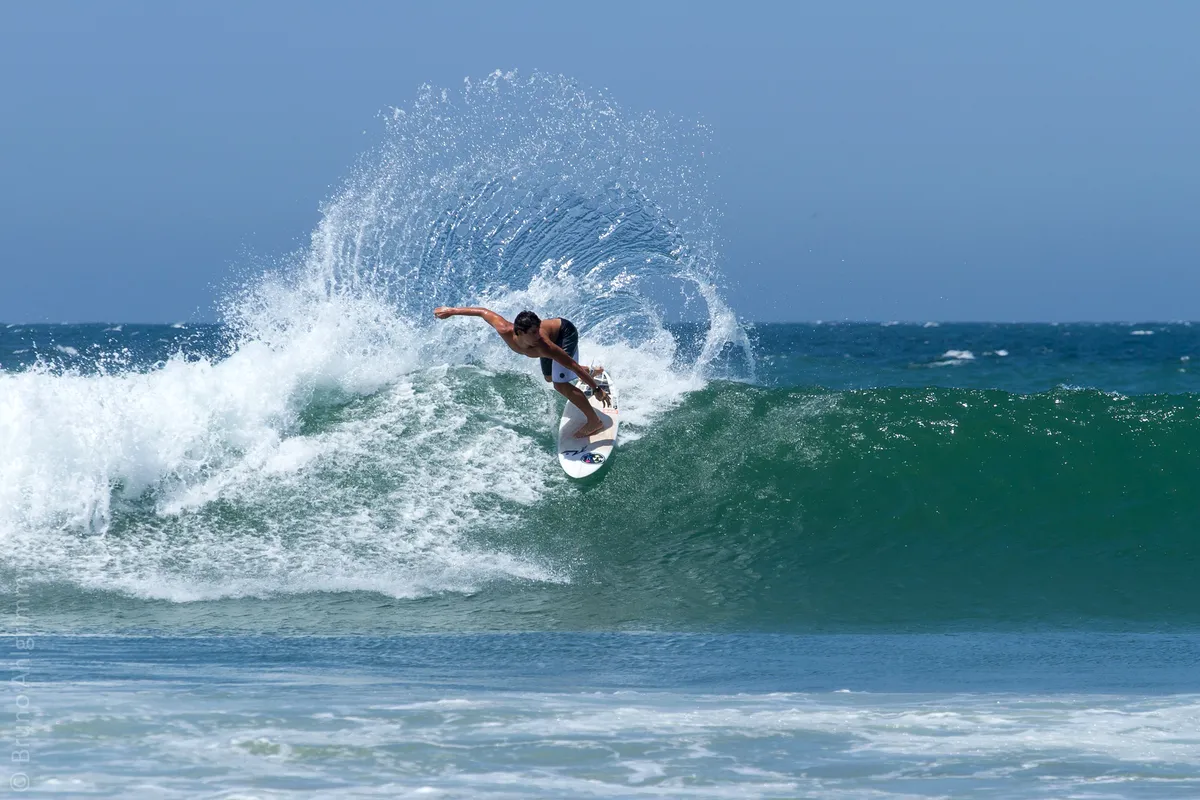
Most surfers pick a section that suits their level, take off there, and work down the line, rather than aiming for the longest ride. Intermediate surfers can get a lot from the inside sections, where the face is gentler, while the outer sections are better for experienced surfers.
Swell season and why the wave can be absent
Chicama is a south and south-west swell wave, and guides commonly place the season between March or April and October, with May often cited as ideal for swell and wind. Winds at Malabrigo are consistently offshore, which helps the face stay clean, but the swell itself is notoriously inconsistent. A week can include days with a few small sets and days with long, perfect lines.
Because of that, build slack into your itinerary. Check the forecast daily, accept that some days will be flat or onshore and have a plan for resting or exploring. If you can only come for three days, the odds of catching a good swell are lower than for a week.
Cold water and what to wear
This is the cold-water Humboldt Current coast. Even though the latitude is only around seven degrees south, water temperatures are far lower than you might expect and the air is often cool and grey. Most surfers wear a full wetsuit, often a 3/2 for much of the season and thicker in the middle of winter, and take a hooded or long-sleeve layer for the paddle back.
The long wave also means long sessions with few chances to warm up, so bring a spare wetsuit if you can, and wash it quickly in fresh water. Sun can still burn through the haze, so protect your face and neck.
Currents, paddles and the boat back
The same geometry that makes the wave long creates strong currents along the point. After riding a long section, the walk or paddle back is slow, and the current will carry you away from the take-off. Several guides recommend hiring a boat to return to the top of the point, particularly for a group, and some surfers combine boat and paddle.
Only go out if you are confident in strong water. Keep an eye on landmarks, avoid being drawn into the harbour area and ask local boatmen about the current before you start. Beginners should not surf the point unsupervised, since it is easy to be swept a long way from where you started.
Reaching Chicama from Trujillo
Trujillo has the nearest airport, with flights from Lima. The town of Chicama is on the Pan-American Highway about 33 km north of the city, and Puerto Malabrigo is further along, so the drive to the surf is roughly an hour to an hour and a half. Taxis, colectivos and private transfers are the usual options.
If you are travelling by bus from elsewhere in Peru, long-distance coaches stop at Trujillo, and colectivos and local buses run on to the coast. Take cash, because machines in Malabrigo are limited, and carry a small supply of basics.
Beyond the line-up: Trujillo and the northern ruins
Trujillo makes an easy base for a few days. Its colonial centre is compact, and the region contains major pre-Columbian sites, including Chan Chan, the vast adobe city of the Chimú culture, which is a UNESCO World Heritage Site. The Huacas del Sol y de la Luna and the El Brujo complex are also within reach of a day trip.
If the wave is not working, a trip to Huanchaco, with its caballitos de totora reed boats, is an easy swap. The coast north towards Pacasmayo has other breaks, though most are more consistent than Chicama but shorter.
Chicama surf season month by month
A broad planning picture, not a forecast. Swell, wind and water temperature vary from year to year.
| January | Off season, with warm, hazy conditions and little swell. Most surfers are elsewhere, so services can be thin. |
|---|---|
| February | Mostly small and inconsistent. The warmer air makes it a quiet time for non-surf activities in Trujillo. |
| March | Early southern swell can show up, and some sources already count March as the start of the season. |
| April | The season starts in earnest. Regular south swell with offshore winds and fewer crowds than mid-year. |
| May | Often cited as ideal for swell and wind. Water and air are cooler, so wear a good wetsuit. |
| June | Cold and consistent, with long walls when the swell lines up. Expect a regular crowd in the main sections. |
| July | Peak of winter, with powerful swells and colder water. Bring a thicker wetsuit and plan on short breaks between sessions. |
| August | Strong swells continue, though they may be inconsistent. Good for experienced surfers who want long rides and can wait for them. |
| September | The season eases, with the occasional big pulse. A decent window for those who prefer fewer people. |
| October | The end of the main window. Some good days remain, but the swell is more variable. |
| November | Mostly small and unreliable. A time to go elsewhere unless you are lucky with a late swell. |
| December | Warmer and quiet, with little swell. Better suited to exploring the coast and the archaeological sites. |
Learning and improving near Chicama
Chicama is not a learner's wave: the cold water, the current and the need to sit in a line-up with experienced surfers make it unsuitable for first lessons. If you are learning, it is better to start at Huanchaco, where schools use the beach breaks, and return to Chicama once you can paddle strongly and read a wave.
Improving surfers can use the inner sections on smaller days, ideally with an instructor or guide who knows how to handle the current. Surf camps and guesthouses in Malabrigo often provide board rental, though quality varies, so bring a leash and check the board before you take it out.
Comparing options across the country? Read our guide to surfing in Peru.
Seasonal notes on this page describe typical patterns, not the conditions on a given day. Use the local forecast, lifeguard advice and a qualified instructor for water-safety decisions, and get a written breakdown of what any surf package includes before paying.
Chicama surf trip questions
When is the best time to surf Chicama?
Guides place the season between March or April and October, with May often cited as ideal for swell and offshore wind. The swell can be inconsistent even within the season.
How long is the wave at Chicama?
Guides say a single ride can reach about four kilometres in the best conditions, but most rides are shorter. The length depends on swell size and how the sections link.
Is Chicama suitable for beginners?
No. Strong currents, cold water and a line-up of experienced surfers make it better for intermediates and above. Beginners should start at Huanchaco.
Do I need a wetsuit at Chicama?
Yes. The water is cold, and most surfers wear a full wetsuit, thicker in the middle of winter.
How do I get to Chicama from Trujillo?
By road, roughly an hour to an hour and a half, using a taxi, colectivo or private transfer. The town of Chicama is about 33 km north of Trujillo on the Pan-American Highway.
Sources & editorial notes
Destination context checked against the sources below. Base-selection and itinerary suggestions are Book & Surf editorial recommendations. Seasonal windows are broad planning suggestions, not measured forecasts or guarantees.
- Wikipedia: Malabrigo, Peru ↗
- Wikipedia: Chicama ↗
- Surfer Today: Chicama, the world's longest wave ↗
- Wikivoyage: Puerto Malabrigo ↗
We do not claim to have personally surfed every break. Read our editorial standards.