The breaks
Recognised, publicly known surf spots around Huanchaco. Suitability depends on the day's swell, wind and tide, so treat the level as a guide, not a guarantee.
| Break | Type | Best for | Notes |
|---|---|---|---|
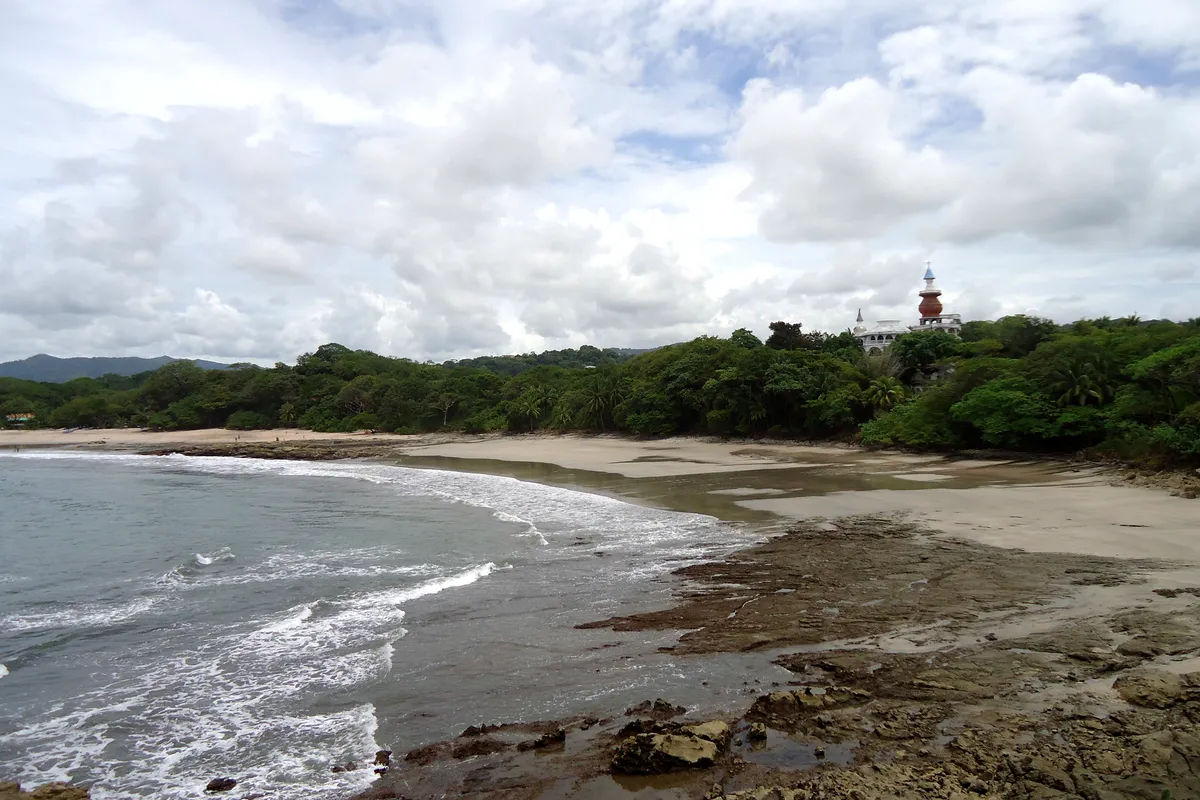
| Huanchaco point | Left-hand point | Intermediate–Advanced | Long lefts along the beachfront from near the church on the hill. Best on solid south-west swells; sand and rock bottom. |
| The pier (El Muelle) | Beach break | Beginner–Intermediate | Waves either side of the historic wooden pier in the centre of town. |
| Huanchaco beach | Beach break | Beginner | Town beach used by surf schools on smaller days. |
| Chicama | Left-hand point | Intermediate–Advanced | One of the world's longest lefts, about an hour and a half north at Puerto Malabrigo. |
One of the world's oldest wave-riding traditions
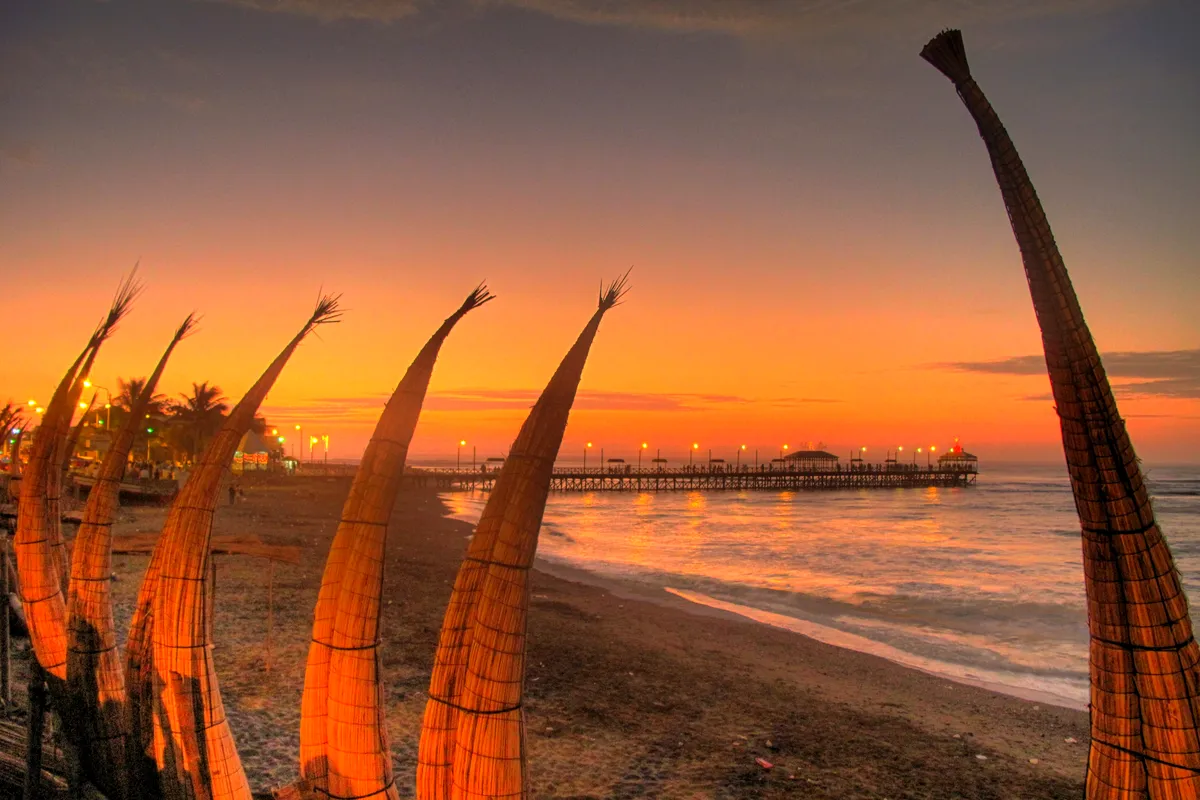
For centuries, fishermen on Peru's northern coast have paddled out through the surf on caballitos de totora, small, pointed boats made from bundles of totora reeds. They kneel or sit on the boats, paddle with a split bamboo cane and ride the waves back to shore with their catch. Some historians consider this one of the earliest forms of wave-riding in the world, with depictions on ancient pottery from cultures that lived here long before the Incas.
In Huanchaco, this tradition is still alive. Caballitos lined up upright on the beach to dry are an iconic sight, and fishermen still take them out each morning. Visitors can sometimes try a ride with a local fisherman.
A World Surfing Reserve
In recognition of its waves, its ancient wave-riding culture and the surrounding environment, Huanchaco has been designated a World Surfing Reserve, the first in Latin America. The designation helps support efforts to protect the coastline and its traditions from development and pollution.
The Huanchaco point
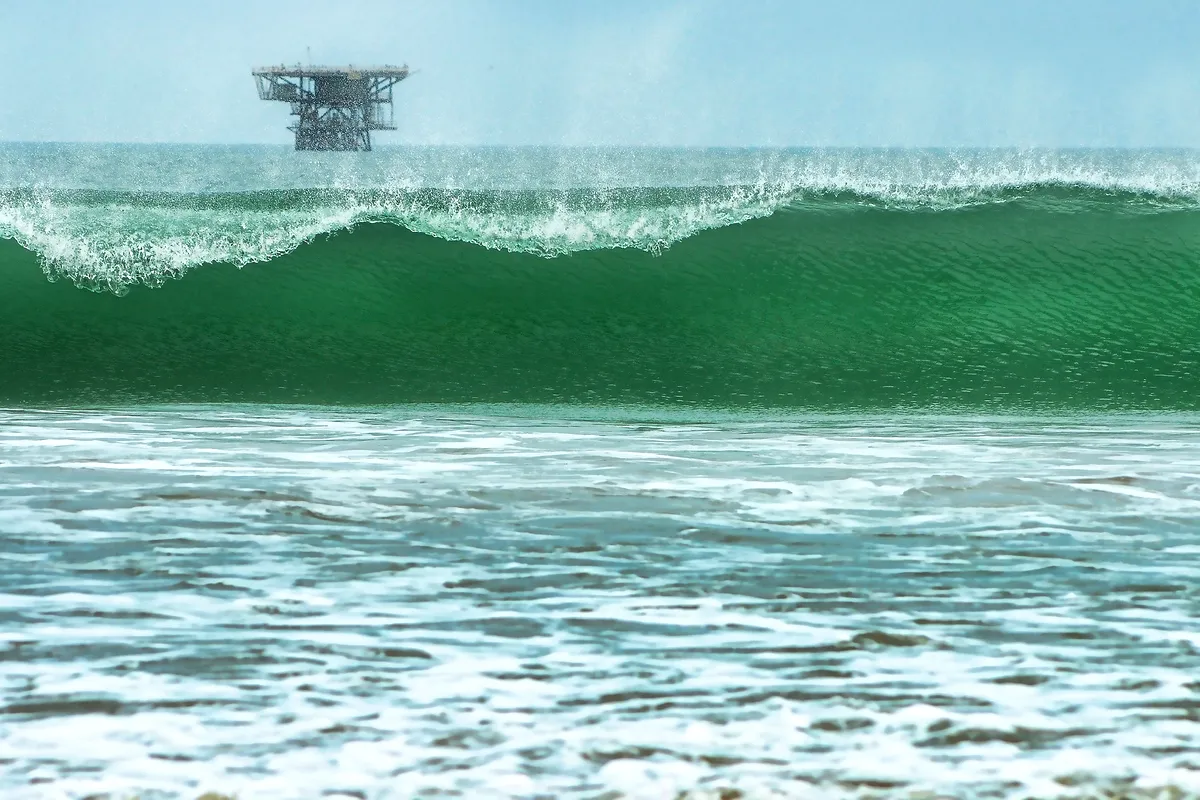
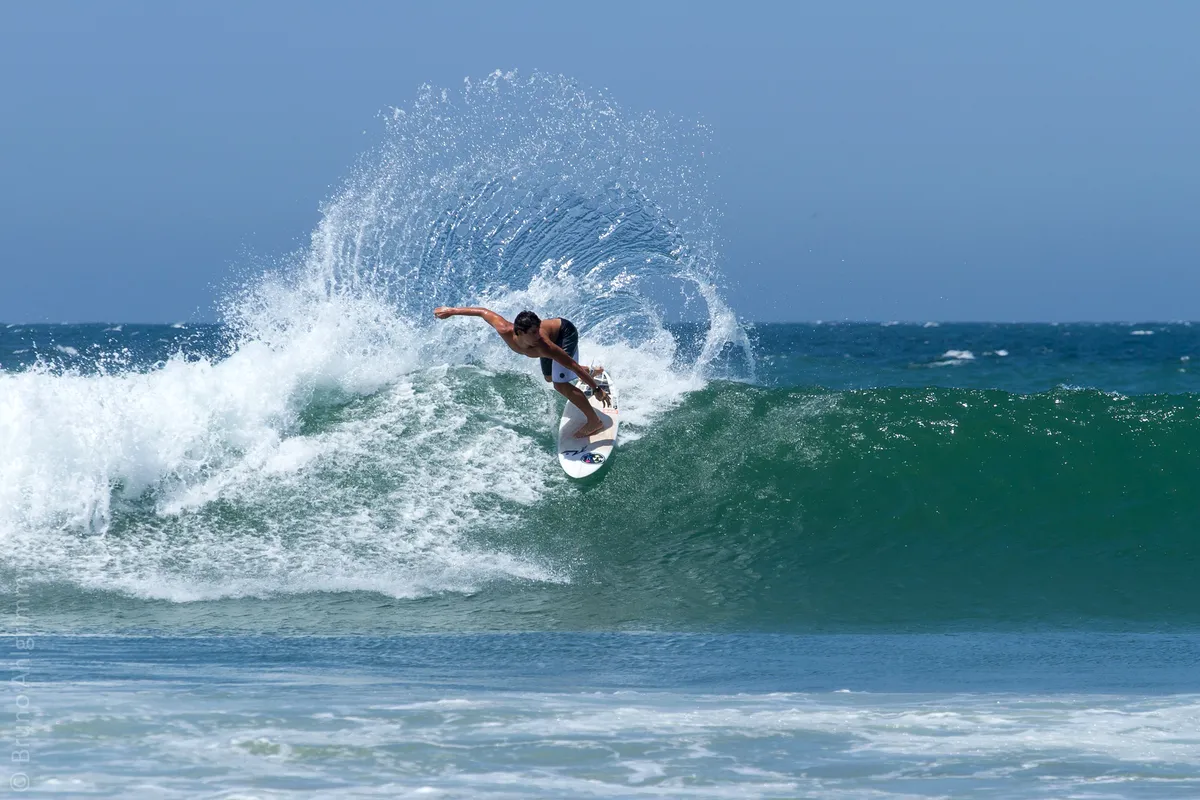
Huanchaco's main wave is a left-hand point break that peels along the town's beachfront, starting near the church on the hill at the southern end of town. On a solid south-west swell, it can produce long, rippable waves that suit intermediate and advanced surfers, and on smaller days, the inside sections are gentler. The bottom is a mix of sand and rock.
The point is strongly influenced by swell direction and size, and it can be crowded with local surfers on good days.
The pier and the beach
Near the historic wooden pier, known as the muelle, in the centre of town, waves break on both sides, offering options for different levels. The beach in front of the town is used by surf schools for lessons on smaller days. The pier is a popular spot for watching the sunset and the caballitos coming in.
Chicama and the north coast
About an hour and a half north of Huanchaco, Chicama, at Puerto Malabrigo, is often described as one of the longest left-hand waves in the world. On big south swells, its sections can link into rides of extraordinary length. Many surfers base themselves in Huanchaco and make trips to Chicama, or stay in Chicama's surf lodges when a big swell is forecast. Pacasmayo, further north, has another long left.
Huanchaco through the year
The best surf season runs from roughly April to October, when south swells from the Southern Hemisphere are most consistent. This is also the cooler, often grey season along the Peruvian coast, with morning fog. From November to March, summer brings sunnier weather and warmer water, but swells are generally smaller.
The Peruvian coast is a desert, with very little rain, though El Niño events can bring unusual rain and warmer water in some years.
Water temperature and wetsuits
The Humboldt Current keeps the water cool along Peru's coast. In Huanchaco, temperatures typically range from the mid to high teens Celsius, so a 3/2 wetsuit is common for much of the year, especially in winter. In summer, a spring suit or thin wetsuit may be enough. Surf shops in town rent wetsuits.
Chan Chan and the ancient north
Huanchaco sits next to Chan Chan, the vast adobe capital of the Chimú kingdom, which flourished before the Inca conquest. Chan Chan is one of the largest adobe cities in the world and a UNESCO World Heritage Site, with intricately decorated walls and plazas. Nearby, the Huacas del Sol y de la Luna, built by the earlier Moche culture, feature colourful murals, and the El Brujo archaeological complex, further north, is home to the tomb of the Lady of Cao.
Getting there and where to stay
Trujillo's airport, with flights from Lima, is about twenty minutes from Huanchaco. Long-distance buses run from Lima and other cities to Trujillo, and taxis and local buses connect Trujillo with Huanchaco.
Huanchaco has a range of accommodation, from surf hostels and guesthouses to small hotels, many near the beach. The town is relaxed and walkable, with seafood restaurants along the seafront.
Ceviche and the seafront
Huanchaco is known for its seafood, especially ceviche, fresh fish marinated in lime juice with chilli and onion, served at restaurants along the seafront. Other local dishes include chicharrón de pescado and shambar, a hearty soup from the Trujillo region. Peru's food culture is a highlight of any trip.
How swell reaches Peru's north coast
Peru's coast faces west and south-west into the Pacific, directly in the path of swells generated by storms in the Southern Ocean. These groundswells travel thousands of kilometres before reaching the coast, arriving as long-period lines that suit the country's long left-hand points. Huanchaco and Chicama both face in a direction that lets south-west swells wrap along the shore, producing waves that peel to the left.
Wind patterns are fairly predictable. Mornings are often calm or lightly offshore, with grey skies in the cooler months, and southerly winds tend to pick up in the afternoon, blowing side-shore along the points. Early sessions usually offer the cleanest conditions. Because the coast is a desert with little rain, the main variables are swell size and direction rather than weather.
Planning a trip to Chicama from Huanchaco
Chicama needs a solid south swell to link its sections into the extraordinarily long rides it is famous for. On smaller days, the wave may break only at one section. Many surfers stay in Huanchaco for its restaurants and atmosphere and drive north when forecasts show a significant swell. Lodges at Puerto Malabrigo offer boat assists, a tow back up the point so surfers can ride more waves without the long walk.
Safety and etiquette
Huanchaco is generally relaxed, but take normal precautions with valuables, especially on the beach and in Trujillo. In the water, the point has rocks and strong currents on bigger days, so watch before paddling out. Respect local surfers and fishermen, give caballitos space and avoid dropping in.
Huanchaco surf season month by month
A broad planning picture, not a forecast. Swell, wind and water temperature vary from year to year.
| January | Summer: sunny, warmer water and smaller swells. Good for beginners. |
|---|---|
| February | Warm weather and small to medium waves. Busy with Peruvian holidaymakers. |
| March | Late summer, with the first autumn swells possible. |
| April | South swells become more consistent. A good month for the point. |
| May | Consistent swells and cooling water; morning fog appears. |
| June | Prime season with regular south swells. A 3/2 wetsuit. |
| July | Consistent and often good; Chicama may run on big swells. |
| August | Still prime, with grey mornings and cool water. |
| September | Good swells continue as spring approaches. |
| October | The tail of the main season, still reliable. |
| November | Smaller swells, warming weather and sunnier skies. |
| December | Summer begins, with sunshine and smaller surf. |
Learning to surf in Huanchaco
Huanchaco has several surf schools that teach beginners on the town beach and near the pier, with wetsuits and soft-top boards included. The summer months often bring smaller, gentler waves for beginners, while the main season suits improvers. Ask about instructor experience, group sizes and which spots are used.
Comparing options across the country? Read our guide to surfing in Peru.
Seasonal notes on this page describe typical patterns, not the conditions on a given day. Use the local forecast, lifeguard advice and a qualified instructor for water-safety decisions, and get a written breakdown of what any surf package includes before paying.
Huanchaco surf trip questions
What are caballitos de totora?
Small reed boats used by fishermen on Peru's northern coast for centuries, ridden through the surf. Huanchaco is one of the few places where they are still used daily.
When is the best time to surf Huanchaco?
April to October brings the most consistent south swells. Summer is smaller and warmer.
Is Huanchaco good for beginners?
Yes, on the town beach and near the pier on smaller days, with surf schools.
How far is Huanchaco from Chicama?
About an hour and a half north by road, so many surfers make day trips or stay overnight when a big swell is forecast.
Do I need a wetsuit in Huanchaco?
A 3/2 is common for much of the year because of the cool Humboldt Current.
What is Chan Chan?
The vast adobe capital of the Chimú kingdom, next to Huanchaco, and a UNESCO World Heritage Site.
Is Huanchaco a World Surfing Reserve?
Yes. It was the first World Surfing Reserve in Latin America, recognising its waves and ancient wave-riding culture.
Can I ride a caballito de totora in Huanchaco?
Some Huanchaco fishermen offer short rides on their caballitos for visitors, usually on calm days near the pier. Agree a price first, follow their instructions and expect to get wet: balancing on a reed boat in the surf is harder than it looks.
What is the weather like in Huanchaco?
Dry all year, as the coast is a desert. The surf season from April to October is cooler and often overcast with morning fog, while summer from December to March is sunny and warm.
Sources & editorial notes
Destination context checked against the sources below. Base-selection and itinerary suggestions are Book & Surf editorial recommendations. Seasonal windows are broad planning suggestions, not measured forecasts or guarantees.
We do not claim to have personally surfed every break. Read our editorial standards.