Cloudbreak.
Cloudbreak is a left-hand reef wave that breaks about a mile offshore of Tavarua, in the Mamanuca group off the west of Viti Levu. Wikipedia describes it as a powerful left that breaks over coral reef and is ranked by many surfers as the best wave in the world. Surf-Forecast describes the wave as breaking over a sheltered reef or bombora and rates it consistent. It is accessible only by boat, which shapes both who surfs it and how the experience works.
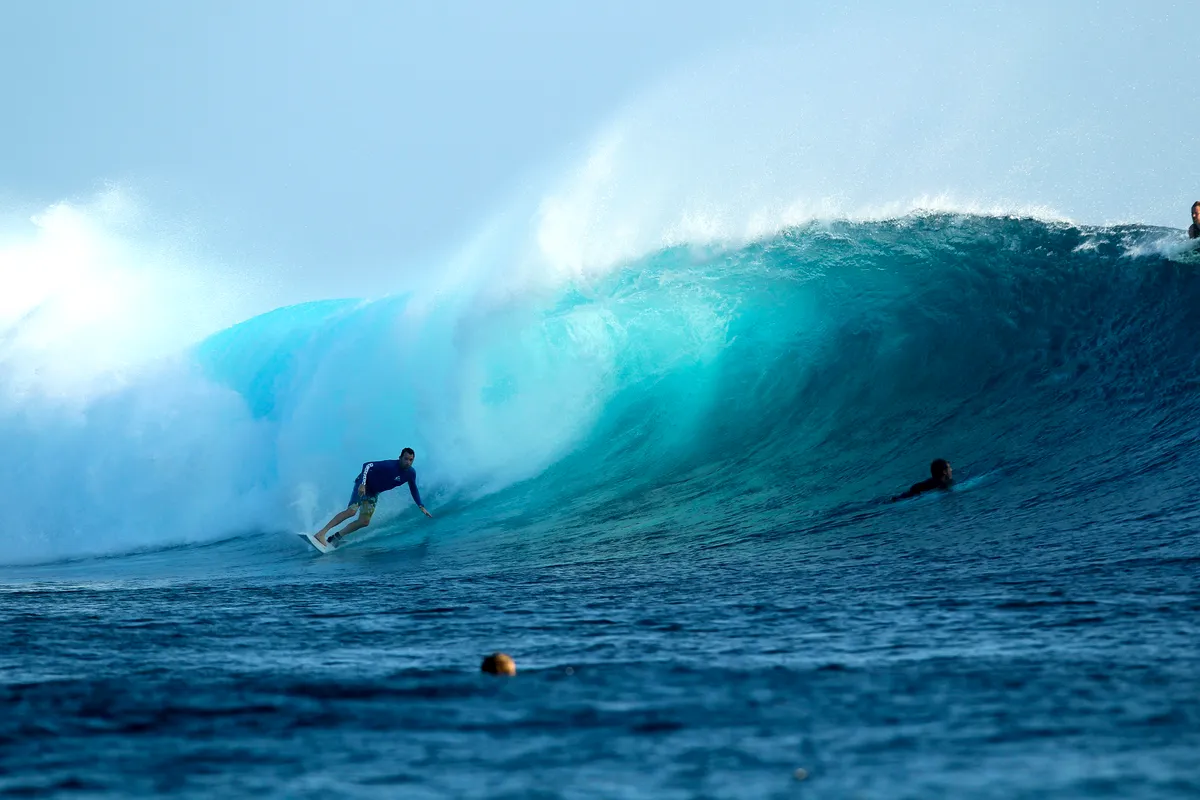 Photo: dave.fin · CC BY 3.0 · Wikimedia Commons
- Level
- Expert
- Direction and bottom
- Left · Reef
- Best swell
- SW to SSW groundswell
- Best wind
- ENE to SW offshore (sources differ; check locally)
- Best tide
- Works at most stages
- Best months
- Mar, Apr, May, Jun, Jul, Aug, Sep
- Size
- Waist-high to double overhead; heavy at larger sizes
- Hazards
- Shallow coral, Sea urchins, Rips and channel currents, Open-water distance from shore, Boat transfers
A wave on an offshore reef
Because Cloudbreak breaks over a reef separated from the island by deep water, it lacks the shelter of a bay or point. The swell arrives from the open ocean, runs along a coral ledge and peels in a series of connected sections. Surf-Forecast lists the best swell direction as south-west, and says groundswells are more common than windswells. The wave breaks left, with a take-off zone that is deeper than most and an inside section that can be fast and hollow.
The page gives the best wind as south-west in one section and east-north-east in another, and the two statements do not agree. The east-north-east wind is offshore for a west-facing reef, so I treat that as the probable ideal and advise checking local reports. Water temperature is about 26 degrees Celsius, so a rash vest is typical.
Season and size
Autumn is the best season on Surf-Forecast's statistics, with April about 62 percent clean, 29 percent blown out and 9 percent too small. Summer is mostly flat. The southern hemisphere winter, from about May to September, is generally regarded as the main swell season in Fiji, when south-west and south swells arrive regularly. The Surf-Forecast difficulty rating from three user votes is four out of five.
The wave can range from fun and playful on smaller days to heavy and powerful when a large swell arrives. Wikipedia mentions that Tavarua hosts annual professional surfing competitions, and the neighbouring breaks Restaurants, Tavarua Rights, Swimming Pools, Namotu Left and Wilkes Pass are listed on the same page. On bigger days the surrounding waves are often easier alternatives.
Who should not surf Cloudbreak
Cloudbreak is a serious wave for experienced surfers. Surf-Forecast lists sea urchins, rips and rocks among the hazards, and the reef is shallow in places. The channel currents can be strong, and an injury a mile from shore needs a boat for evacuation. Surfers should be fit, comfortable with open-water conditions and able to handle a hold-down.
Beginners and weaker swimmers should not paddle out. If you want to experience Fiji's waves with less risk, there are many smaller breaks closer to shore and gentler reef passes for learners. The destination guide covers these in more detail. In the water, respect the local surfers and other guests, and follow instructions from boat drivers.
Access and rules
Cloudbreak is reached by boat from resorts, islands and operators on the mainland. Surf-Forecast lists Nadi International Airport about 31 kilometres away and Nausori about 145 kilometres away, and does not describe boat access. Rules about who may use the break, and how access is arranged, can change, so check with a reputable operator and the local authorities before you travel.
Costs, transfer times and group sizes vary with the operator and season. Take adequate travel insurance that covers boat transfers and surf activity, and bring sun protection, water and any medical items you may need. Do not assume that lifeguards or medical staff are available at the reef. Treat Fijian customs and landowners with respect.
Nearby waves
Surf-Forecast lists Tavarua Rights three kilometres away, Restaurants and Swimming Pools four kilometres away, and Namotu Lefts and Wilkes Pass five kilometres away. These are all part of the same reef system and offer a mix of conditions. The Mamanuca Islands guide covers the island group.
Questions to ask before booking a trip
Because the wave is reached by boat, most of the practical decisions are made by the operator you choose. Ask how many surfers are taken to the reef at once, how rescues are handled, what medical equipment is carried and what happens if the swell is too small or too large. Ask about transfer times from Nadi, how weather changes are handled and whether cancellations are refunded. Check that your travel insurance covers boat travel, medical evacuation and surfing in remote locations. Pack reef shoes, a rash vest, a first-aid kit and high-factor sunscreen. Respect village customs when you arrive on land, and follow the guidance of local boat drivers, who know the channel better than any visitor.
The ocean off Mamanuca Islands, by month
| J | F | M | A | M | J | J | A | S | O | N | D | |
|---|---|---|---|---|---|---|---|---|---|---|---|---|
| Swell, m | 1.4 | 1.5 | 1.4 | 1.4 | 1.5 | 1.5 | 1.6 | 1.6 | 1.4 | 1.4 | 1.3 | 1.1 |
| Period, s | 12 | 12 | 13 | 13 | 14 | 13 | 13 | 13 | 13 | 13 | 13 | 11 |
| Water, °C | 29 | 29 | 29 | 29 | 28 | 27 | 27 | 26 | 27 | 27 | 28 | 29 |
Open-ocean ERA5 medians, not wave size at the break. Sources.
Questions about Cloudbreak
Is Cloudbreak a left or a right?
A left. It breaks over a coral reef about a mile from Tavarua, so you reach it by boat.
How do I get there?
By boat from a resort, island or operator. Confirm current access arrangements before you travel.
When is the best season?
Autumn and the southern winter, with April strong on Surf-Forecast's figures.
Is it crowded?
Surf-Forecast says rarely crowded, though access arrangements and swell forecasts can concentrate surfers on good days.
Is there a lifeguard or medical help at the reef?
Do not assume so. The reef is reached by boat and sits a mile from the island, so evacuation depends on your operator. Ask what first-aid equipment, radios and trained staff are carried, and check that your insurance covers boat and air evacuation before you book.
Check a live forecast and local advice before paddling out. Heavy waves injure and kill experienced surfers.