La Gravière.
La Gravière is the beach in front of the seafront at Hossegor, and the sandbar that breaks there has made the town one of the best-known surf locations in Atlantic Europe. Surf-Forecast lists it as a sandbar break with both lefts and rights, exposed to open ocean, and rates it fairly consistent. It sits on the same coastline as the breaks used for the French round of the world tour, which Wikipedia says has been held in Hossegor since 1987, usually at the end of September. The wave is fast, thick and unforgiving, and it demands more than most visiting surfers expect.
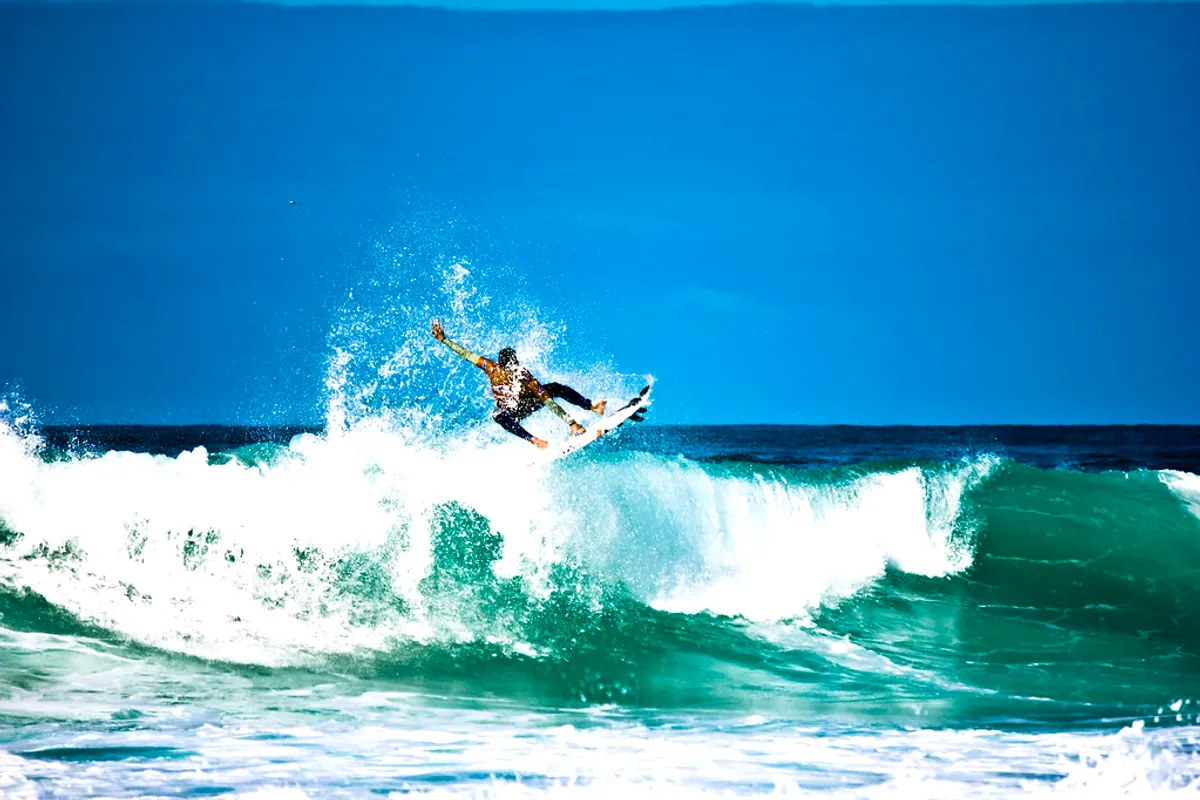 Photo: Angeloscense · CC BY-SA 2.0 · Flickr
- Level
- Advanced
- Direction and bottom
- Both · Sand
- Best swell
- W–WNW, long period
- Best wind
- E offshore
- Best tide
- Mid, with the banks lining up
- Best months
- Sep, Oct, Nov, Dec
- Size
- Chest-high to double overhead; the barrel is best from head-high
- Hazards
- Powerful shorebreak, Strong rips between banks, Crowds, Lifeguard flag zones
What the sand does here
The Landes coast is a long, straight line of dunes and sand with few rocks. La Gravière gets its shape from banks that form just off the beach and are rearranged by every large swell. Wikipedia links the quality of the area's waves to the Capbreton canyon, or gouf, an underwater trench that funnels swell towards this part of the coast. Waves arriving over deep water then meet a shallow bank and pitch up abruptly, giving a barrel that can be very fast and powerful.
Because the bank moves, the break has different personalities from one season to the next. In a good year it can offer long, hollow rights and lefts that connect. In a bad year the same swell may close out along the beach. Local surfers and lifeguards read the sandbanks constantly, and visitors should do the same by watching for a few sets before paddling out.
Conditions that suit it
Surf-Forecast gives the best swell as west and the best wind as east offshore, and lists the combination of west swell and east wind as the ideal. Autumn is the best season, especially October, when its statistics show about 48 percent clean, 46 percent blown out and 6 percent too small. That distribution makes sense for an exposed coast: the swell is usually present, and wind is the deciding factor.
The water temperature on the page is about 18 degrees Celsius, so a summer wetsuit or shorty is the suggestion for that day, though full suits are common as autumn turns to winter. Tide matters less than the position of the banks, and local surfers often prefer mid-tide when the wave is steep but not too shallow. In summer the surf is smaller and easier, but the crowd of holiday surfers is thicker.
Who should not surf it
La Gravière is not a place for beginners, and it is not a good test of a surfer who has only surfed small, gentle beaches. The shorebreak can be heavy, the rips between the banks are strong, and the lineup is often tight. Surf-Forecast says the crowd can be enough to be dangerous at times. Many injuries on this coast come from being held under by the thick lip of a wave or from collisions with other surfers and boards.
If you have limited experience, spend your time on the less critical beaches along the coast or take a lesson in the small surf of the summer months. If you do surf, look for the lifeguard flags that mark the safe bathing zone and keep away from areas that lifeguards have closed. Respect the surfers who live here, who are some of the best in the world and will know the bank far better than you do.
Getting there and where to watch
Hossegor is about 20 kilometres north of Biarritz according to Wikipedia, and the closest airport on Surf-Forecast's list is Biarritz Anglet at about 24 kilometres, with San Sebastián about 45 kilometres away. The town is easy to reach by car along the coast road and by bus connections from Bayonne and Biarritz. A parking area serves the seafront, though it fills quickly in July and August and during the contest.
The promenade and the steps above the beach give a clear view of the lineup, and the cafés on the seafront put you close to the waves. During the world tour event, a temporary grandstand appears and the beach is busy. Watching from the dune edge rather than the water line keeps you away from the shorebreak, which can surge higher than you expect.
Other peaks on the same beach line
Surf-Forecast lists Les Culs Nuls, L'Epi Nord, La Nord, West Peak and La Centrale within about two kilometres. They are all sandbar or beach breaks that work under different banks and tides. La Nord is known for powerful waves at the northern end, and La Centrale sits closer to the middle of town. If La Gravière is closing out, one of these may be a better option. The Hossegor destination guide covers beginners, lodging and the wider Landes coast.
The ocean off Hossegor, by month
| J | F | M | A | M | J | J | A | S | O | N | D | |
|---|---|---|---|---|---|---|---|---|---|---|---|---|
| Swell, m | 2.0 | 2.2 | 1.9 | 1.3 | 1.1 | 0.9 | 0.8 | 1.0 | 1.1 | 1.4 | 1.6 | 1.9 |
| Period, s | 12 | 12 | 12 | 11 | 11 | 10 | 10 | 9 | 10 | 12 | 12 | 12 |
| Water, °C | 13 | 12 | 12 | 14 | 16 | 19 | 22 | 23 | 21 | 19 | 16 | 14 |
Open-ocean ERA5 medians, not wave size at the break. Sources.
Questions about La Gravière
Is La Gravière a left or a right?
Both. Surf-Forecast lists lefts and rights on the sandbar, and which direction is better depends on the bank and swell angle on the day.
When is the best season?
Autumn, especially October. Surf-Forecast's statistics show about 48 percent clean surf in October, and the world tour event is held at the end of September.
Is it suitable for beginners?
No. The shorebreak is powerful, the rips are strong and the lineup is often busy. Beginners are better off in small summer surf with an instructor on a quieter beach.
How far is it from Biarritz?
Wikipedia says Hossegor is about 20 kilometres north of Biarritz, and Surf-Forecast puts the Biarritz Anglet airport at about 24 kilometres.
Check a live forecast and local advice before paddling out. Heavy waves injure and kill experienced surfers.