Why surf in France
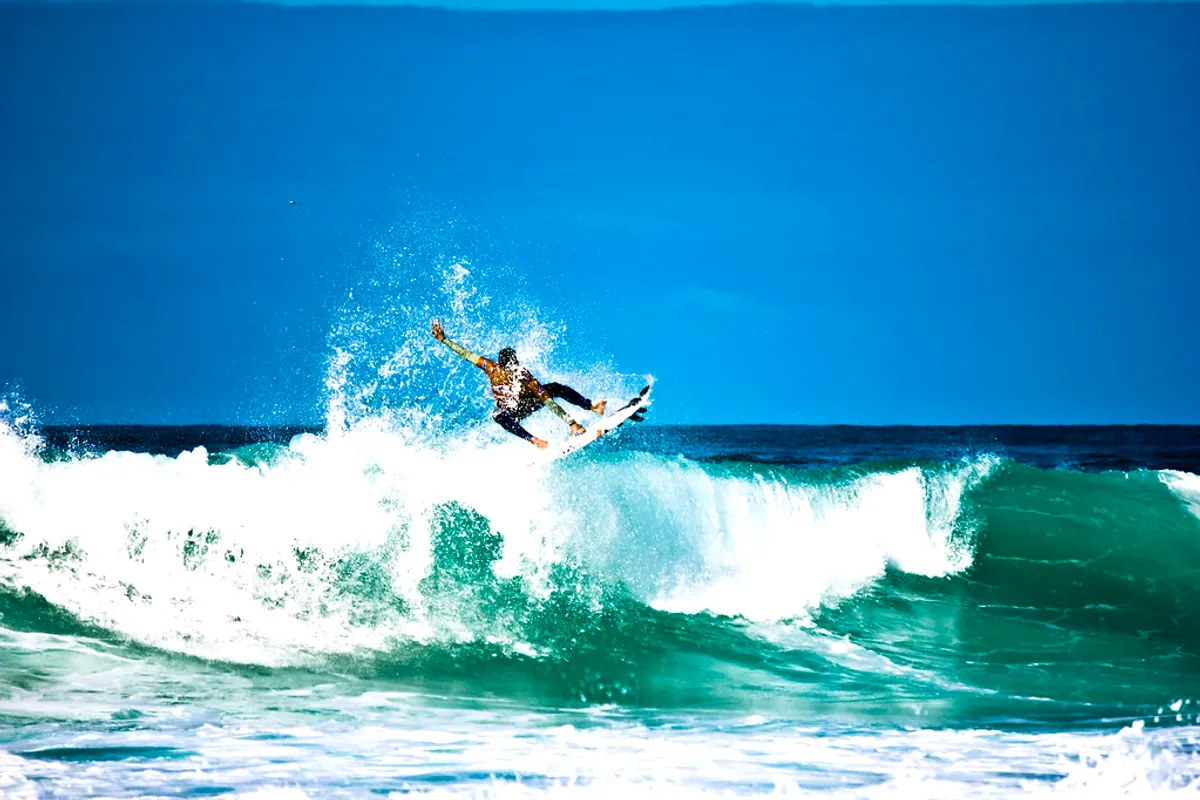
France's south-west coast faces the Bay of Biscay and the North Atlantic, receiving consistent swells from autumn to spring. The coastline is unusual: from the Gironde estuary to the Adour river near Bayonne, it is an almost unbroken line of sandy beach backed by dunes and pine forest, offering hundreds of beach-break peaks. South of Bayonne, the Basque coast becomes rockier, with reefs and points.
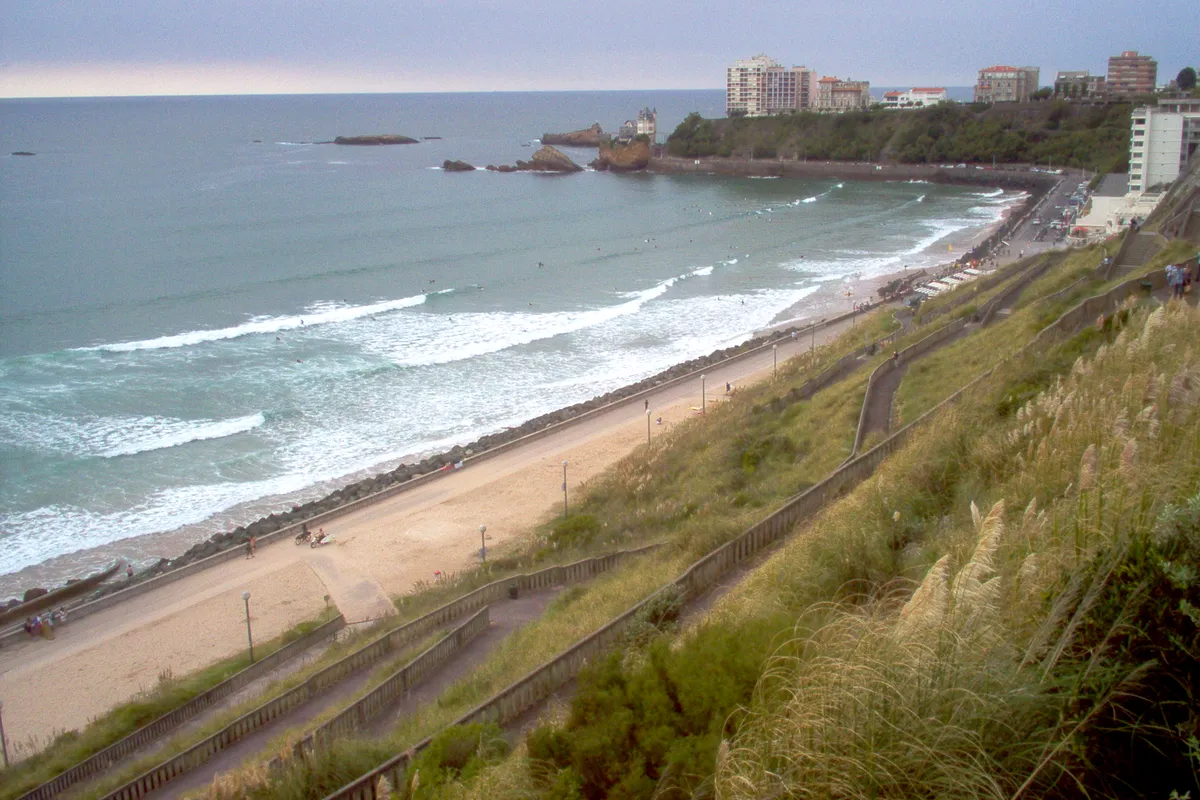
French surfing began in Biarritz in the late 1950s and has grown into one of Europe's strongest surf cultures, with professional contests, surf brands, shapers and a large community. Surf towns combine waves with French food, wine and a relaxed lifestyle. Brittany, in the north-west, offers a different, wilder experience with colder water and rugged coastlines.
When to go surfing in France
Autumn, from September to November, is the classic season for surfing in France. Swells become more consistent and powerful, winds are often offshore, the water is still relatively warm after summer and the summer crowds have gone. This is when Hossegor's beach breaks are at their best and professional contests have traditionally been held.
Winter brings powerful swells, cold water and frequent storms, with short windows of clean conditions. Spring offers good swells and fewer crowds. Summer is usually smaller, warm and very busy, with lifeguarded swimming zones restricting surfing on many beaches. It is the best time for beginners.
Beach-break safety on the French coast
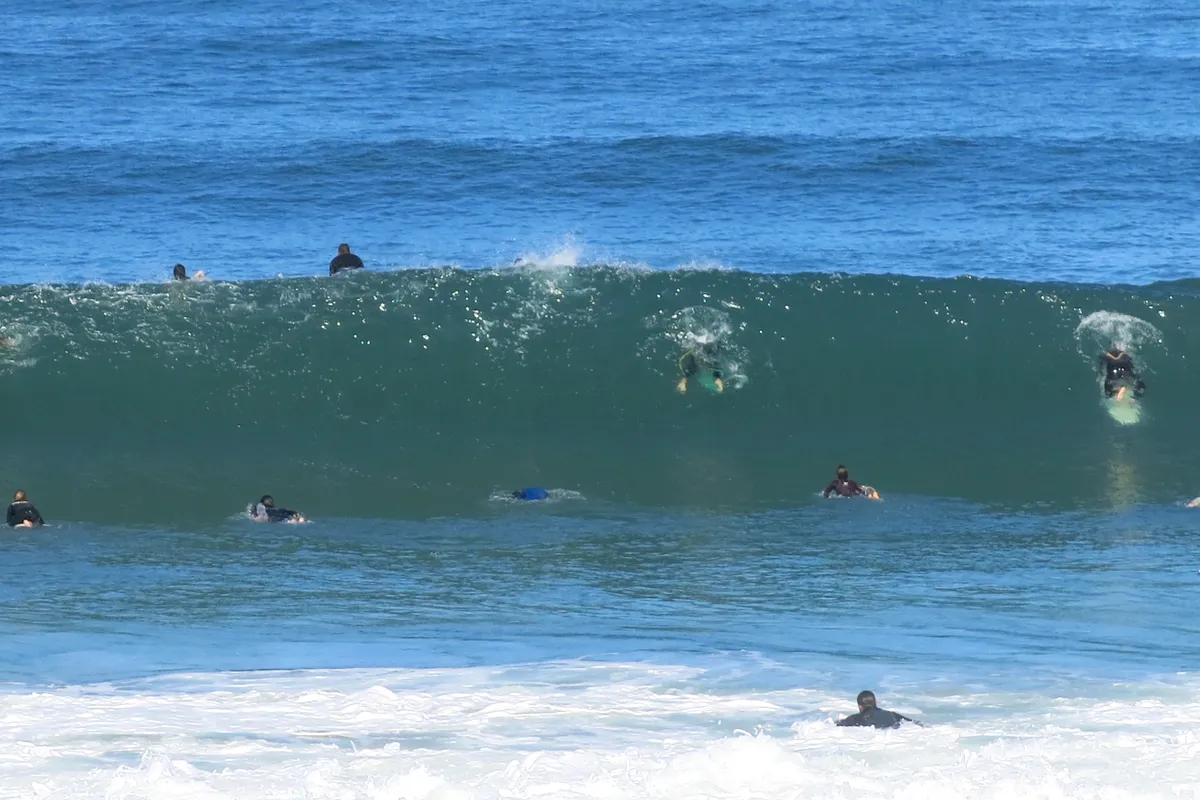
France's beach breaks can be powerful, with heavy shore break and strong rip currents between sandbanks. Many serious injuries happen in the shore break, even on moderate days. Watch carefully before paddling out, choose beaches suited to your level and surf with others.
In summer, lifeguards patrol the main beaches and mark bathing zones with flags. Surfing is restricted inside these zones and allowed in designated areas. Outside summer, most beaches are unpatrolled. Météo-France issues marine forecasts and warnings, and local surf shops can advise on conditions.
How cold is the water in France?
Water temperatures on the French Atlantic coast range from the low teens Celsius in winter to around twenty in late summer, with Brittany a little colder. A 3/2 wetsuit is common in summer and early autumn, a 4/3 in late autumn and spring, and a 5/4 with boots in winter.
Surf schools provide wetsuits for lessons, and rental shops are found in every surf town.
Travelling around France
Biarritz and Bordeaux airports serve the south-west, with Nantes and Brest serving the north-west. High-speed trains connect Paris with Bordeaux, Bayonne, Biarritz and Brittany. Ferries connect the UK with Brittany and Normandy, popular with surfers bringing vans.
A car or campervan is the best way to explore the coast, with many campsites near the beaches. The Landes and Gironde have extensive cycle paths through the pine forests, making cycling a popular way to get between beaches.
A short history of French surfing
Surfing in France is usually traced to 1957, when the American screenwriter Peter Viertel, working on a film in the Basque Country, brought a surfboard to Biarritz. Local enthusiasts quickly took up the sport, building their own boards and forming clubs, and the Côte des Basques became the centre of a new European surf culture. By the 1960s, surf shops and shapers had appeared in Biarritz and Anglet.
The sport spread north along the Landes and Gironde coasts in the following decades. Lacanau began hosting professional contests in the late 1970s, and Hossegor became a hub for surf brands and the European headquarters of several international companies. The Hossegor and Seignosse area has long hosted elite professional events in autumn. Today, France has one of the largest surf communities in Europe, and the French Surfing Federation oversees schools, competitions and national teams.
Food, wine and life between sessions
A surf trip to France is as much about what happens out of the water. In the Basque Country, try pintxos-style snacks, Bayonne ham, piment d'Espelette and gâteau basque. In the Landes, duck dishes and Cap Breton oysters are local specialities, and the Lac d'Hossegor is lined with oyster huts. The Gironde is next to Bordeaux, one of the world's great wine regions, making a vineyard visit an easy addition to a Lacanau trip.
Surf towns hold weekly markets selling local produce, cheese, bread and pastries. Summer brings festivals, night markets and outdoor concerts, while autumn is quieter and more local. Cycling through the pine forests, exploring the dunes and visiting the Dune du Pilat, Europe's tallest sand dune near Arcachon, are all good flat-day options.
Surf culture and etiquette
French surf culture is strong and stylish, with many surf shops, shapers and brands. Line-ups at famous breaks such as La Gravière and the best Basque reefs can be crowded and competitive. Respect local surfers, wait your turn and never drop in.
Many surf towns are lively in summer, with markets, festivals and nightlife. In autumn and winter, they become quieter and more local. Enjoy the food and wine, support local businesses and respect the dunes and pine forests, which are protected environments.
Planning a French surf trip
A popular approach is to base yourself in the Landes, around Hossegor, Seignosse or Capbreton, or in the Basque Country around Biarritz and Anglet, and explore the surrounding coast. The two areas are less than an hour apart. With more time, a road trip north to Lacanau and the Gironde, or south across the border to Spain's Basque Country, adds variety.
Brittany suits surfers looking for wilder, less crowded waves and a different culture, with Celtic heritage, crêpes and rugged landscapes.
Surf regions of France
The Basque coast: Biarritz to Hendaye
The French Basque coast combines sandy beaches and reefs with Basque culture and food. Biarritz, the birthplace of European surfing, has the Côte des Basques and Grande Plage. Anglet, to the north, has a series of jetty-shaped beaches. To the south, Guéthary is known for the big-wave reef Parlementia, Lafitenia near Saint-Jean-de-Luz is a right-hand point, and Hendaye has a long, gentle beach for beginners.
Known for: Biarritz, Anglet, Guéthary, Lafitenia, Hendaye
The Landes: Hossegor, Seignosse and Capbreton
The Landes coast is famous for powerful beach breaks, with Hossegor at its heart. La Gravière is one of the world's best beach-break barrels, while La Nord handles big swells. Seignosse and Capbreton offer more beach breaks for a range of levels. Further north, towns such as Vieux-Boucau and Mimizan have long beaches and fewer surfers.
Known for: Hossegor, Seignosse, Capbreton, Vieux-Boucau, Mimizan
Gironde: Lacanau and the Médoc
North of the Landes, the Gironde coast continues with long sandy beaches backed by forest and lakes. Lacanau is the main surf town, with a long beach and a history of professional contests. Montalivet, Le Porge and Carcans offer quieter beaches, while Cap Ferret, at the entrance to the Arcachon Bay, has powerful beach breaks.
Known for: Lacanau, Montalivet, Le Porge, Cap Ferret
Charente-Maritime and Vendée
The coast between the Gironde estuary and the Loire has islands, beaches and reefs. Île de Ré and Île d'Oléron have beaches that pick up swell, and Les Sables-d'Olonne in the Vendée has a lively surf scene and beach breaks. The region is popular for family holidays and can be good for learners.
Known for: Île de Ré, Île d'Oléron, Les Sables-d'Olonne
Brittany
Brittany, in France's north-west, has a rugged coastline of granite headlands, coves and long beaches, with cold water and powerful swells. La Torche, in Finistère, is one of the region's best-known spots, with a beach and reef set-up. The Crozon Peninsula, Audierne Bay and the Quiberon Peninsula offer many other options. Brittany suits surfers who enjoy wild, uncrowded coastlines.
Known for: La Torche, Crozon Peninsula, Audierne Bay, Quiberon
Normandy and the Channel coast
France's northern coasts, along the English Channel in Normandy and Pas-de-Calais, only occasionally receive surfable swells, usually during winter storms. A small, dedicated community surfs spots around the Cotentin Peninsula and the Côte d'Opale. Water is cold and conditions unpredictable, so these areas suit locals and committed travellers rather than planned surf holidays.
Known for: Cotentin Peninsula, Côte d'Opale
Overseas France
France's overseas territories include some notable surf destinations. Réunion, in the Indian Ocean, has powerful reef breaks such as Saint-Leu, though surfing has been heavily restricted in recent years because of shark incidents, so check current rules carefully. Guadeloupe and Martinique in the Caribbean have reef breaks that work in the northern winter. French Polynesia, home to Teahupo'o, is covered separately.
Known for: Saint-Leu (Réunion), Guadeloupe, Martinique
Learning to surf in France
France has hundreds of surf schools, many accredited by the French Surfing Federation (Fédération Française de Surf). Popular learning spots include Biarritz's Côte des Basques, Anglet's beaches, Seignosse, Capbreton, Lacanau, Les Sables-d'Olonne and Hendaye.
Summer is the most popular time to learn, with smaller waves and warmer water, although beaches are busy and swimming zones restrict surfing. Early autumn often offers a good balance of manageable waves and fewer crowds. Many surf camps offer packages with accommodation, often in campsites or surf houses near the beach.
When choosing a school, ask about accreditation, group size and how they choose beaches. Learning about shore break and rip currents is essential on France's powerful beach breaks.
Surfing in France: questions
When is the best time to surf in France?
September to November is the classic season, with powerful swells, offshore winds, warm water and fewer crowds. Summer is smaller and busier, while winter is powerful and cold.
Where is the best place to learn to surf in France?
Biarritz's Côte des Basques, Anglet, Seignosse, Capbreton, Lacanau and Hendaye are all popular learning spots with many surf schools.
Hossegor or Biarritz: which is better?
Hossegor has more powerful beach breaks and a surf-town feel in the pine forest. Biarritz is a larger, elegant town with gentler beaches, culture and nightlife. They are less than an hour apart.
What wetsuit do I need in France?
A 3/2 in summer and early autumn, a 4/3 in late autumn and spring, and a 5/4 with boots in winter.
Is there surf in Brittany?
Yes. Brittany has a rugged coastline with powerful swells, cold water and many uncrowded spots, including La Torche, the Crozon Peninsula and Quiberon.
Can I surf in France in summer?
Yes, especially as a beginner. Waves are usually smaller, the water is warmest and surf schools are busy. Lifeguarded swimming zones restrict where you can surf on many beaches.
Is surfing in France expensive?
Popular surf towns such as Biarritz and Hossegor can be expensive in July and August. Campsites, surf houses and visiting in autumn or spring help reduce costs, and lessons and board rental are widely available at competitive prices.
Can I surf in the Mediterranean in France?
Only occasionally. The Mediterranean coast gets surfable waves during certain storms, and local surfers around Marseille and the Côte d'Azur make the most of them, but it is not reliable for a surf trip.
What is the best surf town in France for beginners?
Seignosse, Capbreton, Anglet, Lacanau and Biarritz all have many surf schools and beaches suited to beginners in summer and early autumn.
Sources & editorial notes
Country context checked against the sources below. Regional summaries are Book & Surf editorial planning suggestions, not forecasts or safety assessments.