Why surf in the UK
The UK sits in the path of North Atlantic storms, and its exposed western and northern coasts receive regular swell, especially from autumn to spring. The south-west peninsula of Cornwall and Devon catches the most consistent surf in England, with long sandy beaches, rocky coves and some quality reefs. Wales has beaches and points facing the Atlantic and the Irish Sea, Scotland has powerful reefs and empty beaches in a dramatic setting, and the North Sea coast of north-east England produces good waves when easterly and northerly swells arrive.
British surfing has a long history, from early bodyboarders on wooden boards in the early twentieth century to the surf culture that grew around Newquay from the 1960s. Today, surf schools, shops and clubs are found in every surf region, and Britain has also become a pioneer in artificial wave pools. The water is cold, but modern wetsuits make year-round surfing realistic, and the reward is often uncrowded waves in beautiful, wild places.
When to go surfing in the UK
Autumn, from September to November, is usually the best season. Atlantic swells become more consistent, the water is at its warmest after summer and the summer crowds have gone. Winter brings the most powerful swells, cold water, short days and frequent storms, with excellent days between weather systems for experienced surfers. Spring can deliver good swell and long days, while summer is usually smaller, warmer and busiest, which makes it the best time for beginners.
The North Sea coast works on a different pattern, relying on storms that pass to the north and east of Britain, and it is most active from autumn to spring. Weather in Britain changes quickly, so flexibility is the key to a good surf trip.
Cold-water surfing and wetsuits
UK water temperatures range from roughly 8–10°C in late winter to around 15–17°C in late summer in the south-west, with Scotland and the North Sea colder. A 4/3 wetsuit is common in summer and early autumn, and many surfers add boots. From late autumn to spring, a 5/4 with boots and gloves is standard, and a hood is welcome on the coldest days.
Surf schools provide wetsuits and boots. A changing robe, warm layers and a flask of something hot make winter sessions far more enjoyable. Cold water affects stamina and judgement, so keep sessions shorter in winter and surf with others.
Lifeguards and beach safety
Many popular UK beaches are patrolled by RNLI lifeguards during the summer season and some school holidays. Lifeguards mark a swimming zone with red and yellow flags and a zone for surfboards and other craft with black and white chequered flags. A red flag means it is dangerous to enter the water. Outside the patrol season, most beaches are unpatrolled.
Rip currents are a common hazard, especially on big tidal ranges, which are among the largest in the world in parts of the Bristol Channel. Tides can change a beach dramatically within hours and can cut off access below cliffs. Check tide times, read safety signs and follow lifeguard advice. In an emergency at the coast, call 999 or 112 and ask for the Coastguard.
Getting to and around the UK
London's airports are the main international gateways, with Bristol, Exeter, Cardiff, Newquay, Edinburgh and Glasgow also useful for surf regions. Trains run from London to Cornwall and Devon, including a branch line to Newquay, but services to smaller surf beaches are limited.
A car or campervan is the most practical way to explore the coast and follow the swell, particularly in Wales and Scotland. Many surf beaches have paid car parks that fill quickly in summer. Campsites and holiday parks are plentiful in Cornwall and Devon.
Wave pools and inland surfing
Britain has been an early adopter of artificial surf pools. The Wave near Bristol and Lost Shore near Edinburgh offer consistent, bookable waves for every level, from white-water lessons to advanced barrels. They are a useful way to learn the basics, practise between trips or surf when the sea is flat.
Pools do not replace ocean knowledge, such as reading swell, tides and rips, but they can accelerate progress by offering many waves in a short session. Many surfers combine pool sessions with trips to the coast.
A short history of British surfing
Wave-riding in Britain goes back to at least the early twentieth century, when holidaymakers in Cornwall and Devon rode waves on simple wooden bellyboards. Stand-up surfing arrived in the 1950s and 1960s, influenced by visiting Australian and American lifeguards and surfers, and Newquay quickly became the centre of a new British surf scene, with clubs, shops and shapers.
British surfers went on to explore the country's colder coasts, discovering quality reefs in Scotland, Wales and the North Sea. Major contests at Fistral brought professional surfing to Britain, and in recent decades the growth of surf schools and wave pools has introduced many more people to the sport.
Planning a UK surf trip
For a first trip, Cornwall is the obvious choice, with Newquay offering the widest range of surf schools, accommodation and beaches. North Devon, around Croyde and Woolacombe, is a popular alternative with a more relaxed feel. Experienced surfers often head to Wales, Scotland's north coast or the North Sea when the right swell arrives.
Combine surfing with coastal walking on routes such as the South West Coast Path, the Wales Coast Path or the North Coast 500 in Scotland, and with the pubs, food and villages that make British coastal trips memorable.
Surf regions of the UK
Cornwall
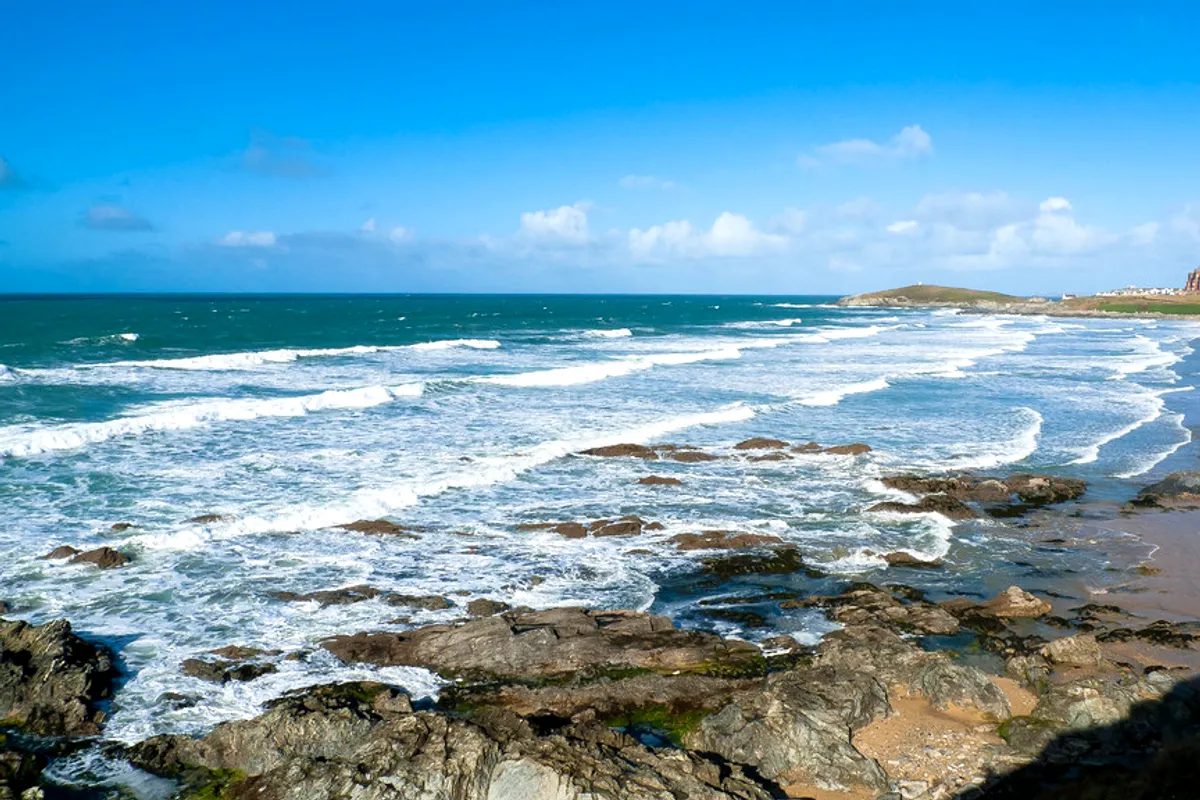
Cornwall is Britain's surf heartland. Newquay has Fistral, the UK's best-known surf beach, along with sheltered town beaches and Watergate Bay. Further west, Perranporth, St Agnes, Gwithian and Sennen Cove pick up plenty of swell, while Porthleven on the south coast is a powerful reef for experienced surfers. North Cornwall offers Polzeath, a gentle beach popular with families, and Bude, with several beaches and a sea pool.
Known for: Newquay, Fistral, Watergate Bay, Perranporth, Sennen Cove, Porthleven, Polzeath, Bude
Devon
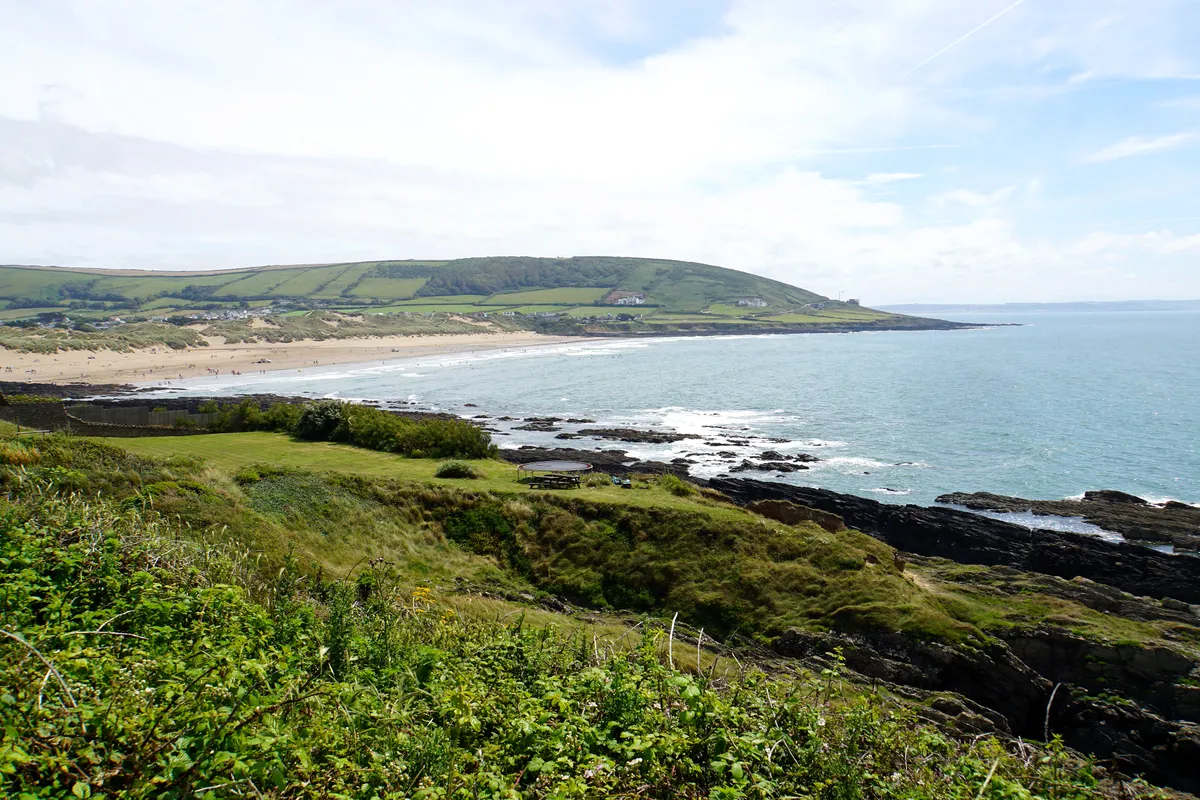
North Devon faces the Atlantic, with Croyde one of England's best-known beach breaks and Woolacombe and Saunton offering long sandy beaches suitable for learners and longboarders. Saunton's gentle, rolling waves are a classic longboard spot. On the south coast, Bantham is the main surf beach, working mainly in winter swells. The region has a strong surf culture and many surf schools.
Known for: Croyde, Woolacombe, Saunton, Bantham
Wales
South Wales has the Gower Peninsula, with Llangennith a long beach popular with surf schools, and Porthcawl's Rest Bay. Pembrokeshire, in the south-west, has Freshwater West, one of Wales's most consistent beaches, and Whitesands Bay near St Davids. North Wales has occasional surf at Hell's Mouth on the Llŷn Peninsula. Welsh beaches are often quieter than Cornwall's.
Known for: Llangennith, Rest Bay, Freshwater West, Whitesands Bay, Hell's Mouth
Scotland
Scotland's north coast faces the full force of North Atlantic and Arctic swells. Thurso East is a world-class right-hand reef for experienced surfers, and the surrounding coast has many other reefs and beaches. The west coast and islands, including Machrihanish, Tiree and the Outer Hebrides, have long, empty beaches. On the east coast, Pease Bay near Edinburgh is a popular beach break. Water is cold and conditions can be wild.
Known for: Thurso East, Machrihanish, Tiree, Outer Hebrides, Pease Bay
North-east England
The North Sea coast from Northumberland to Yorkshire has an active surf community. Tynemouth's Longsands is a popular beach with surf schools, while Saltburn, Scarborough and Whitby offer beach and reef breaks. The best surf comes from northerly and easterly swells, mostly from autumn to spring, and the water is cold, so a thick wetsuit is essential.
Known for: Tynemouth, Saltburn, Scarborough, Whitby
Channel Islands
Just off the coast of France, the Channel Islands are British Crown Dependencies with their own surf scenes. Jersey's St Ouen's Bay is a long, exposed beach with several peaks and a surf club history going back decades. Guernsey also has beaches and reefs that work on Atlantic swells. Both islands are reached by ferry or air.
Known for: St Ouen's Bay (Jersey), Vazon Bay (Guernsey)
Learning to surf in the UK
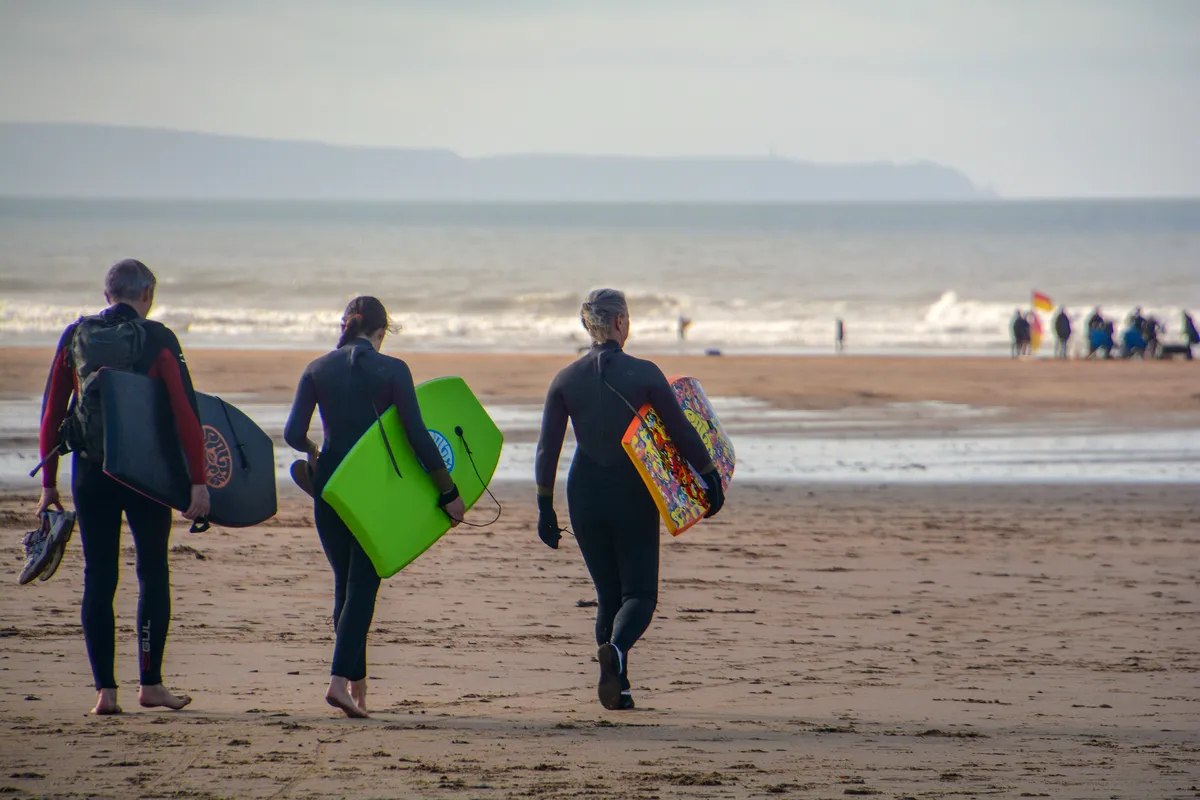
The UK is a great place to learn to surf, especially in summer and early autumn. Popular learning beaches include Newquay's Fistral, Towan and Watergate Bay, Polzeath, Bude, Woolacombe, Saunton and Croyde in Devon, Llangennith on the Gower and Tynemouth's Longsands. Many schools are approved by Surfing England, Surfing Wales or Surf Scotland, the national governing bodies.
Lessons include thick wetsuits, boots and soft-top boards. Choose a school that teaches in lifeguarded areas where possible and explains rip currents and tides. Wave pools near Bristol and Edinburgh offer another way to learn the basics before heading to the coast.
Summer brings the gentlest waves and the warmest water, though beaches are busy. September is often ideal, with warm water, consistent small waves and fewer people.
Surfing in the UK: questions
When is the best time to surf in the UK?
Autumn, from September to November, usually brings consistent swells and the warmest water. Summer is smaller and better for beginners, while winter is powerful and cold.
Where is the best place to learn to surf in the UK?
Newquay in Cornwall is the most popular, with many surf schools and beaches. North Devon, the Gower Peninsula and Tynemouth are also good options.
How cold is the sea in the UK?
Around 8–10°C in late winter and 15–17°C in late summer in the south-west, colder in Scotland and the North Sea. A 4/3 with boots in summer and a 5/4 with boots, gloves and hood in winter is typical.
What do the beach flags mean in the UK?
Red and yellow flags mark the lifeguarded swimming area, black and white chequered flags mark the area for surfboards, and a red flag means it is dangerous to enter the water.
Is there good surf in Scotland?
Yes. Scotland's north coast, including Thurso East, has powerful reefs and beaches, and the islands have long, empty beaches. The water is cold and conditions can be challenging.
Are there surf wave pools in the UK?
Yes. The Wave near Bristol and Lost Shore near Edinburgh offer bookable artificial waves for all levels.
Is surfing in the UK good in winter?
Yes, for experienced surfers with thick wetsuits. Winter brings the most powerful swells and quiet line-ups, though weather can be stormy and days are short.
Do I need a wetsuit to surf in the UK in summer?
Yes. Even in summer, the water is cool enough that most surfers wear a 4/3 wetsuit, often with boots.
What is the best surf beach in the UK?
Fistral in Newquay is the best known, but Croyde, Freshwater West, Thurso East and many other beaches offer excellent waves depending on the swell and your level.
Can I surf in London?
There is no ocean surf in London, but the nearest surf beaches are a few hours away, and inland wave pools offer artificial waves.
Sources & editorial notes
Country context checked against the sources below. Regional summaries are Book & Surf editorial planning suggestions, not forecasts or safety assessments.