The breaks
Recognised, publicly known surf spots around Newquay. Suitability depends on the day's swell, wind and tide, so treat the level as a guide, not a guarantee.
| Break | Type | Best for | Notes |
|---|---|---|---|
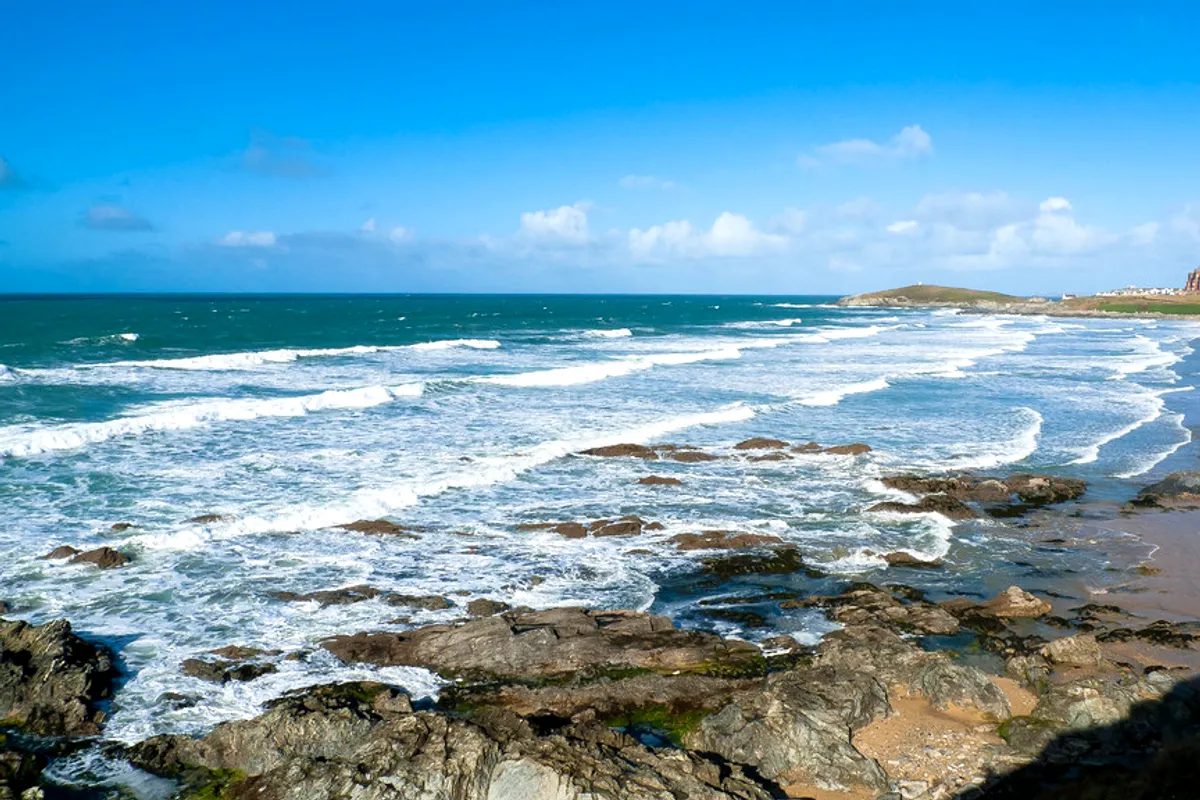
| Fistral | Beach break | Beginner–Advanced | The UK's best-known surf beach, facing the open Atlantic. Consistent peaks, crowded, lifeguarded in season; powerful on bigger days. |
| The Cribbar | Big-wave reef | Expert | Reef off Towan Head that only breaks on the biggest swells. A famous big-wave spot to watch from the headland. |
| Towan & Great Western | Beach break | Beginner–Intermediate | Sheltered town beaches below the cliffs, popular for lessons. Can work well on big swells with southerly winds. |
| Watergate Bay | Beach break | Beginner–Intermediate | Long, open beach north-east of town with plenty of space, surf schools and cafés. |
| Crantock | Beach break | Intermediate | Dune-backed beach across the Gannel estuary. Strong currents near the river mouth, especially on the ebb. |
| Lusty Glaze | Beach break | Beginner–Intermediate | Small cliff-backed cove on the north side of town, reached by steps. |
Why Newquay is Britain's surf capital
Newquay sits on a stretch of north Cornish coast where a series of headlands separates a string of sandy beaches facing different directions. Fistral, on the west side of town, faces the open Atlantic and picks up most swell. The town beaches on the north side, such as Towan and Great Western, are tucked into bays that are sheltered from the biggest swells and the prevailing south-westerly winds. A short drive or walk brings you to Watergate Bay to the north-east and Crantock to the south-west.
That range makes Newquay unusually reliable for the UK. On a big, windy day, the town beaches can offer clean, manageable waves while Fistral is too big; on small days, Fistral often has the best waves in the area. Newquay has been the centre of British surfing since the 1960s, with surf shops, shapers, schools, clubs and a long history of contests, including events at Fistral that brought international surfing to Britain.
Fistral
Fistral is a wide beach backed by dunes and a golf course, divided informally into North Fistral, Little Fistral and South Fistral. North Fistral, close to Towan Head, is usually the most consistent and powerful section, with good beach-break peaks on most swells. South Fistral can be more sheltered from some winds. On its best days, Fistral produces fast, hollow waves, and it is crowded with local and visiting surfers.
Fistral is lifeguarded in season, with chequered flags marking the area for surfboards. It is suitable for beginners on small days with a surf school, but it can become powerful quickly, with strong rips, so learners often use the town beaches instead.
The Cribbar
Off the tip of Towan Head, at the northern end of Fistral, the Cribbar is a reef that only breaks on the biggest Atlantic swells. When it does, it produces huge, powerful waves that have been ridden by British and international big-wave surfers, often with jet-ski support. It is one of the UK's most famous big-wave spots.
For visitors, the Cribbar is a spectacle to watch from the headland, not a wave to surf. On big days, crowds gather on Towan Head; stay back from cliff edges and follow any safety advice.
The town beaches
Towan, Great Western, Tolcarne and Lusty Glaze are a chain of sandy beaches below the cliffs on the north side of town. They face north and are sheltered by Towan Head and the harbour from much of the swell and the prevailing winds. On many days, they offer smaller, gentler waves than Fistral, which makes them popular with surf schools. When a big swell is running and the wind is from the south or south-west, they can produce surprisingly good waves for intermediates.
The town beaches are close to the centre, shops and accommodation, making it easy to fit a session around the day. At high tide, some beaches become very narrow, so check tide times.
Watergate Bay and Crantock
Watergate Bay, a few kilometres north-east of Newquay, is a long, open beach that stretches for about two miles at low tide. It picks up plenty of swell and is a popular learning and intermediate beach, with surf schools, a hotel and cafés. Its size helps to spread surfers out.
Crantock, across the Gannel estuary to the south-west, is a beautiful beach backed by dunes, with waves that can work in a range of conditions. Currents around the estuary can be strong, especially on the ebbing tide, so take care and stay away from the river mouth. Further afield, Holywell Bay and Perranporth are within a short drive.
Staying in Newquay
Staying in Newquay town puts you within walking distance of Fistral and the town beaches, along with shops, restaurants, pubs and nightlife. Newquay has a lively reputation in summer, especially around the town centre, but quieter accommodation is available near Pentire, Fistral and Porth.
Watergate Bay and Porth suit those looking for a calmer stay with easy beach access. Campsites and holiday parks are found around the town and along the coast. Book well ahead for July and August and for the Boardmasters festival weekend in August, when the town is very busy.
How to get to Newquay
Newquay has its own airport with flights from some UK cities. Trains run from London Paddington and other cities to Newquay via a branch line from Par, although services are less frequent than on the main line. By road, Newquay is reached via the A30 and A392; summer traffic can be heavy.
Within Newquay, most beaches are walkable from the centre. Buses connect the town with nearby beaches and villages. A car is useful for exploring further along the coast, but parking at popular beaches fills quickly in summer.
Water, weather and safety
The sea off Newquay ranges from around 9–10°C in late winter to about 16–17°C in late summer. Most surfers wear a 4/3 wetsuit with boots in summer and early autumn and a 5/4 with boots and gloves in winter. The weather can change quickly, so pack layers and waterproofs.
RNLI lifeguards patrol the main beaches during the season. Swim between the red and yellow flags, surf between the black and white chequered flags and never enter the water when a red flag is flying. Rip currents and the large tidal range are the main hazards; check tide times and ask lifeguards about conditions.
Beyond the surf in Newquay
Check the swell and wind each morning and choose between Fistral and the town beaches accordingly. Autumn often brings the best conditions, with warmer water and fewer crowds than summer.
On a flat day, walk the South West Coast Path around Towan Head and Pentire, visit the Blue Reef Aquarium or explore the Gannel estuary. The Eden Project and the fishing villages of Padstow and St Ives are within an hour. Cornish pasties, fish and chips and seafood are local favourites.
Newquay surf season month by month
A broad planning picture, not a forecast. Swell, wind and water temperature vary from year to year.
| January | Powerful winter swells, cold water (9–10°C) and short days. Experienced surfers enjoy quiet line-ups; the Cribbar may break on the biggest days. |
|---|---|
| February | Still stormy and cold. Use the town beaches when Fistral is too big. A 5/4 with boots, gloves and hood. |
| March | Late-winter swells and lengthening days. Water at its coldest. |
| April | Spring brings smaller swells and some settled weather. Easter holidays bring the first crowds. |
| May | Friendlier swells, long days and warming air. Good for improvers. |
| June | Generally small, with long evenings. Good for beginners; lifeguards on duty. |
| July | Peak holiday season: busy beaches, small surf and surf schools in full swing. |
| August | The busiest month, with the Boardmasters festival and the warmest water (around 16–17°C). |
| September | Often the best month: warm water, the first autumn swells and quieter beaches. |
| October | Consistent Atlantic swells and still-mild water. Excellent for intermediates and advanced surfers. |
| November | Bigger swells and cooling water. Storms bring powerful days and empty line-ups. |
| December | Winter swells, cold water and festive breaks. Short, sharp sessions between weather systems. |
Learning to surf in Newquay
Newquay has more surf schools than anywhere else in the UK, teaching at Fistral, the town beaches, Watergate Bay and other beaches chosen for the day's conditions. Many are approved by Surfing England. Lessons include thick wetsuits, boots and soft-top boards, and many schools offer multi-day courses and family sessions.
The town beaches are often the best place for complete beginners, with smaller, gentler waves, while Fistral and Watergate Bay suit improvers. Ask about group size, instructor qualifications and whether lessons take place in lifeguarded areas.
Summer has the gentlest conditions and warmest water but the busiest beaches. September and early October are often ideal, with warm water, consistent small waves and fewer people.
Comparing options across the country? Read our guide to surfing in the UK.
Seasonal notes on this page describe typical patterns, not the conditions on a given day. Use the local forecast, lifeguard advice and a qualified instructor for water-safety decisions, and get a written breakdown of what any surf package includes before paying.
Newquay surf trip questions
When is the best time to surf in Newquay?
September to November usually brings consistent swells, the warmest water and fewer crowds. Summer is smaller and better for beginners, while winter is powerful and cold.
Is Newquay good for beginners?
Yes. Newquay has many surf schools, and the sheltered town beaches and Watergate Bay offer gentle waves for learners.
What wetsuit do I need in Newquay?
A 4/3 with boots in summer and early autumn, and a 5/4 with boots and gloves in winter, often with a hood.
What is the Cribbar?
The Cribbar is a reef off Towan Head that breaks only on the biggest Atlantic swells, producing huge waves for experienced big-wave surfers. It is best watched from the headland.
How do I get to Newquay?
Newquay has an airport with flights from some UK cities, and trains run via a branch line from Par. By road, it is reached via the A30.
Is Fistral beach lifeguarded?
Yes, during the main season. Surf between the black and white chequered flags and follow lifeguard advice.
Sources & editorial notes
Destination context checked against the sources below. Base-selection and itinerary suggestions are Book & Surf editorial recommendations. Seasonal windows are broad planning suggestions, not measured forecasts or guarantees.
We do not claim to have personally surfed every break. Read our editorial standards.