The breaks
Recognised, publicly known surf spots around Biarritz. Suitability depends on the day's swell, wind and tide, so treat the level as a guide, not a guarantee.
| Break | Type | Best for | Notes |
|---|---|---|---|
| Côte des Basques | Beach break | Beginner–Intermediate | Long, gently sloping beach below cliffs with slow, rolling waves. A longboard and learning spot; the beach almost disappears at high tide. |
| Grande Plage | Beach break | Beginner–Intermediate | Central beach below the casino. Punchy on bigger swells; swimming zones restrict surfing in summer. |
| Les Cavaliers (Anglet) | Beach break | Intermediate–Advanced | Powerful jetty-shaped peaks in Anglet that have hosted contests. |
| Sables d'Or (Anglet) | Beach break | Beginner–Intermediate | Anglet beach with consistent peaks between jetties, popular with surf schools. |
| Parlementia (Guéthary) | Reef break | Expert | Big-wave reef break off the Basque village of Guéthary, working on large winter swells. |
| Lafitenia | Right-hand point | Intermediate–Advanced | Right-hand point near Saint-Jean-de-Luz offering long rides on the right swell. |
The birthplace of European surfing
Biarritz has been a fashionable seaside resort since the nineteenth century, when it became a favourite of European royalty. Surfing arrived in the late 1950s, when visitors from California introduced boards to the Côte des Basques, and a local surf culture quickly developed. Biarritz is often called the birthplace of European surfing, and the Côte des Basques remains a symbolic place for surfers.
Today, Biarritz combines its belle époque architecture, casinos and grand hotels with a relaxed surf culture, surf shops and shapers. It is part of the French Basque Country, with its own language, food and traditions, and it sits close to the Spanish border. Surfers come for the waves, but stay for the town, the food and the culture.
Côte des Basques
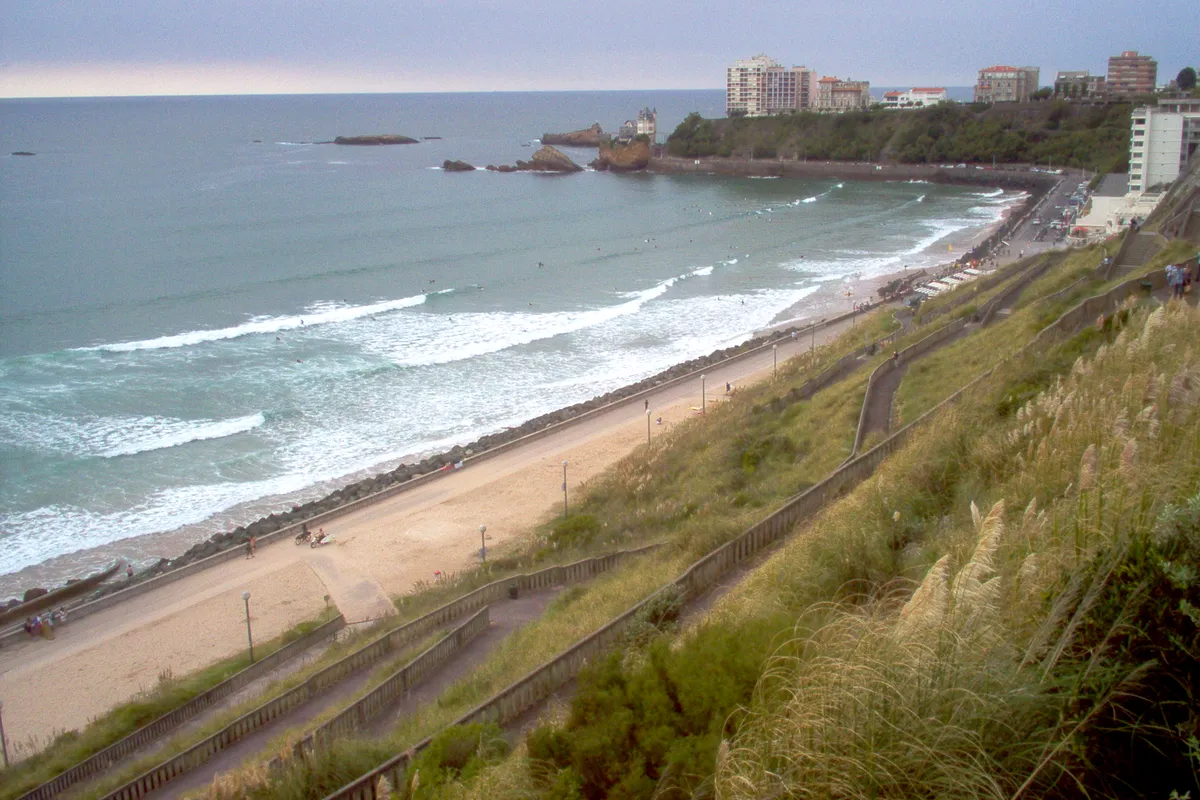
The Côte des Basques is a long beach below cliffs on the south side of Biarritz. Its gently sloping sand and slow, rolling waves make it one of the best longboard and learning spots in France, particularly at lower tides. At high tide, the beach almost disappears, so timing matters. On bigger swells, the waves can become more powerful.
The beach has a strong longboarding culture and many surf schools. The views across to the Spanish coast and the Pyrenees make it one of the most beautiful surf beaches in Europe. Sunsets here are a ritual.
Grande Plage, Marbella and Milady
Grande Plage, in the heart of Biarritz below the casino and grand hotels, is a sandy beach with peaks that can be good for learners and intermediates, especially outside the busy summer months, when swimming zones restrict surfing. Its waves can be punchy on bigger swells.
South of the Côte des Basques, Marbella and Milady are beaches with a mix of sand and reef that suit intermediates and can offer good waves on the right swell and tide. They are generally quieter than the central beaches.
Anglet's beaches
North of Biarritz, the town of Anglet has a long stretch of beaches separated by jetties, including Les Cavaliers, Sables d'Or, VVF and La Barre. The jetties help shape sandbanks, producing consistent beach-break peaks for all levels. Les Cavaliers is known for powerful waves and has hosted contests, while other beaches can be more forgiving.
Anglet has a more relaxed, residential feel than Biarritz and is popular with locals and surf schools. Its beaches are backed by a promenade, pine forest and cycle paths.
Guéthary and the Basque reefs
South of Biarritz, the coast becomes rockier, with reefs and points. Guéthary, a small Basque village, is known for Parlementia, a big-wave reef break that works on large winter swells and attracts experienced surfers. Lafitenia, near Saint-Jean-de-Luz, is a right-hand point that can offer long rides on the right swell.
Further south, Hendaye has a long, gentle beach that suits beginners, and across the border, Spain's Basque Country offers famous waves such as Mundaka and Zarautz.
Picking a base around Biarritz
Staying in central Biarritz puts you close to Grande Plage, the Côte des Basques, restaurants, bars and shops. Accommodation ranges from grand hotels to apartments and guesthouses. It is lively in summer and quieter in autumn and winter.
Anglet is a good alternative, with campsites, surf camps and apartments close to its beaches. Bidart and Guéthary, to the south, are smaller Basque villages with a quieter atmosphere and easy access to the reefs. Saint-Jean-de-Luz, further south, is a charming harbour town.
Beach rules, safety and water quality
In summer, lifeguards patrol Biarritz's main beaches and mark bathing zones with flags. Surfing is usually restricted inside these zones and allowed in designated areas, which can change with the tide and conditions. Follow lifeguard instructions and look for signs on each beach.
The beaches can have strong currents, especially on bigger swells and around rocks and jetties. The Côte des Basques shore break can be powerful at high tide when waves hit the sea wall. Outside summer, most beaches are unpatrolled, so surf with others and check conditions carefully.
After heavy rain, water quality can drop near river mouths and outflows, and local authorities sometimes close beaches temporarily. Check local notices, especially in late summer and autumn storms. The water is cool for much of the year, so a good wetsuit helps you stay in control.
Reaching Biarritz and moving between breaks
Biarritz airport is just outside town, with flights from Paris and other European cities. Trains connect Biarritz with Bordeaux, Paris and Spain. Buses link Biarritz, Anglet, Bayonne and the coastal villages.
A car is useful for exploring the wider coast, but parking in Biarritz can be difficult in summer. Cycling and walking are good ways to get around town and along the coast.
Flat days and a better week in Biarritz
Check the tide carefully, especially for the Côte des Basques, where the beach can disappear at high tide. Autumn often brings the best combination of swell, offshore winds and fewer crowds.
On a flat or rest day, explore Biarritz's Rocher de la Vierge, a rock outcrop linked to the shore by a footbridge, or visit the Cité de l'Océan, an ocean and surf museum. Bayonne, next door, is known for its old town, chocolate and ham. Saint-Jean-de-Luz and the Basque villages inland offer markets, pelota courts and local cuisine. Spain's San Sebastián, famous for its food, is less than an hour away.
Biarritz surf season month by month
A broad planning picture, not a forecast. Swell, wind and water temperature vary from year to year.
| January | Winter swells and cold water (a 5/4 with boots). Parlementia can break on big days; quiet beaches. |
|---|---|
| February | Powerful and often stormy. Short windows of clean surf between weather systems. |
| March | Consistent swells and lengthening days. Still cold water. |
| April | Spring swells with more variable weather. A 4/3 wetsuit. |
| May | Smaller, friendlier waves and warmer weather. Good for intermediates and longboarders. |
| June | Generally small and increasingly busy. Côte des Basques is great for learners at lower tides. |
| July | Peak season: busy beaches, small surf, swimming zones and lively evenings. |
| August | Similar to July, with the warmest water of the year. Small waves and big crowds. |
| September | Autumn swells begin, water is still warm and crowds thin. A great month. |
| October | Often the best month: consistent swells, offshore winds and pleasant weather. |
| November | Bigger swells and cooler water. Excellent for experienced surfers. |
| December | Winter swells and stormy weather. Quiet town and powerful waves. |
Learning to surf in Biarritz
Biarritz is one of France's most popular places to learn to surf. The Côte des Basques is the classic learning beach, with slow, rolling waves at lower tides, and Anglet's beaches and Grande Plage are also used by surf schools. Many schools are accredited by the French Surfing Federation.
Lessons usually include wetsuits and soft-top boards. Summer and early autumn offer the gentlest conditions, while spring and late autumn can be good with a school that chooses carefully. Ask about group size, instructor qualifications and how they plan around the tide.
Biarritz is also an excellent place to learn longboarding, with a strong longboard culture at the Côte des Basques.
Comparing options across the country? Read our guide to surfing in France.
Seasonal notes on this page describe typical patterns, not the conditions on a given day. Use the local forecast, lifeguard advice and a qualified instructor for water-safety decisions, and get a written breakdown of what any surf package includes before paying.
Biarritz surf trip questions
When is the best time to surf in Biarritz?
September to November often brings consistent swells, offshore winds and warm water. Summer is small and busy, while winter is powerful and cold.
Is Biarritz good for beginners?
Yes. The Côte des Basques is a classic learning beach, and Anglet's beaches and Grande Plage are also used by surf schools.
Why is Biarritz called the birthplace of European surfing?
Surfing was introduced to Biarritz in the late 1950s, when visitors from California brought boards to the Côte des Basques, and a local surf culture quickly developed.
What wetsuit do I need in Biarritz?
A 3/2 in summer and early autumn, a 4/3 in late autumn and spring, and a 5/4 with boots in winter.
What is the Côte des Basques like at high tide?
At high tide, the beach almost disappears and the waves can break against the sea wall, so surfing is best at lower tides. Check tide times before you go.
Can I surf in Spain from Biarritz?
Yes. The Spanish Basque Country is less than an hour away, with famous waves such as Zarautz and, on the right days, Mundaka.
Is Biarritz expensive?
Biarritz is one of the more expensive surf towns in France, especially in July and August. Anglet, Bidart and campsites along the coast can be more affordable, and prices drop noticeably in autumn.
Sources & editorial notes
Destination context checked against the sources below. Base-selection and itinerary suggestions are Book & Surf editorial recommendations. Seasonal windows are broad planning suggestions, not measured forecasts or guarantees.
We do not claim to have personally surfed every break. Read our editorial standards.