Mundaka Left.
Mundaka is a small Basque town on the Urdaibai estuary, and the left-hand wave at the river mouth is among the best-known sandbar waves in Europe. Wikipedia says the estuary has created a perfect sandbar that forms hollow waves visible from the town's harbour wall, and notes that Mundaka was once a stop on the world championship tour. Surf-Forecast rates the wave highly on a good day and lower for consistency, which sums up the situation: when everything lines up it is spectacular, and many days it is not.
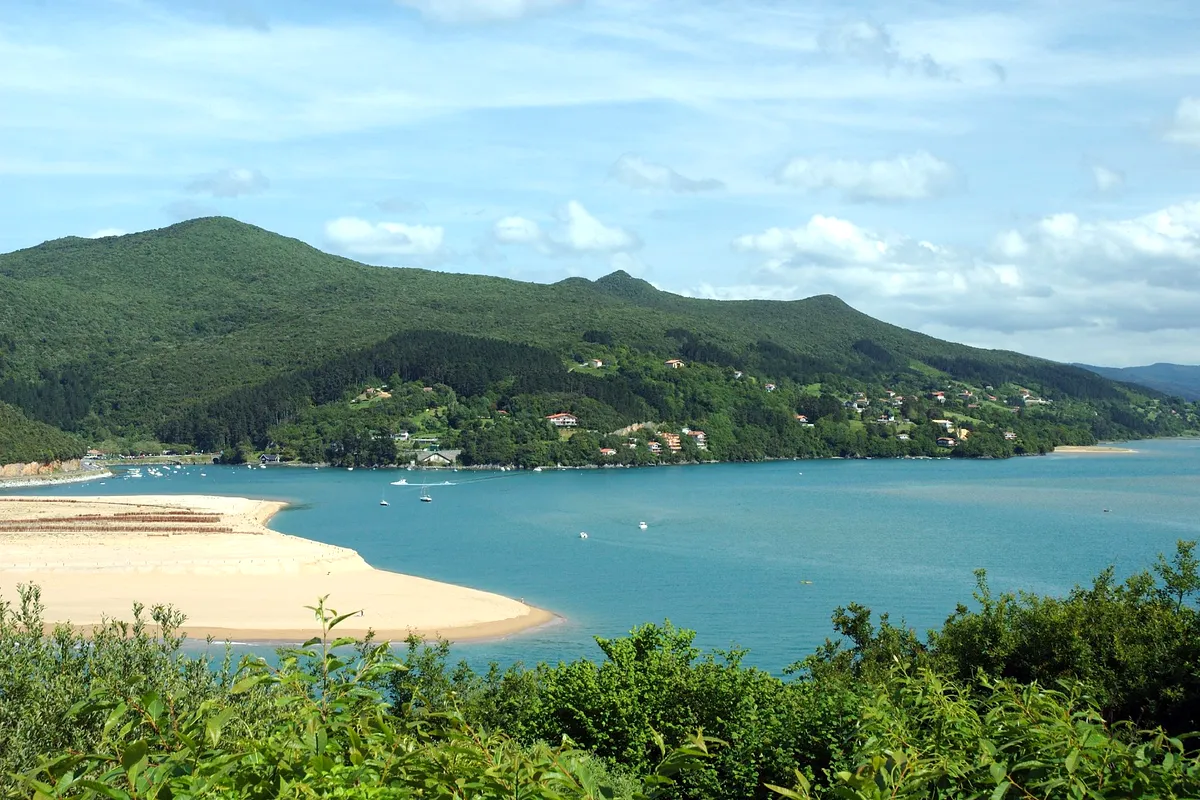 Photo: Eltito · CC BY 2.0 · Wikimedia Commons
- Level
- Advanced
- Direction and bottom
- Left · Sand
- Best swell
- NW groundswell
- Best wind
- S offshore
- Best tide
- Low to falling tide
- Best months
- Oct, Nov, Dec, Jan, Feb, Mar
- Size
- Waist-high to double overhead; the best barrels come from head-high and up
- Hazards
- Estuary currents, Shallow sandbar, Crowds, Rocks along the harbour wall, Cold water
How the sandbar works
The wave forms where the Oka river meets the Bay of Biscay. Swell moves along the channel, reaches the sandbar at the mouth and breaks left in a long, tapering barrel section that peels across the bar towards the harbour wall. The bar is made of sand, so it depends on the river and tides to keep its shape. A storm or a period of heavy river flow can reshape it quickly.
Surf-Forecast gives the best swell as north-west and the best wind as south, and it classes the spot as a river break with both lefts and rights, though the left is the one that makes the reputation. The same page says the best tide is around low and falling, which makes sense for a bar that needs a certain depth of water to hold the barrel without letting the wave close out.
When it works and when it does not
Winter is the key season. In January the page shows clean surf about 35 percent of the time, blown out about 42 percent and too small about 23 percent. The Basque coast catches a wide variety of swell, but Mundaka needs a groundswell with a long period to wrap into the estuary. The user rating on the page for consistency is about 2.9 out of 5, while the quality on a good day is 4.7, a gap that is typical of sandbars.
The water is cold in winter, and the sea temperature on Surf-Forecast is about 18 degrees Celsius at the time of writing, with a shorty or summer suit suggested for that day. In midwinter most surfers wear a full wetsuit, hood and boots. On a day with the right tide, a south wind and a decent swell, the wave can be among the best in Europe; on a day without those, it can be flat or sloppy.
Who should not surf Mundaka
Mundaka is not a wave for beginners or for anyone who is uncomfortable with a fast, shallow barrel. The paddle-out can involve strong estuary currents, the takeoff is steep, and the crowd is often heavy. Surf-Forecast lists rips and crowds as the main hazards. Falling onto a shallow sandbar in the barrel can cause injuries, and the harbour wall and rocks along the channel are hard to avoid in a heavy wipeout.
Local surfers have priority, and the lineup is a place for patient visitors who wait their turn. If you cannot catch waves in a crowd or you tend to fall behind on the takeoff, there are other breaks along the coast with easier conditions. The nearby beaches at Laida and Laga, within three kilometres, offer gentler surf for learners and improvers.
Getting there and where to watch
Wikipedia says that Mundaka is reachable from Bilbao by the EuskoTren E4 Urdaibai line, by bus or by road, and Surf-Forecast puts Bilbao airport about 21 kilometres away. The town is small and parking is limited, so the train is a sensible way to arrive, and a short walk leads from the station to the harbour.
The best place to watch is the harbour wall, which looks directly across the bar and the line-up. You can see the set waves approach, count the surfers and judge the tide. It is also close to cafés and bars, which is part of the attraction of the town. Be mindful of people who are fishing or working on the quay, and leave space for them.
Respect for the estuary
Urdaibai is a protected biosphere area, and the estuary is home to migratory birds and shellfish beds. Avoid walking on sensitive marsh areas and take any rubbish with you. The destination guide for Mundaka describes the town, the wider coast and the other waves within reach, and this page concentrates on the wave itself.
The ocean off Mundaka, by month
| J | F | M | A | M | J | J | A | S | O | N | D | |
|---|---|---|---|---|---|---|---|---|---|---|---|---|
| Swell, m | 1.9 | 2.3 | 1.9 | 1.1 | 1.0 | 1.0 | 0.8 | 0.9 | 1.1 | 1.4 | 1.5 | 1.7 |
| Period, s | 12 | 13 | 13 | 12 | 11 | 10 | 9 | 9 | 10 | 12 | 12 | 13 |
| Water, °C | 13 | 12 | 12 | 13 | 15 | 19 | 21 | 22 | 21 | 19 | 16 | 14 |
Open-ocean ERA5 medians, not wave size at the break. Sources.
Questions about Mundaka Left
Is Mundaka a left or a right?
The famous wave is a left that breaks across the sandbar at the river mouth. Surf-Forecast lists both lefts and rights, but the left is the one that brings surfers from around the world.
What tide is best?
Surf-Forecast says it works best around low tide while the tide is falling. Always check tide tables before you go, because the sandbar can close out at the wrong moment.
Is Mundaka crowded?
Often. Surf-Forecast describes the break as often crowded, and locals expect visiting surfers to wait their turn.
How do I get there from Bilbao?
Wikipedia says you can take the EuskoTren E4 line, a bus or drive. Bilbao airport is about 21 kilometres from the town.
What happens to the wave when the sandbar changes?
The wave depends on sand moving in the estuary, so it can be excellent one season and poor the next. Check recent local reports rather than old photographs, and keep other breaks in mind, such as Laida and Laga within three kilometres, in case the bar is not working.
Check a live forecast and local advice before paddling out. Heavy waves injure and kill experienced surfers.