Supertubes (Jeffreys Bay).
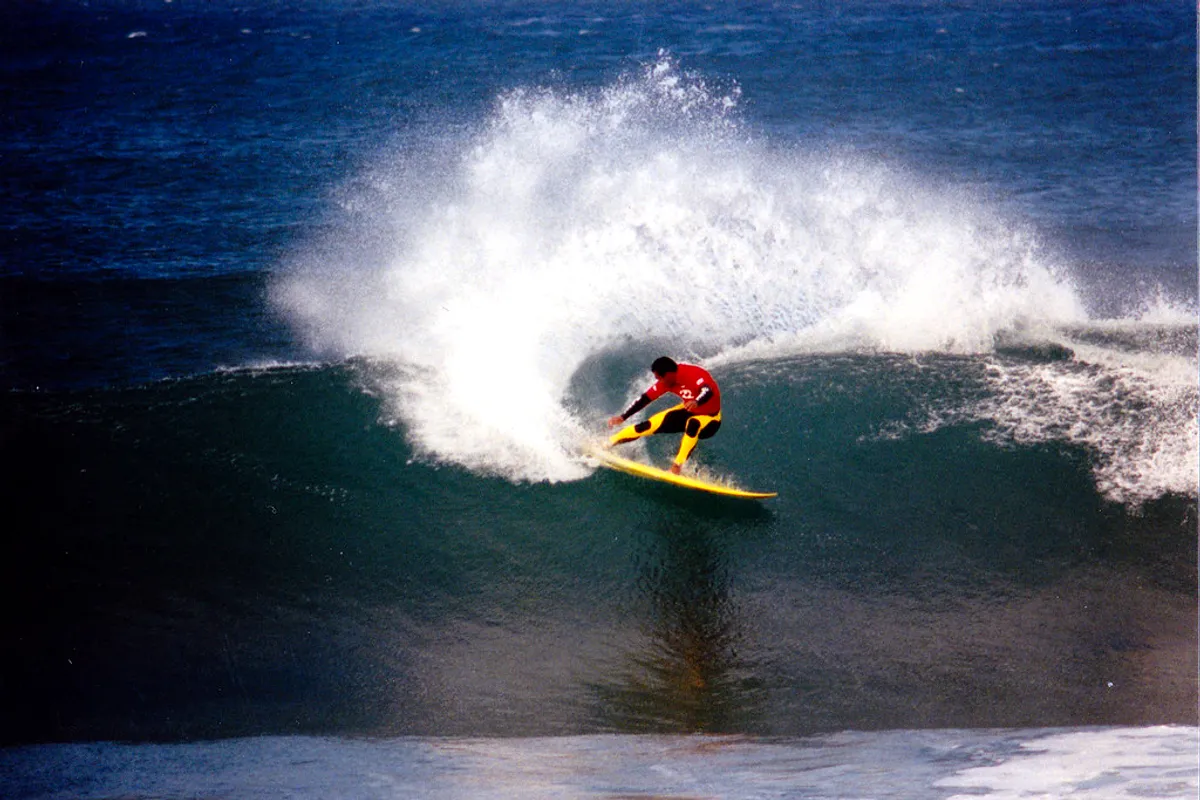
Supertubes is the best-known section of the right-hand point at Jeffreys Bay, in South Africa's Eastern Cape. Wikipedia describes a long, fast, tubing right-hand point break along the west side of the bay, with Supertubes running roughly 300 metres or more and considered the best part of the wave. Regarded as one of the best right-hand points in the world, it hosts the World Surf League's J-Bay Open each July. The wave is spectacular, and it is also fast, crowded and not a place for an unprepared newcomer.
- Level
- Advanced
- Direction and bottom
- Right · Reef
- Best swell
- SW groundswell
- Best wind
- WSW offshore
- Best tide
- Check locally; sections change with the tide
- Best months
- May, Jun, Jul, Aug, Sep
- Size
- 4 to 10 ft on the Hawaiian scale is optimal; waist-high is still rideable
- Hazards
- Sharks, Rocks, Dense crowds, Cold winter water, Strong rip along the point
A chain of sections
Wikipedia lists the sections of the point, from the top: Kitchen Windows, Magna Tubes, Boneyards, Supertubes, Impossibles, Tubes, the Point and Albatross. Supertubes sits in the middle and is the fastest. On rare occasions, with large and wide-breaking swells, Boneyards can link through to the Point for a ride of more than a kilometre. The optimal size is about four to ten feet on the Hawaiian scale, which is eight to twenty feet on the wave face.
Surf-Forecast lists the break as a reef and point break rated four and very consistent, with the best swell from the south-west and the best wind from the west-south-west. The wave is a right, so regular-footers face the wall. On big days it can seem to go on forever, and the sections can link into a continuous ride.
Season and conditions
Winter is the main season. Surf-Forecast shows June as the best month, with about 52 percent of the time clean and about 17 percent too small, while summer tends to be mostly flat. The water temperature is about 19 degrees Celsius, so a summer wetsuit may be enough on some days, but in winter most surfers wear a thicker suit.
The wave breaks across a long point, so the wind angle matters. A west-south-west offshore wind grooms the face, while a strong south-easterly or an east wind can make the bay choppy. The J-Bay Open takes place in July, when conditions often line up, but the event window is flexible and waiting days are common.
Who should not surf it
Supertubes is for experienced surfers who are comfortable on a fast right and who understand priority in a crowded lineup. Surf-Forecast warns of sharks, rocks and crowds. In 2015 Mick Fanning had an encounter with a suspected great white shark during the J-Bay Open final and was physically unharmed, according to Wikipedia. That event is a reminder that sharks are part of the risk on this coast, so check local conditions and avoid surfing at dawn or dusk if you are concerned.
Beginners and weaker intermediates will struggle with the speed of the wave, the number of people and the long paddle back. If you want to learn, choose a beach with qualified instruction and gentler waves in the bay. In the lineup, wait your turn, do not drop in and give way to those closest to the peak.
Getting there and watching
Jeffreys Bay is just off the N2 highway, about 75 kilometres south-west of Port Elizabeth, according to Wikipedia. Surf-Forecast lists Port Elizabeth airport about 63 kilometres away and George airport about 236 kilometres away. Hire cars are the easiest way to reach the town, and local shuttles are also available.
The wave can be watched from the shore and from the viewing areas above the point. During the J-Bay Open, spectators fill the beach, and parking is limited. Arrive early, and bring warm clothes and sun protection, as the wind can be cold even on bright days. Wikipedia says the area's surfing reputation began when the nearby St Francis Bay wave was featured in the 1960s film The Endless Summer, and surfers later found Jeffreys Bay.
Neighbouring breaks
Surf-Forecast lists Boneyards, Salad Bowls, Albatross, Kitchen Windows and Magna Tubes within about a kilometre. They all form part of the same system and are described in the Jeffreys Bay destination guide, which also covers lodging, lessons and the town.
Time your visit around the event
If you are visiting in July, check the dates of the J-Bay Open, because parts of the beach are closed to the public and accommodation can be scarce. Outside the event window the wave is still crowded, but the town is calmer. Pack a thick wetsuit for winter, plus warm clothes for evenings, and bring a spare board in case of breakage on the rocks. Ask local surfers about shark awareness and how information is shared. The town has a long surf-culture history, so you will find shops, shapers and cafés; use them for advice on conditions rather than relying solely on forecasts.
The ocean off Jeffreys Bay, by month
| J | F | M | A | M | J | J | A | S | O | N | D | |
|---|---|---|---|---|---|---|---|---|---|---|---|---|
| Swell, m | 2.4 | 2.3 | 2.4 | 2.6 | 2.7 | 2.7 | 3.0 | 3.2 | 2.8 | 2.7 | 2.6 | 2.4 |
| Period, s | 11 | 11 | 11 | 12 | 12 | 12 | 13 | 13 | 12 | 11 | 11 | 12 |
| Water, °C | 21 | 21 | 20 | 19 | 19 | 18 | 18 | 18 | 17 | 18 | 19 | 20 |
Open-ocean ERA5 medians, not wave size at the break. Sources.
Questions about Supertubes (Jeffreys Bay)
Is Supertubes a left or a right?
A right. It is a long right-hand point break on the west side of Jeffreys Bay.
When is the best season?
Winter, especially June to August. The WSL J-Bay Open is held in July.
Are there sharks?
Surf-Forecast warns of sharks, and Wikipedia records the 2015 incident involving Mick Fanning. Check local advice.
How far is it from Port Elizabeth?
About 75 kilometres south-west, just off the N2, according to Wikipedia.
How do I learn about shark risk at Jeffreys Bay?
Ask local surf shops and lifeguards about recent sightings and any shared alert systems, and read current guidance from local authorities. Surf-Forecast lists sharks among the hazards, and avoiding dawn, dusk and murky water reduces risk but does not remove it. Surf with others and do not wander far from the pack.
Check a live forecast and local advice before paddling out. Heavy waves injure and kill experienced surfers.