The breaks
Recognised, publicly known surf spots around Baler. Suitability depends on the day's swell, wind and tide, so treat the level as a guide, not a guarantee.
| Break | Type | Best for | Notes |
|---|---|---|---|
| Sabang Beach | Beach break | Beginner–Intermediate | Long, dark-sand beach with peaks that suit beginners on small days, lined with surf schools and rental stalls. |
| Charlie's Point | River mouth | Intermediate | River-mouth break near Sabang named after the Apocalypse Now line. Strong currents after rain. |
| Cemento | Right-hand reef | Advanced | Heavy, hollow right over shallow reef that works on bigger swells. |
| Dicasalarin Cove | Beach | Intermediate | Secluded forest-backed cove south of Baler, better known for scenery than consistent surf. |
A town with a surf story
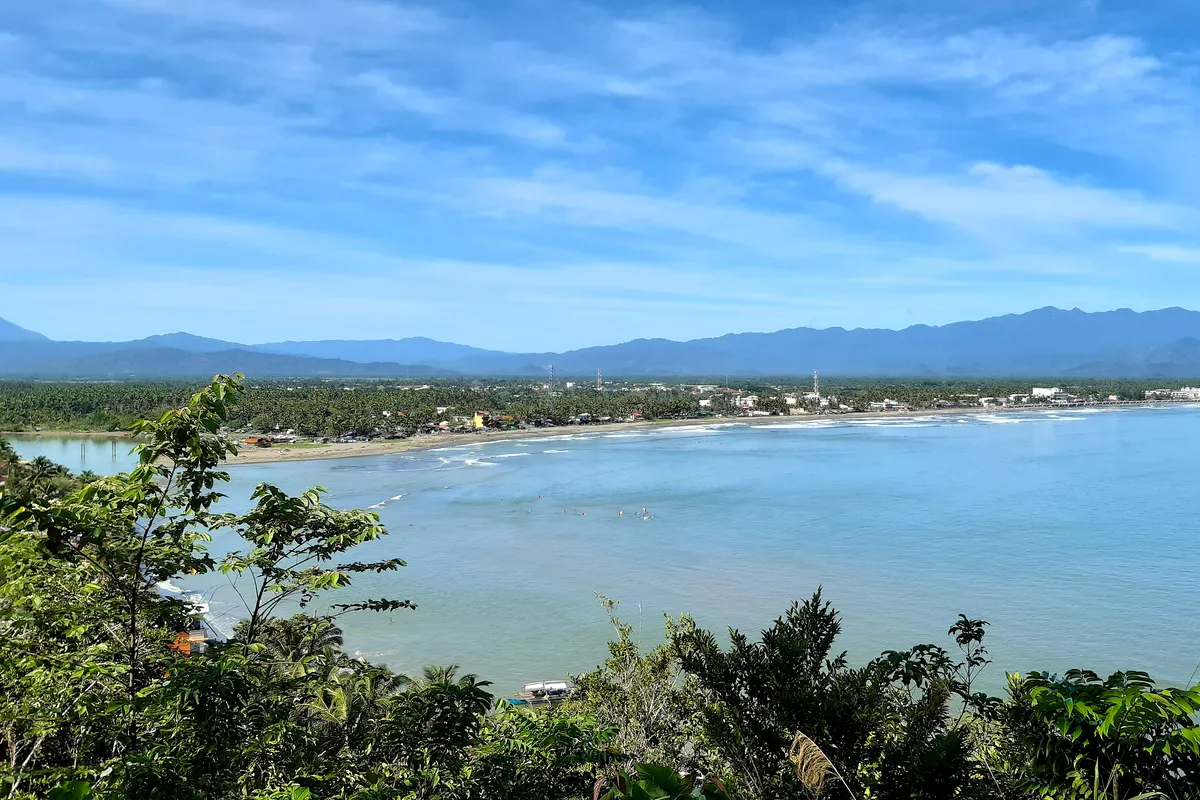
Baler sits on a bay on the east coast of Luzon, facing the Pacific, with forested mountains rising behind it. It was long a quiet provincial town, known in Philippine history for the Siege of Baler, when a small Spanish garrison held out in the town's church for nearly a year in 1898 and 1899, unaware that the Spanish–American War had ended.
In the 1970s, parts of the film Apocalypse Now were shot in and around Baler, including the famous surfing scenes. According to a popular local story, the film crew left surfboards behind, and local young people picked them up and taught themselves to surf. Whatever the exact details, Baler developed one of the first surf communities in the Philippines, and it remains a symbolic place for Filipino surfers.
Sabang Beach
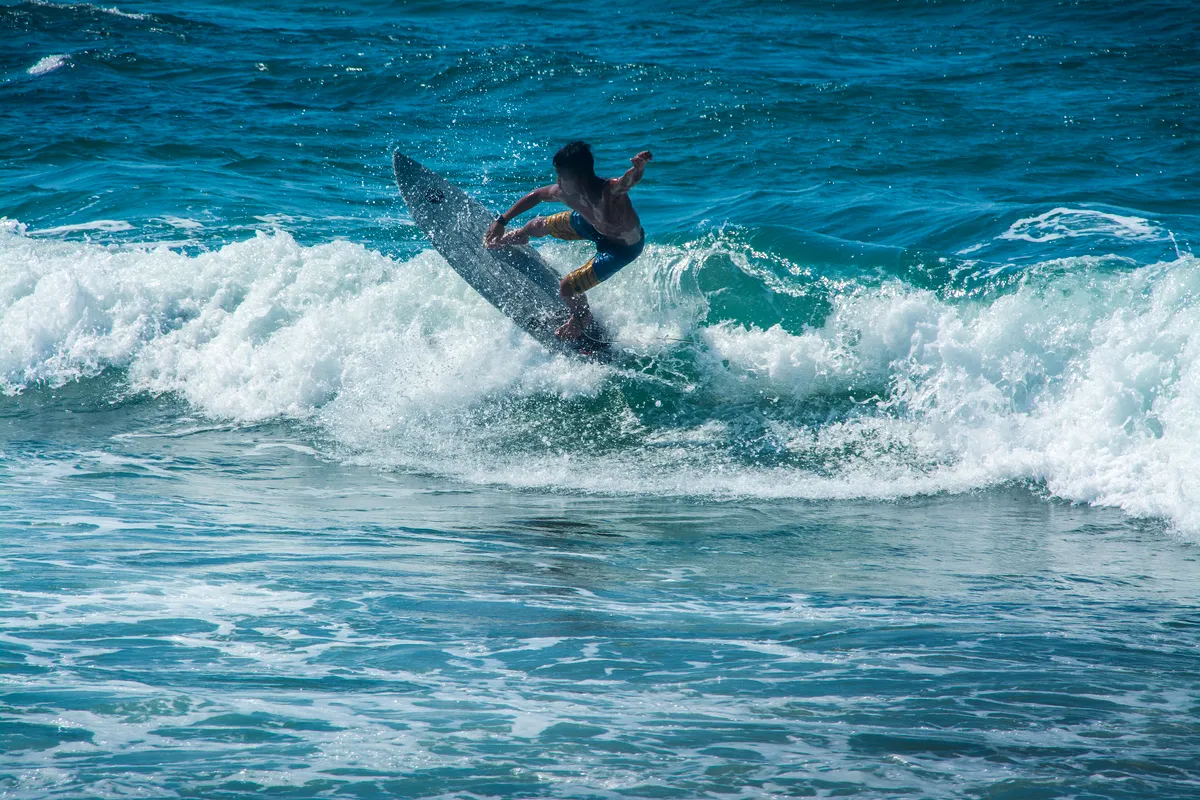
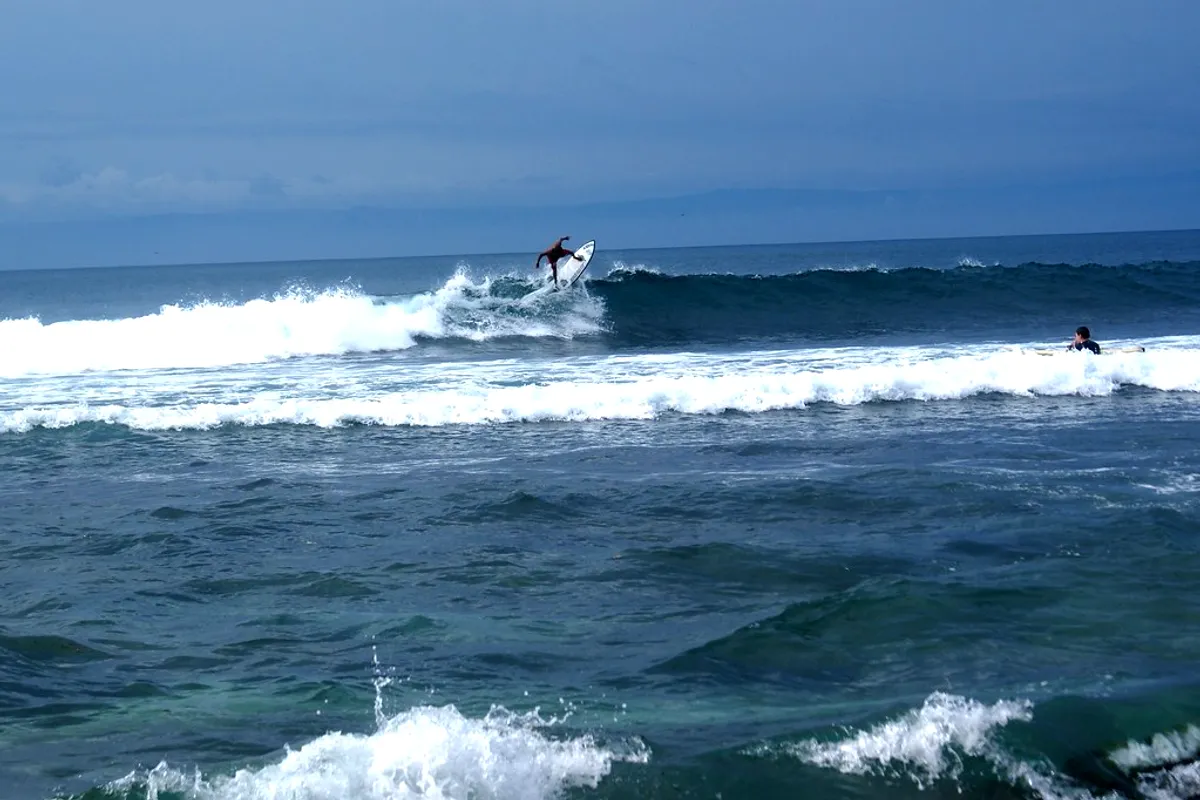
Sabang Beach, the main beach in Baler, is a long stretch of dark sand with beach-break peaks that suit beginners and improvers. Surf schools and board rental stalls line the beach, and instructors are known for being hands-on, pushing students into waves and helping them stand up. On smaller days, it is one of the best places in the Philippines to learn.
On bigger swells, Sabang can become powerful, with strong currents, and it suits intermediate surfers. The beach is lined with resorts, guesthouses and restaurants.
Charlie's Point and the river mouth
At the mouth of the river near Sabang, a break known as Charlie's Point is named after the famous Apocalypse Now line, "Charlie don't surf". It is a river-mouth wave that can produce good lefts and rights on the right swell and tide, suiting intermediate surfers. Currents from the river can be strong, especially after heavy rain.
Cemento and Dicasalarin
Cemento is a powerful right-hand reef break a short drive from Baler, named after the concrete remains of an old structure nearby. It works on bigger swells, producing heavy, hollow waves for experienced surfers. The reef is shallow and the rocks are sharp.
Further south, Dicasalarin Cove is a secluded beach backed by forest, with a lighthouse on the hill above, reached by a rough road or boat. It is better known for its scenery than surf, though waves can break there on the right days.
Monsoons, typhoons and the surf season
Baler faces the Pacific, and its best surf season runs from roughly October to February. During these months, the north-east monsoon, known as amihan, sends swell to the east coast, and typhoons passing offshore can bring powerful waves, especially in October and November. December to February usually brings consistent, if sometimes windy, conditions.
From March to May, the surf is usually small and the weather hot, which suits complete beginners. From June to September, the south-west monsoon and typhoons bring variable conditions and heavy rain. Typhoons that come close to land are dangerous, so follow PAGASA warnings.
Reading Sabang on a typhoon swell
When a typhoon passes far offshore in the Pacific, Sabang Beach can change quickly. Lines of long-period swell arrive, sandbanks light up and the peaks that are gentle on normal days become steep and powerful. Experienced local surfers head to Cemento and the river mouth, while the beach breaks fill with surfers looking for bigger waves.
For beginners, these days are often too big, and instructors may wait for the swell to drop or choose more sheltered corners. Currents become stronger, especially near the river mouth, so watch the water carefully before paddling out. Typhoons that come close to land bring dangerous weather and should be avoided entirely; follow PAGASA advisories and local guidance.
Getting to Baler from Manila
Baler is roughly five to six hours by road from Manila, depending on traffic, via Nueva Ecija and the mountain road over the Sierra Madre. Direct buses run from Manila, and many visitors travel by private car or van. Clark International Airport, north of Manila, is a little closer. The final stretch of road crosses forested mountains with spectacular views.
In Baler, tricycles are the main form of local transport, and most surf spots are within a short ride.
Where to stay in Baler
Most surfers stay along Sabang Beach, where resorts, guesthouses and surf hostels are within walking distance of the waves. Baler town, a short ride inland, has the historic church, a museum, markets and local restaurants. Accommodation books up during holidays and on weekends, when visitors arrive from Manila.
Water, weather and what to pack
The water is warm year-round, so a rash vest or surf top is enough. Bring reef booties for Cemento and other rocky spots, high-protection sunscreen, insect repellent and a light rain jacket, as showers are common. A basic first-aid kit for cuts and scrapes is useful.
History, waterfalls and rest days
On a flat day, visit the Baler Church, where the Siege of Baler took place, and the Museo de Baler, which covers the town's history, including the siege and the Apocalypse Now connection. Ermita Hill offers views over the bay, and the Ditumabo Mother Falls, a tall waterfall in the forest, is a popular hike. The area also has the Millennium Tree, a huge balete tree, and hot springs.
The local surf community
Baler's surf community includes many local instructors and surfers who learned on Sabang Beach and have competed nationally. The town hosts surf competitions and festivals. Booking lessons with local instructors and supporting local businesses helps the community. In the water, be patient, wait your turn and respect local surfers, especially at Cemento.
Baler or La Union?
Both are popular surf towns on Luzon within a day's travel of Manila. La Union, on the west coast, is generally better from October to March with the north-east monsoon blowing offshore, and it has a larger surf and food scene. Baler, on the east coast, faces the Pacific directly and can receive more powerful typhoon swells, with a quieter, more historic atmosphere. Many surfers visit both over time.
Food in Baler
Baler's food scene includes local Tagalog dishes, fresh seafood from the bay and specialities such as suman, sticky rice wrapped in leaves, and dishes made with locally grown produce. Beachfront restaurants on Sabang serve grilled fish, adobo and cold drinks, and the town market offers fresh fruit and snacks.
Baler surf season month by month
A broad planning picture, not a forecast. Swell, wind and water temperature vary from year to year.
| January | North-east monsoon swells, often consistent with some wind. Warm water. |
|---|---|
| February | Still in season, with monsoon swells and drier weather. |
| March | Swells ease; small, warm waves suit beginners. |
| April | Usually small and hot. Holy Week brings crowds. |
| May | Small surf and heat before the rainy season. |
| June | The rainy season begins; variable conditions. |
| July | Rain and typhoon risk. Occasional swells. |
| August | Typhoon swells possible, but weather can be dangerous. |
| September | Typhoon season continues; follow warnings. |
| October | The season begins, with typhoon and early monsoon swells. |
| November | Powerful swells possible; Cemento can work. |
| December | Consistent monsoon swells and holiday visitors. |
Learning to surf in Baler
Sabang Beach is one of the most popular places in the Philippines to learn to surf. Local instructors offer affordable lessons with soft-top boards, often pushing students into waves and staying close in the water. Many beginners stand up in their first lesson.
The calmer months from March to May are often best for complete beginners, while October to February brings bigger, more consistent swells that suit improvers. Ask about instructor experience and group sizes, and learn about rip currents before surfing on your own.
Comparing options across the country? Read our guide to surfing in the Philippines.
Seasonal notes on this page describe typical patterns, not the conditions on a given day. Use the local forecast, lifeguard advice and a qualified instructor for water-safety decisions, and get a written breakdown of what any surf package includes before paying.
Baler surf trip questions
Why is Baler called the birthplace of Philippine surfing?
According to a popular local story, surfboards left behind after the filming of Apocalypse Now in the 1970s helped introduce surfing to local young people, and Baler developed one of the first surf communities in the country.
When is the best time to surf Baler?
October to February, when north-east monsoon and typhoon swells reach the Pacific coast.
Is Baler good for beginners?
Yes. Sabang Beach has gentle waves on smaller days and many local instructors.
How do I get to Baler from Manila?
By bus or car, roughly five to six hours depending on traffic, via the mountain road over the Sierra Madre.
What is Charlie's Point?
A river-mouth break near Sabang Beach, named after the line "Charlie don't surf" from Apocalypse Now.
What was the Siege of Baler?
A siege in 1898 and 1899 in which a small Spanish garrison held out in Baler's church for nearly a year, unaware that the Spanish–American War had ended.
Do I need booties in Baler?
Not at Sabang Beach, which is sandy, but booties are useful at Cemento and other rocky or reef breaks.
Sources & editorial notes
Destination context checked against the sources below. Base-selection and itinerary suggestions are Book & Surf editorial recommendations. Seasonal windows are broad planning suggestions, not measured forecasts or guarantees.
- Wikipedia: Baler, Aurora ↗
- Wikipedia: Siege of Baler ↗
- Wikipedia: Apocalypse Now ↗
- PAGASA: Philippine weather service ↗
We do not claim to have personally surfed every break. Read our editorial standards.