The breaks
Recognised, publicly known surf spots around Mirissa. Suitability depends on the day's swell, wind and tide, so treat the level as a guide, not a guarantee.
| Break | Type | Best for | Notes |
|---|---|---|---|
| Mirissa reef | Right-hand reef | Intermediate | Punchy rights at the western end of the beach, with a shorter left on some days. Shallow at low tide and often crowded. |
| Weligama Bay | Beach break | Beginner | Long, sandy bay about ten minutes west, one of Asia's most popular learning beaches. |
| Midigama | Reef breaks | Intermediate–Advanced | String of reefs and points west of Weligama, including Lazy Left, Lazy Right and Ram's. |
| Hiriketiya | Beach & reef | Beginner–Intermediate | Horseshoe bay about forty minutes east with a gentle beach break and a reef. |
A busy bay on the south coast
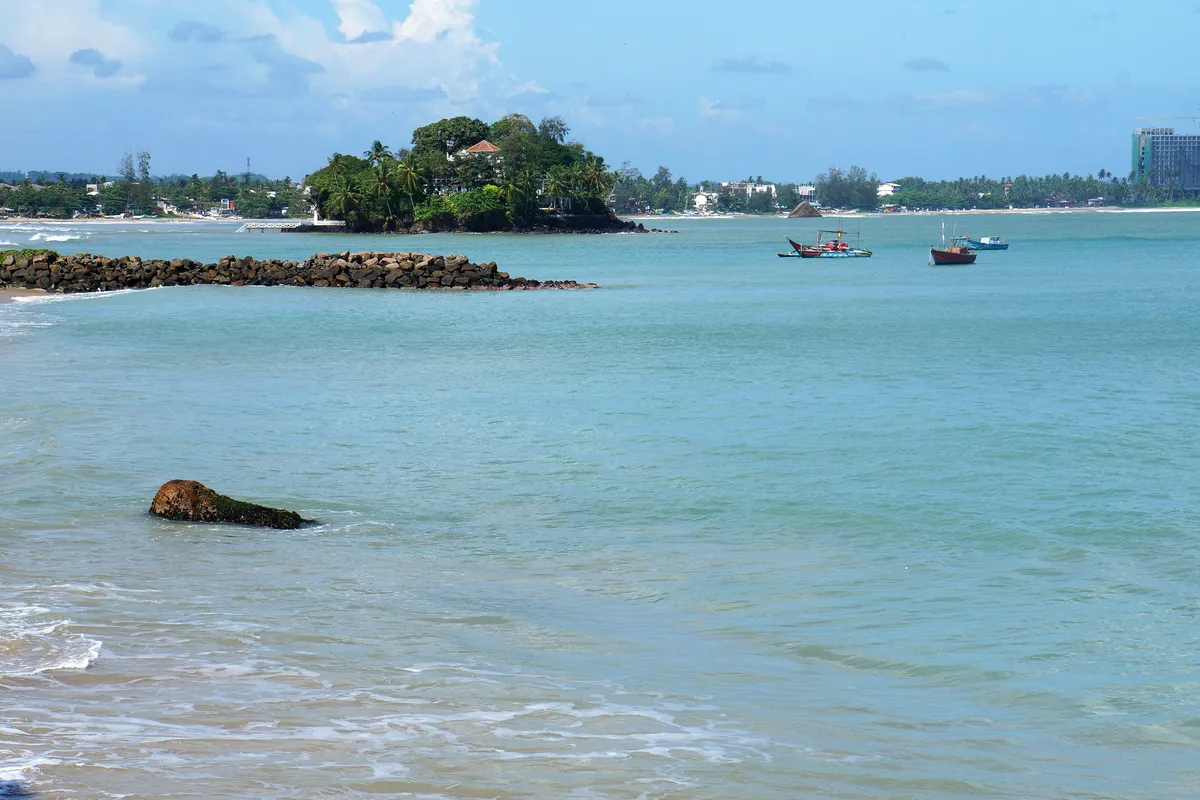
Mirissa lies just east of Weligama, on the southern tip of Sri Lanka, where a curved, palm-lined beach faces south into the Indian Ocean. Once a quiet fishing village, it has become one of the island's most popular beach destinations, with guesthouses, beach restaurants, bars and whale-watching operators lining the sand.
For surfers, Mirissa offers a reef break at the western end of the bay, along with easy access to the wider south coast, from Weligama's beginner bay to the reefs of Midigama and Ahangama. In the evenings, the beach comes alive with seafood dinners and music.
The Mirissa reef
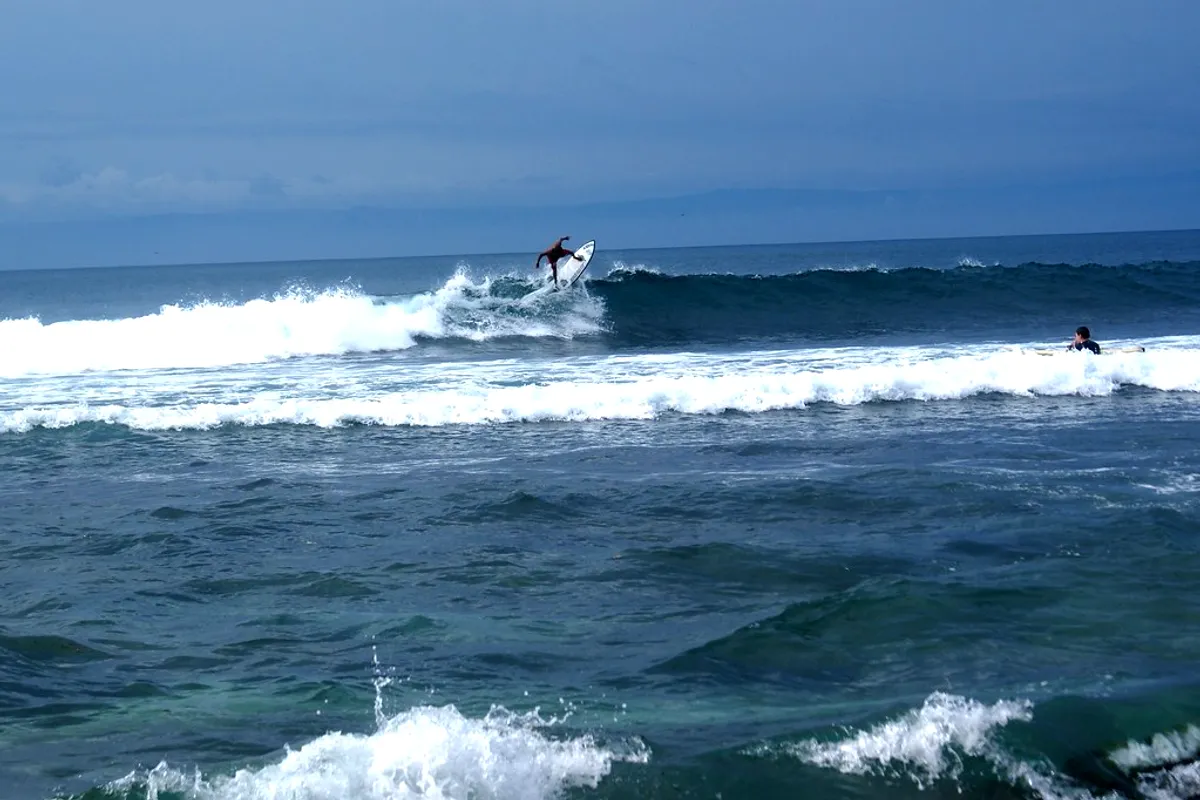
Mirissa's surf break is a right-hand reef at the western end of the beach, near the rocky headland. On a good swell, it produces fun, punchy rights that suit intermediate surfers, with a shorter left on some days. The reef is shallow, especially at low tide, so booties help and timing matters.
Because it is right in front of the busy beach, the reef can be crowded, with locals, visitors and surf school groups sharing the take-off. Early mornings are usually the best time to surf, before the wind and crowds pick up.
The bay and the beginners
The rest of Mirissa's bay is usually calm and sheltered, popular for swimming rather than surfing. Beginners usually head to Weligama, about ten minutes west, where a long, sandy bay offers gentle, rolling waves and dozens of surf schools. Many schools based in Mirissa take students to Weligama for their first lessons, then to the Mirissa reef or nearby spots as they progress.
Midigama, Ahangama and the reefs to the west
West of Weligama, Midigama and Ahangama have a string of reef and point breaks, including well-known spots such as Lazy Left, Lazy Right, Ram's and Kabalana, which work on different swells and tides. They suit intermediate and advanced surfers and are reached by tuk-tuk or scooter in twenty to thirty minutes. To the east, Hiriketiya, about forty minutes away, has a gentle beach break and a reef in a horseshoe bay.
Blue whales and whale watching
Mirissa is one of the best places in the world to see blue whales, the largest animals on earth. From roughly November to April, boats leave the harbour early in the morning to search for blue whales, as well as sperm whales, dolphins and sometimes orcas, which pass close to the south coast along deep-water shipping routes. Sightings are common in peak season, though not guaranteed.
Choose an operator that follows responsible whale-watching guidelines, keeping a respectful distance and limiting the number of boats around each animal.
Mirissa and the north-east monsoon
Mirissa's season runs from roughly November to April, during the north-east monsoon, when winds are generally light or offshore on the south coast and Indian Ocean swells arrive consistently. December to March is usually the peak, with the most reliable conditions and the busiest beaches. This is also the whale-watching season.
From May to October, the south-west monsoon brings rain, strong winds and rough seas to the south coast, and surfers head to Arugam Bay on the east coast.
Getting there and getting around
Bandaranaike International Airport, near Colombo, is about two and a half to three hours away via the Southern Expressway. Trains run along the coast from Colombo to Matara, stopping near Mirissa, and buses are frequent. Many guesthouses arrange private transfers.
In Mirissa, tuk-tuks are the main way to get around, and scooters are available for experienced riders. Weligama, Midigama and Hiriketiya are all within easy reach.
Where to stay in Mirissa
Mirissa has accommodation for all budgets, from beach cabanas and hostels to boutique hotels on the hillsides. Staying near the beach puts you close to restaurants and nightlife, while the hills behind the bay offer quieter, cooler stays with views. Book ahead for December to March.
Coconut Tree Hill and rest days
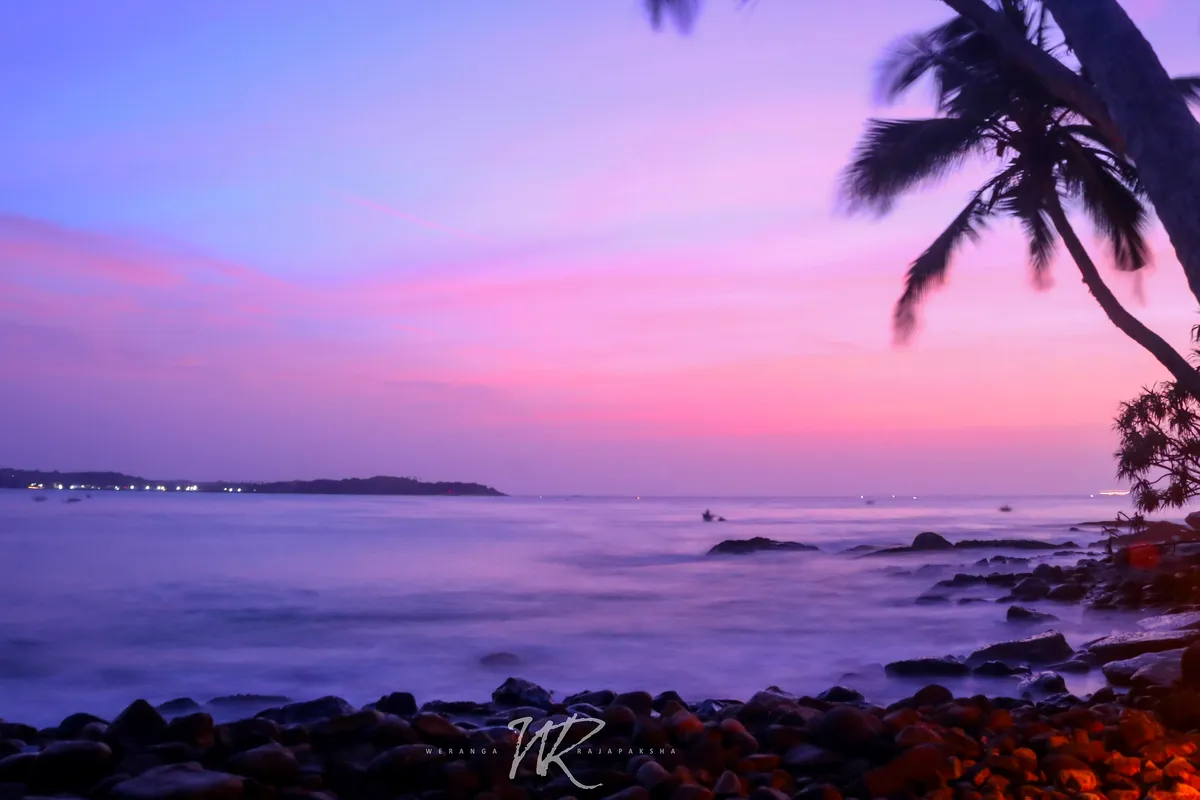
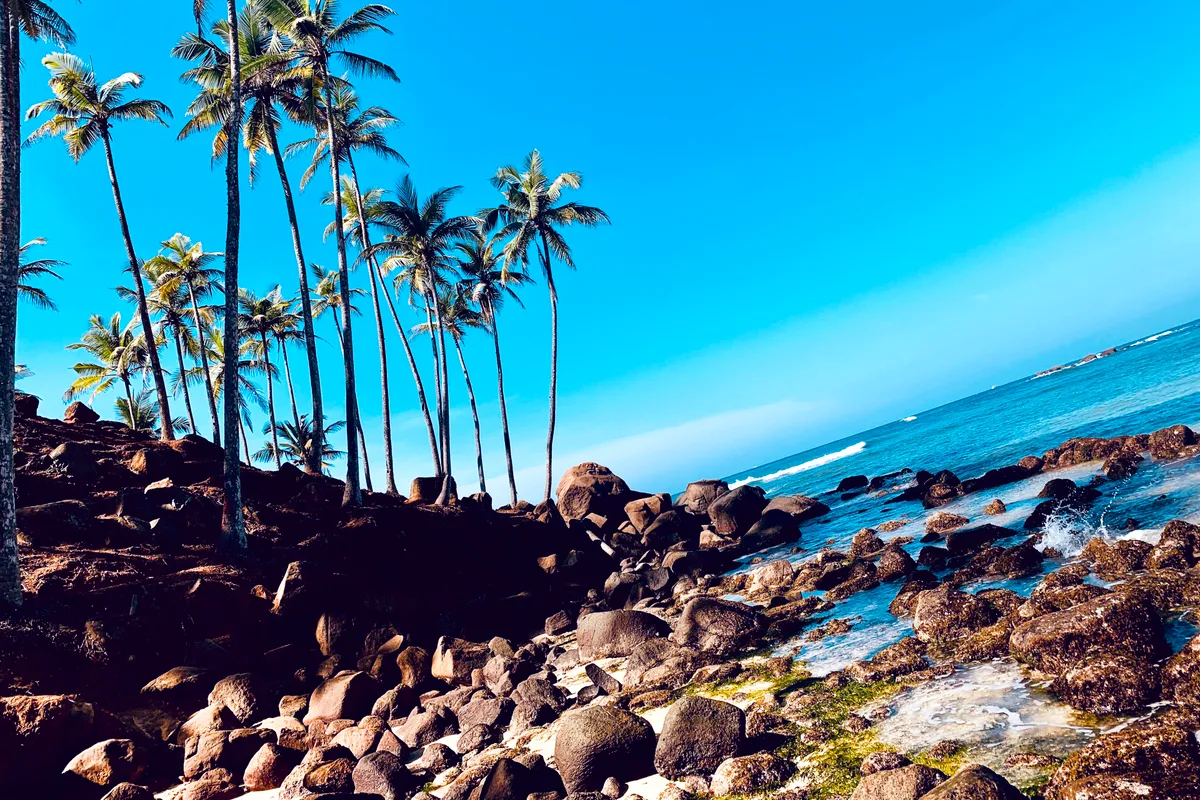
Coconut Tree Hill, a small headland at the eastern end of Mirissa covered in tall palm trees, is one of Sri Lanka's most photographed viewpoints, especially at sunrise and sunset. Secret Beach, a small cove nearby, is popular for swimming. Galle Fort, a UNESCO World Heritage Site, is about an hour west, and the stilt fishermen of Koggala are on the way.
Safety and what to pack
The water is warm year-round, so a rash vest is enough. Bring booties for the reef, high-protection reef-safe sunscreen and a hat. The reef is shallow at low tide, and currents can be strong on bigger days. The coast road is busy, so take care crossing it and on tuk-tuks or scooters. Dress modestly away from the beach and when visiting temples.
Swell, wind and tide on the south coast
Sri Lanka's south coast faces south into the open Indian Ocean, so it receives groundswells generated by storms far to the south, in the Southern Ocean. During the north-east monsoon, from roughly November to April, the prevailing winds blow from the land, keeping the south coast clean, especially in the mornings. Afternoon sea breezes can make some breaks choppy.
Around Mirissa, tide matters as much as swell. The reef can become too shallow at low tide, while some of the Midigama reefs only work on certain tides. Surf shops and schools post daily advice, and a few days of watching the breaks before committing to the shallower reefs is time well spent.
A day in Mirissa
A typical day in Mirissa starts early, with a dawn surf at the reef or a short ride to Weligama before the wind picks up. On whale-watching days, boats leave the harbour around sunrise and return by late morning. The heat of the afternoon is for rest, a swim in the calm bay or a trip to a viewpoint, followed by an evening surf if the tide is right. Dinner is often grilled fish on the beach, with tables set out on the sand as the sun goes down.
Mirissa or Weligama?
Mirissa is livelier, with beach restaurants, nightlife, whale watching and a reef break for intermediates. Weligama, ten minutes away, has a long, sandy bay that is better for complete beginners, with a more surf-focused, less party atmosphere. Many surfers stay in one and surf both.
Mirissa surf season month by month
A broad planning picture, not a forecast. Swell, wind and water temperature vary from year to year.
| January | Peak season: consistent swells, light winds and blue whale watching. Busy beaches. |
|---|---|
| February | Excellent surf and whale-watching conditions. |
| March | Still in season, with good waves and hot weather. |
| April | The end of the season; waves and whales early in the month. |
| May | The south-west monsoon arrives; rough seas. Head to Arugam Bay. |
| June | Off-season on the south coast, windy and wet. |
| July | Off-season on the south coast, with strong onshore winds. |
| August | Off-season; the east coast is in season. |
| September | Off-season with mixed conditions and occasional calm spells. |
| October | Transition month as conditions start to improve. |
| November | The season begins, with cleaner surf and the first whale trips. |
| December | Peak season begins, with consistent surf and busy holidays. |
Learning to surf in Mirissa
Mirissa's reef is better for intermediate surfers, but many surf schools in Mirissa offer lessons, usually taking beginners to Weligama's sandy bay ten minutes away. Lessons include soft-top boards and rash vests. As you progress, schools can guide you to the Mirissa reef or the gentler reefs around Midigama.
Comparing options across the country? Read our guide to surfing in Sri Lanka.
Seasonal notes on this page describe typical patterns, not the conditions on a given day. Use the local forecast, lifeguard advice and a qualified instructor for water-safety decisions, and get a written breakdown of what any surf package includes before paying.
Mirissa surf trip questions
Is Mirissa good for beginners?
The Mirissa reef suits intermediates, but surf schools in Mirissa take beginners to Weligama's sandy bay, about ten minutes away.
When is the best time to surf Mirissa?
November to April, with December to March usually the most consistent.
Can I see blue whales in Mirissa?
Yes. From roughly November to April, whale-watching boats from Mirissa often see blue whales, as well as sperm whales and dolphins.
How far is Mirissa from Weligama?
About ten minutes by tuk-tuk or scooter along the coast road, so it is easy to stay in one and surf the other.
Do I need a wetsuit in Mirissa?
No. The water is warm year-round. A rash vest and reef booties are useful.
What is Coconut Tree Hill?
A palm-covered headland at the eastern end of Mirissa, a popular viewpoint at sunrise and sunset.
Is Mirissa good for a surf and whale-watching trip?
Yes. The surf season and the blue whale season largely overlap from November to April, so you can surf at dawn on most days and take a morning whale-watching trip from the harbour on a flat or small day.
Sources & editorial notes
Destination context checked against the sources below. Base-selection and itinerary suggestions are Book & Surf editorial recommendations. Seasonal windows are broad planning suggestions, not measured forecasts or guarantees.
We do not claim to have personally surfed every break. Read our editorial standards.