The breaks
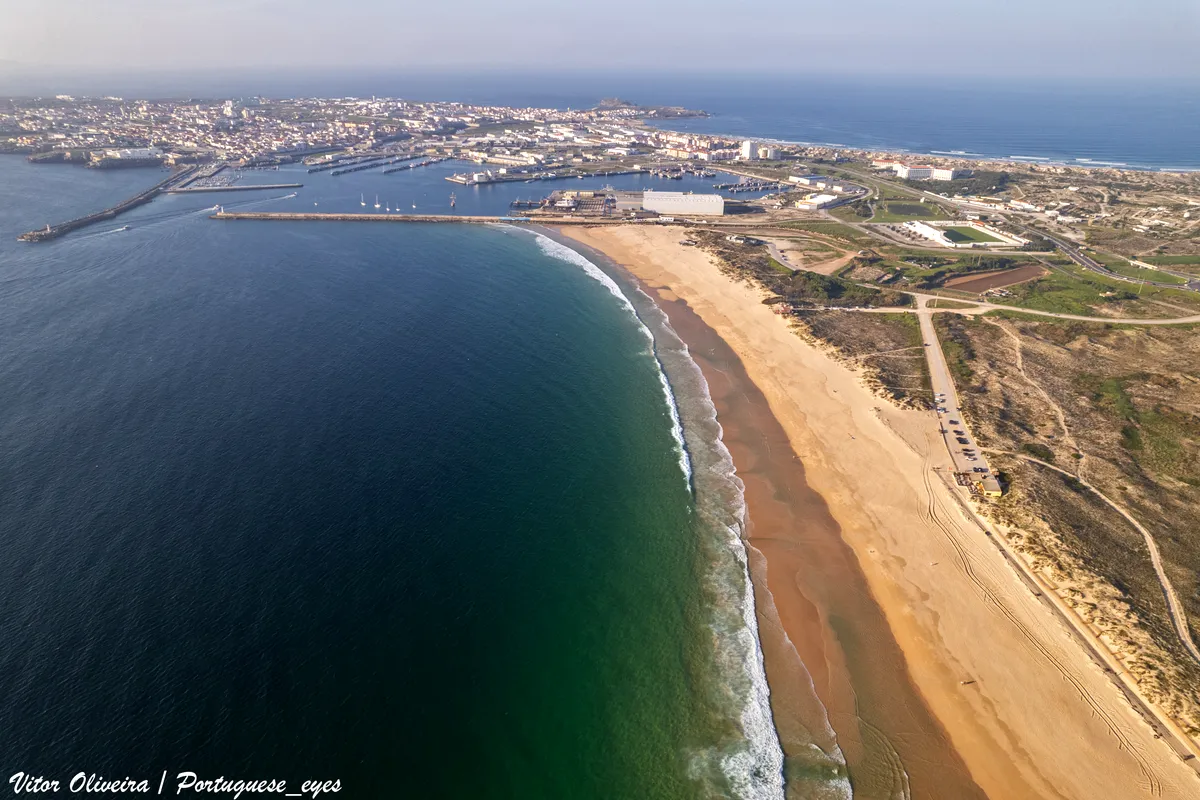
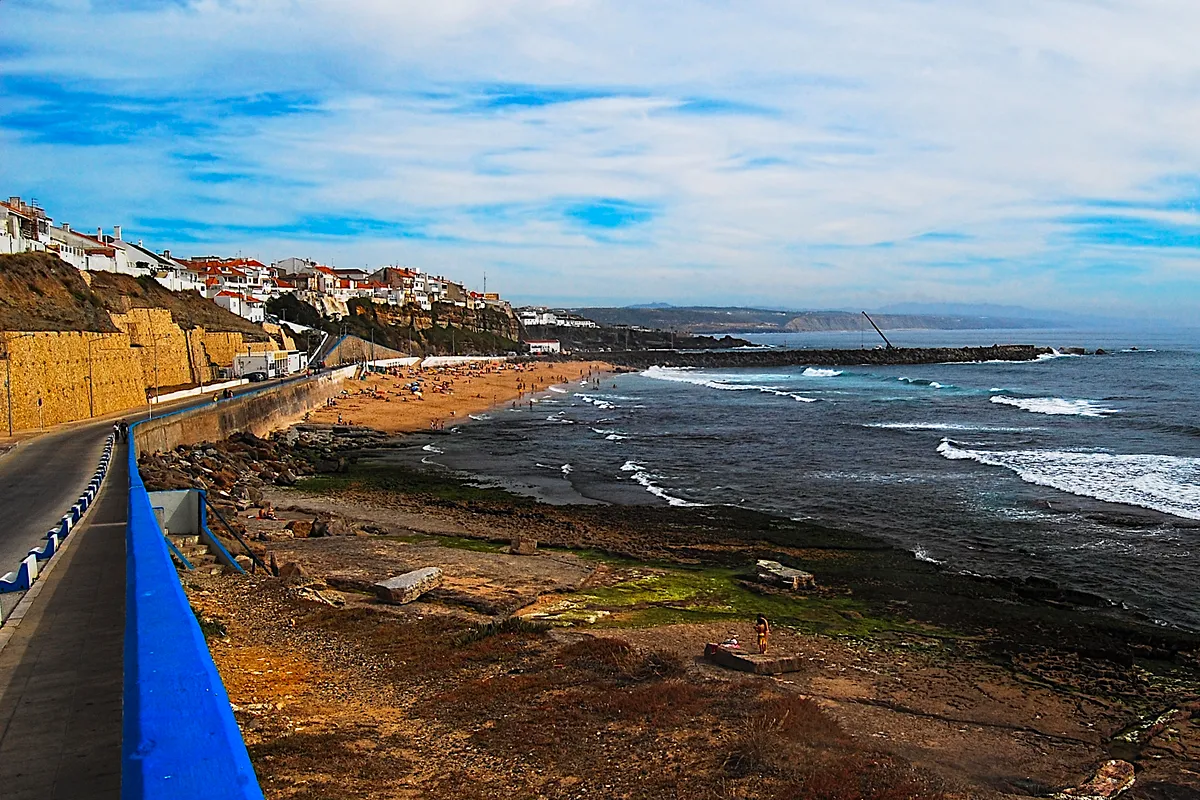
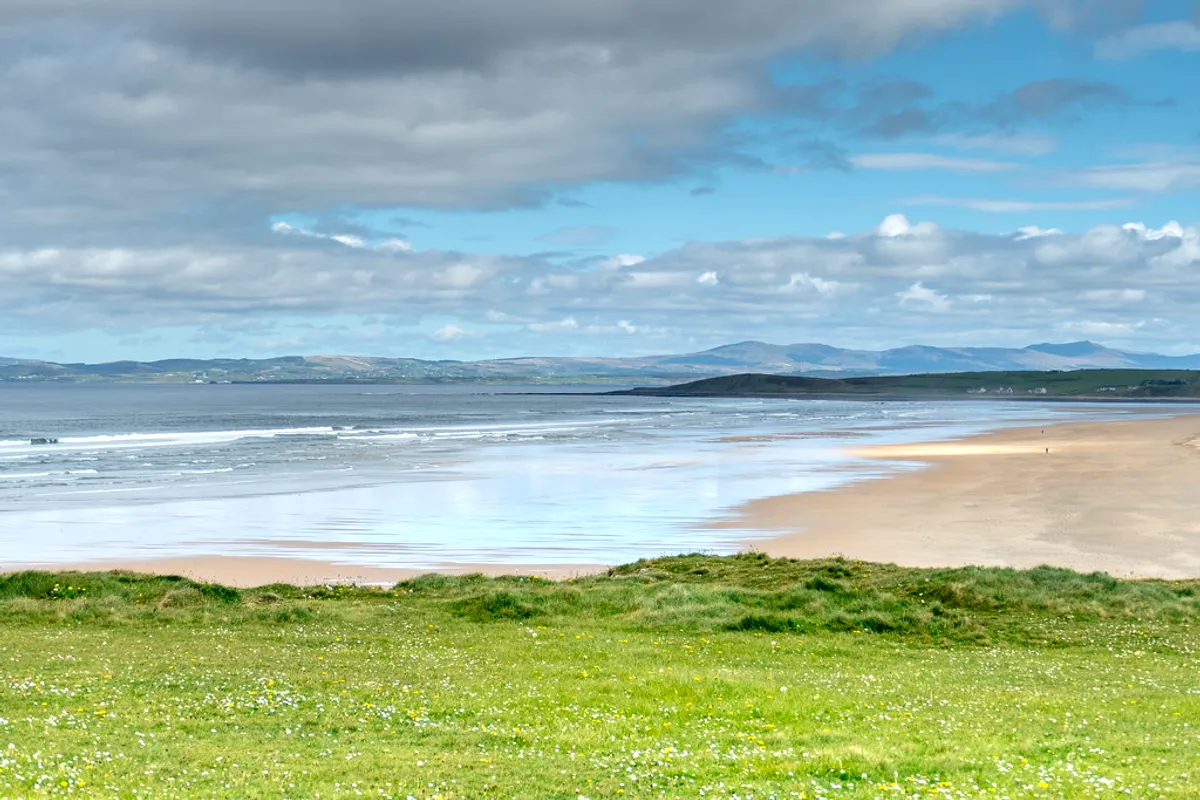
Recognised, publicly known surf spots around Nazaré. Suitability depends on the day's swell, wind and tide, so treat the level as a guide, not a guarantee.
| Break | Type | Best for | Notes |
|---|---|---|---|
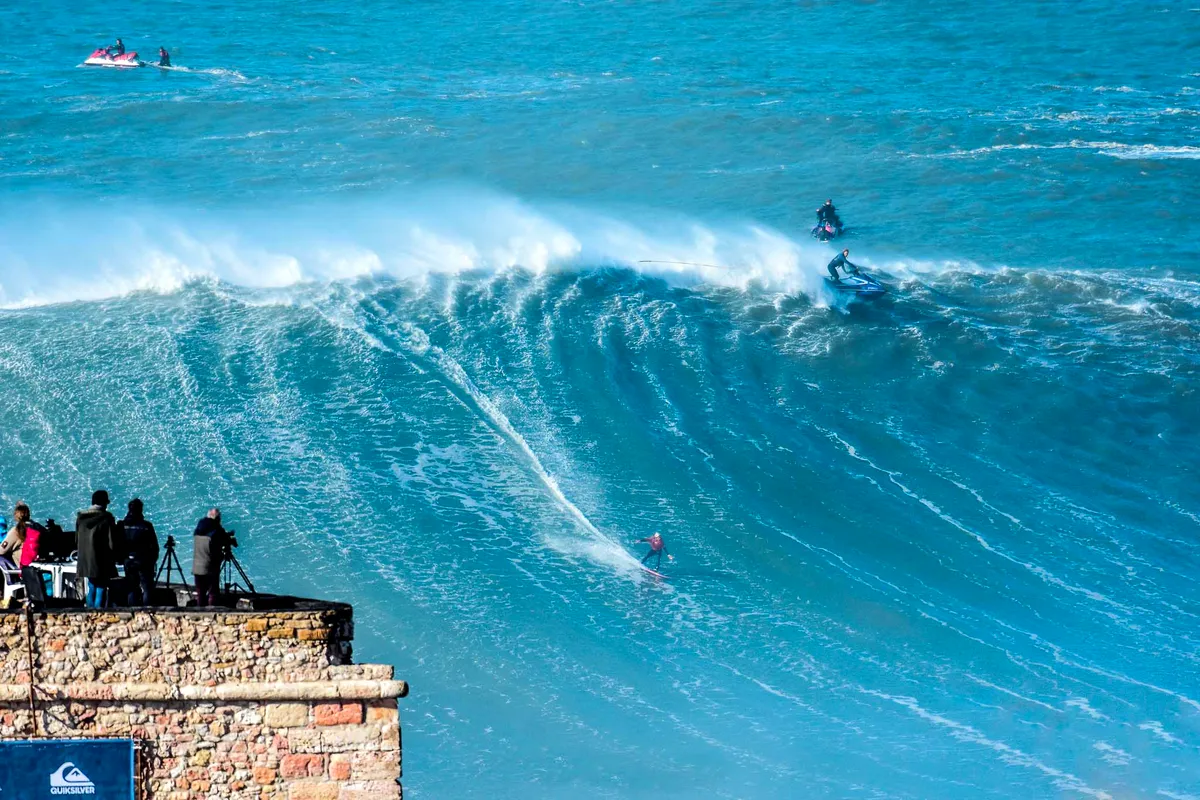
| Praia do Norte | Big-wave beach break | Expert | Giant waves focused by the Nazaré Canyon on major winter swells. Powerful and dangerous even on moderate days; mostly a spectator beach. |
| Praia da Nazaré | Sheltered beach | Beginner | The main town beach, sheltered from most north-west swell. Small, gentle waves on bigger swell days; often calm. |
| São Martinho do Porto | Enclosed bay | Beginner | A shell-shaped bay about fifteen minutes south with very calm water, used for first steps and paddleboarding. |
| Praia do Salgado | Beach break | Intermediate | An exposed beach south of Nazaré that picks up north-west swell without the extremes of Praia do Norte. |
| Peniche | Beach breaks & reefs | Beginner–Advanced | About forty-five minutes south, with beaches facing several directions and many surf schools. |
The canyon that makes the giants
The reason for Nazaré's waves lies offshore. The Nazaré Canyon, one of the largest submarine canyons in Europe, cuts towards the coast and ends just off Praia do Norte, the beach north of the town's headland. When a long-period North Atlantic swell arrives, the part travelling over the deep canyon moves faster than the part travelling over the shallower shelf on either side. The two meet near the beach and combine, while a current running along the shore can add to the effect. The result is waves far larger than those breaking anywhere else on the same stretch of coast.
On the biggest winter days, those waves can reach heights that would have been considered impossible to ride a generation ago. That is why Praia do Norte draws the world's best big-wave surfers, jet-ski teams and safety crews whenever a major swell is forecast.
From fishing town to big-wave capital
For centuries, Nazaré was known for its fishing community, its traditional boats hauled up on the main beach and the women who dried fish on wooden racks in the sun, a sight still seen today. Praia do Norte was regarded as a dangerous beach to avoid. That changed around 2010, when the American surfer Garrett McNamara was invited to explore the waves with local support. A huge wave he rode in 2011 drew international attention, and later rides by Rodrigo Koxa and Sebastian Steudtner set world records for the largest waves surfed.
Today, the town has embraced its new identity. Big-wave days attract thousands of spectators, international media and professional events, including a tow-surfing challenge, while the fishing traditions continue alongside.
Watching from the fort
The best viewpoint is the Fort of São Miguel Arcanjo, a sixteenth-century fortress with a red lighthouse on the headland above Praia do Norte. On big days, the cliff paths and the fort's walls are packed with spectators watching jet-skis tow surfers into giant waves just below. Inside, a small exhibition explains the canyon and displays boards used by big-wave surfers.
Check forecasts and local news for big-wave days, which usually happen between October and March. Arrive early, as roads and car parks fill quickly, and dress for wind and spray. Stay behind barriers and away from the cliff edge: waves and wind on the headland can be dangerous in storms.
Surfing Praia do Norte on a normal day
Outside the giant swells, Praia do Norte is still a powerful, exposed beach break with strong currents, steep shore break and shifting sandbanks. On moderate days, it attracts experienced local surfers and bodyboarders, and it can produce fast, hollow waves. It is not a place for beginners or casual surfers, and lifeguard cover is limited outside summer.
If you are an experienced surfer, watch carefully before paddling out, ask locals about currents and avoid surfing alone. On days with any real size, it is a spectator beach only.
The town beach and São Martinho do Porto
South of the headland, Praia da Nazaré, the main town beach, is sheltered from the worst of the north-west swell. On most days, it is calm enough for swimming, and on bigger swells it can produce small, gentle waves suitable for lessons. It is lined with restaurants and the town's seafront promenade.
About fifteen minutes south, São Martinho do Porto has a nearly enclosed, shell-shaped bay with very calm water, popular for swimming, paddleboarding and very first steps in the white water. Peniche, about forty-five minutes south, has a wide range of beach breaks and surf schools, and many visitors combine the two.
Sítio and the lower town
Nazaré is split into two levels. The lower town, Praia, sits along the main beach with narrow streets, fish restaurants and guesthouses. The upper town, Sítio, perches on the cliff above, with a large square, the Sanctuary of Our Lady of Nazaré and sweeping views over the beach. A funicular railway, the Ascensor da Nazaré, has linked the two since the late nineteenth century.
Staying in the lower town puts you close to restaurants and the main beach. Staying in Sítio offers views and quick access to the fort. Accommodation ranges from guesthouses and apartments to hotels; on big-wave weekends, it books up quickly.
Lisbon, Peniche and getting to Nazaré
Lisbon airport is about an hour and a half by road. Express coaches run from Lisbon to Nazaré several times a day, and the town is also reachable from Porto. A car makes it easier to reach the fort on busy days, to explore São Martinho do Porto and Peniche and to visit nearby towns.
Within Nazaré, the lower town is walkable, the funicular connects to Sítio and a road climbs to the fort. On big-wave days, expect traffic and parking restrictions near the headland; walking up from Sítio is often quicker.
Day trips on the Silver Coast
Nazaré is a good base for exploring central Portugal. The monasteries of Alcobaça and Batalha, both UNESCO World Heritage Sites, are within half an hour. The walled medieval town of Óbidos is about forty minutes south, and Fátima, one of Europe's major pilgrimage sites, is about forty-five minutes inland.
In Nazaré itself, try grilled sardines, caldeirada fish stew and dried fish from the racks on the beach. You may still see older women wearing traditional layered skirts, a local custom associated with the town's fishing heritage.
Nazaré surf season month by month
A broad planning picture, not a forecast. Swell, wind and water temperature vary from year to year.
| January | Peak big-wave season. Major swells can light up Praia do Norte; check forecasts and arrive early at the fort. Cold, wet weather is common. |
|---|---|
| February | Still prime for giant waves, with storms rolling in from the Atlantic. The town is quiet between swells. |
| March | Late-season big swells are possible. Days lengthen and the weather starts to soften. |
| April | Giant waves become rare. Praia do Norte remains powerful; beginners use sheltered beaches nearby. |
| May | Smaller swells and warmer weather. A pleasant time to explore the town and the Silver Coast. |
| June | Summer begins. The main beach is busy with swimmers; Praia do Norte is usually smaller but still powerful. |
| July | Peak holiday season, with festivals and crowded beaches. Learn at São Martinho do Porto or Peniche. |
| August | Busy, warm and generally small surf. The town is lively; book accommodation early. |
| September | The first autumn swells return as crowds thin. Water still relatively mild. |
| October | The big-wave season begins. Watch for the first major swells of the year at Praia do Norte. |
| November | Often a standout month for giant waves, with powerful storms and professional events possible. |
| December | Big swells, short days and festive lights in town. A spectacular time to visit on a forecast swell. |
Learning to surf near Nazaré
Nazaré is famous for waves you should not learn on, but beginners still have options. Local surf schools teach on the sheltered main beach when it has small waves, and drive students to calmer beaches nearby when conditions allow. São Martinho do Porto's enclosed bay is suitable for first contact with a board on very small days.
For a full learn-to-surf trip, many visitors base themselves in Peniche, about forty-five minutes away, where beaches face several directions and dozens of schools operate year-round, and visit Nazaré to watch the big waves. Whichever you choose, ask schools where they teach and how they decide, and never paddle out at Praia do Norte as a learner.
Comparing options across the country? Read our guide to surfing in Portugal.
Seasonal notes on this page describe typical patterns, not the conditions on a given day. Use the local forecast, lifeguard advice and a qualified instructor for water-safety decisions, and get a written breakdown of what any surf package includes before paying.
Nazaré surf trip questions
When can I see the big waves at Nazaré?
Giant waves usually break at Praia do Norte between October and March, when powerful North Atlantic swells arrive. They depend on specific swell conditions, so check big-wave forecasts and local news before you go.
Why are the waves at Nazaré so big?
The Nazaré Canyon, a deep submarine canyon, ends just off Praia do Norte. Swell travelling over the canyon moves faster than swell over the shallower shelf, and the two combine near the beach, creating much larger waves.
Can beginners surf in Nazaré?
Not at Praia do Norte. Beginners can learn on the sheltered main beach on small days, at São Martinho do Porto's calm bay or at Peniche, about forty-five minutes away.
Where is the best place to watch the waves?
The Fort of São Miguel Arcanjo, with its red lighthouse on the headland above Praia do Norte, is the classic viewpoint. Arrive early on big days and stay behind barriers.
How far is Nazaré from Lisbon?
About an hour and a half by road. Express coaches run from Lisbon several times a day.
Who holds the record for the biggest wave surfed at Nazaré?
Several world records for the largest waves surfed have been set at Praia do Norte, including rides by Rodrigo Koxa and Sebastian Steudtner, after Garrett McNamara's 2011 ride drew global attention to the spot.
Sources & editorial notes
Destination context checked against the sources below. Base-selection and itinerary suggestions are Book & Surf editorial recommendations. Seasonal windows are broad planning suggestions, not measured forecasts or guarantees.
- Wikipedia: Nazaré, Portugal ↗
- Wikipedia: Nazaré Canyon ↗
- Wikipedia: Nazaré Funicular ↗
- IPMA: Portuguese Institute for Sea and Atmosphere ↗
We do not claim to have personally surfed every break. Read our editorial standards.