The breaks
Recognised, publicly known surf spots around North Shore, Oahu. Suitability depends on the day's swell, wind and tide, so treat the level as a guide, not a guarantee.
| Break | Type | Best for | Notes |
|---|---|---|---|
| Pipeline | Left-hand reef | Expert | Thick, hollow lefts over a shallow lava reef off Ehukai Beach. One of the world's most dangerous waves; superb for watching. |
| Backdoor | Right-hand reef | Expert | The right-hand wave off the Pipeline peak, equally powerful and shallow. |
| Sunset Beach | Reef peak | Expert | A large, shifting peak over an outer reef with challenging currents. A classic competition venue. |
| Waimea Bay | Big-wave reef | Expert | Calm in summer; a legendary big-wave spot on the biggest winter swells and home of the Eddie Aikau invitational. |
| Haleiwa | Right-hand reef | Advanced | Reef break at Haleiwa Ali'i Beach Park that hosts professional events. |
| Chun's Reef | Reef break | Intermediate | One of the more forgiving North Shore waves, popular with longboarders on smaller days. |
Why the North Shore matters
The North Shore of Oahu faces the open North Pacific with no continental shelf to slow incoming swell. In winter, powerful storms near the Aleutian Islands and Japan send long-period swells thousands of kilometres across the ocean. When they reach the shallow lava and coral reefs of the North Shore, they rise suddenly into some of the most powerful and perfectly shaped waves on earth.
For decades, this coastline, roughly between Haleiwa and Sunset Beach, has been where surfers test themselves and where reputations are made. The winter competition season, including events at Haleiwa, Sunset and Pipeline, draws the world's best surfers, photographers and fans. Surfing here is also deeply rooted in Hawaiian culture, as Hawaii is the birthplace of surfing.
Pipeline and Backdoor
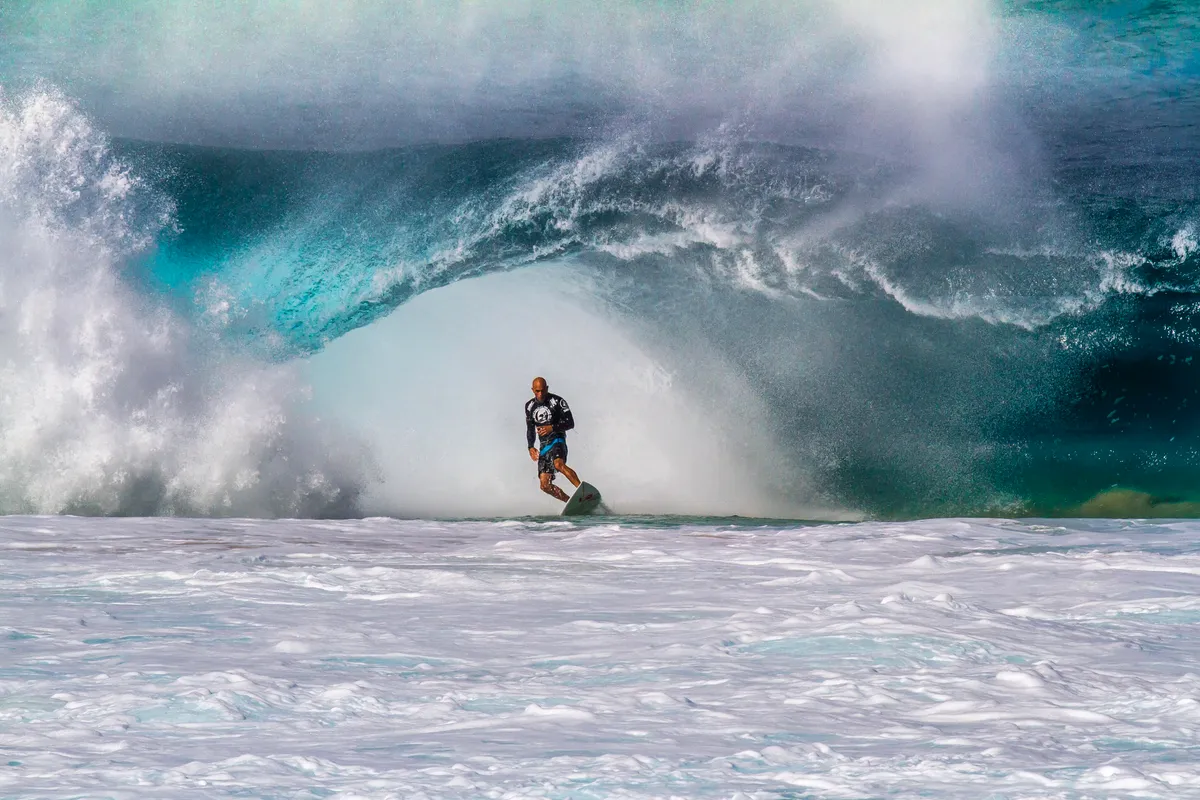
The Banzai Pipeline, off Ehukai Beach Park, is the most famous wave in the world. A shallow lava reef just offshore turns winter swells into thick, hollow left-hand barrels that break with tremendous force; Backdoor is the right-hand wave off the same peak. It is one of the most dangerous waves in surfing, and serious injuries and deaths have occurred even among experts.
Pipeline is for highly experienced surfers only, and the line-up is governed by a strong local hierarchy. For everyone else, the beach is one of the best places in the world to watch surfing, with the barrels breaking close to shore. Arrive early on big days, as parking is limited.
Sunset Beach and Waimea Bay
Sunset Beach, a little further east, is a large, shifting peak that breaks over an outer reef, known for its size, power and challenging currents. It is regarded as one of the most demanding waves to surf well, and a competition venue for decades.
Waimea Bay, to the west, is quiet and calm in summer, a popular spot for swimming and cliff jumping. In winter, on the biggest swells, it becomes a legendary big-wave spot. Waimea is home to the Eddie Aikau Big Wave Invitational, a contest named after the celebrated Hawaiian lifeguard and surfer, which runs only when waves reach extraordinary heights and has been held just a handful of times.
Haleiwa and the gentler options
Haleiwa, the North Shore's main town, has a right-hand reef break at Haleiwa Ali'i Beach Park that hosts professional events. Nearby, Puaena Point, at the edge of Haleiwa harbour, is often more sheltered and can suit improvers on smaller days. Chun's Reef, between Haleiwa and Waimea, is known as one of the more forgiving waves on the North Shore and is popular with longboarders and intermediate surfers.
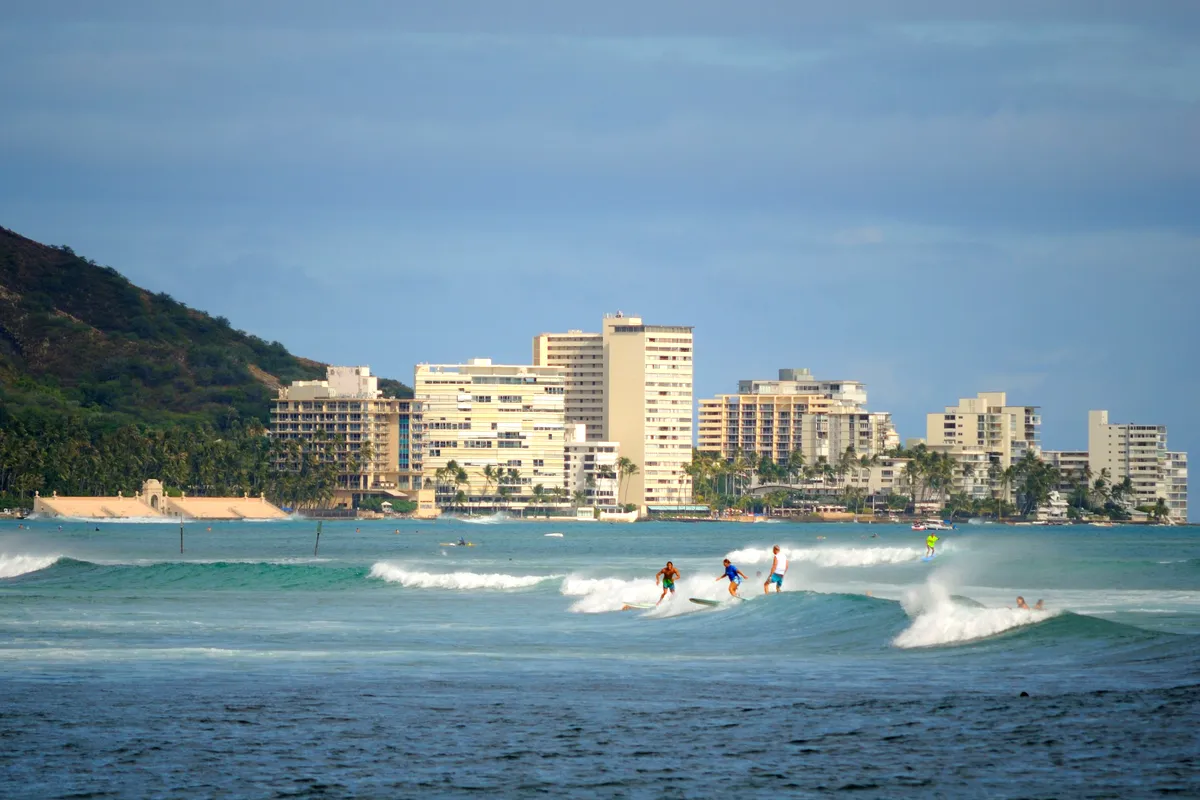
That said, gentle is relative here: on winter swells, even these spots can be powerful. Many visitors who are still learning take lessons on the North Shore in calmer conditions or on Oahu's south shore at Waikiki.
The winter season and summer calm
The North Shore's surf season runs from roughly November to February, with October and March also bringing good swells. Swells can be huge, and conditions change quickly. Many big-wave days are accompanied by high-surf warnings from the National Weather Service.
In summer, from around May to September, the North Shore is often flat or very small, and the water is calm and clear. Beaches such as Waimea Bay and Shark's Cove become popular for swimming and snorkelling. That makes summer a good time to visit with a family or as a beginner, while winter is the season for watching and surfing big waves.
Safety and respect for the ocean
The North Shore's winter waves are extremely powerful. Strong currents, shallow reefs, shore break and sudden large sets catch out visitors every year. Swim only at lifeguarded beaches and follow the lifeguards' advice, never turn your back on the ocean and stay off rocks and ledges when the surf is up.
Green sea turtles often rest on beaches such as Laniakea; it is against the law to disturb them, so keep your distance. Hawaiian monk seals, an endangered species, also haul out on beaches and must be left alone.
Hawaiian culture and the local line-up
Surfing, known in Hawaiian as heʻe nalu, was an important part of ancient Hawaiian culture, practised by people of all ranks. Duke Kahanamoku, the Olympic swimmer and surfer from Waikiki, helped share it with the world in the early twentieth century. On the North Shore, respect for Hawaiian culture and for local surfers is essential.
The best breaks have a well-established local hierarchy. Visitors should sit wide, watch, wait patiently and avoid dropping in or hassling for waves. A respectful attitude goes a long way in the water and on land.
Driving the Kamehameha Highway
The North Shore is about an hour's drive from Honolulu airport and Waikiki, via the H-2 freeway and Kamehameha Highway. The highway runs along the coast past all the main breaks, and on big-wave days traffic can come to a standstill as spectators flock to the beaches. Leave early and be patient.
A rental car is the most practical way to get around, though public buses connect the North Shore with Honolulu. Parking at popular beaches such as Ehukai and Waimea fills quickly.
Shrimp trucks, shave ice and where to stay
The North Shore has a laid-back, rural feel, with holiday rentals, a small number of hotels and resorts, and many surfers staying in rented houses near the beaches. Haleiwa is the main town, with shops, restaurants and the famous shave ice stands. Kahuku, further east, is known for its shrimp trucks.
Accommodation books up quickly during the winter contest season, so plan ahead. Many visitors stay in Waikiki and drive up for the day.
North Shore, Oahu surf season month by month
A broad planning picture, not a forecast. Swell, wind and water temperature vary from year to year.
| January | Peak winter season: big North Pacific swells, high-surf warnings and busy beaches. Watch at Pipeline and Waimea. |
|---|---|
| February | Still prime season, with powerful swells and occasional calmer windows. |
| March | Swells start to ease late in the month, though good days remain. |
| April | Smaller, less frequent swells. A transition to summer conditions. |
| May | Often small or flat. Calm, clear water for swimming and snorkelling. |
| June | Summer calm: Waimea Bay and Shark's Cove become swimming and snorkelling spots. |
| July | Usually flat on the North Shore; surfers head to the south shore. |
| August | Calm, warm and clear. Good for families and beginners on very small days. |
| September | Mostly small, with the first early-season swells possible late in the month. |
| October | The season begins, with the first significant North Pacific swells. |
| November | Winter swells arrive in earnest and the competition season starts. |
| December | Big swells, crowded beaches and contests at the world's most famous breaks. |
Learning to surf on the North Shore
In winter, the North Shore is not a place for beginners. The waves are powerful, the reefs are shallow and conditions can change quickly. If you want to learn on Oahu during winter, take lessons at Waikiki on the south shore, where waves are gentle.
In summer and on small days, some North Shore surf schools teach at sheltered spots such as Puaena Point near Haleiwa or Chun's Reef, with close supervision. Ask about instructor qualifications and where lessons take place, and always respect lifeguard advice.
Comparing options across the country? Read our guide to surfing in the USA.
Seasonal notes on this page describe typical patterns, not the conditions on a given day. Use the local forecast, lifeguard advice and a qualified instructor for water-safety decisions, and get a written breakdown of what any surf package includes before paying.
North Shore, Oahu surf trip questions
When is the best time to visit the North Shore for surfing?
From roughly November to February, when winter North Pacific swells produce the famous big waves. October and March can also be good.
Can beginners surf the North Shore?
Not in winter. Beginners should learn at Waikiki or, in summer and on small days, at sheltered spots like Puaena Point with an instructor.
What is the Eddie?
The Eddie Aikau Big Wave Invitational is a contest at Waimea Bay named after the Hawaiian lifeguard and surfer. It runs only when waves are exceptionally large and has been held only a few times.
Is the North Shore flat in summer?
Often, yes. From about May to September, the North Shore is usually small or flat, with calm water for swimming and snorkelling.
How far is the North Shore from Waikiki?
About an hour by car, though traffic on big-wave days can make it much longer.
Can I watch surfing at Pipeline?
Yes. Ehukai Beach Park, in front of Pipeline, is one of the best places in the world to watch surfing, with barrels breaking close to shore.
Are there lifeguards on the North Shore?
Yes. The main beach parks, including Ehukai, Sunset and Waimea, have lifeguard towers. Swim only at guarded beaches in winter and follow their advice.
Sources & editorial notes
Destination context checked against the sources below. Base-selection and itinerary suggestions are Book & Surf editorial recommendations. Seasonal windows are broad planning suggestions, not measured forecasts or guarantees.
- Wikipedia: Banzai Pipeline ↗
- Wikipedia: Waimea Bay, Hawaii ↗
- Wikipedia: Eddie Aikau ↗
- NOAA National Weather Service: Honolulu ↗
We do not claim to have personally surfed every break. Read our editorial standards.