Why surf in the USA
The United States has thousands of kilometres of coastline on the Pacific and Atlantic, plus the islands of Hawaii in the middle of the Pacific. Each coast has its own character. California has a strong surf culture, consistent swell and a huge variety of breaks. Hawaii is the birthplace of surfing and home to some of the world's most famous waves. The East Coast can deliver excellent surf during hurricane season, while the Pacific Northwest offers cold, uncrowded waves in dramatic landscapes.
Surfing in Hawaii has deep roots in Native Hawaiian culture, where it was known as heʻe nalu. Hawaiian surfers such as Duke Kahanamoku helped spread surfing around the world in the early twentieth century. California developed its own surf culture in the mid-twentieth century, influencing board design, music, fashion and film. Today, the USA hosts many professional contests and has a large surf industry.
When to go surfing in the USA
In California, autumn (September to November) is often the best time, with a mix of south and north-west swells, offshore winds and water still warm from summer. Winter brings powerful north-west swells, especially to Central and Northern California. Summer brings south swells, particularly to Southern California, along with warm water and crowds.
In Hawaii, the North Shore of Oahu and other north-facing coasts receive their biggest swells from November to February, when the famous winter contests take place. South-facing coasts, such as Waikiki, receive swell in summer. On the East Coast, hurricane season (roughly August to October) can bring powerful swells from Florida to New England, while winter storms bring cold, powerful surf to the north-east.
How cold is the water in the USA?
Water temperatures vary greatly across the USA. Hawaii is warm all year, so boardshorts or a light top are enough. Southern California ranges from cool in winter (a 4/3 wetsuit) to mild in late summer (a 3/2 or spring suit). Central and Northern California are cold all year, with a 4/3 or 5/4 common, plus boots in winter.
On the East Coast, Florida is warm for much of the year, while the Mid-Atlantic and New England have warm summers and very cold winters, when a 5/4 or 6/5 with boots, gloves and hood is needed. The Pacific Northwest is cold all year.
Flights, roads and ferries in the USA
Major international airports include Los Angeles, San Diego, San Francisco, Honolulu, New York and Miami. Domestic flights connect regions, and inter-island flights link the Hawaiian islands.
A car is the most practical way to surf in most of the USA, especially in California, where breaks are spread along the coast. Parking can be expensive and limited at popular beaches. In Hawaii, a rental car is useful on most islands, although public buses serve parts of Oahu. On the East Coast, beaches near cities can be reached by public transport in some areas.
Safety and beach rules
Many popular beaches in the USA have lifeguards, especially in summer, and some have designated swimming areas where surfing is restricted. Follow local signs and lifeguard instructions. Rip currents are a common hazard, so learn to recognise them.
In Hawaii, the North Shore's winter waves are extremely powerful and dangerous, and should only be surfed by experienced surfers. In California, water quality can drop after rain, and authorities may issue advisories to avoid the water. Sharks are present in some areas, especially in Northern California; follow local advice. On the East Coast, hurricane swells can be powerful and dangerous.
Surf culture and etiquette
Line-ups at famous breaks in California and Hawaii can be crowded and competitive, with strong local crews. Respect local surfers, wait your turn and never drop in. In Hawaii, show respect for Native Hawaiian culture and the importance of surfing to local communities.
Many surf towns have surf museums, shops and shapers that offer a glimpse into the history and culture of surfing. Support local businesses and respect beach rules and environmental protections.
Surf history and museums
The USA has many places that celebrate surf history. In Hawaii, a statue of Duke Kahanamoku stands at Waikiki Beach, honouring the Olympic swimmer and surfer who helped spread surfing worldwide. The Bishop Museum in Honolulu covers Hawaiian culture, including traditional surfing. In California, the California Surf Museum in Oceanside, the Surfing Heritage and Culture Center in San Clemente and the Santa Cruz Surfing Museum in a lighthouse above Steamer Lane offer collections of historic boards, photographs and stories.
The Huntington Beach area hosts the International Surfing Museum and the Surfers' Hall of Fame. Visiting these places on a flat day adds depth to a surf trip and helps you understand how surfing grew from a Hawaiian tradition into a global culture.
Planning a US surf trip
For a first surf trip to the USA, Southern California is a popular choice, with many surf schools, consistent waves and easy access from Los Angeles and San Diego. A road trip along the Pacific Coast Highway lets you sample different breaks, from San Diego to Santa Cruz.
For experienced surfers, a winter trip to Oahu's North Shore offers the chance to see and surf some of the world's most famous waves. Beginners in Hawaii usually learn at Waikiki. On the East Coast, surf trips are often timed to coincide with hurricane swells, which require flexibility.
Surf regions of the USA
Southern California
Southern California, from San Diego to Santa Barbara, has hundreds of surf breaks and a strong surf culture. San Diego County includes Encinitas, with Swami's and Moonlight Beach, and La Jolla. Orange County has Huntington Beach, known as Surf City USA, and Trestles, a famous cobblestone point at San Onofre State Beach. Los Angeles has Malibu's First Point, a classic longboard wave. The region has many surf schools and warm summer water.
Known for: Encinitas, Trestles, Huntington Beach, Malibu
Central California
Central California, from Santa Barbara to Santa Cruz, has a rugged coastline with cold water and powerful swells. Rincon, near Santa Barbara, is a famous right-hand point. Big Sur has dramatic cliffs and remote beaches. Santa Cruz has a long surf history, with breaks such as Steamer Lane and Pleasure Point. Water is cold, and wetsuits are needed year-round.
Known for: Rincon, Steamer Lane, Pleasure Point
Northern California
Northern California has cold water, powerful swells and fewer surfers. Mavericks, near Half Moon Bay, is one of the world's most famous big-wave spots, breaking on the biggest winter swells. San Francisco's Ocean Beach is a powerful beach break for experienced surfers. Further north, the coast becomes more remote, with rugged beaches and reefs.
Known for: Mavericks, Ocean Beach
Hawaii
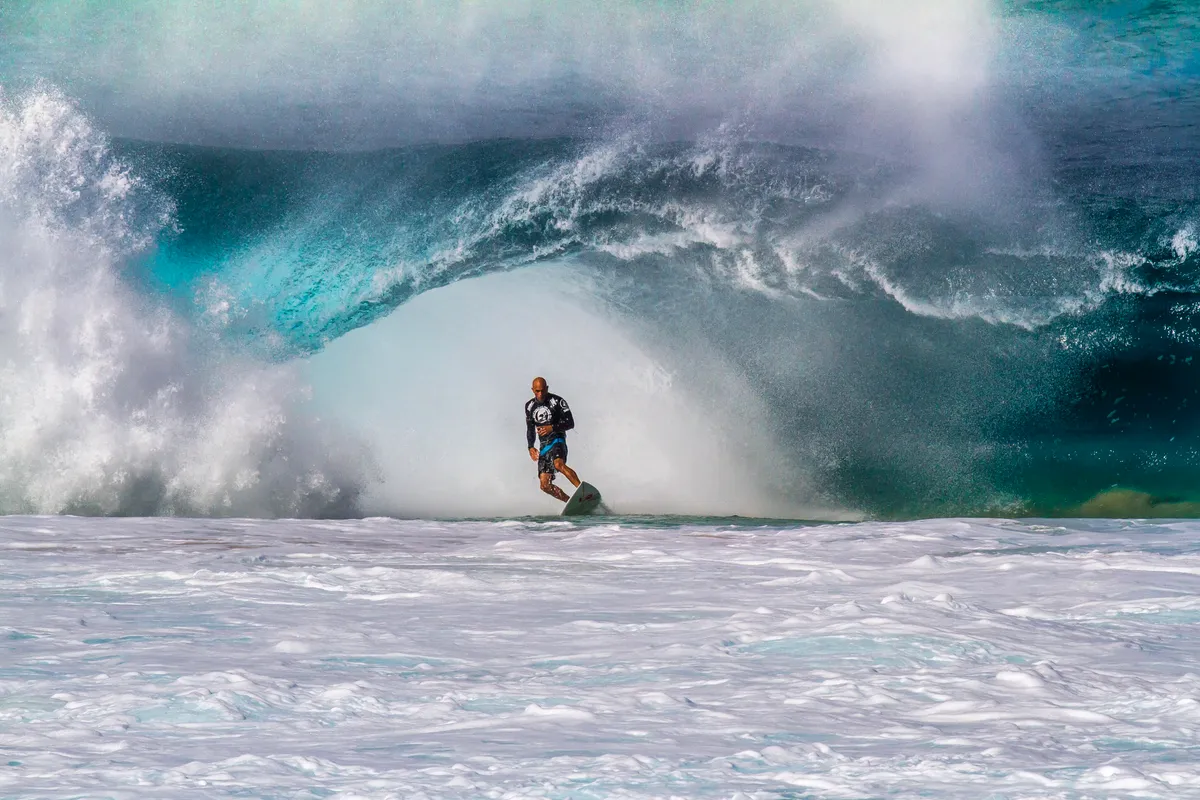
Hawaii is the birthplace of surfing. Oahu's North Shore, with Pipeline, Sunset Beach and Waimea Bay, receives powerful winter swells and hosts world-famous contests. Waikiki, on Oahu's south shore, has gentle waves ideal for learning and a long surf history. Maui has Jaws (Peʻahi), a famous big-wave spot, and Hoʻokipa. Kauai and the Big Island also have quality surf.
Known for: North Shore, Oahu, Pipeline, Sunset Beach, Waimea Bay, Waikiki, Jaws
The East Coast
The East Coast has surf from Florida to Maine. Florida's Atlantic coast, including Cocoa Beach and Sebastian Inlet, receives swells from storms and hurricanes. North Carolina's Outer Banks is known for powerful beach breaks during hurricane season. New Jersey, New York (including Long Island and Montauk) and New England have active surf communities and cold winter surf.
Known for: Cocoa Beach, Sebastian Inlet, Outer Banks, Montauk
Texas and the Gulf Coast
The Gulf of Mexico is usually calm, but storms and hurricanes can bring surfable waves to the Texas coast and other Gulf states. Galveston, South Padre Island and Port Aransas have active surf communities, often surfing around piers and jetties when swells arrive. Surf here is inconsistent and depends on weather systems in the Gulf, so it suits locals and travellers who can move quickly when a swell is forecast.
Known for: Galveston, South Padre Island, Port Aransas
The Pacific Northwest
Oregon and Washington have cold, powerful surf and dramatic coastlines with forests and sea stacks. Oregon's coast, including Cannon Beach and Pacific City, has beach and reef breaks with few surfers. Washington's Westport is a popular surf town. Water is cold year-round, and conditions can be challenging.
Known for: Cannon Beach, Pacific City, Westport
Learning to surf in the USA
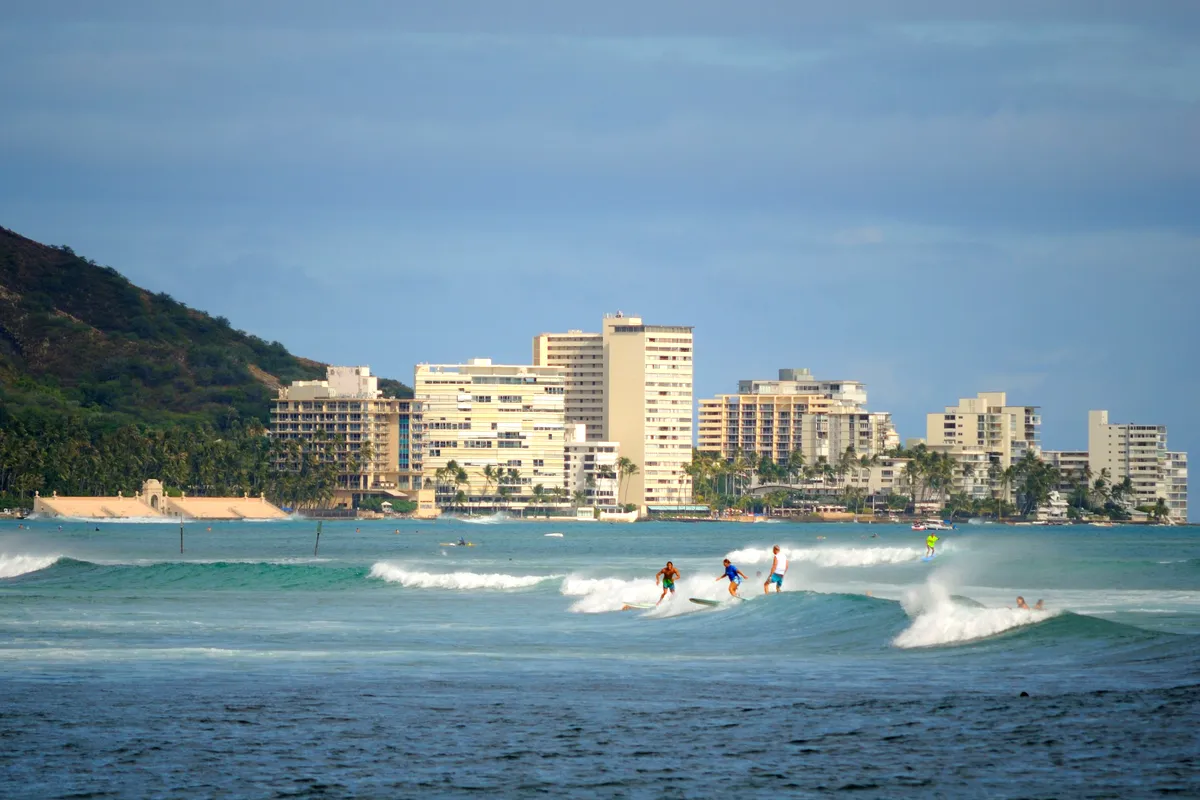
The USA has surf schools in many coastal areas. In Southern California, popular learning spots include Moonlight Beach in Encinitas, La Jolla Shores in San Diego, Huntington Beach and Malibu. In Hawaii, Waikiki is one of the most famous places in the world to learn, with gentle waves and many surf instructors.
On the East Coast, surf schools operate in Florida, the Outer Banks, New Jersey and New York, especially in summer. Lessons usually include soft-top boards and, where needed, wetsuits.
Choose a school with qualified instructors and a good safety record. Learn about rip currents, local rules and surf etiquette, and start in gentle waves before progressing to more challenging breaks.
Surfing in the USA: questions
When is the best time to surf in California?
Autumn, from September to November, often brings a mix of swells, offshore winds and warm water. Winter brings powerful north-west swells, while summer brings south swells and warm water to Southern California.
When is the best time to surf in Hawaii?
North-facing coasts, including Oahu's North Shore, receive their biggest swells from November to February. South-facing coasts, such as Waikiki, receive swell in summer.
Where is the best place to learn to surf in the USA?
Waikiki in Hawaii and beaches in Southern California, such as Moonlight Beach, La Jolla Shores and Huntington Beach, are popular places to learn.
Do I need a wetsuit in California?
Yes, for most of the year. Southern California ranges from a 4/3 in winter to a 3/2 or spring suit in late summer. Central and Northern California are cold year-round.
Can I surf the North Shore of Oahu as a beginner?
Not in winter. The North Shore's winter waves are extremely powerful and dangerous. Beginners should learn at Waikiki or other gentle beaches, and visit the North Shore in summer when it is often calm.
Is there surf on the East Coast of the USA?
Yes. Florida, the Outer Banks, New Jersey, New York and New England all have surf, with hurricane season and winter storms bringing the best swells.
What is Trestles?
Trestles is a famous group of cobblestone point and reef breaks at San Onofre State Beach in Southern California, between San Clemente and San Diego. Lower Trestles is known for high-quality waves and has hosted professional contests. It is crowded and best for experienced surfers.
Is Waikiki good for learning to surf?
Yes. Waikiki has gentle, rolling waves breaking over reef far from shore, and many surf instructors and rental stands. It is one of the most famous places in the world to learn, especially in winter when south-facing coasts are calm.
When is hurricane season for East Coast surfing?
The Atlantic hurricane season runs officially from June to November, with the most activity usually from August to October. Hurricanes far offshore can send powerful swells to the East Coast, but storms close to land are dangerous and should be avoided.
Sources & editorial notes
Country context checked against the sources below. Regional summaries are Book & Surf editorial planning suggestions, not forecasts or safety assessments.