The rise of the Brazilian Storm
Surfing arrived in Brazil in the mid-twentieth century, with early surfers riding wooden boards on Rio de Janeiro's beaches. By the 1970s and 1980s, a strong national surf scene had developed in Rio, São Paulo and Santa Catarina, with contests, shapers and magazines. But it was in the 2010s that Brazil transformed professional surfing. A wave of talented surfers, including Gabriel Medina, Adriano de Souza, Filipe Toledo and Italo Ferreira, began winning world titles, and the media named them the Brazilian Storm. Italo Ferreira won the first Olympic gold medal in surfing at the Tokyo Games.
Today, surfing is hugely popular across Brazil, from city beaches to remote islands, and a professional championship event is held at Saquarema, east of Rio. For visitors, that passion is part of the experience: beaches are lively, surf schools are everywhere and line-ups can be competitive.
Reading Brazil's swell seasons
Brazil's coast is so long that conditions vary widely by region. The south and south-east, including Santa Catarina, São Paulo and Rio de Janeiro, receive their most consistent and powerful swells from roughly April to September, during the Southern Hemisphere autumn and winter, when cold fronts and storms in the South Atlantic send groundswell up the coast.
The north-east coast receives more swell from the North Atlantic, particularly at Fernando de Noronha, where the best waves arrive from roughly December to March. Summer, from December to February, brings warm water and busy beaches in the south, but often smaller, wind-affected waves.
Rio de Janeiro and surfing in the city
Few cities in the world combine urban life and surf like Rio de Janeiro. At Arpoador, a rocky point between Copacabana and Ipanema, surfers ride waves in front of crowds watching the sunset, with the Dois Irmãos mountains as a backdrop. Ipanema and Leblon have beach breaks, and further west, Barra da Tijuca and the beaches beyond, such as Prainha and Grumari, are longer and less crowded, framed by forest-covered hills.
Surfing in Rio is part of daily life, with surfers heading out before work and at weekends. Arpoador has a strong local crew and can be crowded, while the western beaches offer more room. Combining surf with Rio's music, food and landmarks, from Sugarloaf Mountain to the Christ the Redeemer statue, makes it a unique surf city.
How warm is the water?
Water temperatures vary greatly from south to north. In Santa Catarina, the water is cool in winter, often in the mid to high teens Celsius, so a 3/2 or 4/3 wetsuit is common from June to September, and a shorty or boardshorts in summer. Around Rio and São Paulo, the water is milder, with a spring suit or thin wetsuit often enough in winter. In the north-east, including Bahia and Fernando de Noronha, the water is warm all year.
Saquarema, the Maracanã of surfing
About two hours east of Rio, Saquarema is a small town with one of Brazil's most powerful beach breaks at Itaúna beach. Its heavy, hollow waves on south swells have earned it the nickname of the Maracanã of surfing, after Rio's famous football stadium. It has become the home of Brazil's elite professional contest, which draws large, passionate crowds.
Saquarema is best for experienced surfers, especially on bigger days, though calmer days and nearby beaches offer options for others. The town has a relaxed atmosphere, with lagoons, a hilltop church overlooking the beach and simple accommodation.
Safety on Brazilian beaches
Brazilian beaches can have strong rip currents, and lifeguard coverage varies by beach and season. Watch the water, ask locals and surf within your ability. In cities, take normal precautions: avoid leaving valuables on the beach, use registered taxis or ride-hailing apps and follow local advice about neighbourhoods.
In Recife and nearby beaches in Pernambuco, surfing is restricted or prohibited along parts of the coast because of a history of shark incidents, and warning signs are posted. Respect these restrictions.
Brazil on a budget
Brazil can be affordable for surf travellers, especially outside peak holidays. Hostels and guesthouses, known as pousadas, offer good-value accommodation in surf towns, and local restaurants serving pratos feitos, set meals of rice, beans, meat and salad, keep food costs down. Buses are an economical way to travel between coastal towns.
Prices rise sharply during Christmas, New Year and Carnival, when accommodation books up months ahead. Fernando de Noronha is the most expensive destination, with high accommodation costs and daily environmental fees.
Flights, buses and the long coast
São Paulo and Rio de Janeiro have the main international airports, with domestic flights connecting to Florianópolis, Salvador, Recife and Fernando de Noronha. Brazil's long-distance bus network is extensive and comfortable, and many surfers travel between coastal towns by bus or rental car.
Distances are large, so it is best to focus on one or two regions rather than trying to cover the whole coast. Fernando de Noronha is reached only by air from Recife or Natal, and visitors pay an environmental preservation fee.
Culture, food and life on the beach
Brazilian beach culture is social and lively, with beach kiosks, football, music and street food. After a session, try açaí bowls, pão de queijo, fresh coconut water and grilled fish. In the evenings, many surf towns have relaxed bars and restaurants, and cities such as Rio and Salvador offer music, nightlife and history.
In the water, Brazilian surfers are passionate and competitive. Respect local surfers, wait your turn and avoid dropping in, especially at popular breaks in Rio and Florianópolis.
Planning a Brazil surf trip
For a first trip, Florianópolis is a popular choice, with dozens of beaches on one island, waves for all levels and a relaxed lifestyle. Rio combines city life with surf at Arpoador and Barra da Tijuca, and Saquarema offers powerful waves a couple of hours east. For experienced surfers in the southern summer, Fernando de Noronha is a spectacular, if expensive, island destination. Brazil's peak holiday periods, including Christmas, New Year and Carnival, are busy and expensive, so book ahead.
Surf regions of Brazil
Santa Catarina: Florianópolis and Garopaba
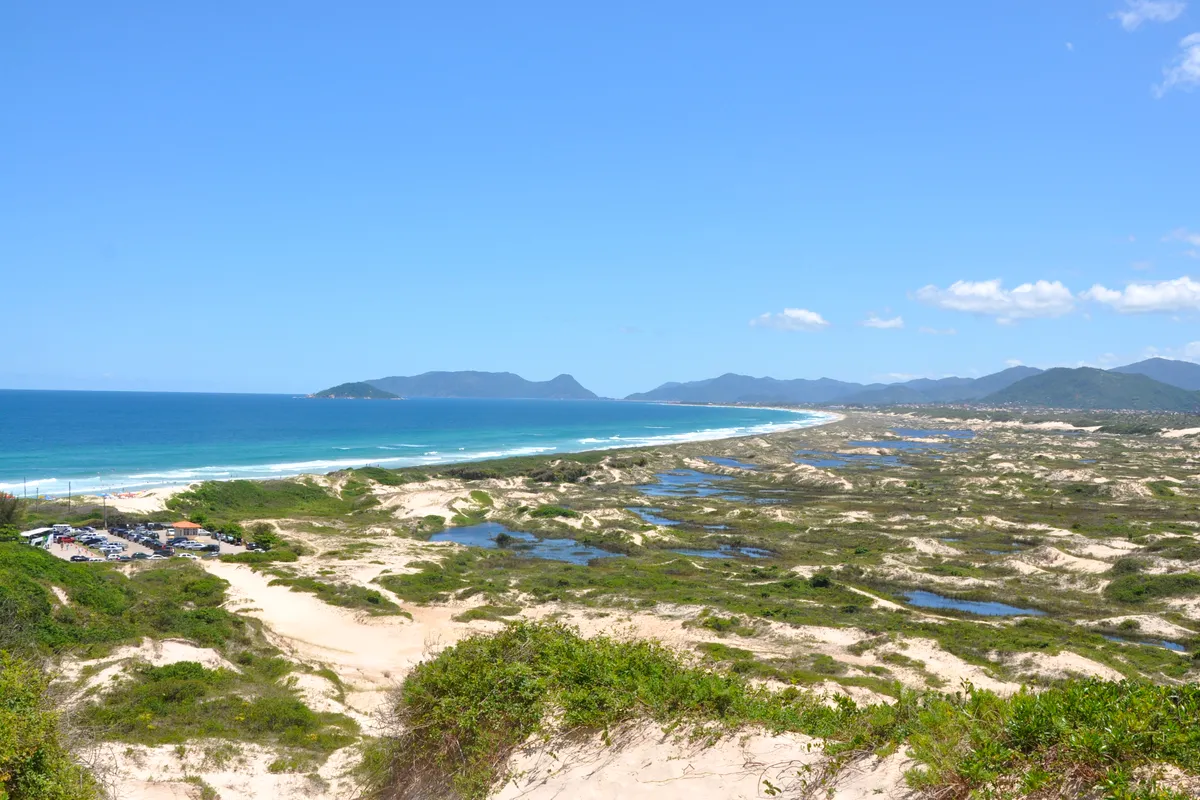
Santa Catarina is the heart of southern Brazilian surfing. Florianópolis, on Santa Catarina Island, has dozens of beaches facing different directions, including Joaquina, Praia Mole, Campeche and Barra da Lagoa. South of the island, Garopaba and Imbituba have beaches and points that work on south swells, and the area is known for southern right whales in winter.
Known for: Florianópolis, Joaquina, Praia Mole, Garopaba, Imbituba
Rio de Janeiro and Saquarema
Rio de Janeiro has city surf at Arpoador, a rocky point between Copacabana and Ipanema, and longer beaches at Barra da Tijuca and Prainha to the west. About two hours east, Saquarema's Itaúna beach is one of Brazil's most powerful beach breaks and the venue for an elite professional event, sometimes called the Maracanã of surfing.
Known for: Arpoador, Barra da Tijuca, Prainha, Saquarema
The São Paulo coast
The coast of São Paulo state has many beaches popular with surfers from the city, including Maresias, known for powerful beach-break barrels, Ubatuba, with dozens of beaches, and Guarujá. Weekends and holidays can be crowded with visitors from São Paulo.
Known for: Maresias, Ubatuba, Guarujá
Bahia
In Bahia, the town of Itacaré is surrounded by Atlantic rainforest and has a series of beaches and points, from gentle waves for learners to more powerful reef and beach breaks. The warm water and relaxed atmosphere make it popular with travellers.
Known for: Itacaré
Fernando de Noronha
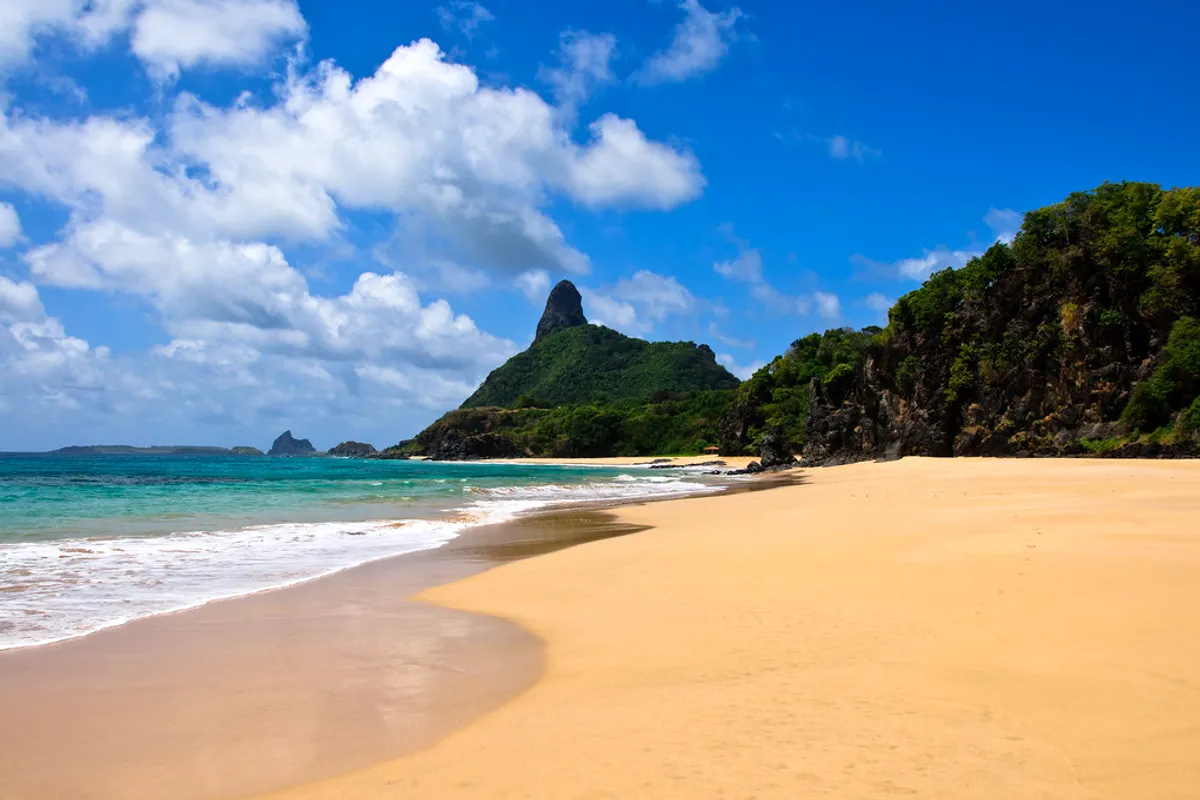
Fernando de Noronha is a volcanic archipelago off the north-east coast, protected as a marine national park and a UNESCO World Heritage Site. From roughly December to March, North Atlantic swells produce powerful waves at beaches such as Cacimba do Padre, which has hosted professional contests. Visitor numbers are controlled, and an environmental fee applies.
Known for: Cacimba do Padre
The north-east coast
Beyond Noronha, Brazil's north-east has warm water and long beaches, though much of the coast is better known for kitesurfing, thanks to strong, steady winds in places such as Ceará. Surfing in Recife and nearby beaches in Pernambuco is restricted because of shark incidents.
Known for: Ceará coast
Rio Grande do Sul and the far south
South of Santa Catarina, Rio Grande do Sul has long, straight beaches and a colder climate, with surf at places such as Torres, known for rocky headlands that create better-shaped waves. The water is cold in winter, and the region sees fewer international visitors.
Known for: Torres
Learning to surf in Brazil
Brazil has surf schools on many popular beaches. In Florianópolis, Barra da Lagoa and parts of Campeche are popular with beginners, and many schools operate around the island. In Rio, schools teach at Arpoador on small days and at the long beaches of Barra da Tijuca. Itacaré in Bahia has gentle beaches and warm water.
Summer brings warm water but busy beaches, while winter brings more consistent but more powerful waves in the south. Ask schools about instructor qualifications, group size and which beaches they use. Many instructors speak some English, but a few words of Portuguese are appreciated.
Surfing in Brazil: questions
When is the best time to surf in Brazil?
In the south and south-east, including Florianópolis and Rio, April to September brings the most consistent swells. Fernando de Noronha is best from December to March.
Where is the best place to learn to surf in Brazil?
Florianópolis, particularly Barra da Lagoa, Rio's Barra da Tijuca and Itacaré in Bahia are popular learning spots with surf schools.
What is the Brazilian Storm?
The name given to the generation of Brazilian surfers, including Gabriel Medina, Adriano de Souza, Filipe Toledo and Italo Ferreira, who won multiple world titles from the 2010s onwards.
Do I need a wetsuit in Brazil?
In Santa Catarina in winter, a 3/2 or 4/3 is common. Around Rio and São Paulo, a spring suit or thin wetsuit may be enough in winter. The north-east is warm all year.
Can I surf in Recife?
Surfing is restricted or prohibited along parts of the coast in and around Recife because of shark incidents. Respect posted restrictions.
How do I get to Fernando de Noronha?
By domestic flight from Recife or Natal. Visitor numbers are controlled and an environmental preservation fee applies.
Is Brazil safe for surf trips?
Popular surf destinations are widely visited. Take normal precautions in cities, avoid leaving valuables on beaches and follow local advice.
Is Saquarema good for beginners?
Itaúna beach in Saquarema is powerful and best for experienced surfers. Beginners may find gentler waves at other beaches nearby on calmer days.
What wetsuit do I need in Florianópolis in winter?
A 3/2 or 4/3 wetsuit is common from June to September, when the water can drop to the mid to high teens Celsius.
Do I need to speak Portuguese to surf in Brazil?
No, but a few words are appreciated. English is spoken in some surf schools and tourist areas, though less widely than in many destinations.
Sources & editorial notes
Country context checked against the sources below. Regional summaries are Book & Surf editorial planning suggestions, not forecasts or safety assessments.