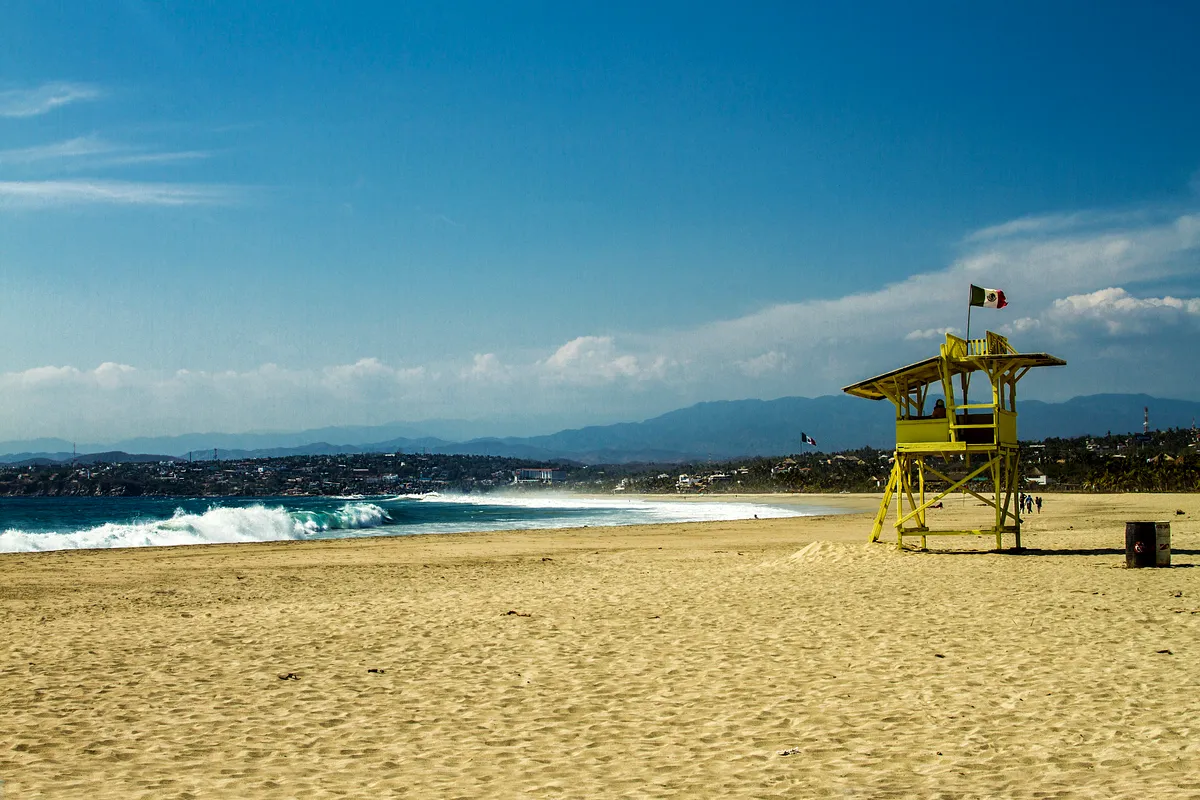
Why surf in Mexico
Mexico has one of the longest Pacific coastlines in the Americas, facing south-west and west into swells generated by storms in the Southern Hemisphere and by hurricanes off its own coast. The mainland coast, from Nayarit to Oaxaca, receives consistent south swells from spring to autumn, with warm water all year. Baja California, the long peninsula in the north-west, faces the North Pacific and receives powerful winter swells, with cooler water on its Pacific side.
The variety is remarkable: long right-hand points in Guerrero and Oaxaca, friendly beach breaks and longboard waves in Nayarit, world-famous heavy beach breaks at Puerto Escondido and big-wave reefs off Baja. Mexico is easy to reach from North America, affordable compared with many surf destinations and rich in food, culture and history.
When to go surfing in Mexico
On the mainland Pacific coast, the main surf season runs from roughly April to October, when south swells from the Southern Hemisphere winter arrive consistently. This is when Puerto Escondido's Zicatela and the long points of Oaxaca and Guerrero are at their best. It is also the rainy season, with heat, humidity and the risk of tropical storms and hurricanes, particularly from June to October.
From November to March, the mainland is drier and calmer, with smaller south swells and occasional north-west swells, which suits beginners and longboarders, especially around Sayulita and the Riviera Nayarit. Baja California's Pacific coast is best from November to March, when North Pacific storms send powerful swells.
Water temperature and what to pack
The mainland Pacific coast is warm all year, typically in the high twenties Celsius, so boardshorts or a swimsuit and a rash vest are enough. Baja California's Pacific coast is much cooler, with a 3/2 or 4/3 wetsuit needed in winter in the north. The Sea of Cortez side of Baja is warmer but rarely has surf.
Pack reef-safe sunscreen, a hat, insect repellent and reef booties for rocky points. Bring a basic first-aid kit for cuts, and plan for heat and humidity in the summer season.
Arriving in Mexico
Mexico City is the main international hub, with domestic flights to Puerto Escondido, Huatulco, Zihuatanejo and other coastal towns. Puerto Vallarta's airport serves Sayulita and the Riviera Nayarit, and Los Cabos and Tijuana serve Baja. Many travellers from the United States drive into Baja.
Buses are comfortable and widely used for travel between cities. Rental cars give flexibility on the coast, but research road conditions and safety, avoid driving at night and use toll highways where possible.
Safety and etiquette
Mexico is a popular destination for surfers, but safety varies by region. Check your government's current travel advice, stay informed about local conditions and follow local guidance, particularly in rural areas. Most well-known surf towns have established tourism and are widely visited.
In the water, some breaks are very powerful, especially Zicatela in Puerto Escondido, and should only be surfed by experienced surfers. Respect local surfers, wait your turn and avoid dropping in. Water quality can be poor near river mouths and in some towns after heavy rain; ask locally and check any advisories.
Baja road trips
Baja California is one of the classic surf road trips in the Americas. The peninsula stretches for more than a thousand kilometres south of the US border, with the Pacific coast facing winter north-west swells and the Sea of Cortez on the other side. Many surfers drive south from California, exploring point breaks and empty beaches reached by dirt roads, camping on the coast and stocking up in small towns.
The journey requires preparation: a reliable vehicle, preferably with high clearance, spare tyres, water, fuel and supplies, Mexican vehicle insurance and the appropriate permits. Distances between towns can be long, mobile coverage is limited and roads can be rough. Avoid driving at night, check current travel advice and consider travelling with others. The reward is uncrowded waves, desert landscapes and starry nights.
Choosing where to go
Mexico's size means choosing a region is the first step. For beginners and families, the Riviera Nayarit around Sayulita and Punta de Mita offers gentle waves, many surf schools and easy access from Puerto Vallarta, particularly from November to April. For intermediates and longboarders, Guerrero's long left at Saladita and the waves around Troncones are a relaxed choice. For experienced surfers seeking power, Puerto Escondido and the Oaxacan points in the south-swell season are the main draw, and Baja's winter points reward adventurous road-trippers.
Consider travel logistics, safety advice and season together, and remember that much of the mainland coast is hot and humid in summer.
Hurricane season and swell
The Pacific hurricane season in Mexico officially runs from mid-May to November. Hurricanes and tropical storms can generate powerful swells for the mainland coast, sometimes producing excellent waves at breaks that rarely work. They also bring heavy rain, flooding and dangerous conditions near the storm's path.
If you travel during the season, monitor forecasts from the US National Hurricane Center and Mexican authorities, choose accommodation with flexible cancellation and follow official advice. Storms close to land are dangerous and should never be surfed.
Food, culture and flat days
Mexican food is one of the great pleasures of a surf trip, from fresh fish tacos and ceviche on the coast to regional specialities such as Oaxacan mole and tlayudas. Many surf towns have lively markets and street-food scenes.
On flat days, explore lagoons and mangroves, release baby turtles with licensed conservation programmes, visit colonial towns and archaeological sites, or hike in the mountains behind the coast. Oaxaca city, with its food, art and markets, is a short flight from Puerto Escondido.
Planning a Mexico surf trip
For beginners and longboarders, Sayulita and the Riviera Nayarit offer easy access, gentle waves and plenty of surf schools, particularly from November to April. Experienced surfers looking for power head to Puerto Escondido and the Oaxacan points in the south-swell season. Guerrero's long lefts at Saladita and the waves around Troncones suit improvers and longboarders.
Baja is a classic road-trip destination, with point breaks and empty beaches that reward self-sufficient surfers with a vehicle, especially in winter.
Surf regions of Mexico
Oaxaca: Puerto Escondido and the south
Puerto Escondido is home to Zicatela, one of the world's heaviest beach breaks, sometimes called the Mexican Pipeline. La Punta, at the end of the beach, is a left-hand point for intermediates, and Carrizalillo is a sheltered cove for learners. Further south and east, the Oaxacan coast towards Salina Cruz has long right-hand points that work on south swells, and Chacahua offers a remote lagoon and point break.
Known for: Puerto Escondido, Zicatela, La Punta, Carrizalillo, Chacahua, Salina Cruz
Riviera Nayarit and Puerto Vallarta
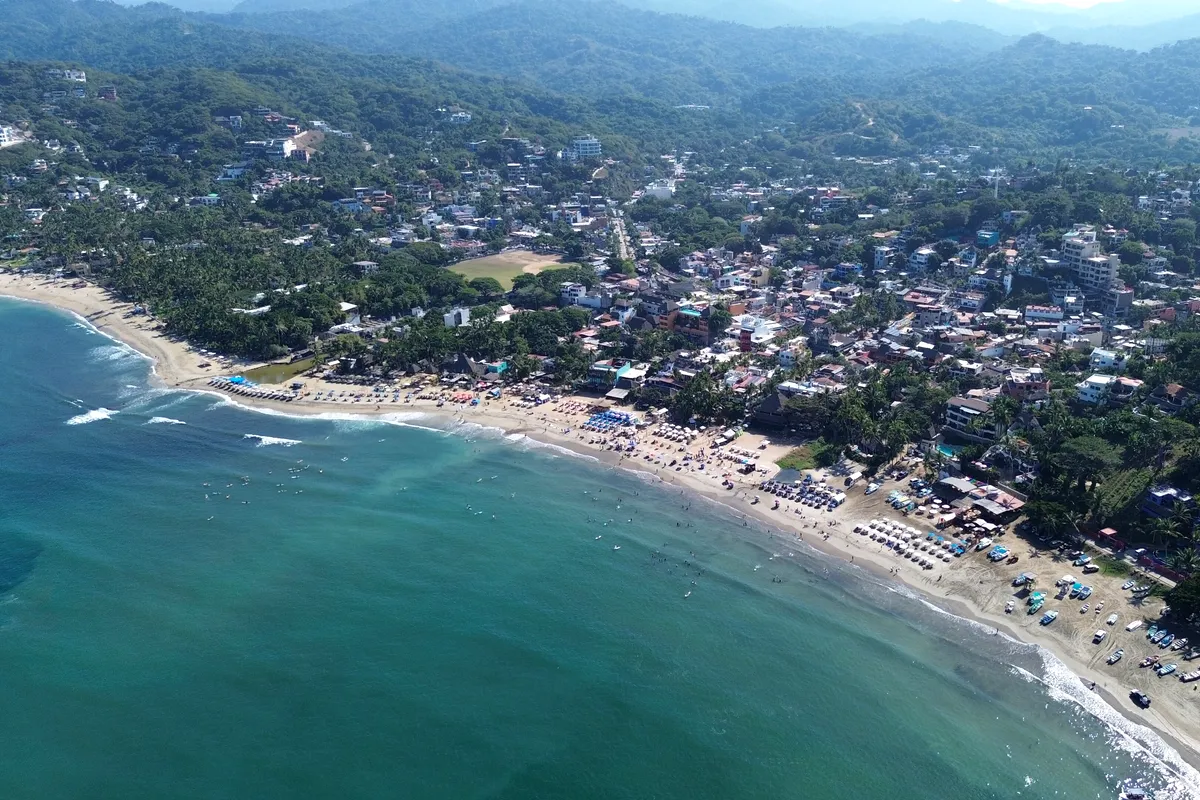
North of Puerto Vallarta, Sayulita is a lively surf town with a right-hand reef and a beach break popular with beginners. Punta de Mita, at the tip of the bay, has several point and reef breaks that suit longboarders and intermediates. San Pancho, a short drive north, has a powerful beach break and a quieter atmosphere.
Known for: Sayulita, Punta de Mita, San Pancho
Guerrero
Guerrero's coast includes Saladita, a long, gentle left-hand point beloved by longboarders, and Troncones, a small town with reef and point breaks for different levels. The area is reached via Zihuatanejo airport and offers a relaxed alternative to busier surf towns.
Known for: Saladita, Troncones
Michoacán and Colima
Michoacán has remote, uncrowded point breaks such as Nexpa and La Ticla, best for self-sufficient surfers. Colima's Pascuales is a powerful beach break that attracts experienced surfers. Check travel advice carefully for these regions.
Known for: Nexpa, La Ticla, Pascuales
Baja California
Baja's Pacific coast receives powerful winter swells. In the north, Ensenada has San Miguel, a right-hand point, and Todos Santos Island offshore, known for big waves. Further south, the coast has many point breaks reached by dirt roads. Baja California Sur includes Todos Santos and Cerritos, popular with surfers and learners, and the beaches around Los Cabos, which work on summer south swells.
Known for: San Miguel, Todos Santos Island, Cerritos, Los Cabos
The Gulf and Caribbean coasts
Mexico's Gulf of Mexico and Caribbean coasts rarely have consistent surf. The Caribbean coast around Cancún and the Riviera Maya is mostly protected by reefs, and only occasional storms or cold fronts bring small waves. Some local surfers ride these waves, but these coasts are not reliable for a surf trip.
Known for: Cancún, Veracruz
Learning to surf in Mexico
Sayulita is one of Mexico's most popular places to learn to surf, with a gentle beach break, many surf schools and board rental on the beach. Puerto Escondido's Carrizalillo and La Punta are good learning spots despite the town's reputation for heavy waves. Cerritos in Baja California Sur and Troncones in Guerrero also have surf schools.
The warm water makes learning comfortable on the mainland. November to April often brings gentler conditions for beginners, while summer south swells can be too powerful at some beaches.
Choose a school with qualified instructors, ask about group size and safety and learn about rip currents and local hazards, including rocks at point breaks.
Surfing in Mexico: questions
When is the best time to surf in Mexico?
On the mainland Pacific coast, April to October brings consistent south swells. November to March is calmer and suits beginners. Baja California's Pacific coast is best in winter.
Is Puerto Escondido good for beginners?
Zicatela is not, but nearby Carrizalillo and La Punta are good learning spots with surf schools.
Do I need a wetsuit in Mexico?
Not on the mainland Pacific coast, where the water is warm all year. Baja California's Pacific coast needs a wetsuit in winter.
Where should beginners surf in Mexico?
Sayulita, Punta de Mita, Puerto Escondido's Carrizalillo and La Punta, Troncones and Cerritos in Baja California Sur are all good options.
Is it safe to surf in Mexico?
Popular surf towns are widely visited, but safety varies by region. Check your government's travel advice, follow local guidance and avoid driving at night.
When is hurricane season in Mexico?
On the Pacific coast, hurricane season runs from mid-May to November. Storms can bring swell but also dangerous weather, so monitor forecasts.
Can I drive to Baja for surfing?
Yes. Many surfers drive south from California. You need Mexican vehicle insurance, the appropriate permits, a reliable vehicle and supplies, and you should avoid driving at night.
Is there surf on Mexico's Caribbean coast?
Rarely. The Caribbean coast around Cancún is mostly protected by reefs and only occasionally gets small waves during storms.
Where is the best longboard wave in Mexico?
Saladita in Guerrero is a famously long, gentle left that is popular with longboarders. El Anclote at Punta de Mita is another good option.
Do I need to speak Spanish to surf in Mexico?
No, but a few words are appreciated. English is widely spoken in popular surf towns such as Sayulita and Puerto Escondido.
Is Mexico good for a winter surf trip?
Yes. The mainland Pacific coast is dry and warm in winter with gentler waves, ideal for beginners, while Baja's Pacific coast receives powerful winter swells.
Sources & editorial notes
Country context checked against the sources below. Regional summaries are Book & Surf editorial planning suggestions, not forecasts or safety assessments.