The breaks
Recognised, publicly known surf spots around Florianópolis. Suitability depends on the day's swell, wind and tide, so treat the level as a guide, not a guarantee.
| Break | Type | Best for | Notes |
|---|---|---|---|
| Joaquina | Beach break & point | Intermediate–Advanced | The island's most famous surf beach, backed by dunes. Powerful peaks and a rocky point; crowded on good days. |
| Praia Mole | Beach break | Intermediate–Advanced | Beautiful beach between green hills with punchy waves and a steep shore break. |
| Campeche | Beach break | Beginner–Intermediate | Long beach facing Campeche Island, with peaks for different levels depending on swell. |
| Barra da Lagoa | Beach break | Beginner | Fishing village at the lagoon channel with a sheltered corner of gentle waves. One of the best learning spots. |
| Moçambique | Beach break | Intermediate | Long, wild beach backed by forest, with fewer people. |
| Matadeiro | Beach & point | Intermediate–Advanced | South-island beach that picks up powerful south swells, beside the village of Armação. |
An island with a beach for every wind
Santa Catarina Island is long and narrow, about fifty kilometres from north to south, with the city of Florianópolis spread across the island and the adjacent mainland. The island's east coast faces the open Atlantic and catches most of the swell, its south coast picks up powerful south swells and its north coast is more sheltered, with calm, warm beaches popular with families.
That range is what makes Florianópolis so good for surfing. When a cold front brings a south swell and southerly winds, surfers move to beaches sheltered from the wind; when north-east winds blow, other beaches become offshore. Locals, known as manezinhos, often check several beaches before choosing where to paddle out. The island has a strong surf culture, with surf shops, shapers and contests, and has produced well-known Brazilian surfers.
Joaquina and Praia Mole
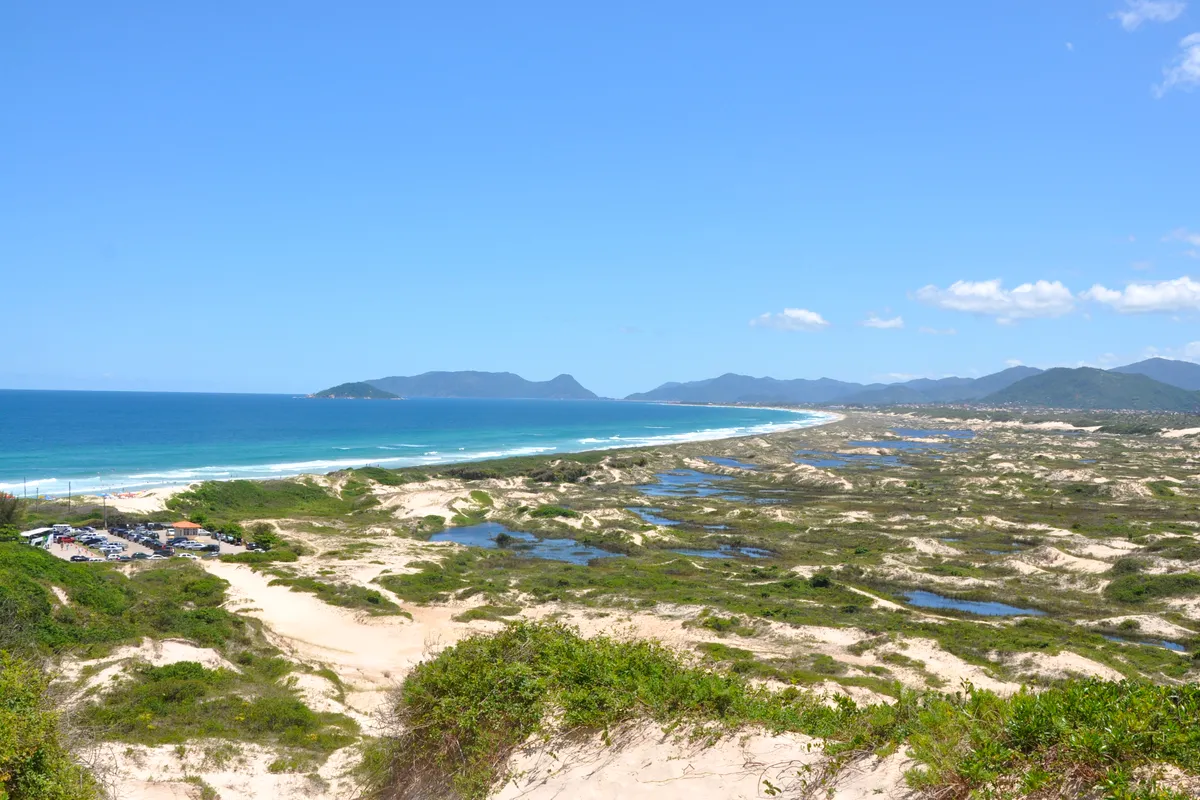
Joaquina, on the east coast, is the island's most famous surf beach, backed by large sand dunes where visitors go sandboarding. It has powerful beach-break peaks and a rocky point at its southern end, and it hosted international contests in the 1980s and 1990s, helping to put Brazilian surfing on the map. It can be crowded and is best for intermediate and advanced surfers on bigger days.
Praia Mole, just north, is a beautiful beach framed by green hills, with punchy beach breaks that are popular with experienced surfers and a lively scene on the sand. It can be powerful, with a steep shore break.
Campeche, Barra da Lagoa and the beginner beaches
Campeche, south of Joaquina, is a long beach facing Campeche Island, a protected island with archaeological sites. Its peaks can suit a range of levels depending on the swell. Barra da Lagoa, a fishing village at the mouth of the channel that drains the island's lagoon, has a sheltered corner with gentle waves that is one of the best places on the island to learn.
Further north, Moçambique is a long, wild beach backed by forest, and Santinho, near the northern tip, offers more peaks. Many surf schools operate at Barra da Lagoa, Campeche and Santinho.
The wild south of the island
The south of the island is less developed, with small fishing villages, hiking trails and beaches that pick up powerful south swells. Armação and Matadeiro, separated by a river, have beach and point breaks, and Lagoinha do Leste, reached only by a hiking trail or boat, is a spectacular, remote beach with a lagoon behind it. Pântano do Sul is a traditional fishing village with seafood restaurants.
These beaches are best for experienced surfers on big days, as the south swells can be powerful, and facilities are limited.
Winter fronts and summer crowds
The best surf season runs from roughly April to September, during the southern autumn and winter, when cold fronts sweep up from the south, bringing powerful south swells. Conditions can change quickly as fronts pass, so flexibility and local knowledge are useful.
Summer, from December to February, brings warm water, sunshine and huge crowds of holidaymakers, especially from Argentina and other parts of Brazil. Waves are often smaller and affected by north-east winds, but beginners can find gentle conditions. Carnival is a particularly busy time.
How cold fronts shape a surf day
Surf in Florianópolis follows the rhythm of the cold fronts that sweep up from the south, especially from autumn to spring. As a front approaches, winds often blow from the north and north-east, favouring south-facing beaches. When the front passes, the wind swings to the south and south-west, a strong swell arrives and east-facing beaches such as Joaquina and Praia Mole can become excellent as the wind eases. A day or two later, conditions settle until the next front.
Local surfers follow these patterns closely and are often prepared to drive across the island to find the right combination of swell and wind. Visitors who stay flexible, rather than committing to a single beach, catch far more good waves.
Wetsuits and water temperature
Florianópolis is further south than many visitors expect, and the water can be cool in winter, often in the mid to high teens Celsius. A 3/2 or 4/3 wetsuit is common from June to September, sometimes with boots on the coldest days. In summer, the water is warm, and boardshorts or a shorty are usually enough.
Lagoa da Conceição and where to stay
Lagoa da Conceição, a village on the shores of the island's central lagoon, is the most popular base for surfers, with restaurants, bars, hostels and guesthouses, and easy access to Joaquina, Praia Mole and Barra da Lagoa. The lagoon is popular for kitesurfing, windsurfing and paddleboarding.
Campeche and Barra da Lagoa have more relaxed, beach-village atmospheres, while the north of the island has resorts and calmer beaches. Accommodation books up quickly in summer and during Carnival.
Surf culture and the manezinhos
Florianópolis has one of Brazil's oldest surf scenes. Surfing took off on the island in the 1970s and 1980s, and Joaquina became famous for hosting international contests that brought top surfers from around the world. Today, the island has surf clubs, shapers, surf shops and a strong local community, and many well-known Brazilian surfers have trained here.
Locals, nicknamed manezinhos, have a distinctive accent and a strong attachment to their island. In the water, respect them, wait your turn and avoid dropping in, especially at Joaquina and Praia Mole, where line-ups can be competitive.
From the airport to the beaches
Hercílio Luz International Airport is on the island, with flights from São Paulo, Rio and other Brazilian cities, as well as some international routes from neighbouring countries. Buses connect the city centre and the main beaches, and ride-hailing apps and taxis are widely available.
A rental car is useful for exploring different beaches and following the swell, though traffic on the island's roads can be heavy in summer.
Whales, trails and rest days
From roughly July to November, southern right whales come close to shore along the coast south of Florianópolis, especially around Garopaba and Imbituba, which have whale-watching viewpoints and tours. On the island, hiking trails lead to secluded beaches, waterfalls and viewpoints, such as the trail to Lagoinha do Leste.
Try sandboarding on the Joaquina dunes, take a boat trip to Campeche Island or eat fresh oysters, which are farmed in the bays around the island.
Florianópolis surf season month by month
A broad planning picture, not a forecast. Swell, wind and water temperature vary from year to year.
| January | Summer: warm water, sunshine and huge crowds. Smaller waves, often affected by north-east winds. |
|---|---|
| February | Peak summer and Carnival. Busy beaches; good for beginners on small days. |
| March | Late summer, with warm water and the first autumn fronts possible. |
| April | Autumn brings more consistent south swells and fewer visitors. A great month. |
| May | Consistent swells and cooling water. Good for all levels. |
| June | Winter fronts and powerful south swells. A 3/2 or 4/3 wetsuit. |
| July | Prime season for powerful waves, with cold mornings. Whales arrive along the coast. |
| August | Consistent and powerful, with cool water and quiet beaches. |
| September | Still good swells, with warming weather and whale-watching season. |
| October | Spring brings more variable conditions and warming water. |
| November | Smaller swells and north-east winds become more common. |
| December | Summer holidays begin, with warm water and busy beaches. |
Learning to surf in Florianópolis
Florianópolis is one of Brazil's best places to learn to surf, with many surf schools and a choice of beaches. Barra da Lagoa's sheltered corner is the classic beginner spot, while Campeche and Santinho can also be good on smaller days. Schools usually include soft-top boards and wetsuits in winter.
Summer brings warm water and gentler waves but busy beaches, while autumn and winter bring more consistent surf that suits improvers. Ask schools about instructor qualifications, group sizes and whether they move between beaches to find the best conditions.
Comparing options across the country? Read our guide to surfing in Brazil.
Seasonal notes on this page describe typical patterns, not the conditions on a given day. Use the local forecast, lifeguard advice and a qualified instructor for water-safety decisions, and get a written breakdown of what any surf package includes before paying.
Florianópolis surf trip questions
When is the best time to surf Florianópolis?
April to September, during the southern autumn and winter, brings the most consistent south swells. Summer is warmer and busier, with smaller waves.
Is Florianópolis good for beginners?
Yes. Barra da Lagoa has a sheltered corner of gentle waves, and many surf schools operate on the island.
Do I need a wetsuit in Florianópolis?
In winter, yes, typically a 3/2 or 4/3. In summer, boardshorts or a shorty are usually enough.
Where should I stay in Florianópolis?
Lagoa da Conceição is the most popular base for surfers, close to Joaquina, Praia Mole and Barra da Lagoa.
Can I see whales near Florianópolis?
Yes. From roughly July to November, southern right whales come close to shore near Garopaba and Imbituba, south of the island.
What is Joaquina famous for?
Joaquina is the island's best-known surf beach, backed by large sand dunes, and it hosted international surf contests in the 1980s and 1990s.
Is Florianópolis safe for visitors?
Florianópolis is generally considered one of the safer cities in Brazil for visitors. Take normal precautions with valuables, especially on beaches and in cars.
Sources & editorial notes
Destination context checked against the sources below. Base-selection and itinerary suggestions are Book & Surf editorial recommendations. Seasonal windows are broad planning suggestions, not measured forecasts or guarantees.
We do not claim to have personally surfed every break. Read our editorial standards.