Uluwatu (The Peak).
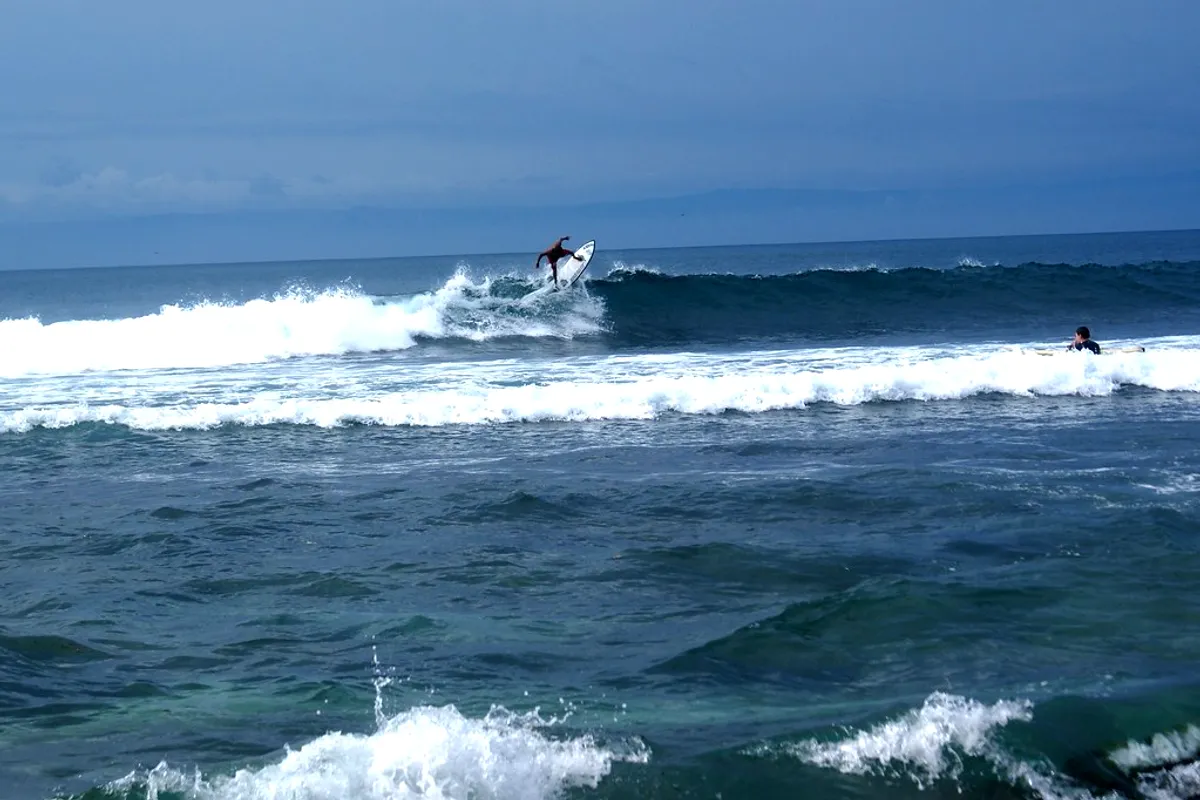
Uluwatu sits on the south-western tip of the Bukit Peninsula in Bali, at the foot of limestone cliffs below the temple of the same name. The Peak is the best-known take-off on the reef, one of several peaks listed by Surf-Forecast alongside the Bombie, Outside Corner, Racetrack and Temples. The wave is a left-hand reef and point break, and it has been a destination since the early 1970s. It is both beautiful and demanding, and the Bukit coast is not a place to improvise.
- Level
- Advanced
- Direction and bottom
- Left · Reef
- Best swell
- SW groundswell
- Best wind
- SE offshore
- Best tide
- Varies by section; check local advice
- Best months
- May, Jun, Jul, Aug, Sep, Oct
- Size
- Waist-high to double overhead; multiple sections link on bigger swells
- Hazards
- Shallow coral and limestone reef, Cave and steps access, Strong currents, Crowds, Rocks at the inside
Where The Peak sits in the lineup
Uluwatu is not one wave but a chain. The Peak is the main take-off for many surfers and links to the sections known as the Racetrack and the Inside Corner. Further out, the Bombie and Outside Corner break on bigger swells. Surf-Forecast lists The Peak as a reef and point break rated four out of ten and very consistent, and the nearby sections as similar in quality.
The reef is limestone and coral, with ledges and holes that shape the wave. Rides can be long when the sections connect, and they can be fast and hollow when the swell is large. Because the reef is shallow at the inside, wipeouts there are risky, and many surfers aim to avoid the final section when the tide is low.
Season, swell and wind
Surf-Forecast says the best swell is south-west and the best wind is south-east, and groundswells are more frequent than windswells. May to October, the dry season, is the best period, with August the most consistently clean month. The wind direction in this season keeps the faces smooth in the morning, while afternoon sea breezes can add texture.
The tide is the subject of much local discussion. Surf-Forecast says surf quality is not affected by the tide, but surfers who know the break often point out that the sections change with the water level. The water temperature is about 27 degrees Celsius, so a rash vest is typical, and the main concern is the sun. Wikipedia says Uluwatu was discovered as a surfing destination in 1972 after the 1971 surf film Morning of the Earth.
Who should not surf it
The Peak is not a beginner wave and should not be your first experience on Bali's reefs. The take-off is steep, the reef is shallow, and the lineup can be crowded. Surf-Forecast warns of rocks in the lineup. Beginners and weaker intermediates will do better on the sandy beaches of the south, such as those near Kuta, with an instructor.
The entry and exit are also part of the challenge. Many surfers reach the water through a cave and steps in the cliff, then paddle through a channel to the lineup, and the tide and swell affect how safe that is. Ask a local before you go, and do not attempt the entry on a large swell without advice. If you are uncertain, watch from the cliff, and save your session for a smaller day.
Getting there and watching
Uluwatu is in the Pecatu area of Badung regency, about 12 kilometres from Bali's Ngurah Rai airport according to Surf-Forecast, though traffic often makes the journey longer. Wikipedia says the name comes from ulu, meaning land's end, and watu, meaning rock, and that the temple sits 70 metres up on the rock at the south-west point of the peninsula. Scooters and taxis are the usual ways to get around.
The cliff-top walkways and cafés give an excellent view of the waves, and many people sit there for hours. Watch your footing on steps and loose stone, and keep your belongings secure. The temple has its own rules, including covering up and guarding against monkeys, so follow signs. Parking and entrance charges vary, so confirm locally.
Around the Bukit
Surf-Forecast lists the Bombie, The Peak, Outside Corner, Racetrack and Temples all within about a kilometre of each other. They form a coherent system, and the Uluwatu destination guide covers the wider Bukit area, other breaks and where beginners can learn.
Timing the entry and the crowd
Tide and swell affect how safe the cave and steps are, and the lineup is often busiest in the dry season. Surfers commonly go out at first light to avoid both crowds and onshore afternoon winds, and tourists fill the cliff-top cafés by mid-morning. Bring reef shoes for walking over the rock shelf, a leash that you trust and sun protection. Be aware that monkeys near the temple can snatch loose items, so keep valuables secure. Dress respectfully when visiting the temple area. If conditions are too big, there are other breaks on the Bukit that suit different levels.
The ocean off Uluwatu, by month
| J | F | M | A | M | J | J | A | S | O | N | D | |
|---|---|---|---|---|---|---|---|---|---|---|---|---|
| Swell, m | 1.7 | 1.7 | 1.5 | 1.7 | 1.9 | 2.0 | 2.1 | 2.1 | 1.9 | 1.8 | 1.5 | 1.7 |
| Period, s | 12 | 12 | 13 | 14 | 15 | 15 | 15 | 15 | 14 | 14 | 13 | 13 |
| Water, °C | 29 | 29 | 29 | 30 | 28 | 27 | 26 | 26 | 26 | 27 | 29 | 29 |
Open-ocean ERA5 medians, not wave size at the break. Sources.
Questions about Uluwatu (The Peak)
Is Uluwatu a left or a right?
A left. Surf-Forecast describes a left-hand reef and point break, with several linked sections.
When is the best time?
The dry season, from May to October, with August the most consistently clean month on Surf-Forecast's figures.
How do I get into the water?
Many surfers go through a cave and steps in the cliff. Conditions change with tide and swell, so ask a local before you try.
How far is it from the airport?
About 12 kilometres in a straight line on Surf-Forecast's figure, though road travel takes longer.
What should I do about the monkeys?
Keep valuables out of sight and zipped away, avoid carrying loose food near the temple area and do not feed or tease the animals. Monkeys at Uluwatu are known to snatch sunglasses, phones and hats. If one takes something, do not chase it; ask a staff member for help.
Check a live forecast and local advice before paddling out. Heavy waves injure and kill experienced surfers.