Desert Point (Bangko-Bangko).
Desert Point, also called Bangko-Bangko, is a left-hand reef break at the south-west tip of Lombok, Indonesia. Surf-Forecast describes it as an exposed reef break that peels left, and WannaSurf calls it a long, hollow wall that often ends in a barrel and needs a decent swell to work. It is one of the places on Lombok that surfers talk about with a mix of awe and caution: when it breaks, the ride is long and tubular, and when it does not, the trip can be a long way for very little.
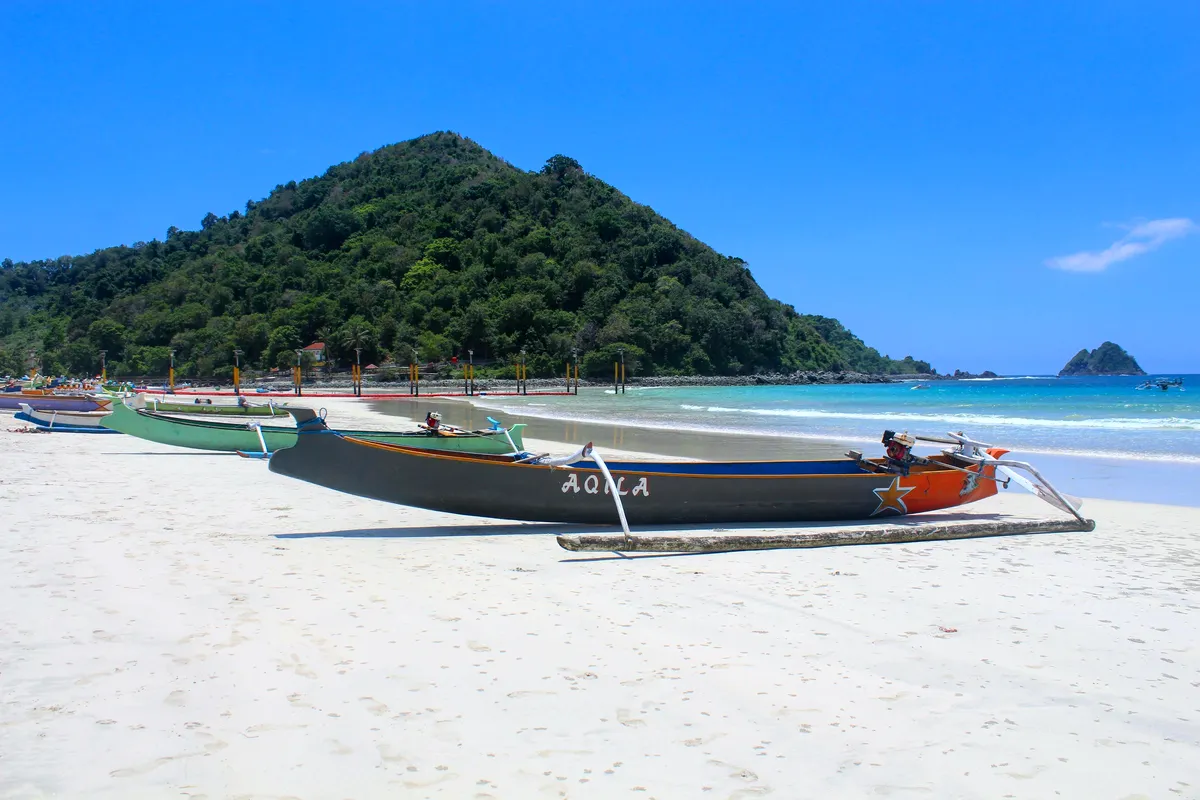 Photo: Afifahdpl · CC BY-SA 4.0 · Wikimedia Commons
- Level
- Expert
- Direction and bottom
- Left · Reef
- Best swell
- SW groundswell, mid to large
- Best wind
- ENE offshore
- Best tide
- Varies; low tide is shallow and risky
- Best months
- May, Jun, Jul, Aug, Sep
- Size
- Needs a solid swell; double overhead is common on a good day
- Hazards
- Shallow coral reef, Rips and undertow, Remote location, Sharp coral cuts, Few services nearby
A wave that needs the right swell
WannaSurf lists Desert Point as a left over a coral reef, with a typical length of 150 to 300 metres, and describes a long, hollow wall. It also describes the wave as one of the more inconsistent in the world, needing a big swell. Surf-Forecast is more moderate, rating it five out of ten and fairly consistent, with ideal swell from the south-west and offshore winds from the east-north-east.
The reef lies in a shallow coral shelf, and the wave stands up quickly before pitching into a barrel. Sections can link for a long distance on the right swell, and a skilled surfer can be tucked into the tube for several seconds. The inside is shallow and sharp, and a fall there can mean cuts and bruises.
Because the swell has to be right for the wave to link, many visitors treat Desert Point as a bonus rather than the whole purpose of a Lombok trip. Having an alternative plan, and a sense of humour about flat days, makes the experience more enjoyable.
Season and tide
May to October, the dry season, is the best period. Surf-Forecast gives May as the top month, with about 78 percent of the time clean, 21 percent blown out and 1 percent too small. Water temperature is about 29 degrees Celsius. The ideal tide is not stated, but WannaSurf advises caution during low-tide sessions, and the shallow reef becomes more dangerous as the water drops.
Surf-Forecast says that the spot is often crowded, while WannaSurf lists weekday and weekend crowds as few, so the two sources do not fully agree. That is a sign that the crowd varies greatly with the swell. When a big swell is forecast, expect a competitive lineup.
Who should not surf it
Desert Point is for experienced surfers who are comfortable in shallow, hollow tubes, who can cope with a long paddle and who are prepared for rips and undertow. Both Surf-Forecast and WannaSurf warn about rips. The remote location means that medical care is a long way off, and reef cuts can become infected quickly in tropical conditions.
Intermediate surfers who have not surfed shallow reef barrels should stay on the shore and watch, and consider easier waves around Kuta and Selong Belanak. Do not surf alone, and do not attempt the break on a big day without local knowledge. Boots can help to protect your feet on the reef, and a rash vest or light suit helps to protect your skin.
Getting there
The break lies off the Bangko-Bangko peninsula in West Lombok. Surf-Forecast lists Lombok's Selaparang airport at about 37 kilometres in a direct line and Bali's Denpasar airport at about 73 kilometres, though road travel is much longer. OpenStreetMap records the surf break beside the Jalan Raya Bangko-bangko in the Batu Putih area. Roads in this part of Lombok can be rough, and services are limited, so organise transport and accommodation in advance.
The lineup can be watched from the point, where small groups of surfers wait for sets. Bring water, food and sun protection, since there may be little shade or shop nearby. Respect local communities and any fees or rules that apply for access.
Nearby options
Surf-Forecast lists Safari Island about seven kilometres away and Belongas, Serangan Beach, Senggigi and Mawi further along. The Kuta Lombok guide covers the south coast, where there are many beginner-friendly beaches and reefs.
Making the most of a remote trip
Desert Point is far from the tourist centres of Lombok, so preparation matters more than usual. Bring food, water, reef boots, a first-aid kit and plenty of sun protection, and confirm accommodation or camping arrangements before you set out. Mobile signal and medical facilities can be limited, so carry a printed list of emergency contacts and let someone know your plans. The wave may stay flat for days, so build in spare time and other activities, such as surfing the south coast or exploring the island. Respect local rules about access and any fees collected by the community. Keep rubbish with you, because waste management is limited in remote areas.
The ocean off Kuta Lombok, by month
| J | F | M | A | M | J | J | A | S | O | N | D | |
|---|---|---|---|---|---|---|---|---|---|---|---|---|
| Swell, m | 1.5 | 1.4 | 1.4 | 1.5 | 1.6 | 1.8 | 1.9 | 1.9 | 1.7 | 1.7 | 1.4 | 1.5 |
| Period, s | 12 | 12 | 13 | 14 | 15 | 15 | 15 | 15 | 14 | 14 | 13 | 13 |
| Water, °C | 29 | 29 | 29 | 29 | 28 | 27 | 27 | 26 | 27 | 28 | 29 | 29 |
Open-ocean ERA5 medians, not wave size at the break. Sources.
Questions about Desert Point (Bangko-Bangko)
Is Desert Point a left or a right?
A left. Both Surf-Forecast and WannaSurf describe a left-hand reef break.
How consistent is it?
It depends on the source. WannaSurf describes it as one of the more inconsistent waves, while Surf-Forecast says fairly consistent.
When is the best season?
May to October, with May the strongest month on Surf-Forecast's figures.
Is it suitable for intermediates?
Generally not. It is a shallow coral barrel for experienced surfers.
What should I pack for a day at Desert Point?
Bring water, food, sun protection, reef boots, a first-aid kit and a spare leash. Services nearby are limited, and mobile signal may be patchy. Pack light but carry enough to cope with a long wait between sets or a slow journey back along the rough road.
Check a live forecast and local advice before paddling out. Heavy waves injure and kill experienced surfers.