The breaks
Recognised, publicly known surf spots around Arrifana. Suitability depends on the day's swell, wind and tide, so treat the level as a guide, not a guarantee.
| Break | Type | Best for | Notes |
|---|---|---|---|
| Arrifana beach | Beach break | Beginner–Intermediate | Sandy beach in a cliff-ringed bay, partly sheltered from northerly winds. Popular with surf schools; crowded with lessons on busy days. |
| Arrifana reef | Right-hand reef | Advanced | Right-hand reef near the harbour and Pedra da Agulha, producing longer, powerful waves on the right swell. |
| Monte Clérigo | Beach break | Intermediate | Small beach village north of Arrifana that picks up plenty of swell. |
| Amoreira | Beach break | Beginner–Intermediate | Wide beach at the Aljezur river mouth, with a lagoon behind it. |
| Odeceixe | Beach break | Beginner–Intermediate | Beautiful beach at the Seixe river mouth, on the Algarve–Alentejo border. |
A bay sheltered by cliffs
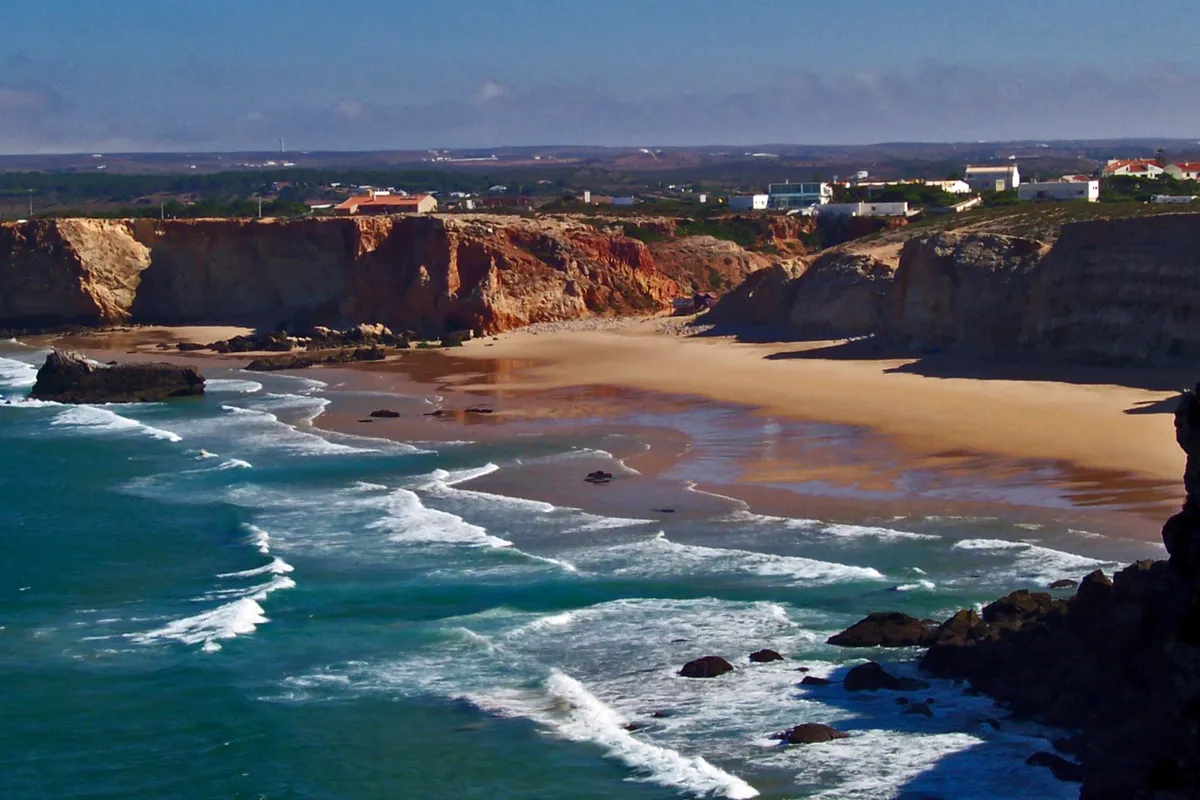
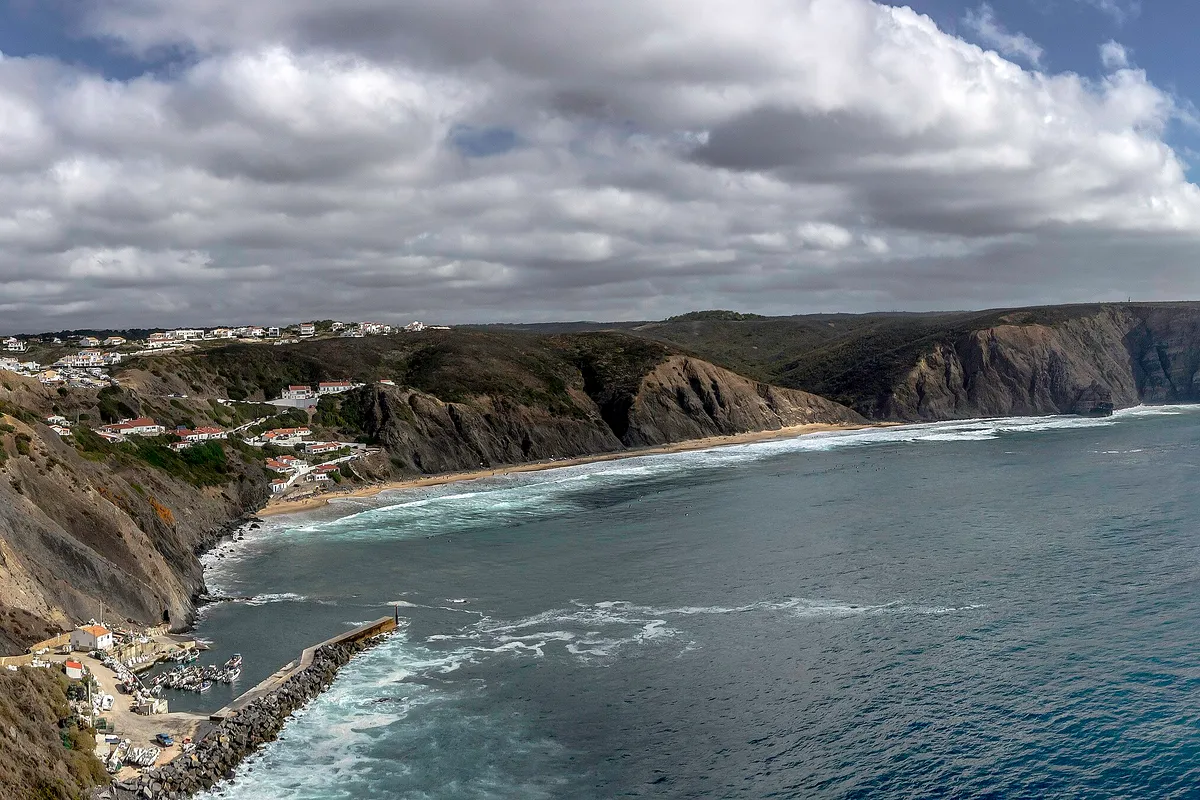
Arrifana is a small bay on the west coast of the Algarve, about ten minutes from the town of Aljezur. High cliffs surround the beach on three sides, and at the southern end, a small fishing harbour sits below a rock stack. The bay faces west and north-west, but its shape and the surrounding cliffs offer some protection from the strongest northerly winds, which makes it a useful option when other beaches are blown out.
The village of Arrifana, perched on the cliff above, has a handful of restaurants, guesthouses and surf schools, and the clifftop viewpoint near the ruins of an old fortress offers sweeping views of the bay. Arrifana lies within the Southwest Alentejo and Vicentine Coast Natural Park, which protects the coast from heavy development.
The beach break
Most of the bay is a sandy beach break that suits beginners and improvers on small to medium days. Waves are generally gentler in the middle and northern parts of the bay, and many surf schools from Aljezur, Lagos and the surrounding area bring students here. On busy days, the beach can be crowded with lessons.
On bigger swells, the beach break can become powerful, with stronger currents, and conditions are better suited to experienced surfers. A steep road and steps lead down from the village to the beach.
The reef by the harbour
At the southern end of the bay, near the harbour and the rock stack known as Pedra da Agulha, a right-hand reef break produces longer, more powerful waves on the right swell. It is one of the best waves in the area when it works, but it breaks over rock, can be crowded with experienced local surfers and is not suitable for beginners.
Watch carefully before paddling out, ask locally about tide and entry points and respect the local line-up.
Monte Clérigo, Amoreira and Odeceixe
North of Arrifana, Monte Clérigo is a small beach village with a sandy beach that picks up plenty of swell, and Amoreira, at the mouth of the Aljezur river, is a wide beach with a river lagoon behind it, popular with families and surfers. Further north, Odeceixe sits at the mouth of the Seixe river, on the border between the Algarve and the Alentejo, with a beautiful beach and calm river water for swimming.
To the south, Bordeira and Amado, near Carrapateira, are long, exposed beaches that are popular with surf schools. With a car, you can check several of these beaches in a morning.
Reading the bay on a busy day
On a good autumn morning, Arrifana can look like a postcard from the clifftop: lines of swell wrapping into the bay, the harbour boats bobbing at the southern end and dozens of surfers spread across the sand. From up there, you can see how the waves behave before committing to the steep walk down. Look for where the peaks are breaking cleanly, where the white water is drifting back out along the sides of the bay and how crowded the reef is.
Surf schools usually set up in the middle and northern parts of the beach, where waves are softer. Independent surfers who already ride green waves often find quieter peaks between the school groups and the reef. On bigger days, the currents along the cliffs strengthen, and the safest choice may be to move to a more sheltered beach or simply watch the reef from above.
Seasons and swell
Arrifana works best from roughly September to May, when North Atlantic swells are consistent. Autumn often brings the best combination of swell, mild water and lighter winds. Winter can be powerful, with the reef coming alive on bigger swells, and spring offers good waves with fewer visitors.
Summer brings smaller waves and strong northerly afternoon winds, known as the nortada. The bay's shelter helps on windy days, but mornings are usually best. Water temperatures range from the mid-teens Celsius in winter to the high teens in summer, often cooler than expected because of upwelling, so a 4/3 or 3/2 wetsuit is common.
Surf camps around Aljezur
The countryside around Aljezur has become one of Portugal's busiest surf camp areas, with converted farmhouses, glamping sites and surf hostels scattered through the hills between the coast and the town. Most camps include daily transport to whichever beach suits the conditions, choosing between Arrifana, Monte Clérigo, Amoreira, Bordeira and Amado, which is the main advantage of booking a camp here rather than staying at a single beach.
When comparing camps, ask how far the daily drive is, how many students share an instructor and whether yoga, meals and equipment are included. Outside summer, many camps offer better prices and smaller groups, and the coast is noticeably quieter.
Getting there from Faro or Lisbon
Faro airport is about an hour and a quarter away by road, and Lisbon about two and a half hours. Buses connect Aljezur with Lagos and Lisbon, but services to Arrifana itself are limited, so a car is the most practical option. Many surf camps provide transport.
The road down to the beach is steep and parking near the bottom is limited, so arrive early in summer or park in the village and walk.
Staying in Arrifana or Aljezur
Arrifana village has a few guesthouses, apartments and surf houses on the cliff, with views over the bay. Aljezur, a small town ten minutes inland, has more accommodation, restaurants and shops, as well as a ruined Moorish castle on a hill above the old town. Many surf camps are based in the countryside around Aljezur.
Accommodation books up in summer, but the area is quiet and good value outside the peak months.
The Rota Vicentina and rest days
The Rota Vicentina, a network of walking trails along the coast and through the countryside, passes near Arrifana, including the Fishermen's Trail, which follows the clifftops. Aljezur's castle offers views over the valley, and the town is known for its sweet potatoes, celebrated at an annual festival. Further south, Sagres and Cape St Vincent are about forty-five minutes away, and the beaches and town of Lagos about forty minutes.
Arrifana surf season month by month
A broad planning picture, not a forecast. Swell, wind and water temperature vary from year to year.
| January | Winter swells; the reef can come alive. Cool water (a 4/3) and quiet village. |
|---|---|
| February | Consistent and powerful, with changeable weather. |
| March | Still consistent swells, with spring flowers on the cliffs. |
| April | Good swells and milder weather. A pleasant shoulder month. |
| May | Smaller, friendlier waves and warm days. Good for learners. |
| June | Summer begins, with smaller surf and northerly afternoon winds. |
| July | Busy summer beach with small waves; surf in the morning. |
| August | Peak season, crowded beach and lessons. Upwelling can keep the water cool. |
| September | The first autumn swells arrive and crowds thin. |
| October | Often the best month, with consistent swells and lighter winds. |
| November | Bigger swells and more rain. The reef starts to work regularly. |
| December | Winter swells, short days and a very quiet village. The reef works on bigger swells for experienced surfers. |
Learning to surf in Arrifana
Arrifana's beach break is one of the most popular learning spots on the Costa Vicentina. Surf schools from Aljezur and further afield teach here, often choosing Arrifana when other beaches are too windy because of its partial shelter. Lessons usually include wetsuits and soft-top boards.
Spring, early summer and autumn often offer the best balance of manageable waves and fewer crowds. Ask schools about group size, instructor qualifications and how they choose between Arrifana and other nearby beaches. The reef by the harbour is for experienced surfers only.
Comparing options across the country? Read our guide to surfing in Portugal.
Seasonal notes on this page describe typical patterns, not the conditions on a given day. Use the local forecast, lifeguard advice and a qualified instructor for water-safety decisions, and get a written breakdown of what any surf package includes before paying.
Arrifana surf trip questions
Is Arrifana good for beginners?
Yes. The sandy beach break in the bay is popular with surf schools. The reef by the harbour is for experienced surfers only.
When is the best time to surf Arrifana?
September to May brings the most consistent swells, with autumn often best. Summer is smaller and windier.
How far is Arrifana from Lagos?
About forty minutes by car. Faro airport is about an hour and a quarter away.
What wetsuit do I need in Arrifana?
A 4/3 for much of the year and a 3/2 in summer and early autumn. Upwelling can make the water cooler than expected.
Why is Arrifana good on windy days?
The surrounding cliffs and the shape of the bay offer some shelter from northerly winds, which often blow out more exposed beaches.
Where should I stay near Arrifana?
Arrifana village has a few guesthouses on the cliff, while Aljezur, ten minutes inland, has more accommodation, shops and restaurants.
Is parking easy at Arrifana?
Parking near the bottom of the steep road to the beach is limited and fills quickly in summer. Many visitors park in the village and walk down, or arrive early in the morning.
Sources & editorial notes
Destination context checked against the sources below. Base-selection and itinerary suggestions are Book & Surf editorial recommendations. Seasonal windows are broad planning suggestions, not measured forecasts or guarantees.
- Wikipedia: Aljezur ↗
- Wikipedia: Southwest Alentejo and Vicentine Coast Natural Park ↗
- Rota Vicentina: walking trails ↗
We do not claim to have personally surfed every break. Read our editorial standards.