The breaks
Recognised, publicly known surf spots around Batu Karas. Suitability depends on the day's swell, wind and tide, so treat the level as a guide, not a guarantee.
| Break | Type | Best for | Notes |
|---|---|---|---|
| BK Point | Right-hand point | Beginner–Intermediate | Slow, forgiving and long on a good day, suited to longboards and mid-lengths. Increasingly crowded, so pick your waves and stay clear of the rocks. |
| BK Reef | Reef break | Intermediate–Advanced | Handles bigger swells than the point. Sources disagree on its difficulty, so judge it by size and tide and ask locally first. |
| Pangandaran beach breaks | Beach break | Intermediate | Exposed sand-bottom breaks near the main town. They can be punchy with rips, so check conditions and surf with company. |
| Batu Karas bay | Beach/point inside | Beginner | The inside of the bay is used for lessons when the point is small. Watch for other surfers and for current near the rocks. |
Batu Karas surf climate, measured
Ten years of ocean model data for the open water off this coast: what the swell usually looks like before it reaches the beach. Shelter, sandbars and reefs change what you actually surf, so read this next to the month notes below.
| Month | Swell | Period | From | Wind | Water | Wetsuit | Days over 2.5 m |
|---|---|---|---|---|---|---|---|
| Jan | 1.7 m | 12 s | SW | 23 km/h W | 29°C | Boardshorts | 3% |
| Feb | 1.7 m | 12 s | SW | 19 km/h W | 29°C | Boardshorts | 3% |
| Mar | 1.5 m | 13 s | SW | 15 km/h W | 29°C | Boardshorts | 0% |
| Apr | 1.7 m | 14 s | S | 15 km/h E | 29°C | Boardshorts | 3% |
| May | 1.9 m | 14 s | S | 22 km/h E | 29°C | Boardshorts | 5% |
| Jun | 2.0 m | 14 s | S | 23 km/h SE | 28°C | Boardshorts | 13% |
| Jul | 2.1 m | 15 s | S | 25 km/h SE | 27°C | Boardshorts | 18% |
| Aug | 2.1 m | 15 s | S | 24 km/h SE | 25°C | Boardshorts | 23% |
| Sep | 2.0 m | 14 s | S | 22 km/h SE | 26°C | Boardshorts | 15% |
| Oct | 1.9 m | 14 s | S | 19 km/h SE | 27°C | Boardshorts | 8% |
| Nov | 1.6 m | 13 s | S | 15 km/h SE | 28°C | Boardshorts | 3% |
| Dec | 1.7 m | 13 s | S | 19 km/h W | 29°C | Boardshorts | 0% |
Median values from ERA5 at a sea point near Batu Karas (8°S, 108.5°E), sampled 4 days a month at 12:00 UTC, 2015-2024. Highlighted months are our suggested planning window. Not a forecast or a safety assessment. How we use this data.
Book a surf trip to Batu Karas
Everything we can link you to for this trip, grouped by what you need. Before you pay a camp or school, read who holds your money, and check that your insurance covers surfing.
Where to stay
Search near the breaks. Filter for surf hostels, apartments or hotels once you can see the map.
Surf lessons and activities
Listings change by season, so check what the operator includes and who coaches.
Flights
Add your dates and check the board fee on every leg before you pay.
Car hire
Ask about roof racks and whether the insurance covers boards on the roof.
Airport transfer
Tell the driver you have a board and its length when you book.
Scooter or motorbike
Check your licence and your insurance cover before you ride.
Mobile data
Download a forecast app and offline maps before you land.
Flight delay claims
If a delay eats your first surf day, check whether you can claim.
Luggage storage
Useful between check-out and a late flight. Check the size limit before dropping a board.
Links marked as partner links may earn us commission at no cost to you; the rest earn us nothing. We have not checked live availability or price, and the seller's terms apply. How we handle this.
A fishing village on Java's southern coast
Batu Karas lies on the south coast of West Java in the Pangandaran area, a stretch of coast where the Indian Ocean meets black-sand beaches and headlands. Pangandaran itself is a town on a narrow isthmus, with a nature reserve on the peninsula and sea on both sides. The area has a tropical rainforest climate, with heavy rain across the year and especially in the wet months.
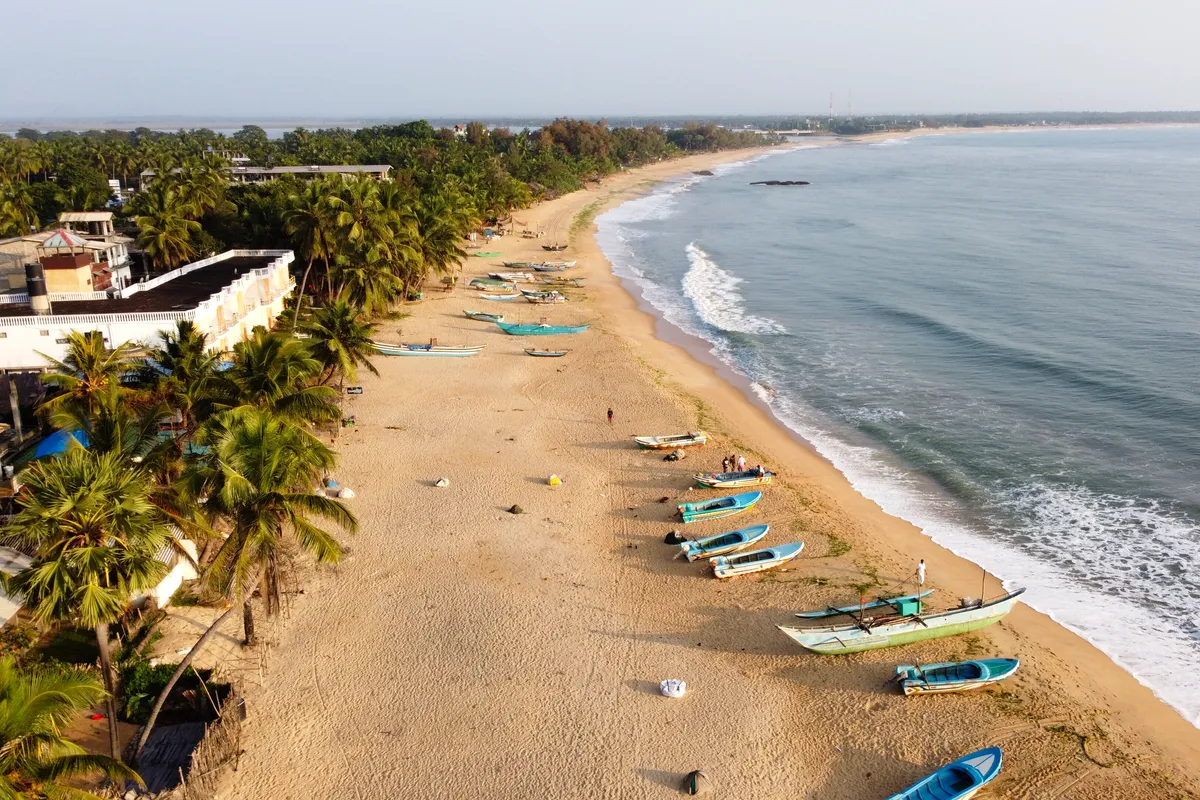
The surf village is a few kilometres from the main tourist town, and it feels quieter. Accommodation runs along a small bay, with guesthouses, cafés and surf shops in a compact area. Fishing boats still launch from the beach, and the pace is slower than on Bali's southern peninsula.
It is worth remembering that the coast is tsunami-prone. A magnitude 7.7 undersea earthquake on 17 July 2006 sent a tsunami into the Pangandaran area, killing more than 300 people in the town. Ask your accommodation about evacuation routes when you arrive; it is a sensible habit on any Indian Ocean coast.
BK Point and why beginners come here
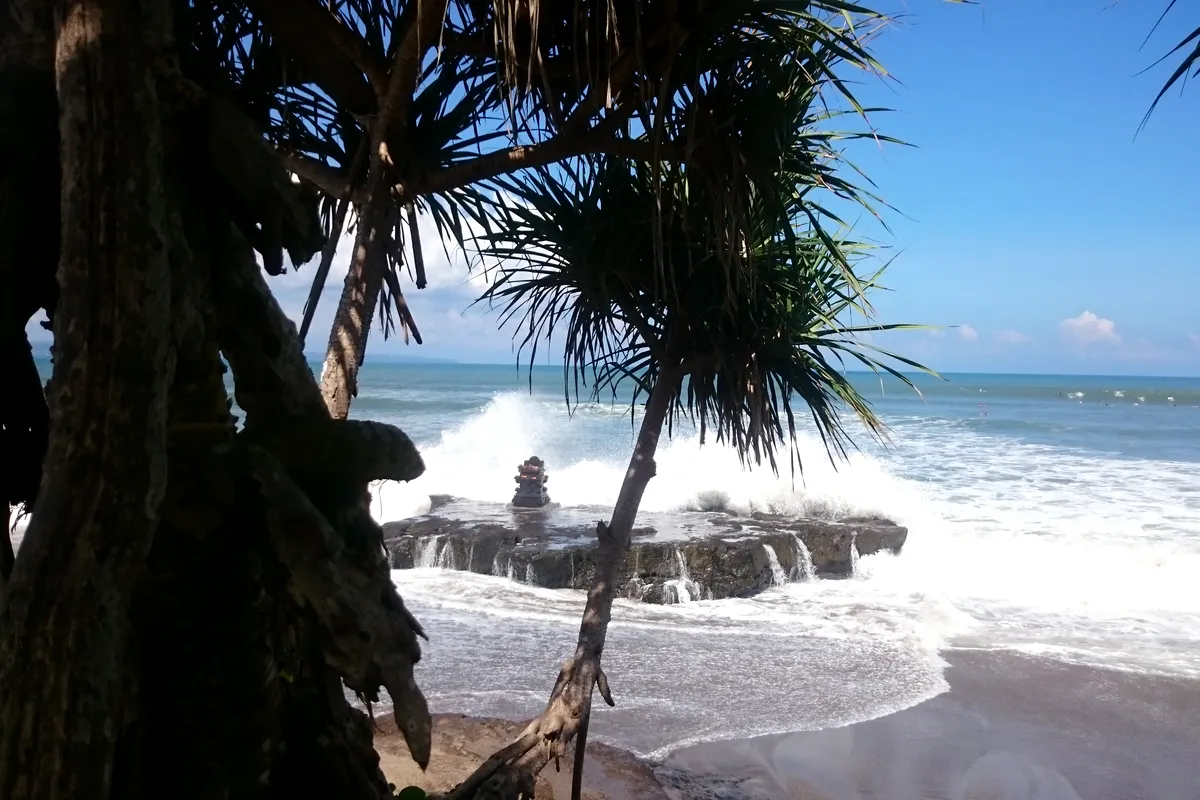
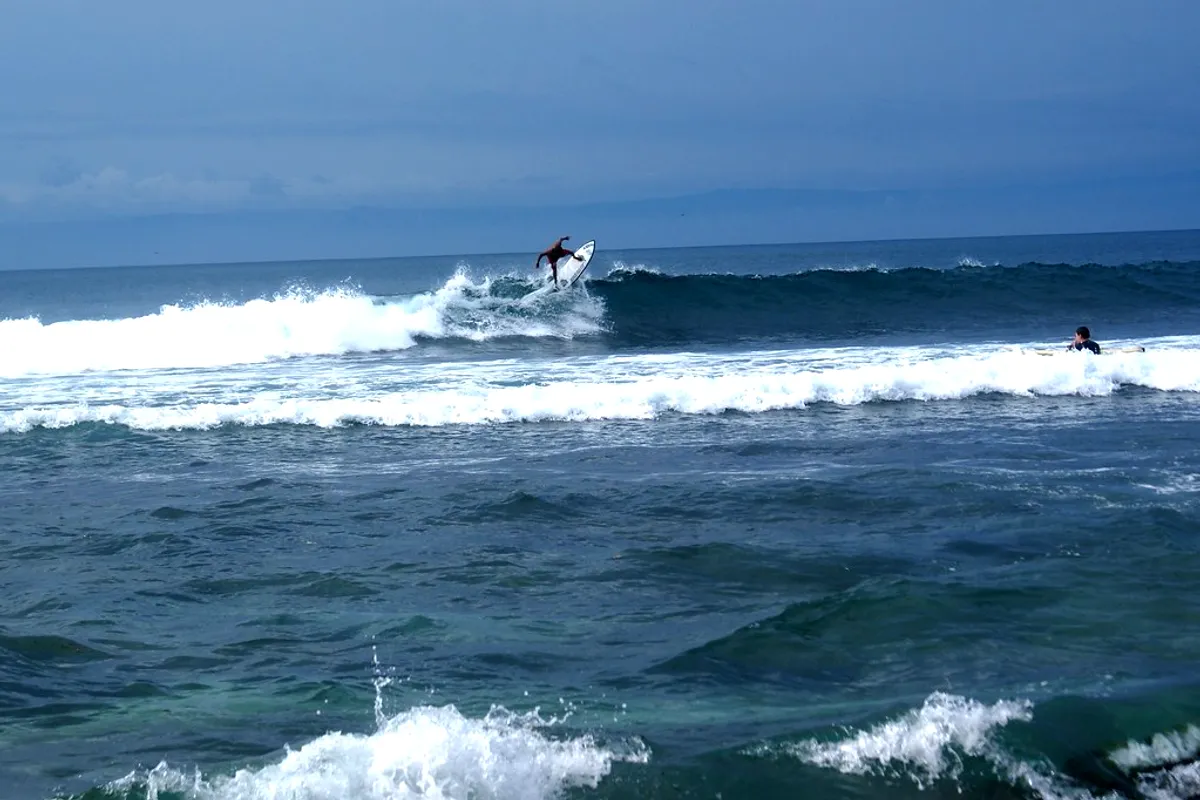
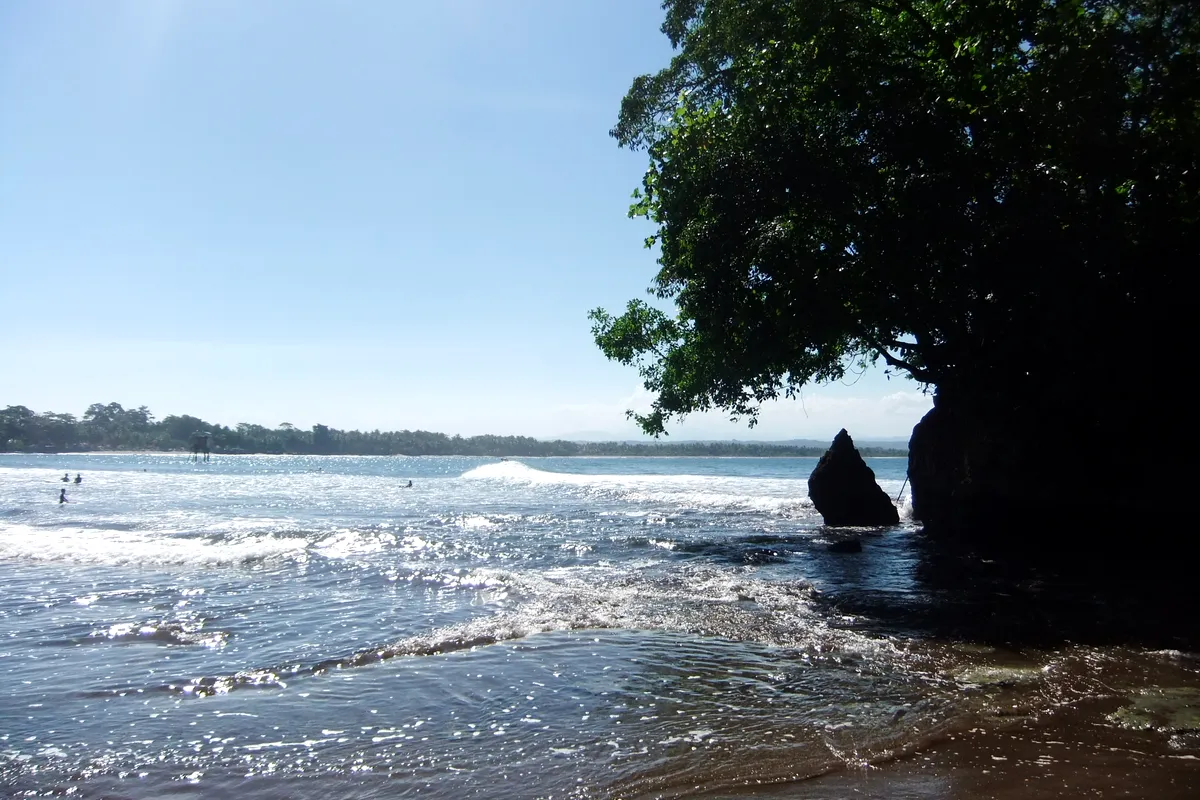
The main wave is a right-hand point break, known locally as BK Point, that peels along a rocky shoreline into a sandy bay. Surf guides describe it as slow and forgiving, a wave that suits longboards and mid-length boards and offers long rides for newer surfers. It is one of the most commonly recommended learning waves in Java.
That popularity has a cost. More recent writing notes that the point is more crowded than it used to be, which means that beginners, longboarders and local surfers all share the same wave. Pick your moments, leave room, and do not expect an empty line-up at peak times.
On bigger swells the wave becomes less forgiving, and it is possible to get pushed towards rocks at the inside. Beginners should surf with a lesson or at least with someone who knows how the current moves on the day.
The reef and the other breaks
A reef break nearby, usually called BK Reef, handles larger swells and is surfed by more experienced people. Sources disagree on how hard it is: one site rates it as intermediate, while another calls it a favourite for stronger surfers, so judge it by the size and tide on the day rather than the label.
There are also beach breaks along the nearby coast and around Pangandaran itself. These tend to be more exposed and can be punchy, with rip currents, so they are best left to people who are used to open beach breaks. Check conditions with a local before heading out.
On a flat day, you have other options. The area is known for a nature reserve on the Pangandaran peninsula, and a number of local operators run boat trips and river tours, though conditions and safety standards vary. Ask your accommodation for reputable options rather than booking from the beach.
Dry season, wet season and what to expect
Local and travel sources agree that the dry months bring the most reliable conditions for learners, although the exact range varies. Surf Atlas points to May to August, with some good days in September; Rapture Camps describes April to September as the dry season and best for beginners and intermediates. Treat April to September as the main window and May to August as its core.
In the wet season, from roughly October to March, conditions get messier and less predictable. Rain falls often, and the average annual rainfall for the Pangandaran area is in excess of 3,000 millimetres. You can still surf, but the reef may become the better option than the point on certain days, and the weather can disrupt travel.
Water temperatures are warm throughout the year, so a rash vest is usually enough. Sun protection matters more than a wetsuit.
Getting to Batu Karas
The nearest airport is Cijulang Nusawiru, which serves the area with domestic flights; services have varied over time, so check current schedules. Many visitors travel overland instead. From Bandung, the most common approach is by road, taking several hours, and shared minibuses and private transfers both run to Pangandaran and Batu Karas. From Jakarta the journey is longer still, and from Yogyakarta it is also a long day.
Once you reach Pangandaran, the final stretch to Batu Karas is a short road transfer by shared vehicle, taxi or scooter. Your accommodation can usually advise on the best way to make the last leg.
Allow extra time for the journey, especially in the wet season, when landslides and flooded roads can slow traffic. If you are bringing a board, check bus and airline policies in advance.
Staying in Batu Karas and getting around
Batu Karas is walkable. Guesthouses, homestays and small surf houses sit within a few minutes of the point, and cafés serve a mix of Indonesian dishes and surf-town staples. Prices are generally lower than in Bali, and the village suits budget travellers well.
Board rental and surf lessons are available in the village, and many places combine accommodation with lessons. Compare what is included, such as equipment, instruction time and group size, rather than choosing on price alone.
If you want to explore, a scooter is the usual way to get around. The coast road is hilly and there can be heavy traffic near Pangandaran at weekends and Indonesian holidays. Wear a helmet and avoid riding after dark.
Safety, etiquette and the rocks
The point is gentle compared with many Indonesian waves, but it is not risk-free. Rocks line the inside, especially at low tide, and a lost board can drift into other surfers. Learn to fall away from your board, keep your leash in good condition and avoid surfing too close to the rocks.
Crowds are the most common problem. Longboarders get the most waves because they catch them early; shorter boards need to be patient and sit deeper. Beginners should stay out of the main take-off zone unless a coach tells them otherwise.
Share the water kindly. Local surfers and instructors earn their living from the wave, and the village is small, so keep your noise down, dispose of rubbish properly and pay fairly for lessons and rentals.
Batu Karas surf season month by month
A broad planning picture, not a forecast. Swell, wind and water temperature vary from year to year.
| January | Peak of the wet season, with heavy rain and messy conditions. Some small days at the point are possible but plans can change quickly. |
|---|---|
| February | Still wet and unpredictable. Fewer visitors and cheap rooms, but surf conditions are often poor and roads may be affected. |
| March | Rain begins to ease. Swell can be inconsistent, and lessons depend on the day's conditions. |
| April | The start of the dry window in many guides. Swell is more regular and the point begins to work for learners. |
| May | A strong month for beginners and intermediates, with drier weather and regular, manageable waves. |
| June | Core dry season. Expect the best learning conditions and more people in the water, especially at weekends. |
| July | Peak visitor season in Indonesia. The point can be crowded, so go early and be prepared to share waves. |
| August | Similar to July, often with stronger swell. Larger days make the reef the better choice for confident surfers. |
| September | Some guides call this a good month too, with decent swell and thinner crowds. Weather starts to become less settled late in the month. |
| October | The transition to the wet season. Waves can still be good on some days, but rain returns and forecasts become harder to trust. |
| November | Wet season. Surf is often messy and the weather can disrupt lessons and travel. |
| December | Wet, quiet and unpredictable, apart from Indonesian holiday weekends. Check forecasts closely before committing to a trip. |
Learning to surf in Batu Karas
Batu Karas is one of the better places in Java to learn. The point is slow, the water is warm and the village has a concentration of surf shops and instructors. Lessons usually begin on the inside of the bay or at the point, depending on the day's tide and swell.
Choose a school that gives you enough water time and keeps groups small. Ask who teaches, how many students share an instructor and what the board and safety arrangements are. Longboards and soft-top boards are the sensible choice for learning; a shortboard makes a slow wave harder, not easier.
A week is enough for most people to progress from white water to green waves, particularly in the dry season. After that, move on to the line-up when the swell is small and keep clear of the busy take-off area.
Comparing options across the country? Read our guide to surfing in Indonesia.
Seasonal notes on this page describe typical patterns, not the conditions on a given day. Use the local forecast, lifeguard advice and a qualified instructor for water-safety decisions, and get a written breakdown of what any surf package includes before paying.
Batu Karas surf trip questions
When is the best time to surf in Batu Karas?
Sources generally place the best conditions between April and September, with May to August as the core. The wet season from October to March is messier, with more rain and less reliable surf, though small days can still work.
Is Batu Karas good for beginners?
Yes. BK Point is a slow, forgiving right-hand point that suits longboards and mid-length boards, and the village has several surf schools. It is increasingly crowded, so learners should be mindful of other surfers and the rocks.
How do you get to Batu Karas?
Most people come overland from Bandung, Jakarta or Yogyakarta to Pangandaran, then take a short transfer to Batu Karas. Cijulang airport has some domestic services, though schedules vary. Allow a long day of travel and check the current options.
How big does Batu Karas get?
The point is usually mellow, with larger swells making it less forgiving and pushing surfers toward the rocks. The reef handles bigger days. As always, check conditions locally and do not go out beyond your level.
Is Batu Karas safe in terms of tsunamis?
The Pangandaran coast was hit by a tsunami after a magnitude 7.7 earthquake in July 2006. Ask your accommodation about evacuation routes and the local warning plan when you arrive, as you would anywhere on Java's south coast.
Sources & editorial notes
Destination context checked against the sources below. Base-selection and itinerary suggestions are Book & Surf editorial recommendations. Seasonal windows are broad planning suggestions, not measured forecasts or guarantees.
- Wikipedia: Pangandaran ↗
- Surf Atlas: Batu Karas ↗
- Voice of Indonesia (RRI): Batu Karas delivers long, mellow rides ↗
- Surf Indonesia: Java surf spots ↗
We do not claim to have personally surfed every break. Read our editorial standards.