The breaks
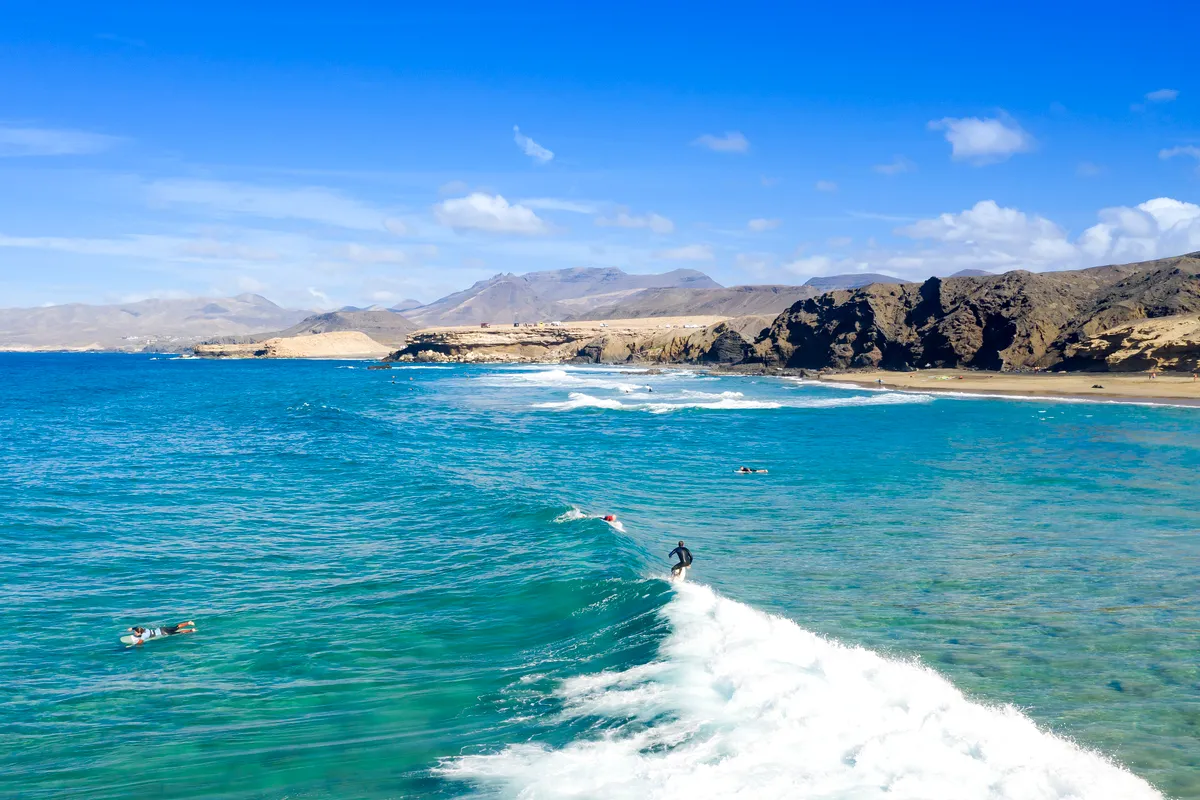
Recognised, publicly known surf spots around Gran Canaria. Suitability depends on the day's swell, wind and tide, so treat the level as a guide, not a guarantee.
| Break | Type | Best for | Notes |
|---|---|---|---|
| El Confital | Right-hand reef | Advanced | A well-known reef wave at the north of Las Palmas that has hosted international events. Rocks, a tight take-off and a local line-up make it unsuitable for learners. |
| Las Canteras | Beach break | Beginner–Intermediate | The city beach, protected by an offshore reef. The southern end near La Cícer is where novices learn, while experienced surfers use the outer break. |
| El Lloret | Reef break | Intermediate–Advanced | Round the corner from the southern end of Las Canteras. Needs a clear swell direction and careful tide timing; rocks nearby. |
| Bocabarranco | Reef and beach | Intermediate | In Gáldar on the north-west coast. Sources disagree about its status, but one guide lists it as a less crowded alternative to the capital. |
| Playa del Inglés | Beach break | Beginner | A south coast resort beach where schools run lessons on small days. Surf is inconsistent, and dunes and strong sun are as much of the experience as the waves. |
Gran Canaria surf climate, measured
Ten years of ocean model data for the open water off this coast: what the swell usually looks like before it reaches the beach. Shelter, sandbars and reefs change what you actually surf, so read this next to the month notes below.
| Month | Swell | Period | From | Wind | Water | Wetsuit | Days over 2.5 m |
|---|---|---|---|---|---|---|---|
| Jan | 1.7 m | 12 s | N | 20 km/h NE | 19°C | 2 mm shorty or spring suit | 10% |
| Feb | 1.8 m | 13 s | N | 20 km/h NE | 19°C | 2 mm shorty or spring suit | 15% |
| Mar | 2.0 m | 12 s | N | 22 km/h NE | 18°C | 3/2 mm full suit | 18% |
| Apr | 1.5 m | 12 s | N | 19 km/h NE | 19°C | 2 mm shorty or spring suit | 5% |
| May | 1.5 m | 10 s | N | 23 km/h N | 20°C | 2 mm shorty or spring suit | 3% |
| Jun | 1.3 m | 8 s | N | 21 km/h N | 21°C | 2 mm shorty or spring suit | 0% |
| Jul | 1.5 m | 8 s | N | 24 km/h N | 21°C | 2 mm shorty or spring suit | 0% |
| Aug | 1.4 m | 8 s | N | 23 km/h NE | 22°C | Rash vest or 1 mm top | 0% |
| Sep | 1.4 m | 8 s | N | 22 km/h NE | 23°C | Rash vest or 1 mm top | 0% |
| Oct | 1.4 m | 12 s | N | 16 km/h NE | 23°C | Rash vest or 1 mm top | 3% |
| Nov | 1.5 m | 12 s | N | 19 km/h NE | 22°C | Rash vest or 1 mm top | 10% |
| Dec | 1.7 m | 13 s | N | 15 km/h NE | 21°C | 2 mm shorty or spring suit | 13% |
Median values from ERA5 at a sea point near Gran Canaria (28.25°N, 15.75°W), sampled 4 days a month at 12:00 UTC, 2015-2024. Highlighted months are our suggested planning window. Not a forecast or a safety assessment. How we use this data.
Book a surf trip to Gran Canaria
Everything we can link you to for this trip, grouped by what you need. Before you pay a camp or school, read who holds your money, and check that your insurance covers surfing.
Where to stay
Search near the breaks. Filter for surf hostels, apartments or hotels once you can see the map.
Surf lessons and activities
Listings change by season, so check what the operator includes and who coaches.
Flights
Add your dates and check the board fee on every leg before you pay.
Car hire
Ask about roof racks and whether the insurance covers boards on the roof.
Airport transfer
Tell the driver you have a board and its length when you book.
Mobile data
Download a forecast app and offline maps before you land.
Flight delay claims
If a delay eats your first surf day, check whether you can claim.
Luggage storage
Useful between check-out and a late flight. Check the size limit before dropping a board.
Links marked as partner links may earn us commission at no cost to you; the rest earn us nothing. We have not checked live availability or price, and the seller's terms apply. How we handle this.
Cheapest months to fly to Gran Canaria
Lowest return fare to LPA that Aviasales users found recently, in US dollars. Treat these as a guide to which months are cheaper, not as prices you can book today.
| From | Nov 26 | Dec 26 | Jan 27 | Feb 27 | Mar 27 |
|---|---|---|---|---|---|
| London | $66 | $50 | – | – | – |
| New York | $951 | – | – | – | $747 |
| Frankfurt | $163 | $177 | $158 | $213 | $187 |
Prices seen by 1 November 2026. Travelpayouts Data API. Board fees are extra on most airlines: see our surfboard baggage guide.
Las Palmas, a city with a surf break at its door
Gran Canaria covers about 1,560 square kilometres and is roughly 50 kilometres across, with a high interior that rises to nearly 2,000 metres. The island has a hot, dry climate with warm temperatures all year, mild winters and almost no rain in the summer months. The capital, Las Palmas de Gran Canaria, sits on the north-east corner and is the surf hub.
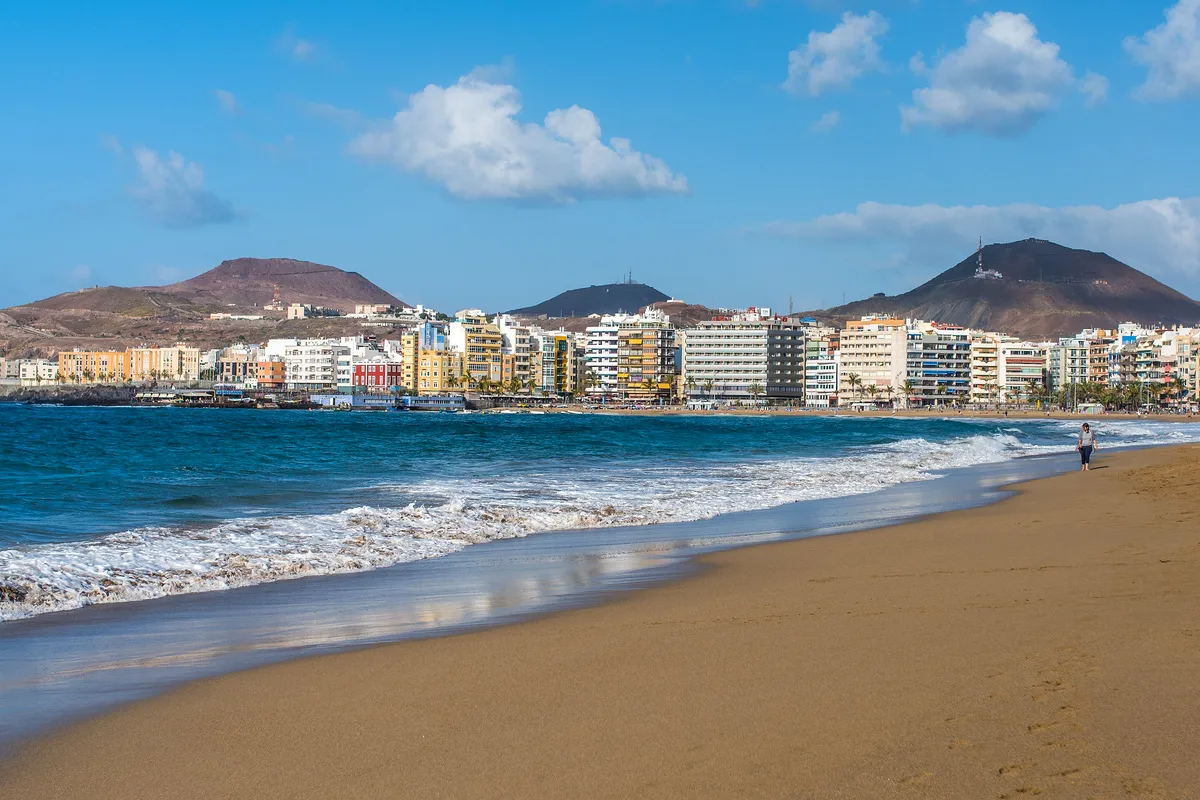
The city beach, Las Canteras, is protected by an offshore reef and is a protected area popular with divers. That reef is a strength for swimmers and learners, because it softens waves in most of the bay, but it also means the best surf is at the edges. Tourists share the sand with surfers, so the beach is always full of life. There are few places in Europe where you can finish a surf, take a shower, walk to a cafe on a promenade and be in a restaurant street within minutes.
El Confital, the island's marquee wave
A short distance from Las Canteras, at the northern end of the city, El Confital is regarded by many guides as one of Europe's best waves. It is a right-hander breaking over a mixture of reef and sand, and it has hosted international competitions. It is not a beginner wave, and the combination of rocks, a tight take-off zone and a locals' line-up demands respect.
Winter swell from the north and north-west is what powers it. On large swells it can be very powerful, and the walk to the water involves rocky ground. If the waves look daunting, they probably are. There are other spots nearby, including the outer reef at the southern end of Las Canteras, which is sometimes known as La Cícer, and the corner at El Lloret, but these are also for those who know what they are doing.
The windy south and Pozo Izquierdo
Gran Canaria's south and east coasts are better known for wind than for waves. Pozo Izquierdo, in Santa Lucía, is one of Spain's best-known windsurfing and kitesurfing spots and hosts international windsurf competitions because of its dependable wind. For a traditional surfer, it is mostly a spectator destination.
The resort area of Maspalomas and Playa del Inglés, with its dunes and long beaches, attracts holidaymakers rather than surfers, though schools there offer lessons. Descriptions of the quality of the waves vary, and some guides note that demand for lessons comes from the resort crowd rather than the strength of the surf. It is possible to learn there on a small day, but do not make the south your priority if your main goal is to surf well.
The north-west coast and quieter alternatives
Away from Las Palmas, the north and west of the island have more varied waves. Gáldar, on the north-west coast, has spots such as Bocabarranco and El Frontón, though sources disagree on which is the main wave there. El Frontón is associated with a bodyboard competition.
Telde, on the east coast, is known for surf schools in the Salinetas area, which gives another set of options for learners. These areas offer more room and fewer people, but they also have fewer facilities. Check the swell direction, because exposure varies a lot between the island's sides, and drive carefully on the winding roads around the coast.
Where to stay and how to move around
Gran Canaria Airport is the island's only commercial airport and one of the busiest in Spain, on the east coast between Las Palmas and the south. It is only a short drive to Las Palmas, and the south is further along the motorway. Regular buses link the capital to the airport and to the beaches along the north-east.
Staying near Las Canteras is easiest for surfers: you can walk to the waves, rent boards, and take lessons without a car. Staying in the south suits sun and sand, but you will need a car or a long bus ride to reach the best surf. Many visitors rent a car for a day or two to explore the island's interior and the north-west coast.
Winter sun and a changeable swell
Daytime highs average around 20 degrees Celsius in winter and 26 in summer, so a surf trip from northern Europe is as much about warmth as waves. The best swell reaches the north coast from October to March, when North Atlantic storms send long-period groundswell south. In summer, trade winds blow along the north-east coast and the waves are smaller, which suits learners.
The sea is cooler than the air suggests, particularly in winter. A 3/2 is usually enough for most visitors, with a 4/3 for early mornings in January and February. Take reef boots if you plan on stepping onto rocky entries.
Combining surf with the rest of the island
The island's interior is mountainous, and a day trip to the central peaks gives a break from the sea. The resort area at Maspalomas has a dune system and a nineteenth-century lighthouse that is easy to include in a day.
If you travel with a family or partner who does not surf, the beaches around Las Palmas and the south offer swimming and sunbathing, while the city has museums, markets and a lively evening scene. This variety is one of the island's strengths, as it makes it easy to plan a trip that suits all ages.
Gran Canaria surf season month by month
A broad planning picture, not a forecast. Swell, wind and water temperature vary from year to year.
| January | Peak winter swell on the north coast, with mild air temperatures. El Confital can be powerful, and Las Canteras offers smaller alternatives. |
|---|---|
| February | Consistent swell and cool-ish water. A good month for experienced surfers, with the island's warm air making it comfortable between sessions. |
| March | Still regular swell, with the days getting longer. Trade winds begin to strengthen, so mornings tend to be best. |
| April | Swell gets smaller and wind patterns change. A pleasant shoulder month for intermediates and learners, with fewer tourists. |
| May | Small waves and warm days. Las Canteras is usually friendly for beginners, with consistent but modest surf. |
| June | Summer pattern of small waves and trade wind. Lessons run daily, and the beaches around Las Palmas are busy. |
| July | Dry and sunny, with wind-driven chop. Surf is mostly small, so it suits beginners and wind sports more than serious surfing. |
| August | Peak tourist season. Small surf at Las Canteras and strong wind at Pozo Izquierdo, which is the better stop for windsurfers. |
| September | The sea is at its warmest and the first long-period swells begin to appear. A quiet time for a mixed trip. |
| October | Autumn swells begin in earnest. El Confital starts to work on good days, with warm air and fewer visitors than winter. |
| November | Regular groundswell and pleasant weather. A popular month for surfers escaping northern Europe's early winter. |
| December | Big swell on the north side, with the Christmas period busy in the city. Plan lessons in advance and check conditions daily. |
Learning to surf in Las Palmas
Las Canteras is the natural classroom. The reef offshore softens many waves, and the southern end of the beach is used by schools for beginners. Lessons are available through most of the year, and the beach has easy access to showers, cafés and public transport.
Some schools also operate on the east coast, in the Telde area, and on the southern resort beaches on calm days. Ask about class size, whether a rescue plan is in place and how the school chooses between beaches.
When you feel ready to step up, do it with coaching rather than heading straight for El Confital. A coach can help you read reef waves on smaller days and explain how tide and swell direction change the break.
Comparing options across the country? Read our guide to surfing in Spain.
Seasonal notes on this page describe typical patterns, not the conditions on a given day. Use the local forecast, lifeguard advice and a qualified instructor for water-safety decisions, and get a written breakdown of what any surf package includes before paying.
Gran Canaria surf trip questions
Where can beginners surf in Gran Canaria?
Las Canteras in Las Palmas is the most convenient, with schools and rentals. Telde and some southern resort beaches also run lessons on suitable days.
When is the best time to surf in Gran Canaria?
October to March brings the strongest swell to the north coast. Summer is smaller and windier, which suits beginners and wind sports.
Is El Confital suitable for intermediates?
Not generally. It is a reef wave with rocks, a tight take-off and a local line-up. Intermediate surfers should wait for small days and watch first, or look for easier waves elsewhere.
Is Gran Canaria good for windsurfing?
Yes. Pozo Izquierdo is among Spain's best-known windsurfing and kitesurfing spots, thanks to reliable wind on the east coast.
Do I need a car on Gran Canaria?
Not if you stay near Las Canteras. A car helps for the north-west coast, the interior and the south, where the best surf and scenery are more spread out.
Sources & editorial notes
Destination context checked against the sources below. Base-selection and itinerary suggestions are Book & Surf editorial recommendations. Seasonal windows are broad planning suggestions, not measured forecasts or guarantees.
- Gran Canaria Tourism: surfing and windsurfing spots ↗
- The Surf Atlas: Gran Canaria ↗
- Wikipedia: Gran Canaria ↗
We do not claim to have personally surfed every break. Read our editorial standards.