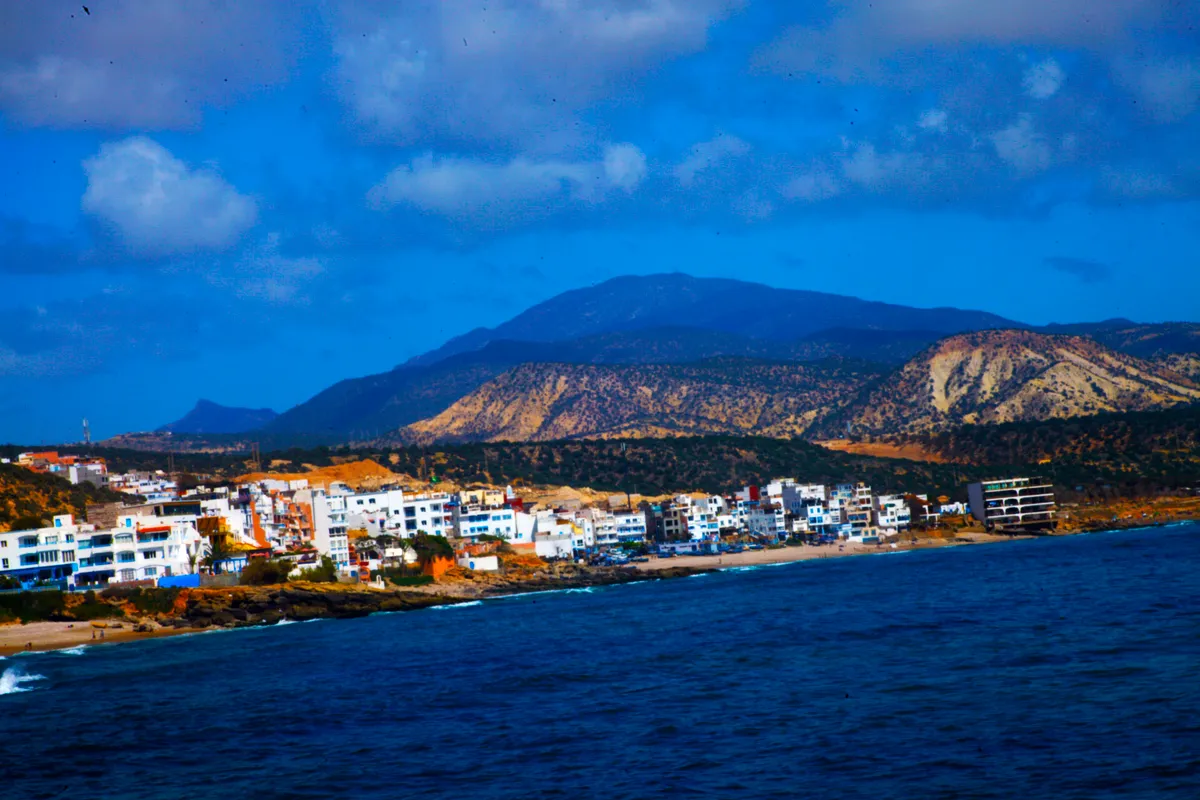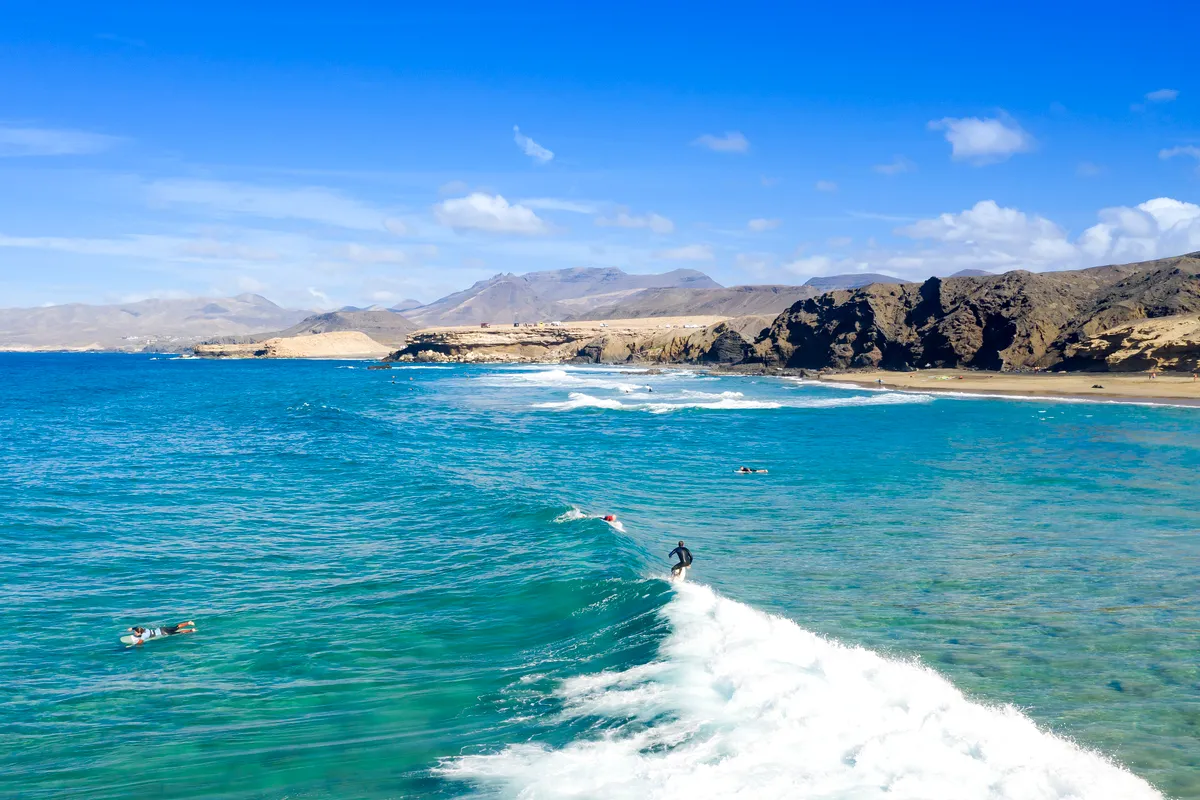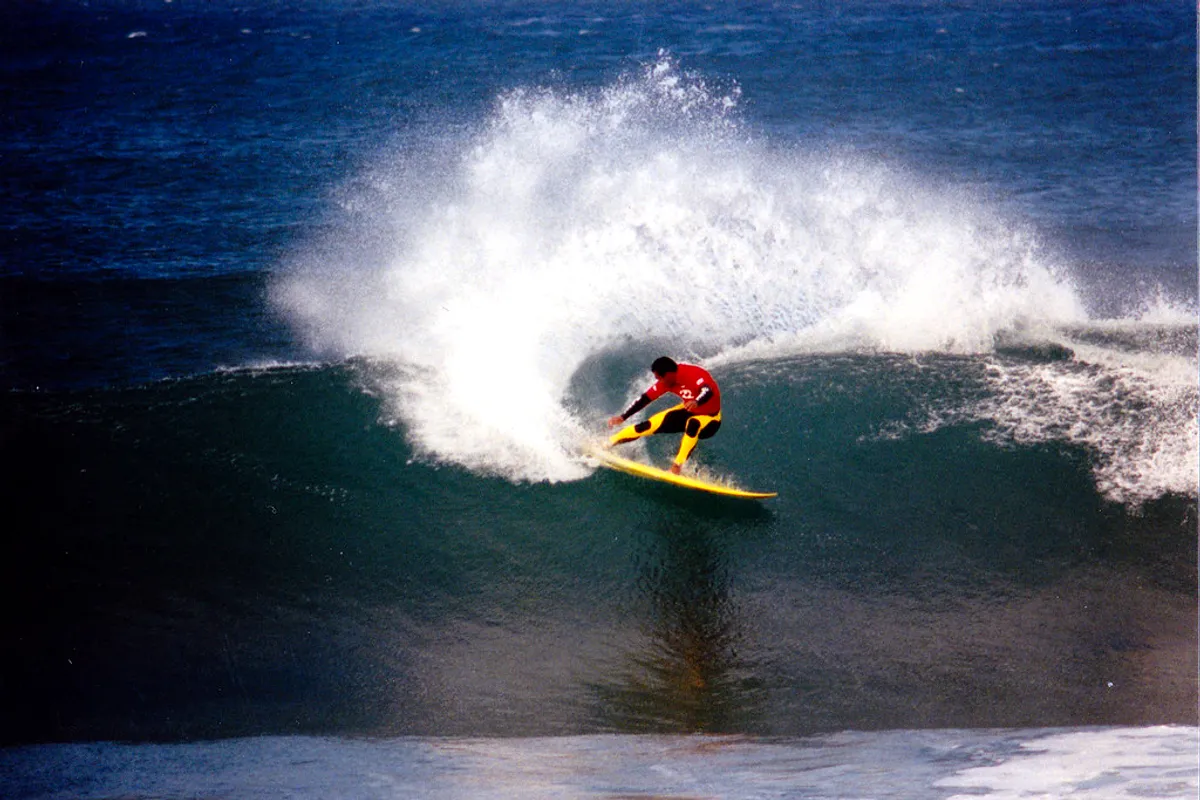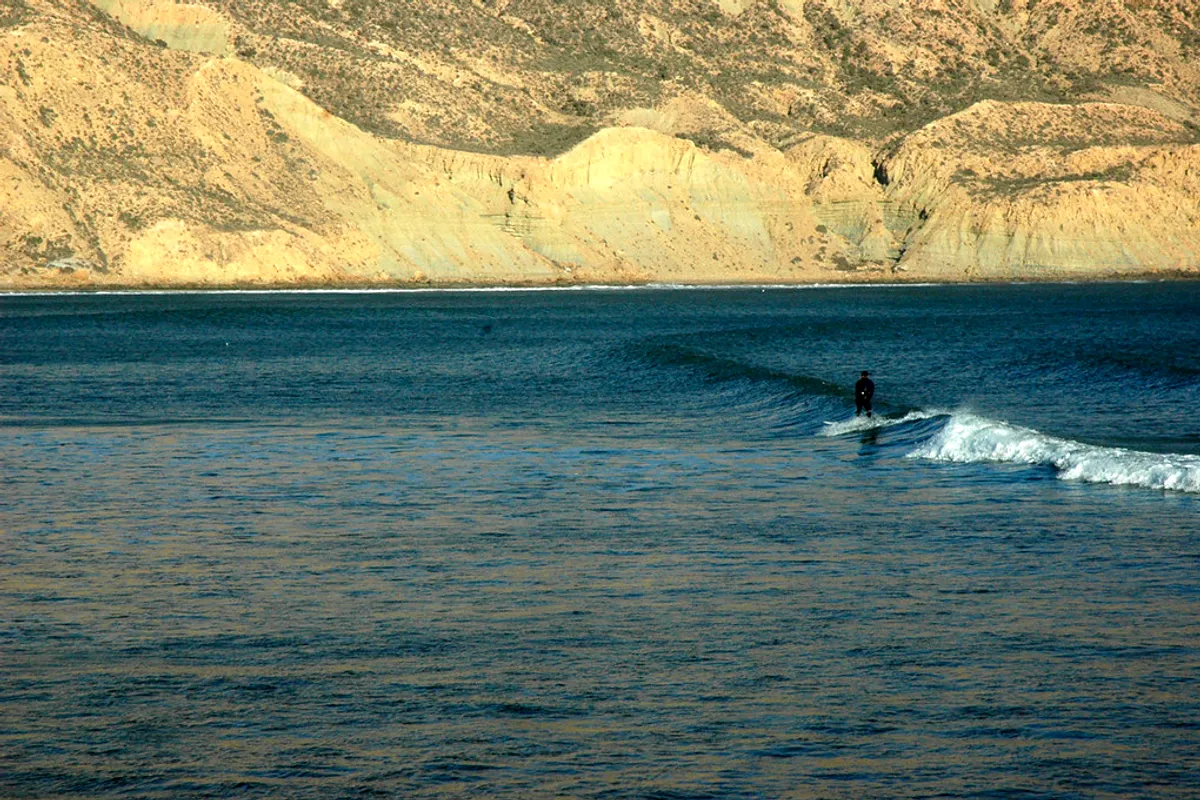
The breaks
Recognised, publicly known surf spots around Imsouane. Suitability depends on the day's swell, wind and tide, so treat the level as a guide, not a guarantee.
| Break | Type | Best for | Notes |
|---|---|---|---|
| The Bay | Right-hand point | Beginner–Intermediate | Long, slow, sand-bottomed right that wraps into the harbour. A longboarder's favourite; needs a solid north-west swell. |
| The Cathedral | Point & beach | Intermediate–Advanced | More exposed wave on the other side of the headland, with faster, more powerful walls and stronger currents. |
| Imsouane beach | Beach break | Beginner | Sandy inside sections of the Bay, used for lessons on smaller days. |
| Tamri | Beach break | Intermediate | Beach breaks around the Tamri area between Imsouane and Taghazout, often quieter options on the drive south. |
What makes the Bay special
Imsouane's Bay is a right-hand point break that wraps around a headland into a sheltered harbour where fishing boats are pulled up on the sand. When a solid north-west swell arrives, the wave bends around the point and peels along a sandy bottom, slowing down as it enters the bay. The result is a long, gentle, forgiving wave that can offer some of the longest rides in Africa on the right day.
Because it is slow and sand-bottomed, the Bay suits longboarders, mid-length riders, improvers and even beginners on smaller days. Many surfers come specifically to work on their trim, cross-stepping and noseriding. Others simply come to enjoy the experience of riding one wave for what feels like minutes. The Bay needs swell to wrap in, so on small days it can be barely breaking.
The Cathedral
On the other side of the headland, the Cathedral is a more exposed point and beach break that faces the open ocean and picks up more swell. It produces faster, more powerful waves with more defined walls, suiting intermediate and advanced surfers. It is a good alternative when the Bay is too small or too crowded.
The Cathedral is named after the shape of the cliffs behind it. On bigger days, it can be powerful with strong currents, so watch first and ask locally about the best paddle-out spot.
Tides, swell and crowds
The Bay works best on a solid north-west swell, which wraps around the point and into the harbour. Tide affects the wave: the length and shape change through the tide cycle, and some states of tide produce better rides than others. Local surfers and surf schools can explain which tide suits the current swell.
Because the Bay is a single, long wave with one main take-off zone, it can get crowded, especially on weekends and in peak season. Surfers often take turns, and a long ride means a long walk or paddle back. Be patient, share the waves and remember that a busy line-up on such a slow wave requires good board control.
Etiquette on a single long wave
The Bay's length is what makes it special, but it also creates a unique line-up dynamic. Because each wave can last a long time, fewer waves are ridden per hour, and everyone wants their turn. Wait patiently at the take-off, respect the surfer with priority and never drop in on someone already riding.
After a long ride, many surfers walk back along the beach or the harbour to the point rather than paddling all the way. Watch where others re-enter the water and avoid paddling straight through the line of riders coming down the wave. Surf schools should keep their groups on the inside, away from the main take-off zone.
Fishing boats come and go from the harbour, so stay clear of their path and give them priority. A friendly, patient attitude goes a long way in a small village where everyone shares the same wave.
The village and the fishing port
Imsouane is a working fishing village, and the harbour is busy with boats, fishermen and fish auctions. Fresh fish is grilled in small restaurants near the port, and the village has a slow, peaceful rhythm compared with Taghazout. There are a handful of cafés, surf shops and guesthouses, but it is much smaller and quieter.
The village has seen development in recent years, including changes to some buildings near the seafront, and it continues to evolve. Respect the fishing community: the harbour is a workplace first, and fishing boats have priority.
Imsouane: which area to stay in
Most visitors stay in small guesthouses, surf hostels or apartments in the village, many within walking distance of the Bay. Facilities are limited compared with Taghazout, so expect a quieter, simpler stay. Some surfers base themselves in Taghazout or Tamraght and make day trips to Imsouane when the swell suits.
Book ahead in peak season, as accommodation is limited. Cash is useful, as card payments are not always accepted.
Travel to Imsouane, and getting about
Agadir Al Massira airport is the closest, usually around two hours by road, depending on traffic and route. Essaouira is a similar distance to the north. Many surf camps offer transfers, and grand taxis can be arranged. The final section of the road descends from the main coast road to the village.
Once in Imsouane, everything is walkable. A car gives flexibility to explore other spots along the coast, including Taghazout to the south and quieter beaches between Imsouane and Essaouira.
Water, weather and what to pack
Imsouane shares the same climate as the Agadir coast: sunny, mild winters and warm summers, with cool water due to the Canary Current. Water temperatures are around 17–18°C in winter and the low twenties in late summer. A 3/2 or 4/3 wetsuit is common in winter, and a 3/2 or shorty in late summer and early autumn.
Pack layers for cool mornings and evenings, sun protection and modest clothing for the village. Board rental is available, including longboards, which are the board of choice for the Bay.
Making the most of a week in Imsouane
Watch the forecast for north-west swell, and plan sessions around the tide that works best at the Bay. On small days, try the Cathedral or take the opportunity to rest. Bring or rent a longboard to make the most of the Bay's long, slow walls.
On a rest day, enjoy the slow pace of village life, watch the fishing boats come in and eat fresh fish at the harbour. Take a day trip to Essaouira, a historic walled port city and UNESCO World Heritage Site, or to Paradise Valley inland from Taghazout. Respect local customs, dress modestly away from the beach and be mindful during Ramadan.
Imsouane surf season month by month
A broad planning picture, not a forecast. Swell, wind and water temperature vary from year to year.
| January | Peak season: regular north-west swells make the Bay run long. Mild, sunny days and cool water (a 3/2 or 4/3). |
|---|---|
| February | Consistent and often excellent, with cool mornings. Busy on good days. |
| March | Still good swell with spring warmth. A great month for longboarders. |
| April | Swells become less frequent. The Bay works less often; the Cathedral may be the better option. |
| May | Smaller swells and warmer weather. The Bay is often too small; good for beginners on the inside. |
| June | Generally small. Summer winds can affect conditions. A quiet time in the village. |
| July | Small surf and more Moroccan holidaymakers. Good for relaxing and learning on small days. |
| August | Warmest water of the year, small waves. Busy with domestic tourism. |
| September | The first autumn swells can arrive late in the month, with warm water still around. |
| October | The season starts: more consistent north-west swell and warm water. |
| November | Regular swells and pleasant weather. The Bay starts to run regularly. |
| December | Prime season, with powerful swells and long rides. Busy around Christmas and New Year. |
Learning to surf in Imsouane
Imsouane is a great place for improvers and longboarders, and the inside of the Bay can be good for beginners on smaller days. Several surf schools and camps in the village offer lessons, board rental and packages that include accommodation.
The Bay's slow, long waves are perfect for practising trim, turning and footwork, and many surfers say they progress quickly here. On busy days, though, the line-up can be crowded, so beginners should stay on the inside and keep good control of their boards.
When choosing a school, ask about group size, instructor qualifications and how they adapt to tide and swell. Some camps in Taghazout also run day trips to Imsouane.
Comparing options across the country? Read our guide to surfing in Morocco.
Seasonal notes on this page describe typical patterns, not the conditions on a given day. Use the local forecast, lifeguard advice and a qualified instructor for water-safety decisions, and get a written breakdown of what any surf package includes before paying.
Imsouane surf trip questions
How long is the wave at Imsouane?
On a good north-west swell, the Bay can offer one of the longest rides in Africa, peeling for a long distance into the harbour. Length depends on swell size, direction and tide.
When is the best time to surf Imsouane?
October to March, when north-west swells are consistent enough to wrap into the Bay. Summer is usually small.
Is Imsouane good for beginners?
Yes, on smaller days on the inside of the Bay. It is especially good for improvers and longboarders. The Cathedral is better for intermediate and advanced surfers.
How far is Imsouane from Taghazout?
Usually around an hour and a half to two hours by road. Many surfers make day trips from Taghazout when the swell suits.
What board should I bring to Imsouane?
A longboard or mid-length is ideal for the Bay's slow, long waves. A shorter board can work at the Cathedral. Board rental is available in the village.
Is Imsouane crowded?
The Bay can be busy on good days and weekends because it is a single, long wave. Weekday mornings are often quieter. Be patient and share the waves.
Sources & editorial notes
Destination context checked against the sources below. Base-selection and itinerary suggestions are Book & Surf editorial recommendations. Seasonal windows are broad planning suggestions, not measured forecasts or guarantees.
We do not claim to have personally surfed every break. Read our editorial standards.