The breaks
Recognised, publicly known surf spots around Lakey Peak. Suitability depends on the day's swell, wind and tide, so treat the level as a guide, not a guarantee.
| Break | Type | Best for | Notes |
|---|---|---|---|
| Lakey Peak | Reef A-frame | Intermediate–Advanced | The main peak, with a long left and a shorter, faster right. Tight and busy in the dry season, so call your direction and take turns. |
| Lakey Pipe | Hollow reef | Advanced | A short walk south of the peak and a hollower, more serious wave. Sources vary on its direction, so check locally before paddling out. |
| Nungas | Long reef wave | Intermediate | A long, peeling wave that rewards positioning more than power and is the area's main intermediate option. Allow time for the paddle. |
| Periscopes | Right-hand reef | Advanced | A steeper right around the point to the north, with backdoor sections on bigger swells. Advanced surfers only, and most active near high tide. |
| Cobblestones | Reef bay | Intermediate | A mellower bay to the south, usually reached by boat, with lefts and some rights. Suits improving surfers in the dry season. |
Lakey Peak surf climate, measured
Ten years of ocean model data for the open water off this coast: what the swell usually looks like before it reaches the beach. Shelter, sandbars and reefs change what you actually surf, so read this next to the month notes below.
| Month | Swell | Period | From | Wind | Water | Wetsuit | Days over 2.5 m |
|---|---|---|---|---|---|---|---|
| Jan | 1.4 m | 12 s | SW | 8 km/h W | 29°C | Boardshorts | 0% |
| Feb | 1.3 m | 13 s | SW | 7 km/h W | 29°C | Boardshorts | 0% |
| Mar | 1.2 m | 13 s | SW | 6 km/h N | 29°C | Boardshorts | 0% |
| Apr | 1.3 m | 14 s | SW | 8 km/h E | 29°C | Boardshorts | 0% |
| May | 1.4 m | 15 s | SW | 11 km/h SE | 28°C | Boardshorts | 0% |
| Jun | 1.6 m | 15 s | S | 12 km/h SE | 27°C | Boardshorts | 0% |
| Jul | 1.7 m | 15 s | SW | 12 km/h SE | 26°C | Boardshorts | 5% |
| Aug | 1.7 m | 15 s | SW | 15 km/h SE | 26°C | Boardshorts | 5% |
| Sep | 1.6 m | 14 s | SW | 14 km/h S | 26°C | Boardshorts | 5% |
| Oct | 1.5 m | 14 s | SW | 13 km/h S | 27°C | Boardshorts | 3% |
| Nov | 1.3 m | 13 s | SW | 10 km/h SE | 29°C | Boardshorts | 0% |
| Dec | 1.4 m | 13 s | SW | 9 km/h SW | 29°C | Boardshorts | 0% |
Median values from ERA5 at a sea point near Lakey Peak (8.75°S, 118.5°E), sampled 4 days a month at 12:00 UTC, 2015-2024. Highlighted months are our suggested planning window. Not a forecast or a safety assessment. How we use this data.
Book a surf trip to Lakey Peak
Everything we can link you to for this trip, grouped by what you need. Before you pay a camp or school, read who holds your money, and check that your insurance covers surfing.
Where to stay
Search near the breaks. Filter for surf hostels, apartments or hotels once you can see the map.
Surf lessons and activities
Listings change by season, so check what the operator includes and who coaches.
Flights
Add your dates and check the board fee on every leg before you pay.
Car hire
Ask about roof racks and whether the insurance covers boards on the roof.
Airport transfer
Tell the driver you have a board and its length when you book.
Scooter or motorbike
Check your licence and your insurance cover before you ride.
Mobile data
Download a forecast app and offline maps before you land.
Flight delay claims
If a delay eats your first surf day, check whether you can claim.
Luggage storage
Useful between check-out and a late flight. Check the size limit before dropping a board.
Links marked as partner links may earn us commission at no cost to you; the rest earn us nothing. We have not checked live availability or price, and the seller's terms apply. How we handle this.
Hu'u and the south coast of Sumbawa
Sumbawa is a large island in the middle of the Lesser Sunda chain, with Lombok to the west, Flores to the east and Sumba to the south-east. Its landscape is drier and sparser than Bali's, with savanna-like grassland, and its population is modest for the size of the island. Wikipedia counts roughly 1.56 million people on the island at the 2020 census.
Lakey Peak sits on the Gulf of Cempi coast in the Hu'u area, on Sumbawa's south side. The community here is small and the tourist infrastructure is built almost entirely around surf travellers: simple guesthouses, a few warungs and cafés, and small hotels along a short stretch of coast. It is a place to go for the waves rather than for the town.
The island is also known for a much older story. The 1815 eruption of Mount Tambora, on the north of Sumbawa, was the most powerful in recorded history and caused the 'Year Without a Summer' in 1816. You will not see it from the surf, but it gives the island a different geological and historical weight from the better-known Bali coast.
The peak and its neighbours
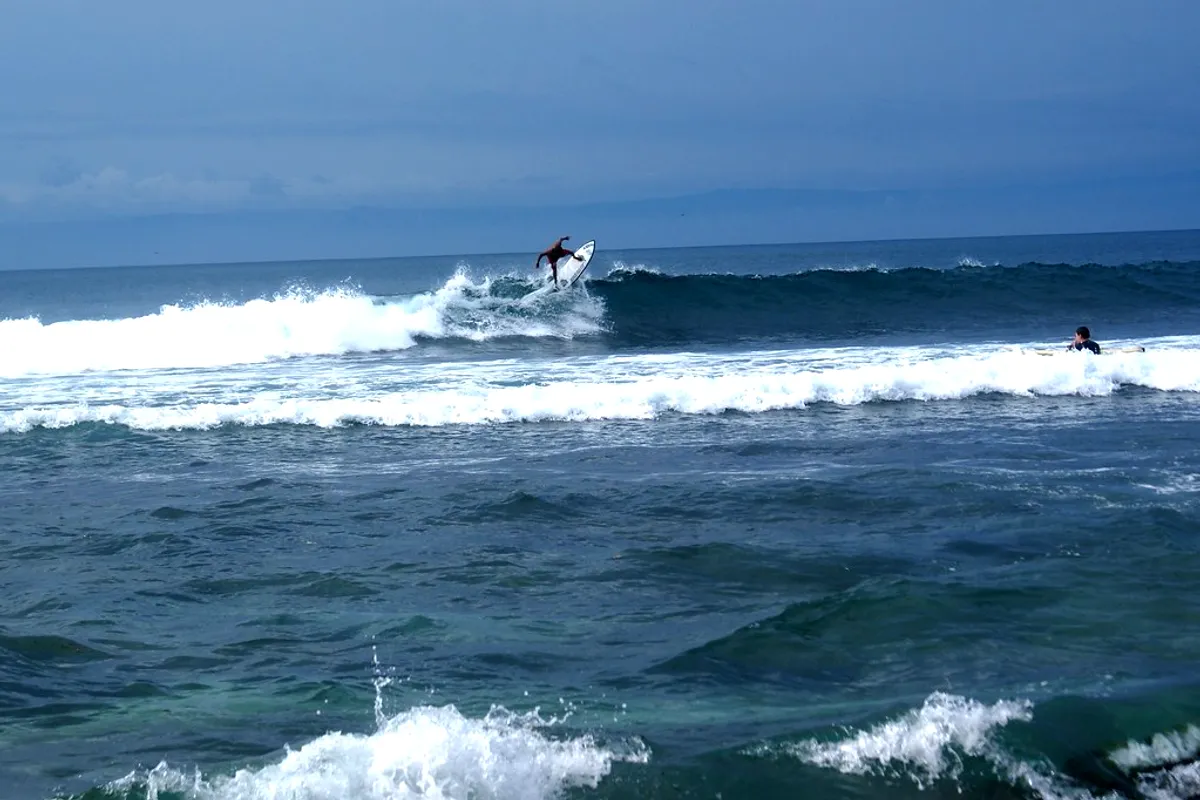
Lakey Peak itself is a reef A-frame. The left is long and runs with several barrel sections; the right is shorter, faster and more technical. Because the peak is not split, surfers heading in opposite directions can be close together in the same line-up, which is the main reason for communicating clearly: call your direction, watch who is inside and never assume the person next to you has seen you.
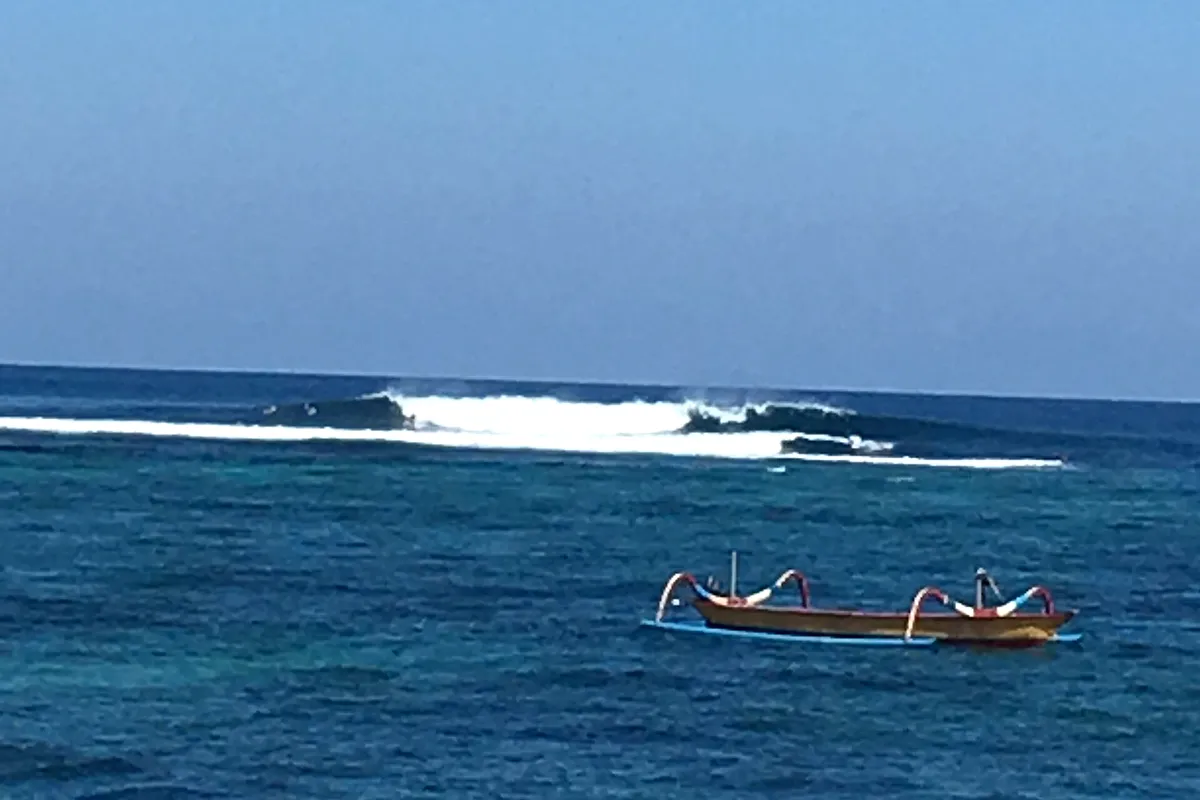
A few minutes' walk south is Lakey Pipe, a hollow reef wave. Sources disagree on its direction and difficulty, so check locally rather than relying on a single description; it is generally treated as a more serious wave than the main peak. Further out is Nungas, a long, peeling wave that rewards positioning rather than power and is the main intermediate wave in the area.
Periscopes, around the point to the north, is a steeper right-hand reef for advanced surfers only. Cobblestones, usually reached by boat, is a mellower bay with a mix of lefts and rights that suits improving surfers in the dry season. Distances and tide preferences vary by source, so take advice from a local before paddling to any of the outer breaks.
Why the dry season matters here
The dry season, roughly May to October, brings the most consistent southern hemisphere swell and the prevailing winds that produce clean faces on this coast. Guides quote typical swell in the range of five to fifteen feet at its peak, which gives you an idea of how much power the reef can handle.
The wet season, from around November to March, can still deliver waves, and some sources suggest it is more forgiving for newer surfers. Expect messier conditions, so early mornings matter, and expect fewer facilities to be running at full tilt. Because the area is remote, a bad run of weather can limit what you can do in a short trip.
Tide changes the character of the reef. Reports suggest that Lakey Pipe softens a little as the tide rises and that Periscopes comes alive near high water. Ask the person running your accommodation about the current tide-and-swell relationship rather than relying on memory or a guidebook that may be older than the sandbars and reef.
Getting to Lakey Peak
The usual route is to fly to Bima's Sultan Muhammad Salahuddin Airport (BMU) on Sumbawa's eastern side, with domestic flights from Denpasar and Makassar. Wikipedia describes air travel as the most convenient way to reach the island. From Bima, the road to Hu'u is a transfer of a couple of hours by most accounts, but confirm the time and the route with your accommodation, which can usually arrange a driver.
The cheaper but slower option from Bali is to take a ferry between Lombok and Sumbawa and then continue overland across the island. Ferries run frequently between Labuhan Lombok and Poto Tano, but you will be on the move for the best part of a day or more by the time you reach the south coast, and the overland journey adds hours. For a short trip, the flight is usually worth the money.
If you are carrying boards, check the airline's baggage policy in advance. Domestic carriers in Indonesia vary in what they will carry and what they charge, and small aircraft sometimes have strict limits.
Staying, eating and getting around
Accommodation is within walking distance of the peak, in a mix of beachfront guesthouses and small hotels. Sumbawa is more modest than Bali, and rooms and facilities vary widely. Book ahead in the peak months, from June to August, because the number of beds is limited and organised groups can fill them.
Food is mostly simple Indonesian dishes, fresh fish and a handful of cafés that cater to visitors. The nearest bigger towns are some distance away, so bring spare equipment and any medication you rely on. Mobile signal and wifi may be patchy, so check before relying on this as a place to work.
A rented scooter is the common way to get around the local area, but roads can be rough and traffic on the main road to Bima includes trucks and animals. Wear a helmet, carry a licence you are legally allowed to ride with and avoid riding at night.
Line-up manners at a shared peak
A tight reef peak punishes poor etiquette quickly. The usual order applies: the surfer closest to the peak has priority, and anyone taking off must call left or right, then follow through. If you are not sure who has the wave, do not go. When the peak is busy, it is better to sit slightly wider and pick off waves than to fight for the take-off.
Bring a leash that suits the conditions and be ready to lose the board on a shallow reef. A lost board in a crowded line-up is a danger to others, not just a nuisance. Wearing reef shoes is a sensible precaution at low tide, and clean any cut straight away because tropical water leads to infections.
Local surfers and workers have built much of the town's economy around visitors, so be generous with respect, pay fairly for services and take litter away with you.
Lakey Peak surf season month by month
A broad planning picture, not a forecast. Swell, wind and water temperature vary from year to year.
| January | Wet season, with rain and messy conditions. Waves are possible on a good day but this is a low month for visitors and facilities. |
|---|---|
| February | Still wet and changeable. Early mornings are the best chance of clean faces, and the line-up is quiet. |
| March | The wet season winds down and weather gradually improves, though the swell is usually smaller and less consistent than mid-year. |
| April | A shoulder month as the dry season begins. Early arrivals can find uncrowded waves before the main season starts. |
| May | The dry season is under way and southern hemisphere swells arrive more regularly. A good month before the school-holiday crowds. |
| June | Consistent swell and mostly offshore trade winds. Crowds build and accommodation starts to fill up. |
| July | Peak season, with the strongest swell of the year and the busiest line-ups. Book ahead and be patient at the peak. |
| August | As busy as July. The reef can be heavy on bigger days, so only paddle out if you are comfortable with the conditions. |
| September | Still reliable, with swell remaining regular and the crowds starting to thin. A good time for intermediates to try Nungas. |
| October | The tail of the dry season. Waves can be excellent with fewer people around, and the first signs of wetter weather appear. |
| November | The wet season begins. Swell is less consistent and conditions are more changeable, with fewer visitors. |
| December | Wet, windy and quiet. Some places to stay close or reduce services, so check before travelling. |
Learning to surf near Hu'u
Lakey Peak is not the place to take your first lesson. The main wave is a shallow reef with a busy, tight peak, and the infrastructure for beginners is limited compared with Bali, Lombok or Java.
Improving intermediates can use the area well. Cobblestones, the mellower bay reached by boat, and Nungas on smaller days are the usual stepping stones. Some local guides offer coaching and boat trips, but quality varies, so ask what is included and who the instructor is before you pay. If you are brand new, spend a few weeks at a beach-break destination such as Canggu or Kuta Lombok first, then come to Sumbawa when you can paddle, duck-dive and surf green waves with control.
Comparing options across the country? Read our guide to surfing in Indonesia.
Seasonal notes on this page describe typical patterns, not the conditions on a given day. Use the local forecast, lifeguard advice and a qualified instructor for water-safety decisions, and get a written breakdown of what any surf package includes before paying.
Lakey Peak surf trip questions
When is the best time to surf at Lakey Peak?
The dry season from about May to October brings the most consistent swell and favourable winds. July and August are the busiest. The wet season can produce waves but conditions are messier and facilities are quieter.
How do you get to Lakey Peak from Bali?
The simplest route is a domestic flight from Denpasar to Bima's airport, followed by a road transfer to Hu'u that is typically a couple of hours; confirm locally. The cheaper alternative is a ferry from Lombok to Sumbawa and a long overland journey, which takes much longer.
Is Lakey Peak suitable for beginners?
No. The main peak is a shallow reef with a tight take-off and little room to learn. Intermediates can use Nungas or the boat-access bay at Cobblestones, but complete beginners are better off learning elsewhere in Indonesia first.
What are the main hazards at Lakey Peak?
Shallow reef and the tight peak, where surfers going left and right sit close together. Remoteness is another risk: medical care is limited and cuts can become infected quickly in tropical water. Wear reef shoes at low tide if you are not used to it.
Can you work remotely from Lakey Peak?
Not reliably. Mobile coverage and wifi can be patchy, and the area has few venues set up for work. If you need to be online, check connectivity with your accommodation before booking.
Sources & editorial notes
Destination context checked against the sources below. Base-selection and itinerary suggestions are Book & Surf editorial recommendations. Seasonal windows are broad planning suggestions, not measured forecasts or guarantees.
- Wikipedia: Sumbawa ↗
- Surf Atlas: Lakey Peak ↗
- Perfect Wave Travel: Sumbawa surf travel guide ↗
- Indonesian Surf Guide: how to get to Lakey Peak ↗
We do not claim to have personally surfed every break. Read our editorial standards.