The breaks
Recognised, publicly known surf spots around Zarautz. Suitability depends on the day's swell, wind and tide, so treat the level as a guide, not a guarantee.
| Break | Type | Best for | Notes |
|---|---|---|---|
| Zarautz (west end) | Beach break | Beginner–Intermediate | The busiest section near the town and promenade, with many surf schools and swimmers in summer. |
| Zarautz (middle) | Beach break | Intermediate | Often the most consistent peaks on the beach, shifting with the sandbanks. |
| Zarautz (east end) | Beach break | Intermediate–Advanced | Near the dunes and golf course; can be quieter and sometimes more powerful. |
| Zurriola (San Sebastián) | Beach break | Beginner–Intermediate | City beach in the Gros neighbourhood with surf schools and a lively scene. |
| Orio | River-mouth left | Advanced | A left at the mouth of the Oria river that can work in the right conditions for experienced surfers. |
Why Zarautz became a surf town
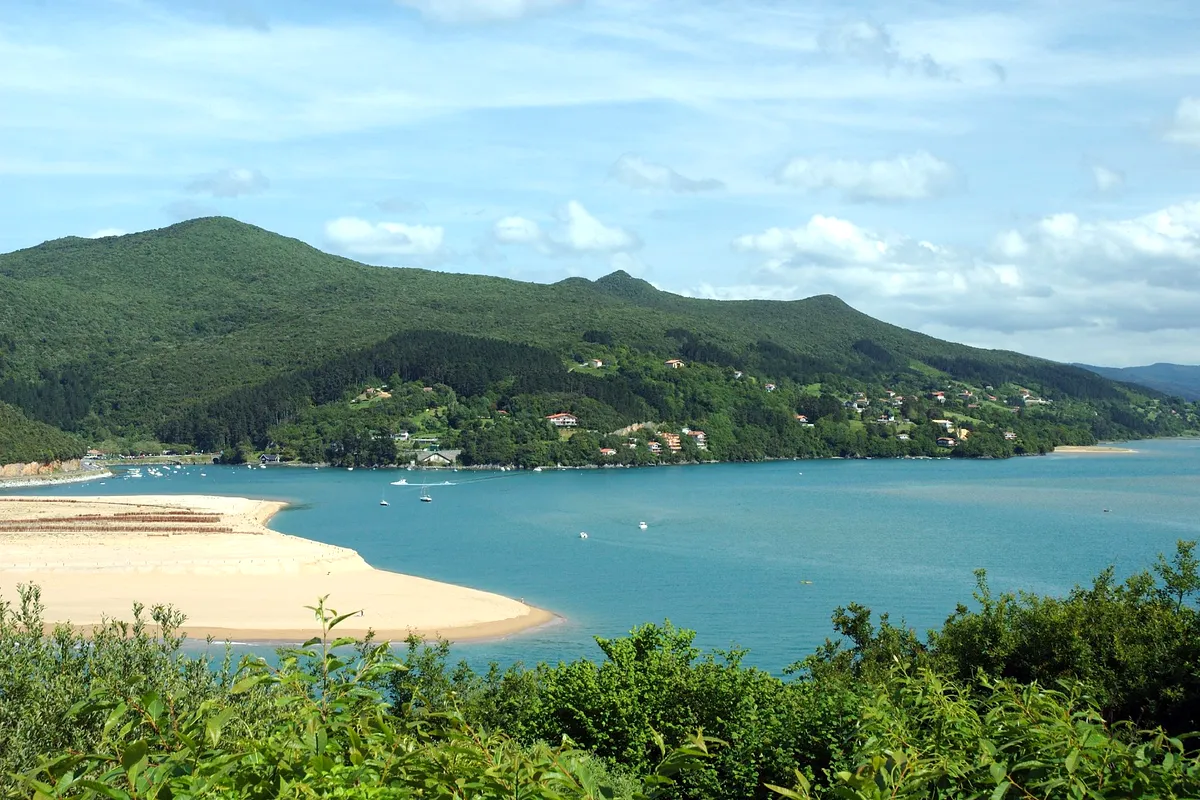
Zarautz sits in a broad bay on the Bay of Biscay, its beach stretching for roughly two and a half kilometres between the old town and a protected dune system at the eastern end. The beach faces north and picks up most Atlantic swells, and because it is long and sandy, peaks form along its whole length, spreading surfers out. It is rarely completely flat from autumn to spring.
Surfing took hold here early in Spain's surf history, and the town has hosted national and international competitions. Surf shops, schools, clubs and board shapers line the seafront and the streets behind it, and surfing is part of everyday life for many residents. Out of the water, Zarautz is a traditional Basque town with a promenade, a historic centre and excellent food.
Surfing arrives on the Basque coast
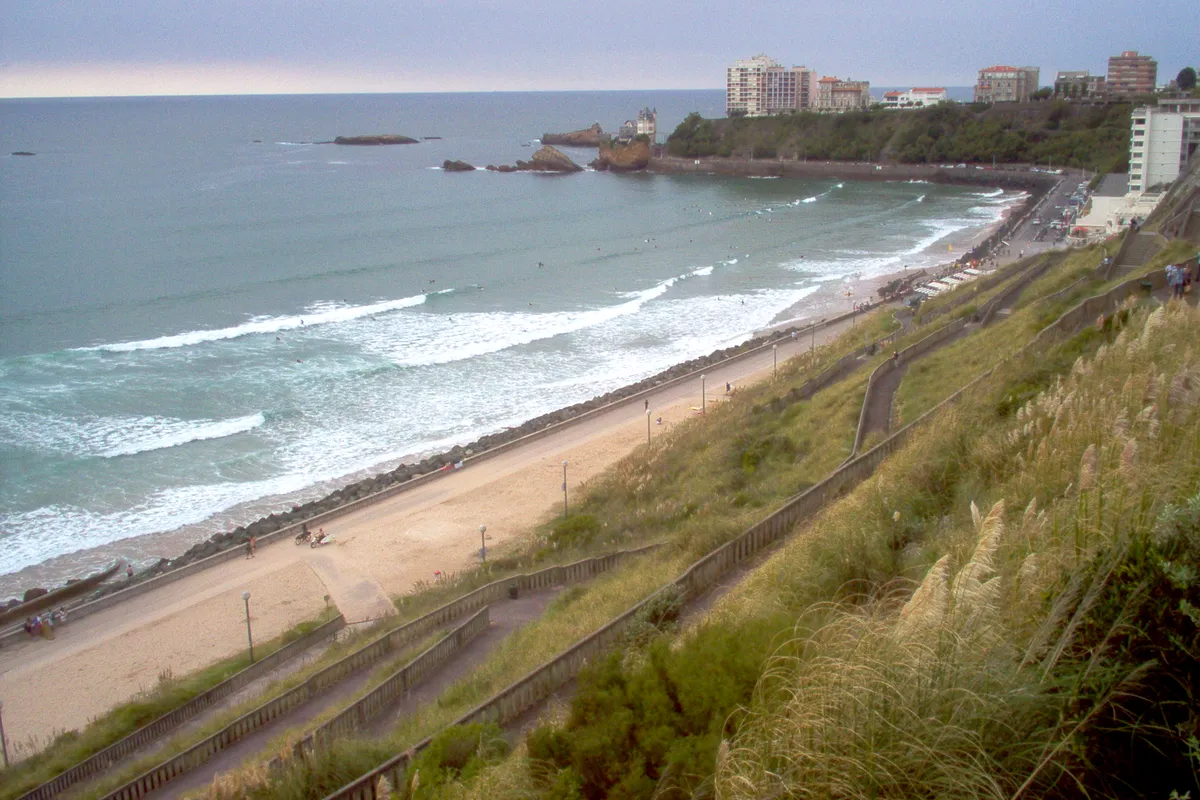
Surfing reached the Basque coast in the late 1950s and 1960s, spreading south from Biarritz, where it had taken root among French and visiting American surfers. Local pioneers in Zarautz, San Sebastián and Bizkaia began riding the beaches and river mouths, building their own boards and founding clubs.
Zarautz quickly became one of the centres of Spanish surfing. Its long, consistent beach suited the growing number of surfers, and the town went on to host national championships and international professional events. Today, Basque surfers are among the strongest in Spain, and the region's surf culture blends easily with its food, festivals and strong local identity.
Reading the beach
The beach has several sections that behave differently. The western end, close to the town centre and the promenade, is the busiest, with many surf schools and swimmers in summer. The middle sections tend to have the most consistent peaks, while the eastern end, near the dunes and the golf course, can be quieter and sometimes more powerful.
Sandbanks shift with storms, so the best peak changes over time. Watch for a few minutes before paddling out to see where waves are breaking cleanly and where the rips are running back out to sea. On bigger swells, the whole beach can close out, and conditions are better suited to experienced surfers.
Zurriola, Orio and the rest of Gipuzkoa
San Sebastián's Zurriola beach, in the Gros neighbourhood about twenty-five minutes east, is a city beach break with surf schools and a lively surf scene, ideal if you are staying in the city. La Concha, the famous bay in the centre, is sheltered and rarely has surf.
Orio, between Zarautz and San Sebastián, has a river-mouth left that can be good on the right conditions for experienced surfers. Further west, the coast of Gipuzkoa and Bizkaia has more beaches and reefs, including Mundaka, about an hour away, when it breaks.
Autumn swells and Basque weather
The best surf season is autumn, from September to November, when North Atlantic swells become consistent, the water is still relatively mild and the summer crowds have gone. Winter brings bigger, more powerful swells and cold water, along with rain and frequent storms; the beach can be excellent between weather fronts.
Spring offers decent swells and fewer visitors, while summer is generally smaller, warmer and very busy, with lifeguard-controlled swimming zones. The Basque climate is mild but wet, and the green hills behind the coast are a sign of frequent rain, so pack a waterproof.
Three airports and a train line
San Sebastián's small airport at Hondarribia is around half an hour away, with domestic flights. Bilbao airport, about an hour west, has more international routes, and Biarritz, across the French border, is a little under an hour by road. The Euskotren regional railway connects Zarautz with San Sebastián and Bilbao, and buses run along the coast.
Zarautz itself is compact and walkable, with the beach a few minutes from most accommodation. A car is useful for exploring other breaks and inland villages, but parking near the beach is limited in summer.
Old town, seafront or campsite
The old town, a few streets behind the beach, has bars, pintxos, restaurants and guesthouses, and is the most convenient base for walking to the surf. Apartments and hotels along the seafront offer views of the waves. On the hillside above the eastern end, a large campsite and several surf camps are popular with travelling surfers.
San Sebastián is an alternative base for those who want city life and some of Europe's best food scene, with a short train or drive to Zarautz.
Getaria, txakoli and pintxos
Getaria, a fishing village just west of Zarautz, is linked by a coastal walking path along the cliffs. It is known for grilled fish cooked over charcoal in the street, for txakoli, the slightly sparkling white wine grown on the surrounding hills, and as the birthplace of the navigator Juan Sebastián Elcano and the designer Cristóbal Balenciaga, whose museum sits above the town.
In Zarautz and San Sebastián, an evening of pintxos, small bites served at bar counters, is a Basque ritual. The coastal path, the Basque Coast Geopark further west and the Flysch cliffs at Zumaia are excellent flat-day options.
Respecting the line-up and the local language
Zarautz has a large local surf community and many schools sharing the same beach, so line-ups can be busy. Schools should keep their groups in designated zones, and visiting surfers should take turns and avoid dropping in. The local language is Basque, or Euskara, alongside Spanish; a few words of either are appreciated, and signs are often bilingual.
Zarautz surf season month by month
A broad planning picture, not a forecast. Swell, wind and water temperature vary from year to year.
| January | Big winter swells, cold water (a 5/4 with boots) and frequent storms. Excellent between fronts for experienced surfers. |
|---|---|
| February | Powerful, cold and changeable. Quiet line-ups on weekdays. |
| March | Still consistent with lengthening days. Water at its coldest. |
| April | Spring swells with more settled spells. A 4/3 wetsuit; Easter brings visitors. |
| May | Smaller, friendlier waves and green hills. A good month for improvers. |
| June | Summer begins, with small surf and longer days. Good for beginners. |
| July | Peak season: busy beach, lifeguard swimming zones and small waves. Surf schools in full swing. |
| August | The busiest month, with the warmest water of the year. Early mornings are best. |
| September | Autumn swells return, crowds thin and the water is still mild. A great month. |
| October | Often the best month, with consistent swells and pleasant weather. |
| November | Bigger swells, cooling water and more rain. Excellent for confident surfers. |
| December | Winter swells and festive evenings in the old town. Cold water and short days. |
Learning to surf in Zarautz
Zarautz is one of Spain's most popular places to learn to surf. Many schools operate along the seafront, offering group and private lessons, week-long courses and surf camps with accommodation. The long beach and its many peaks give instructors room to find suitable waves, and schools often have designated teaching areas.
Summer and early autumn usually offer the gentlest conditions and warmest water, while late autumn and winter are better for improvers with good wetsuits. Ask schools about instructor qualifications, group sizes and whether wetsuits and boards are included. San Sebastián's Zurriola beach is another good option if you prefer to stay in the city.
Comparing options across the country? Read our guide to surfing in Spain.
Seasonal notes on this page describe typical patterns, not the conditions on a given day. Use the local forecast, lifeguard advice and a qualified instructor for water-safety decisions, and get a written breakdown of what any surf package includes before paying.
Zarautz surf trip questions
Is Zarautz good for beginners?
Yes. Zarautz has a long sandy beach with many peaks and dozens of surf schools, especially at the western end near the town.
When is the best time to surf Zarautz?
September to November usually brings consistent swells, mild water and fewer crowds. Summer is smaller and busy, while winter is powerful and cold.
How far is Zarautz from San Sebastián?
About twenty-five minutes by road, with regular trains and buses connecting the two.
What wetsuit do I need in Zarautz?
A 3/2 in summer and early autumn, a 4/3 in spring and late autumn and a 5/4 with boots in winter.
Can I surf in San Sebastián?
Yes. Zurriola beach in the Gros neighbourhood is a city beach break with surf schools. La Concha bay is sheltered and rarely has surf.
What is txakoli?
Txakoli is a slightly sparkling, dry white wine produced on the hills around Getaria and Zarautz and served in Basque bars, often with pintxos.
Is Zarautz crowded?
The western end near the town is busy with schools and swimmers in summer. The middle and eastern sections, and weekdays outside summer, are usually quieter.
Can I walk from Zarautz to Getaria?
Yes. A coastal path runs along the cliffs between Zarautz and Getaria, an easy walk with sea views, ending in Getaria's harbour full of grill restaurants.
Sources & editorial notes
Destination context checked against the sources below. Base-selection and itinerary suggestions are Book & Surf editorial recommendations. Seasonal windows are broad planning suggestions, not measured forecasts or guarantees.
- Wikipedia: Zarautz ↗
- Wikipedia: Getaria ↗
- Wikipedia: Txakoli ↗
- AEMET: Spanish State Meteorological Agency ↗
We do not claim to have personally surfed every break. Read our editorial standards.