Coxos.
Coxos sits on the coast north of Ericeira, in front of a small bay known as Praia dos Coxos, and it is the wave that gives the area its reputation among experienced surfers. Surf-Forecast calls it an exposed reef break rated five out of ten and notes that it is often crowded. Within the Ericeira World Surfing Reserve it is the break most associated with tubes, and also the one most associated with injuries. If you have any doubt about being out there, the answer is almost certainly to watch.
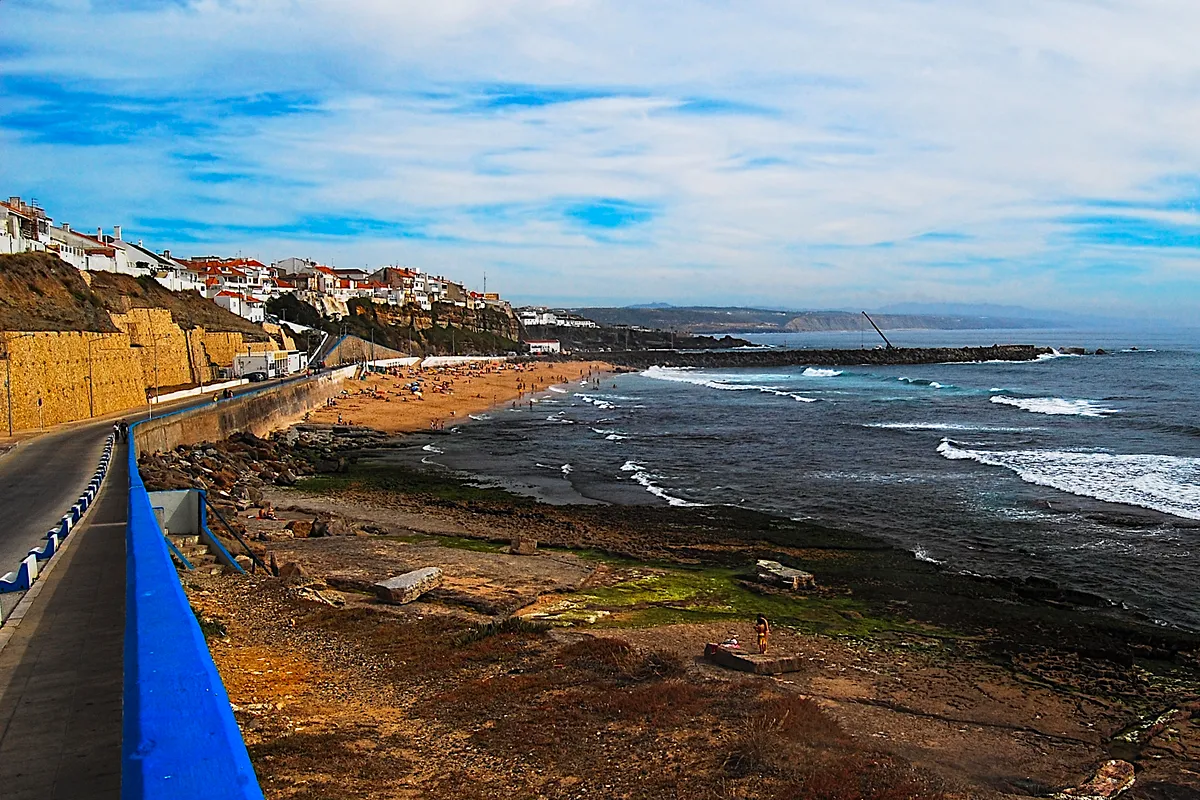 Photo: Juntas · CC BY-SA 4.0 · Wikimedia Commons
- Level
- Expert
- Direction and bottom
- Right · Reef
- Best swell
- NNW
- Best wind
- SE offshore
- Best tide
- Check locally; the reef changes with the tide
- Best months
- Oct, Nov, Dec, Jan, Feb, Mar
- Size
- Chest-high to double overhead; heavy at any size
- Hazards
- Shallow, sharp reef, Rocky entry and exit, Rips, Crowds of local surfers
What makes the wave heavy
Coxos breaks over a shallow reef, and the swell jacks up quickly as it moves from deep water onto the rock. On a clean day the wave offers a hollow section with a barrel that runs along the reef before softening and closing down towards the inside. It is a right-hander, with a take-off zone that needs precise positioning. Move a few metres too far inside and the wave breaks onto exposed rock; sit too deep and it hits you as a closeout.
Surf-Forecast gives the best swell direction as north-north-west and the best wind as south-east. In October its figures show roughly 29 percent clean, 55 percent blown out and 16 percent too small. That tells you something about how Coxos behaves: the swell is nearly always there, but wind spoils many days, so clean mornings are the prize.
Reading the conditions
Coxos works throughout the year but is best in the cooler months. Windswell and groundswell arrive in roughly equal amounts, and the long-period groundswells produce the best shape. Rips are a hazard, and the currents tend to push surfers towards the rocks, so the first thing to learn is where the channel is and how to use it.
The water temperature on Surf-Forecast sits near 17 degrees Celsius, and a spring wetsuit is typical on the page, though a thicker suit is normal in winter. If the forecast shows a big swell and strong wind from the north, look at other breaks instead. A good plan is to compare Coxos with Ribeira d'Ilhas one kilometre south and decide which is safer at the current size.
Who should stay out
Coxos is not for beginners, and it is not an appropriate wave for intermediates who are still building confidence with larger or hollow waves. The reef is shallow and cuts skin and boards, the entry and exit are over rocks, and the lineup is competitive. Do not enter the water if you are not confident taking off late on a steep face, holding your breath through multiple waves or swimming through whitewater to a rocky shore.
Visiting surfers who do paddle out should be patient and wait for waves that are clearly theirs. Priority goes to the surfer closest to the peak, and dropping in at Coxos is an invitation to a serious accident. Crowds are likely on any day when the wave is breaking well. If you are unsure, spend a session watching the surfers and learning the lineup before you commit.
Access and viewing
OpenStreetMap records Praia dos Coxos in the parish of Santo Isidoro, with a footpath called the Trilho dos Coxos leading to the coast. Lisbon airport is about 35 kilometres away, and Ericeira town is a short drive south. The path to the water is rocky and not suitable for those who are not comfortable on uneven ground, so wear sensible footwear and carry your board carefully.
The headland above the bay gives a clear view of the wave, and a few minutes of watching from there tells you how the sets are moving and where the better surfers are sitting. Respect any signs about erosion or restricted areas on the cliffs. If you take photographs, stay behind barriers and do not walk to the edge to get a better angle.
Other breaks nearby
Cave, one kilometre away, is a heavier and less frequent reef, rated five by the same source. Ribeira d'Ilhas is about a kilometre south and is more forgiving. Crazy Left, Pedra Branca and Reef round out the choices within two kilometres. Having the full list helps you choose a break that matches the swell and your own ability, and the Ericeira destination guide covers the town and its beginner beaches.
The ocean off Ericeira, by month
| J | F | M | A | M | J | J | A | S | O | N | D | |
|---|---|---|---|---|---|---|---|---|---|---|---|---|
| Swell, m | 2.6 | 2.5 | 2.8 | 1.8 | 1.7 | 1.4 | 1.4 | 1.4 | 1.5 | 1.8 | 2.0 | 2.0 |
| Period, s | 13 | 14 | 13 | 11 | 10 | 9 | 9 | 9 | 11 | 12 | 12 | 13 |
| Water, °C | 14 | 14 | 14 | 15 | 16 | 17 | 17 | 17 | 18 | 17 | 17 | 16 |
Open-ocean ERA5 medians, not wave size at the break. Sources.
Questions about Coxos
Is Coxos a left or a right?
A right. The wave peels along a shallow reef with a hollow section, and surfers need to commit on takeoff to avoid the rocks.
Can I surf Coxos if I am an intermediate?
Generally no. The reef is shallow and the lineup is competitive. Intermediates will find better learning waves at Ribeira d'Ilhas or at nearby beach breaks.
What is the best swell and wind?
North-north-west swell with a south-east offshore wind, according to Surf-Forecast. Wind spoils many days, so early morning is often the best chance.
How crowded is it?
Surf-Forecast describes it as often crowded. Expect a busy peak on any day when the wave is working, and expect local surfers to have priority.
What should I watch for before paddling out?
Look at where the rip runs, how the sets line up with the reef and how many experienced surfers are in the water. Note the exit route over the rocks as well as the entry, and decide beforehand where you will go if a set catches you inside. If any part of that plan is unclear, wait.
Check a live forecast and local advice before paddling out. Heavy waves injure and kill experienced surfers.