The breaks
Recognised, publicly known surf spots around Dominical. Suitability depends on the day's swell, wind and tide, so treat the level as a guide, not a guarantee.
| Break | Type | Best for | Notes |
|---|---|---|---|
| Playa Dominical | Beach break with river-mouth banks | Intermediate–Advanced | A long, powerful beach with rights and lefts. Sandbars shift with rain and the Barú river, and rips can be strong along the whole stretch. |
| Dominical south point | Left point at the south end | Intermediate–Advanced | A left that is reported to work when the beach break is too big or messy. Rocks and currents are a concern, so look before you paddle. |
| Dominicalito | Mellow beach break | Beginner–Intermediate | Smaller and more sheltered than the main beach. A common choice for lessons, families and surfers who want an easier session. |
| Matapalo | Beach break | Intermediate | A quieter beach to the north, which can be a good backup. Check conditions and access locally before driving out. |
| Pavones | Long left point | Advanced | Much further south, famed for one of the longest lefts in the world. A separate trip, but Dominical is a convenient base for the southern coast. |
Dominical surf climate, measured
Ten years of ocean model data for the open water off this coast: what the swell usually looks like before it reaches the beach. Shelter, sandbars and reefs change what you actually surf, so read this next to the month notes below.
| Month | Swell | Period | From | Wind | Water | Wetsuit | Days over 2.5 m |
|---|---|---|---|---|---|---|---|
| Jan | 1.0 m | 12 s | SW | 4 km/h NW | 29°C | Boardshorts | 0% |
| Feb | 1.0 m | 13 s | SW | 4 km/h NE | 29°C | Boardshorts | 0% |
| Mar | 1.0 m | 13 s | SW | 4 km/h NE | 29°C | Boardshorts | 0% |
| Apr | 1.2 m | 14 s | S | 4 km/h SE | 30°C | Boardshorts | 0% |
| May | 1.3 m | 14 s | SW | 4 km/h W | 29°C | Boardshorts | 0% |
| Jun | 1.5 m | 14 s | SW | 5 km/h SW | 29°C | Boardshorts | 0% |
| Jul | 1.4 m | 15 s | SW | 4 km/h S | 29°C | Boardshorts | 0% |
| Aug | 1.4 m | 13 s | SW | 4 km/h S | 29°C | Boardshorts | 0% |
| Sep | 1.4 m | 14 s | SW | 4 km/h SW | 29°C | Boardshorts | 0% |
| Oct | 1.4 m | 13 s | SW | 6 km/h W | 28°C | Boardshorts | 0% |
| Nov | 1.3 m | 13 s | SW | 4 km/h S | 28°C | Boardshorts | 0% |
| Dec | 1.0 m | 12 s | SW | 4 km/h SE | 28°C | Boardshorts | 0% |
Median values from ERA5 at a sea point near Dominical (9.25°N, 84°W), sampled 4 days a month at 12:00 UTC, 2015-2024. Highlighted months are our suggested planning window. Not a forecast or a safety assessment. How we use this data.
Book a surf trip to Dominical
Everything we can link you to for this trip, grouped by what you need. Before you pay a camp or school, read who holds your money, and check that your insurance covers surfing.
Where to stay
Search near the breaks. Filter for surf hostels, apartments or hotels once you can see the map.
Surf lessons and activities
Listings change by season, so check what the operator includes and who coaches.
Flights
Add your dates and check the board fee on every leg before you pay.
Car hire
Ask about roof racks and whether the insurance covers boards on the roof.
Airport transfer
Tell the driver you have a board and its length when you book.
Mobile data
Download a forecast app and offline maps before you land.
Flight delay claims
If a delay eats your first surf day, check whether you can claim.
Luggage storage
Useful between check-out and a late flight. Check the size limit before dropping a board.
Links marked as partner links may earn us commission at no cost to you; the rest earn us nothing. We have not checked live availability or price, and the seller's terms apply. How we handle this.
Cheapest months to fly to Dominical
Lowest return fare to SJO that Aviasales users found recently, in US dollars. Treat these as a guide to which months are cheaper, not as prices you can book today.
| From | Nov 26 | Dec 26 | Jan 27 | Feb 27 |
|---|---|---|---|---|
| London | $818 | $1237 | – | – |
| New York | $234 | $277 | $606 | $496 |
| Los Angeles | $687 | $459 | $598 | $604 |
| Frankfurt | $805 | $1356 | $1056 | – |
Prices seen by 1 November 2026. Travelpayouts Data API. Board fees are extra on most airlines: see our surfboard baggage guide.
A small town between river and rainforest
Dominical is a village in the province of Puntarenas, on what is known as the Costa Ballena, the Whale Coast. The Barú river meets the sea at the north end of the beach, the main street runs parallel to the sand, and the forested hills climb quickly behind the town. It is a hub for surfers, backpackers and travellers heading to waterfalls, wildlife and national parks.
The atmosphere is easy-going and modest in scale. There are surf shops, small hotels, cafés, and most places can be reached on foot. The beach is the centre of daily life, and a quick glance from the footbridge or the sand shows where the peaks are working.
How the beach break works
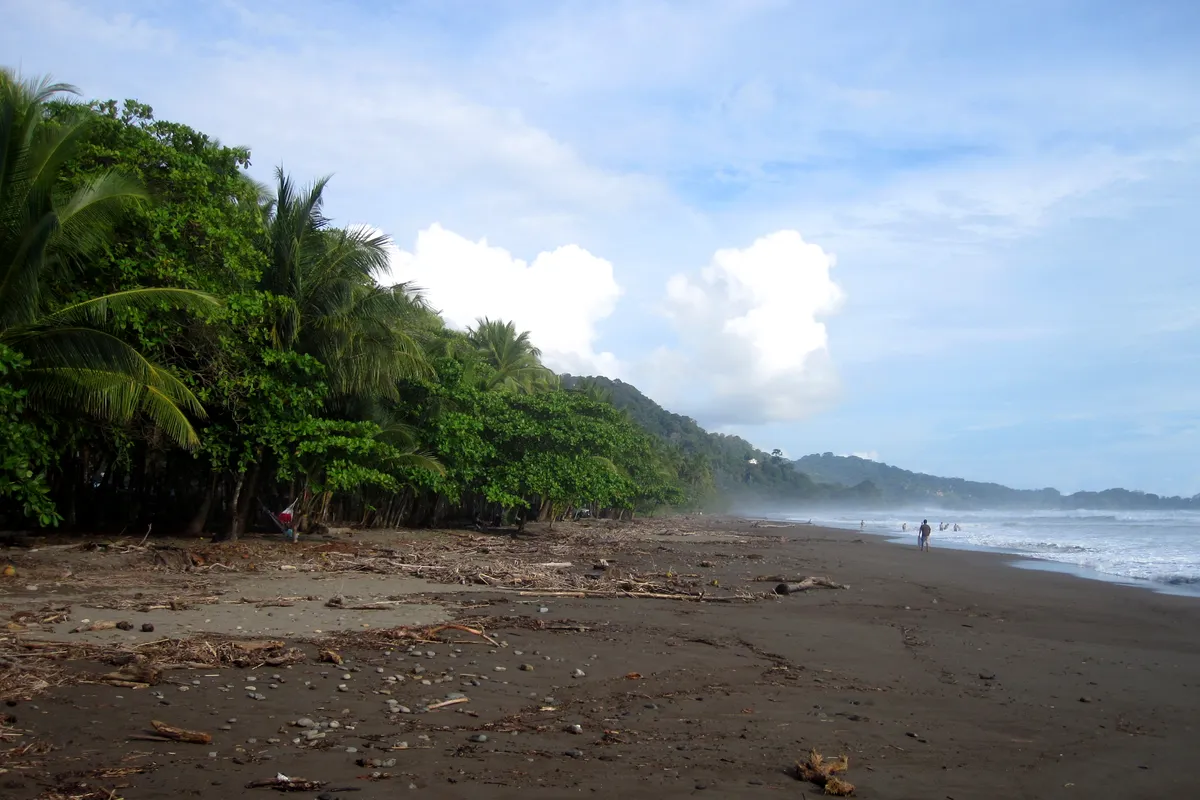
Playa Dominical is a long beach break with rights and lefts, known for power and consistency. Sandbars shift with rain and river flow, and the best peaks tend to cluster near the river mouth. Because the bottom is sand, wipeouts are forgiving, but the waves themselves can be heavy, with fast, thick lips and closeouts when the swell is big.
The beach is wide, and there is usually a peak for each level if you walk. Experienced surfers use the rips to paddle to corner peaks, but those same currents can be serious for beginners. A left point at the south end of the bay is reported to work when the beach break is too big or messy.
Dominicalito and the quieter beaches
A short distance away, Dominicalito is a more mellow beach break that suits beginners and families. It is smaller and more sheltered than the main beach, with a relaxed feel and a few places to eat.
Other beaches along the coast, including Matapalo to the north, offer alternatives when Dominical is busy or too large. Ask in town about the day's best option, and check tides before driving out, as some beaches are cut off or too shallow at certain heights.
Wet-season swell and dry-season calm
Most sources agree the wet season, from about April or May to October, brings the biggest south and south-west swells. The dry season, roughly December to April, tends to have smaller waves and is usually recommended for beginners. One statistical guide rates May as the most consistently clean month, which fits the idea that early wet season combines good swell with manageable weather.
Rain is a factor in the wet season. Afternoon storms are common, and heavy rainfall sends mud, debris and logs down the river, which can reduce water quality and visibility. Surf in the morning, avoid the river mouth after rain and check for floating debris.
Rips, river and other hazards
Rips are the main hazard at Dominical and can be strong along the whole beach. Look for the darker, calmer channels between breaking waves and stay across them, not against them. If you are caught, do not fight it. Swim parallel to the shore, or ride it out until it weakens.
Tropical rivers in Costa Rica can hold crocodiles, so be cautious near the river mouth, and avoid swimming in brown water after heavy rain. Sun and heat are significant, and thefts from cars parked near the beach are a known problem, so leave nothing visible.
Getting from San José to Dominical
Dominical is roughly three to four hours by road from San José, depending on the route and traffic. The usual route crosses the mountains by the Cerro de la Muerte highway and descends to the Pacific, which can involve mist and twisting roads. A coastal route through Jacó and Quepos is longer but flatter.
Public buses run from San José, and shared shuttles and private transfers are common. A car helps for reaching waterfalls, trails and other beaches, but is not essential if you stay in town. Check conditions before driving at night, as the roads are unlit in places.
Whales, waterfalls and the Costa Ballena
The area is known for humpback whale migrations, with Marino Ballena National Park near Uvita, a short drive south, a popular place to see them. Sightings are possible in two periods during the year, so check the tour season before planning a trip.
The Nauyaca Waterfalls, in the hills behind the town, are a common day trip, with hiking and swimming pools. Rainforest walks and bird-spotting tours fill the rest of a flat day. If you have time, Uvita's long sandbar, shaped like a whale's tail at low tide, is a short and rewarding visit.
Boards, gear and a surf-town routine
Dominical's beach break chews through thin boards and weak leashes, so a slightly thicker, more buoyant board than you would use at home makes paddling through the whitewater easier. Many surfers bring a six-foot-plus shortboard or a mid-length, while those learning should rent a soft-top locally. Shops in town sell wax, leashes and basic repairs, but specialist boards and spares are limited, so bring a spare leash and fins.
A typical day starts early. The wind is lightest at dawn, the tide tables are worth checking the night before, and by midday the heat and the afternoon storms in the wet season shorten sessions. Many people surf twice, once at first light and again in the late afternoon, and spend the middle of the day in the shade, at a café or on a hike to the waterfalls.
Where to stay in and around Dominical
The village itself is the easiest base, with small hotels, hostels and houses within walking distance of the beach and the restaurants. Staying in the hills above town gives views over the coast and cooler nights, though you will need transport. Dominicalito and the road towards Uvita have quieter lodgings, some with direct beach access.
Book early for December to March and for national holidays, when Costa Rican families and foreign visitors fill the town. In the wet season, prices fall and many places offer discounts for longer stays, but check that your road access is reliable after heavy rain.
Dominical surf season month by month
A broad planning picture, not a forecast. Swell, wind and water temperature vary from year to year.
| January | Dry, sunny and busy with holidaymakers. Waves are generally smaller, which suits beginners. |
|---|---|
| February | The driest period, with calm conditions and clear days. Waves are modest and the water is warm. |
| March | Hot and dry, with whale watching still possible. A good time for learning, when the beach is easier to read. |
| April | Transition into the wet season. South swells start to build, and the first afternoon storms arrive. |
| May | Often cited as consistently clean. Good swell and manageable weather make it a strong month. |
| June | Bigger south swells and regular rain. Surf early, before the afternoon storms and onshore wind. |
| July | Solid, powerful waves and fewer visitors. Rips are stronger, so beginners should stay close to shore. |
| August | Still consistent, with whales possible further south. Rain makes the river muddy and may bring debris. |
| September | Often the wettest month, with big swells and low prices. Roads can flood, so check conditions. |
| October | The tail end of the wet season. Swell stays good, and the rain begins to ease late in the month. |
| November | Dry weather returns gradually. Waves ease, and the landscape is green and quiet. |
| December | Dry season begins and visitors return for the holidays. Manageable waves and clear skies. |
Choosing where to learn near Dominical
Dominical's main beach is powerful, so most lessons take place on smaller days, in the white water, or at Dominicalito. Several schools and board rentals operate in town, and instructors will usually check conditions in the morning before choosing a beach.
Ask about instructor-to-student ratios and what happens if the surf becomes too big. Dry-season mornings are the best time for a first lesson, when waves are smaller and rips are weaker. Beginners should stay in front of the instructor, stay out of the river mouth and avoid the wet season's biggest swells.
Comparing options across the country? Read our guide to surfing in Costa Rica.
Seasonal notes on this page describe typical patterns, not the conditions on a given day. Use the local forecast, lifeguard advice and a qualified instructor for water-safety decisions, and get a written breakdown of what any surf package includes before paying.
Dominical surf trip questions
When is the best time to surf in Dominical?
The wet season, roughly May to October, brings the biggest south swells. The dry season is usually better for beginners because the waves are smaller.
Is Dominical good for beginners?
It can be, with a school and on smaller days. The main beach is powerful with strong rips, so Dominicalito is a gentler alternative.
How far is Dominical from San José?
Roughly three to four hours by road, depending on the route and traffic. Buses, shared shuttles and private transfers are available.
What are the hazards at Dominical?
Strong rips, shifting sandbars, possible crocodiles near the river mouth, debris after rain and theft from parked cars.
Can I see whales near Dominical?
Yes. Marino Ballena National Park near Uvita is known for humpback whales, with sightings in two periods of the year. Check the season before booking a tour.
Sources & editorial notes
Destination context checked against the sources below. Base-selection and itinerary suggestions are Book & Surf editorial recommendations. Seasonal windows are broad planning suggestions, not measured forecasts or guarantees.
- Surf Atlas: Surfing in Dominical ↗
- Surf-Forecast: Dominical ↗
- Costa Rica Surf HQ: complete guide to surfing Dominical ↗
- Visit Costa Rica (official tourism) ↗
We do not claim to have personally surfed every break. Read our editorial standards.