The breaks
Recognised, publicly known surf spots around Rincón. Suitability depends on the day's swell, wind and tide, so treat the level as a guide, not a guarantee.
| Break | Type | Best for | Notes |
|---|---|---|---|
| Domes | Right-hand reef | Intermediate–Advanced | Named after the old reactor dome. A steep, fast wave that works on many winter days and hosted part of the 1968 world championships. |
| Maria's | Reef beach break | Intermediate–Advanced | Another 1968 championship venue and a sunset favourite. Friendly on small days and powerful when the swell builds. |
| Tres Palmas | Outer reef | Advanced | A big-wave break inside a marine reserve that works only on a large winter swell. Expert-only with strong currents. |
| Sandy Beach | Beach/reef | Intermediate | A mix of sand and rock that suits intermediates on small days and can be dominated by advanced surfers when the swell is big. |
| Indicators | Reef | Intermediate | A longer, softer wave that some guides call beginner-friendly. Check conditions locally; rips can run on bigger swells. |
| Little Malibu | Right-hand point/reef | Intermediate | Named in local lists of Rincón breaks. Size, crowd and difficulty vary, so ask a local school before paddling out. |
Rincón surf climate, measured
Ten years of ocean model data for the open water off this coast: what the swell usually looks like before it reaches the beach. Shelter, sandbars and reefs change what you actually surf, so read this next to the month notes below.
| Month | Swell | Period | From | Wind | Water | Wetsuit | Days over 2.5 m |
|---|---|---|---|---|---|---|---|
| Jan | 1.0 m | 9 s | E | 18 km/h E | 27°C | Boardshorts | 0% |
| Feb | 1.0 m | 9 s | E | 21 km/h E | 27°C | Boardshorts | 0% |
| Mar | 1.0 m | 9 s | E | 18 km/h E | 27°C | Boardshorts | 0% |
| Apr | 0.8 m | 6 s | E | 19 km/h E | 27°C | Boardshorts | 0% |
| May | 0.9 m | 6 s | E | 19 km/h E | 28°C | Boardshorts | 0% |
| Jun | 0.8 m | 6 s | SE | 19 km/h E | 28°C | Boardshorts | 0% |
| Jul | 0.8 m | 6 s | E | 19 km/h E | 29°C | Boardshorts | 3% |
| Aug | 0.7 m | 6 s | E | 18 km/h E | 29°C | Boardshorts | 0% |
| Sep | 0.7 m | 8 s | E | 15 km/h E | 30°C | Boardshorts | 0% |
| Oct | 0.8 m | 8 s | E | 16 km/h E | 29°C | Boardshorts | 0% |
| Nov | 0.8 m | 8 s | E | 16 km/h E | 29°C | Boardshorts | 0% |
| Dec | 1.0 m | 8 s | E | 19 km/h E | 28°C | Boardshorts | 0% |
Median values from ERA5 at a sea point near Rincón (18°N, 67.25°W), sampled 4 days a month at 12:00 UTC, 2015-2024. Highlighted months are our suggested planning window. Not a forecast or a safety assessment. How we use this data.
Book a surf trip to Rincón
Everything we can link you to for this trip, grouped by what you need. Before you pay a camp or school, read who holds your money, and check that your insurance covers surfing.
Where to stay
Search near the breaks. Filter for surf hostels, apartments or hotels once you can see the map.
Surf lessons and activities
Listings change by season, so check what the operator includes and who coaches.
Flights
Add your dates and check the board fee on every leg before you pay.
Car hire
Ask about roof racks and whether the insurance covers boards on the roof.
Airport transfer
Tell the driver you have a board and its length when you book.
Mobile data
Download a forecast app and offline maps before you land.
Flight delay claims
If a delay eats your first surf day, check whether you can claim.
Luggage storage
Useful between check-out and a late flight. Check the size limit before dropping a board.
Links marked as partner links may earn us commission at no cost to you; the rest earn us nothing. We have not checked live availability or price, and the seller's terms apply. How we handle this.
A surf town at the western end of the island
Rincón is a municipality of around 15,000 people at the far western tip of Puerto Rico. Tourism is the main industry, and the town has dozens of beaches and a weekly art walk in the centre. It is relaxed, quiet outside the winter surf season and easy to understand: one coastal road, a sequence of beaches, and a lot of people who have chosen to live here for the waves.
The town's surf reputation dates back to 1968, when the World Surfing Championships were held at Domes and Maria's beaches. That event put Rincón on the international surf map, and many of the foreign surfers who came never left. Today, the community is a mix of locals, long-term residents from the US mainland and winter visitors.
Domes and Maria's: where the contest was held
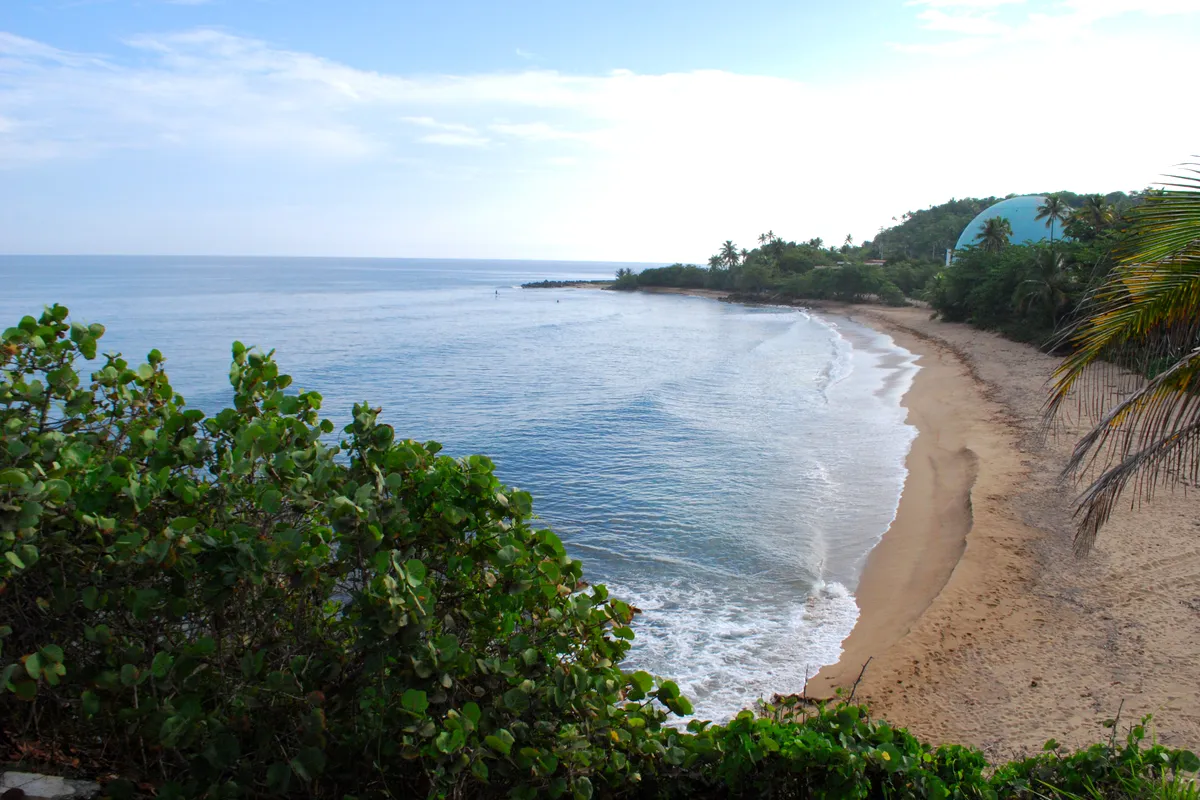
Domes is named after the dome of the decommissioned BONUS nuclear reactor, Puerto Rico's only one, which stands beside the beach. The wave is a reef break that can produce steep, fast rights and is usually described as intermediate to advanced, with a reputation for working on a lot of winter days. It can be barreling on a large north-west swell.
Maria's, a little further along, is known for its sunsets and its fast, powerful wave, which shifts in character as the swell grows. Reports of how hard it is vary, which suggests that it is friendly on small days and demanding on big ones. Both breaks are over reef, so wear booties if you are not used to coral, and watch the line-up before paddling out.
Tres Palmas: the big-day wave
Tres Palmas, inside a marine reserve, is an outer reef that wakes up only on a big winter swell. Sources agree that it is for experts, with a long paddle, heavy water and powerful currents, and they differ on exactly how large the swell must be before it works. In summer, the same area is a calm place to snorkel.
Visitors who want to see Tres Palmas at its best can watch from the shore on a large day. Most people should not paddle out. The reserve has rules about activities and anchoring, and it is worth reading the signs. If you are an advanced surfer, go with local advice and a friend, and be ready for a long swim if your leash breaks.
Sandy Beach, Indicators and the gentler options
Not everything in Rincón is a heavy reef. Sandy Beach has a mix of sand and rock and can be good for intermediates when the swell is small, though it can also handle huge swells and be dominated by advanced surfers. Indicators is a longer, softer wave that some guides describe as beginner-friendly, although others place it among the reef breaks with strong rips on a big swell, so confirm with a local school on the day.
Small days at Domes and Maria's can also be fun for intermediates. For beginners, the best plan is to book a lesson and let the instructor choose the spot for the day. The same beach can be gentle in November and impossible in January, so conditions matter more than names.
The swell season and the quiet months
Winter waves can reach 25 to 30 feet at their biggest, and the best surf generally runs from November through March, with some sources extending the season to April. The swell comes from north-west and northern Atlantic storms. From late spring to early autumn the island is usually flat, though a tropical system can send a few days of surf in late summer.
The quiet months are good for diving, snorkelling and the beach. Prices fall, the town feels more local and many of the businesses reduce hours. If you are after surf, plan for winter and have a backup plan for flat spells, which can happen even at the height of the season.
Whales, sunsets and the art walk
Between January and February humpback whales can be watched from the coast and boat trips, and the town holds a Humpback Whale Festival in March. Sunsets are a daily event, and Maria's is a favourite viewing beach. The art walk takes place weekly in the centre, and the restaurants range from simple beach kiosks to more formal dinners.
A good plan on a flat day is to head inland to the hills, take a drive along the coast to Aguadilla or spend an afternoon on a snorkelling trip. If you hope to see whales, check with local operators for timing, and remember that sightings are not guaranteed.
Getting to Rincón and getting around
Rafael Hernández Airport (BQN) in Aguadilla is the closest airport, and the drive to Rincón takes roughly 30 to 40 minutes. San Juan's main airport is further away, around two and a half hours by road, so many surfers choose the western gateway. Puerto Rico is a US territory that uses the dollar and drives on the right, so US visitors need no passport and no currency exchange.
A rental car is the practical choice, as buses are limited and the breaks are spread out. Hurricanes Irma and Maria in 2017 caused widespread damage to the island's electricity grid, and outages can still happen after storms. Keep a torch, a power bank and a small cash reserve, particularly during the Atlantic hurricane season.
Rincón surf season month by month
A broad planning picture, not a forecast. Swell, wind and water temperature vary from year to year.
| January | Peak winter swell and the busiest period. Domes and Maria's are consistent and Tres Palmas can break; whales are in the area. |
|---|---|
| February | Strong swell continues with warm 24°C water and sunny days. Crowds remain high, and beginners should check conditions daily. |
| March | Late-season swells and the Humpback Whale Festival. Water is warming and crowds ease slightly. |
| April | The season tapers. Smaller days become more common, and some sources still count it as surf season. |
| May | Mostly flat to small. A good month for diving, snorkelling and quiet beaches, with much lower prices. |
| June | Flat spells are normal and the sea is warm. The wet season is under way, and the beaches are quiet. |
| July | Hot and humid with little swell. Tropical waves can occasionally produce a few days of surf. |
| August | The warmest water of the year, around 29°C. Hurricane season peaks, which can bring swell but also storm risk. |
| September | A risky month for weather but occasional tropical swell. Check forecasts and keep travel plans flexible. |
| October | Still in hurricane season. A few early north-west swells arrive late in the month as the winter pattern sets in. |
| November | The start of the surf season. Water is warm, swell is increasing and the crowds are not yet at their winter peak. |
| December | Winter swell builds, holiday crowds arrive and the dry season begins. Domes and Maria's are working on many days. |
Learning to surf in Rincón
Rincón has a good number of surf schools and instructors, and the warm Caribbean water makes lessons comfortable year-round. In winter, the biggest waves can be intimidating, so a school that knows the coast and moves to the right beach each day is worth paying for.
Most lessons use soft boards at a gentle break, with an instructor in the water. Summer is the best season for complete beginners because the sea is small, though some days are completely flat. Ask what happens if the surf is too small or too large, and whether the school provides rash vests and reef-safe sunscreen.
If you already surf, hire a local coach for a session or two. Reading a reef break is different from a sand-bottom beach break, and the right advice can keep you safe.
Comparing options across the country? Read our guide to surfing in Puerto Rico.
Seasonal notes on this page describe typical patterns, not the conditions on a given day. Use the local forecast, lifeguard advice and a qualified instructor for water-safety decisions, and get a written breakdown of what any surf package includes before paying.
Rincón surf trip questions
When is the best time to surf in Rincón?
November to March is the main season, with consistent north-west swell and warm water. Summer is usually flat, with the occasional tropical swell and a risk of hurricanes.
Is Rincón good for beginners?
In small conditions, yes, with a school. In winter, the reef breaks can be powerful and the rips strong, so beginners should pick gentler spots with instructors.
What is Tres Palmas?
It is a marine reserve and an outer reef that breaks only on big winter swells. It is for experts and best watched from the shore when it is working.
Do I need a passport or visa for Puerto Rico?
Puerto Rico is a US territory, so US citizens do not need a passport to arrive from the mainland. Others should check entry rules, since they are the same as for the United States.
How far is Rincón from the airport?
Rafael Hernández Airport in Aguadilla is the nearest, about 30 to 40 minutes by road. San Juan's main airport is around two and a half hours away.
Sources & editorial notes
Destination context checked against the sources below. Base-selection and itinerary suggestions are Book & Surf editorial recommendations. Seasonal windows are broad planning suggestions, not measured forecasts or guarantees.
We do not claim to have personally surfed every break. Read our editorial standards.