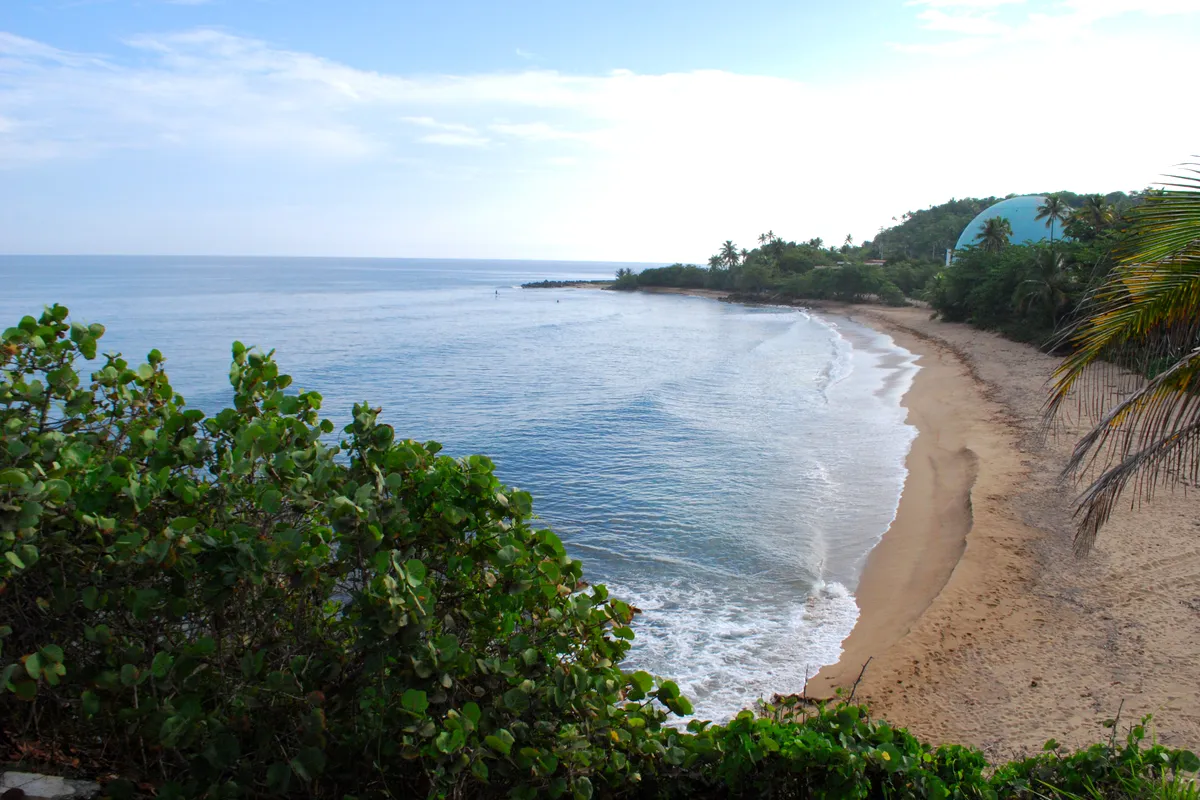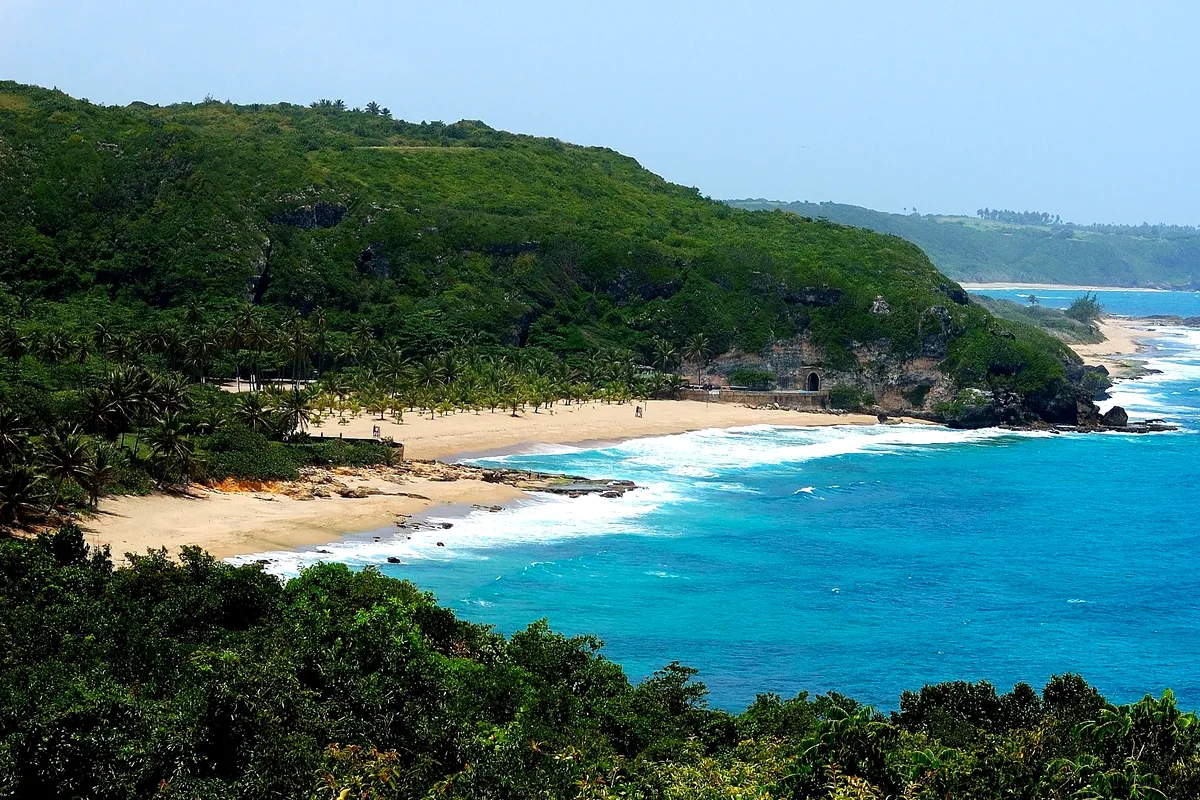
Why a Caribbean island has real surf
Puerto Rico lies about 1,000 miles south-east of Miami, between the Dominican Republic and the US Virgin Islands. The main island is roughly 110 miles long and 40 miles wide, with mountains in the middle and flatter land along the north and south coasts. The Puerto Rico Trench, one of the deepest parts of the Atlantic, lies around 71 miles to the north, which means deep water close to shore and little to slow the swells that arrive from the north and north-west.
Those swells are generated by winter storms in the North Atlantic, and they travel long distances before reaching the island. The north and west coasts take the full force, while the south coast, facing the sheltered Caribbean Sea, is mostly flat. That is why the surf tourism sits in a few places on the north-west corner rather than all around the coast. It is a compact surf destination, with a lot of options inside a short drive.
When to go: the winter swell window
The surf season runs from November to March, with some sources stretching it to April. Wave size at the biggest end can reach 25 to 30 feet in the largest winter storms, and the island's main surf town, Rincón, is built around that period. Early in the season, from November to mid-December, the swell is building, water is warm and crowds are lighter than at the height of winter.
The dry season runs from December to March, which means the best surf coincides with the best weather. From April to November the island has its wet season, with hot, humid weather and afternoon downpours. Summer surf is usually small or flat, although a tropical storm in the Atlantic can send a few days of waves. If you are travelling for surf, choose January or February for the most reliable swell, and November or March for a balance of waves and quieter beaches.
Warm seas, strong sun: kit for Puerto Rico
The sea around Puerto Rico is warm all year. Coastal water averages roughly 24°C in February and about 29°C in August, so wetsuits are rarely needed. Most surfers wear boardshorts or a bikini with a rash vest for sun protection, and some use a thin 1mm top on cooler winter mornings or after a long session in the water.
The bigger issue is the sun and the reef. Choose a reef-safe sunscreen, wear a hat on the beach and consider reef booties if you are not used to walking on coral or rock. Many of the best breaks are over reef, and a small cut can become infected in warm water, so clean any scrapes carefully.
Hurricane season and the 2017 storms
Hurricane season follows the usual Atlantic pattern, from June to November, with the peak in late summer and early autumn. On average, a tropical-storm-strength system passes near the island about every five years and a hurricane about every seven. In 2017, Hurricane Irma, a Category 5, and Hurricane Maria, a Category 4, caused widespread damage, particularly to the electric grid.
For surfers, the lesson is not that the island is unsafe but that planning matters. Book flexible travel for the peak storm months, buy insurance that covers weather disruption, and follow official advice if a storm is forecast. Power cuts can still happen after storms, so carry a torch and a charged power bank. Winter, the main surf season, is outside the hurricane window.
Getting to Puerto Rico and getting around
Puerto Rico is an unincorporated territory of the United States, and the currency is the US dollar. People born in Puerto Rico have been US citizens since 1917, and US citizens can travel between the island and the mainland without a passport. Spanish and English are both official languages, although Spanish dominates daily life. Vehicles drive on the right, and the time zone is Atlantic Standard Time (UTC−4), which does not change for daylight saving.
Most visitors fly into San Juan, but surfers heading for Rincón often use Rafael Hernández Airport in Aguadilla on the west coast, which is much closer. A rental car is the practical way to move between breaks, since public transport is limited. Roads on the west coast are generally easy, and traffic around San Juan can be heavy. Bring your own board if you fly from the mainland, but check airline fees and sizes first.
Reef, rips and wave-size safety
Puerto Rican breaks are mostly over shallow reef, and winter swells can be powerful. A wave that looks friendly from the beach can turn heavy as the tide drops or the swell builds. Watch the line-up for at least ten minutes, look at where the experienced surfers sit, and avoid surfing alone. Rip currents run through channels beside reefs and can be strong on big days.
Several beaches have no lifeguards, and some of the best-known breaks are expert-only when large. Tres Palmas in Rincón is the best example. If you are unsure, ask a local surf school or a shop for advice. Respect marine reserves, which have their own rules, and avoid leaving valuables in a parked car at remote spots.
Culture, food and a slower pace
Beyond the beach, Puerto Rico has a deep culture of music, food and history. Spanish and English both appear on signs, and many people in tourist areas speak English, though a few Spanish phrases go a long way. Food ranges from beach kiosks serving fried snacks to long, lazy lunches featuring pork, plantains and seafood.
The island has 78 municipalities, and each has its own plaza and character. San Juan, the capital, has a walled old city, forts and a busy dining scene. In the west, Rincón holds a weekly art walk, and the area is quiet in the off-season. Plan time to explore inland, since the central mountains and rainforest add variety to a surf trip.
Combining a surf trip with the rest of the island
Many visitors split a trip between the west coast for surf and the San Juan area for city time. Another option is to base yourself in one place and take day trips, since the island is small. On a flat day, the west coast has snorkelling, diving and coastal drives, while the north coast has pools, caves and beaches.
The offshore islands of Vieques and Culebra, off the east coast, are known for beaches and quiet communities. They are not significant surf destinations, but they are good for rest days. Whale watching is possible in winter, and the Humpback Whale Festival in Rincón in March is a local highlight. Time your trip so a flat spell does not catch you with no plan.
Planning a Puerto Rico surf trip
Pick the west coast if you want the largest choice of waves and the easiest base. Book accommodation early for January and February, which are the most popular months. Hire a car and plan to drive between breaks, because the best wave in the morning may not be the best in the afternoon. For intermediate surfers, small days at Domes or Maria's are a good test; for beginners, a school is a must.
Pack reef shoes, reef-safe sunscreen, a rash vest and a spare leash. If you are flying with a board, put it in a padded bag and check the airline's size limits. Keep plans flexible in case of weather. A week gives you time to see several breaks, rest and explore without rushing.
Surf regions of Puerto Rico
West coast: Rincón and Aguadilla
The west coast is the heart of Puerto Rican surfing. Rincón has Domes, Maria's, Tres Palmas, Sandy Beach and Indicators, spread along a few kilometres of coast, and it hosted the 1968 World Surfing Championships. North of Rincón, Aguadilla has Crash Boat beach and heavier reef waves that suit experienced surfers. Aguadilla's airport makes it the easiest region to reach, and the area has the island's best choice of schools and rentals.
Known for: Rincón, Domes, Maria's, Tres Palmas, Aguadilla, Crash Boat
North coast: Isabela to San Juan
Further east along the north coast, Isabela has several beach and reef breaks, including Jobos and the Shacks area, popular with locals and visitors. Between Arecibo and San Juan, towns such as Dorado and the San Juan beaches of Isla Verde and Ocean Park have breaks that work when the north swell is large. The region is less touristy than Rincón for surfing, but close to the capital and its airport, so it works for a city-plus-surf trip. Break names vary between local guides, so check with a shop.
Known for: Isabela, Jobos, Dorado, Isla Verde, Ocean Park
The south and east coasts, Vieques and Culebra
The south coast faces the Caribbean Sea and is mostly flat, so it is not a surf destination. The east coast and the offshore islands of Vieques and Culebra can get small waves when the swell wraps around or a storm passes, but they are better known for beaches, snorkelling and sailing. They are worth a visit for rest days, and for travellers who want a beach holiday alongside a few days of surf elsewhere on the island.
Known for: Luquillo, Vieques, Culebra
Learning to surf in Puerto Rico
Puerto Rico is a good place for a first lesson, thanks to warm water and a developed tourism industry. Most schools are on the west coast, particularly around Rincón and Aguadilla, and offer group lessons, private coaching and board rentals. A typical group lesson lasts around two hours, with a soft-top board and instruction on safety and pop-ups.
The best time for beginners is outside the big-swell months, although the school will choose a break to match the day. Ask how the instructors judge conditions, how many students they take, and what happens when the surf is too big. Some of the reefs here are not suitable for learners, and a good school will say so.
If you already surf and want to progress, consider a coaching session on a small day at one of the friendlier breaks, then move up gradually. Do not use Tres Palmas as a progression spot.
Surfing in Puerto Rico: questions
When is the best time to surf in Puerto Rico?
November to March is the main surf season, with the most reliable swell in January and February. The dry season coincides with the best waves, while summer is usually flat and the hurricane season runs from June to November.
Do I need a passport to visit Puerto Rico?
US citizens can travel from the mainland without a passport because Puerto Rico is a US territory. Visitors from other countries should check the entry rules that apply to travel to the United States.
Is Puerto Rico good for beginners?
Yes, in the right place and season. The west coast has schools and warm water, but many reefs are shallow and powerful in winter. Beginners should take lessons and let the instructor pick the beach.
Do I need a wetsuit in Puerto Rico?
Usually not. Water temperatures range from about 24°C in February to around 29°C in August, so boardshorts and a rash vest are enough for most sessions.
Which airport should I use for Rincón?
Rafael Hernández Airport in Aguadilla is closest, about 30 to 40 minutes by road. San Juan is further away, but flights can be cheaper or more frequent, so compare both.
Sources & editorial notes
Country context checked against the sources below. Regional summaries are Book & Surf editorial planning suggestions, not forecasts or safety assessments.